

Autumn Decorating Ideas That Make Your Home Feel Beautiful All Season
Why Some Autumn Homes Stay With Us
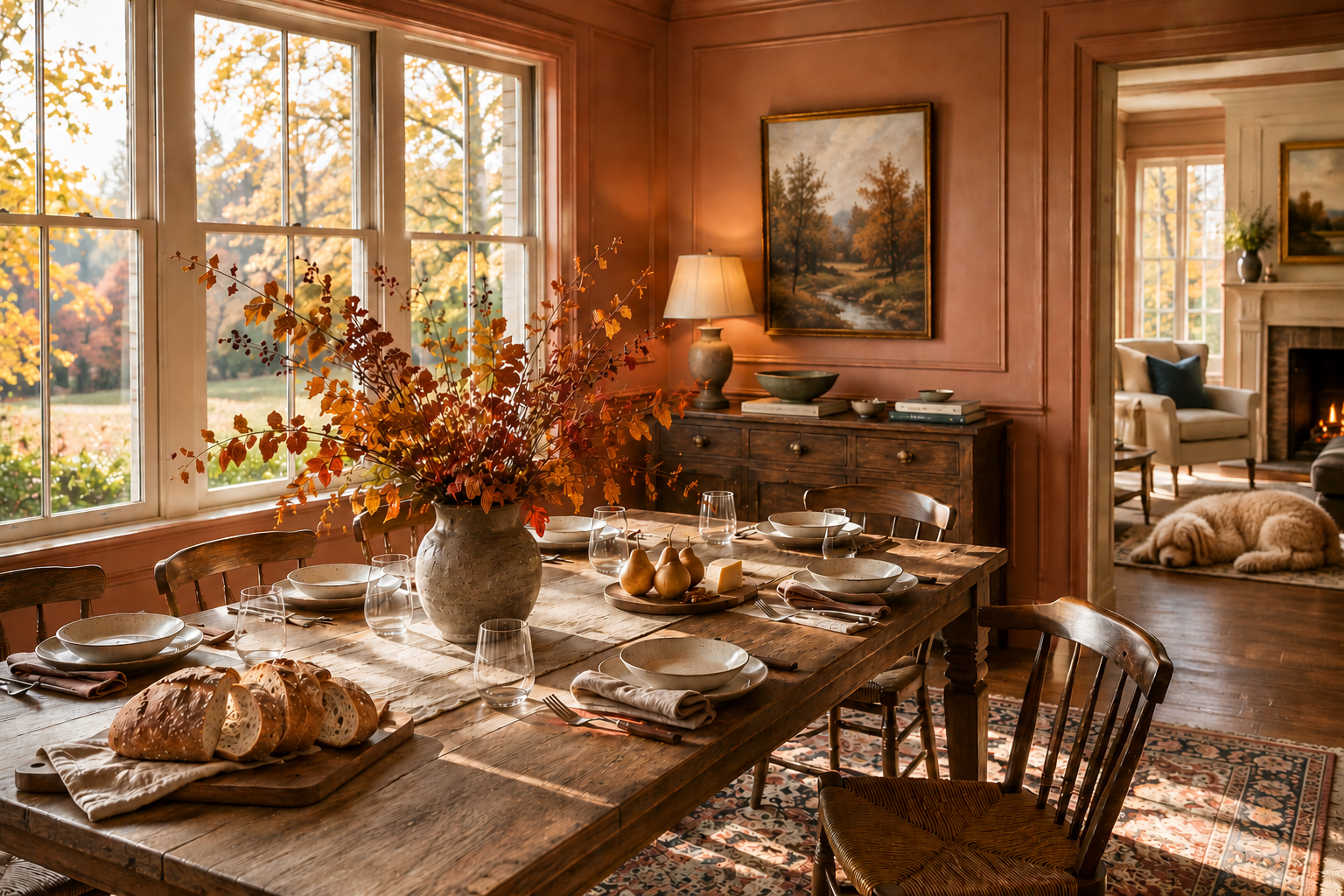
You step through the front door, and before you even register the decorating, something else catches your attention. A lamp glows softly in the corner even though the afternoon light hasn’t quite faded. The warm smell of bread drifts from the kitchen where a crusty loaf is being sliced while dinner finishes on the stove. A wool throw has slipped from the arm of a chair, and boots by the door are still damp and cool from an afternoon walk. Even the air inside feels different, warmer, quieter, gently settling around you.
Hours later, when you’re back in your own driveway, the individual details begin to blur. You might remember the branches gathered in a stoneware vase or the deep russet linen on the dining table, but what stays with you is the feeling of the evening: the warmth of the room compared to the cool air outside, the faint aroma of dinner clinging to your sweater, and the soft hum of conversation that seemed to follow you out the door.
Conversation stretched longer than anyone expected. Coffee eased into dessert, hands wrapped around warm mugs, a deck of cards appeared and eventually a glance at the clock brought genuine surprise. The sound of laughter, the glow of lamplight, and the comfort of being gathered around a table lingered long after the night ended.
That memory has as much to do with decorating as it does with the things you could see. The light, fragrance, textures, food, and small signs of the season shaped an evening people genuinely enjoyed being inside, an evening that felt familiar in all the best ways.
How Autumn Slowly Settles Into a Home
The first cool morning changes something. You reach for the fuzzy robe at the back of your closet instead of the light wrap you have worn all summer. The air feels crisp when you open the door, and the floor is cool under bare feet. On the way home, you stop at a farm stand and come back with pears, squash, and a bundle of late season flowers. Their fragrance fills the car, and by evening some have made their way into dinner while the flowers end up on the dining table.
A few weeks later, the house has begun to shift with the weather. The windows close earlier in the evening as the cool air settles in. Sunday afternoon feels like a good time to bake again, especially when rain taps against the windows and cancels plans outside. The heavier tablecloth comes out for dinner because friends are coming over, and the first fire of the season is lit after a quiet comment that the room feels chilly. The smell of wood smoke mixes with the warmth of the oven, creating a familiar autumn comfort.
By October, those small changes have quietly gathered. Guests arrive brushing cold air from their sleeves and carrying cider from a nearby orchard, its sweetness noticeable the moment the bottle is opened. Conversation starts in the kitchen while dinner finishes on the stove, then moves to the table when it becomes clear everyone has been standing around talking for half an hour. Two more people join at the last minute, so another place is made, chairs are pulled from other rooms, and a lighthearted joke about keeping the folding chairs close by drifts through the room. The warmth of the space, the aroma of a home cooked meal, and the sound of voices overlapping make the evening feel unmistakably seasonal.
As these moments gather, a pattern begins to emerge. Homes that feel especially good in autumn are not shaped by one decorating choice or one seasonal purchase. They are shaped by the way several parts of the home shift together: light softening as evenings arrive earlier, the weight of materials returning to rooms that felt airy in summer, the smell of something simmering in the kitchen, the sound of pages turning or music playing in the background, and the familiar warmth that gathers when people settle in for the evening.
The light changes as the day shortens. Materials with more weight and texture return to rooms that felt lighter during summer. Seasonal ingredients begin appearing in the kitchen and at the table. Fragrance moves through the house as something bakes, simmers, burns, or is carried in from outdoors. Music, books, gatherings, weekend traditions, and the things people enjoy doing at home begin shaping the season too.
These are the seven elements that give an autumn home its atmosphere.
They offer a way to think beyond individual purchases and consider how each choice contributes to the whole experience: how a room looks, how it feels, how it functions, and how people move through it as the season deepens.
Light: The Glow That Shapes the Season
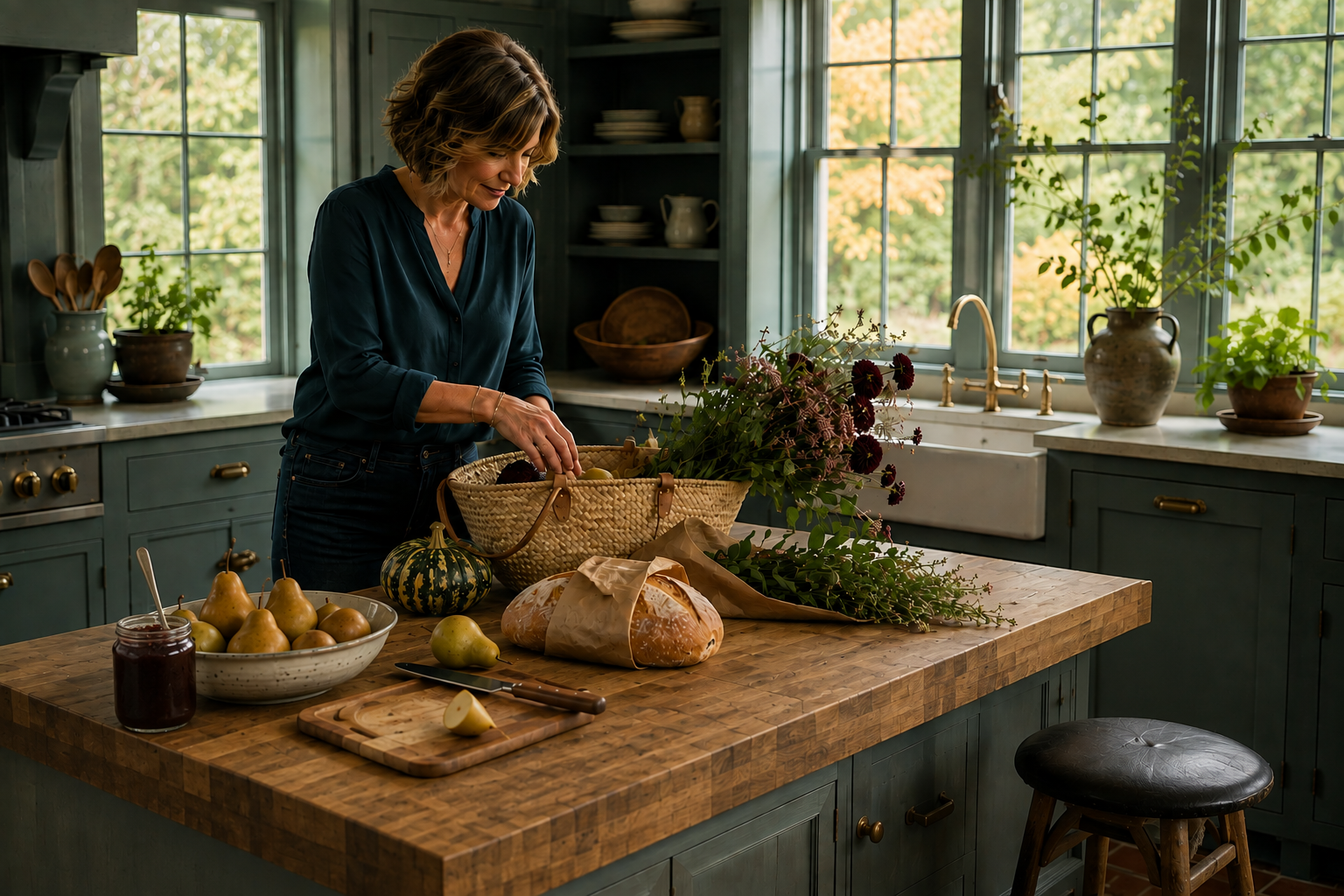
In summer, the lamp beside the sofa may go untouched until late at night. By October, the switch is lifted before dinner as the last daylight slips from the room, and the soft glow feels instantly familiar. It is the kind of light you remember from other cool evenings when the house seemed to settle around you.
Earlier sunsets bring lamplight into the evening sooner. A reading chair that needed no help from a lamp in August depends on it by mid‑season, and the kitchen that stayed bright through dinner now needs light while the meal is still being prepared. You notice it in small moments: shadows stretching across the counter while onions sizzle, or the way the room feels warmer the moment a lamp clicks on. Autumn quietly changes when we begin relying on the light inside our homes.
Start with the places you use after sunset. A floor lamp beside a chair makes reading comfortable without flooding the entire living room with brightness. A small lamp on a kitchen counter gives the room a gentler presence after dinner, softening the edges of the day. In the dining room, sconces or shaded lamps can remain on after the plates have been cleared, allowing conversation to continue in light that encourages people to linger.
Bulb temperature matters. Warm white bulbs in the 2700K range create a softer glow than cooler bulbs and work well in living rooms, bedrooms, and dining areas where comfort is the priority. Dimmers give rooms more flexibility as daylight disappears, especially in spaces used differently from afternoon through evening.
Decorative lighting can become part of the seasonal layer. Glass hurricanes on a mantel, an antique brass lamp brought into a darker corner, or tiny lights woven through branches on a covered terrace add autumn character while still serving the room. Their glow becomes part of the atmosphere, the kind of light you remember stepping into on a chilly night.
The most useful lighting changes follow the way you spend your evenings. Notice where people naturally settle after dinner, where conversations gather, and where you instinctively reach for more light. Those are the places worth illuminating first.
As the season deepens, light becomes one of the most powerful ways to shape the feeling of a room. These layers help you use it intentionally.
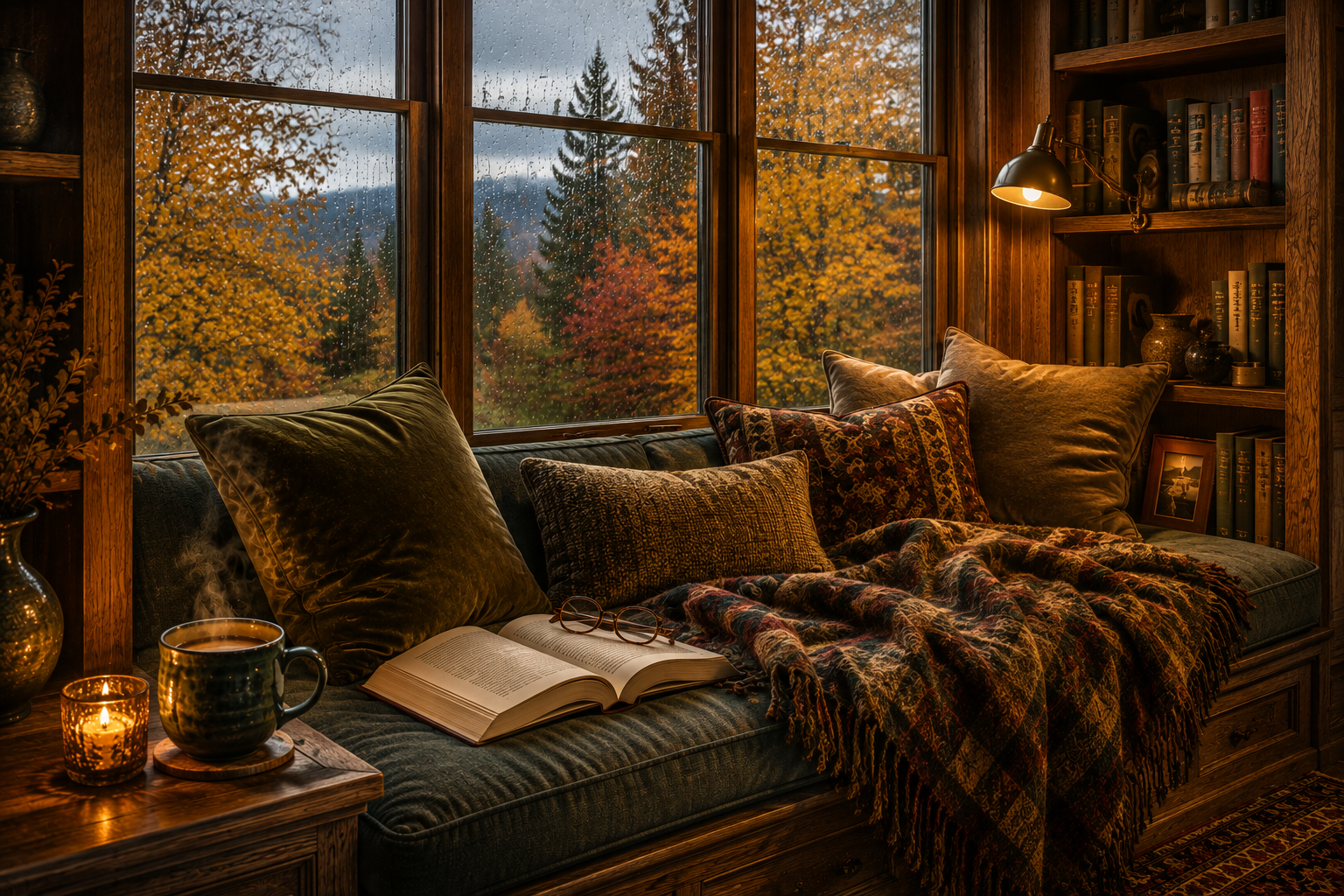
Lighting in Layers
Light becomes even more important as the season shifts. Use these layers to shape the room in a way that feels warm, intentional, and unmistakably autumnal.
Background Light: Replace the Daylight
This is the glow that fills the room once the sun disappears — shaded lamps, sconces, and fixtures that soften the edges of the evening.
Working Light: Light You Actually Use
A lamp beside a reading chair, a small lamp on the kitchen counter, the glow above the stove. These lights make everyday tasks feel comfortable rather than stark.
Gathering Light: Light That Encourages People to Stay
Dimmers, low lamps, and warm bulbs create the kind of light people settle into after dinner. It’s the glow that makes conversation last longer.
Atmospheric Light: The Seasonal Layer
Glass hurricanes, candles, lanterns, and tiny terrace lights add character without overwhelming the room. Their glow becomes part of the evening itself.
This keeps the room layered but calm — bright enough to be useful, soft enough to feel like autumn.
Texture: The Depth Autumn Brings to a Room
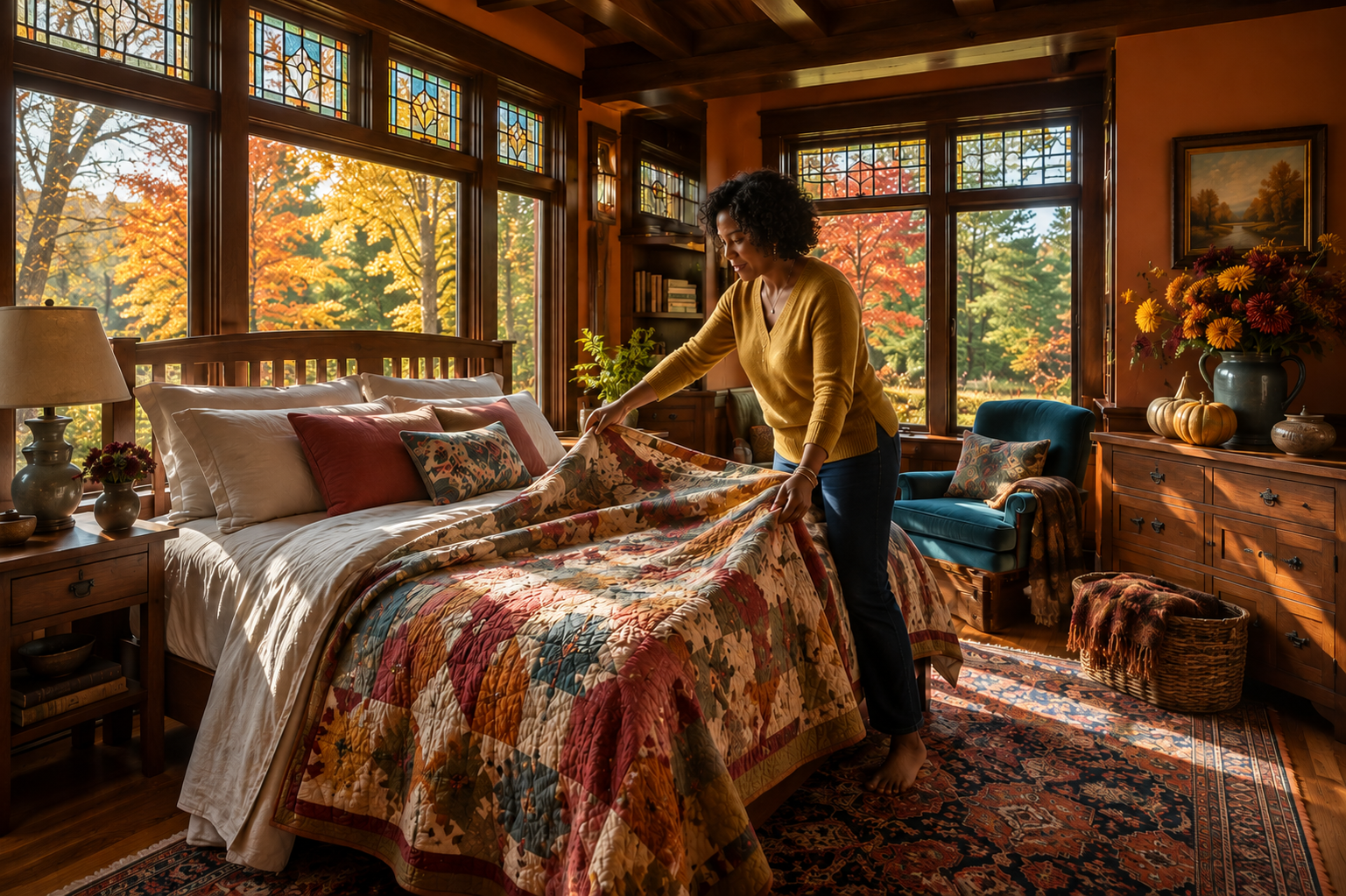
The change is easy to recognize when you walk into a bedroom on a cool evening. Crisp summer bedding has been joined by a quilt folded across the foot of the bed, the lightweight rug beside it has been replaced by something denser underfoot, and the upholstered window seat suddenly feels inviting again. You feel the difference before you fully see it. The warmth of the quilt, the softness of the rug, and the way the room seems to hold the cool air a little more gently all signal the season’s arrival.
Texture gives autumn decorating much of its visual depth. Wool, velvet, linen, leather, wood, stone, boucle, brushed metal, and woven fibers interact with light differently, giving the eye more to explore even when the color palette remains restrained. These materials also carry their own sensory memories: the weight of a wool throw, the smoothness of worn leather, the cool touch of stone on a chilly morning.
This is especially useful if you prefer a neutral home. A room built around cream, camel, tobacco, walnut, and charcoal can feel richly seasonal without adding a collection of obvious fall motifs. A nubby wool cushion against worn leather creates contrast through surface. Heavy linen falling across a table has a different presence from the bare wood beneath it. A handmade ceramic bowl beside smooth glassware makes both materials more noticeable and more tactile.
Existing pieces are a good place to begin. Pull the quilt out of the linen cupboard. Bring the woven tray back to the ottoman when evenings move indoors. Replace the lightweight cotton cover on the bed with the coverlet you packed away in spring. Let firewood remain visible beside the hearth if you are actually using it. The sight and scent of it alone changes the way the room feels.
Then add what the space is missing. A substantial rug may make a large living room more comfortable underfoot. New pillow covers can introduce wool, velvet, or woven fabric without replacing the inserts you already own. Texture works best when you experience it as part of everyday life—felt in the weight of a quilt pulled across the bed on a cold night or the linen tablecloth you smooth before friends arrive for dinner.
Textures That Shape the Season
Texture becomes even more powerful when you think about it in layers. Use this simple structure to give a room more depth without overwhelming it.
Underfoot: The Grounding Texture
This is the texture that anchors the room. A wool rug, heavy jute, or thick cotton runner changes how the space feels the moment you step inside. It’s the first place you notice the season physically.
At Hand: The Comfort Texture
These are the textures you touch without thinking — the quilt you pull across your lap, the velvet pillow you lean into, the boucle throw draped over the arm of a chair. Choose one that adds warmth and one that adds softness.
At Eye Level: The Contrast Texture
This is where the room gains visual interest. Ceramics, stone, brushed metal, glass, and wood catch light differently, creating contrast even in a neutral palette. Pair one smooth texture with one textured or matte surface to keep the room from feeling flat.
In the Periphery: The Seasonal Texture
These are the textures that shape atmosphere rather than demand attention. Firewood stacked beside the hearth, a woven basket near the sofa, branches in a ceramic vase, dried grasses on the console. They echo what’s happening outdoors and make the room feel connected to the season.
The Simple Four‑Texture Formula
Choose:
One grounding texture (rug, runner)
One comfort texture (throw, quilt, pillow)
One contrast texture (stone, ceramic, metal, glass)
One seasonal texture (wood, branches, dried foliage, woven pieces)
Fragrance: Give Autumn a Scent of Its Own
By the time dinner reaches the table, the kitchen already carries traces of everything that happened there that afternoon. Apples were peeled for a tart, onions browned slowly on the stove, and fresh rosemary was chopped for dinner. Hours later, a hint of each still lingers in the air, mixing with the warmth of the room in a way that feels unmistakably seasonal.
Some of the scents we associate most strongly with autumn begin this way, as part of cooking, gardening, gathering outdoors, and spending more time at home. They become familiar because we experience them alongside the things we do every year. The smell of damp leaves on a coat, the faint smoke from a neighbor’s chimney, or the sweetness of pears on the counter often stays with us long after the moment has passed.
Home fragrance can build on those associations. Choose a scent with a particular room or part of the day in mind. A reed diffuser works well in an entry or powder room where fragrance can remain in the background. Lighting a candle after dinner can become part of settling in for the evening, especially when the small flame and gentle warmth echo the comfort of the meal you just finished. A simmer pot makes sense on an afternoon spent cooking or working around the house, filling the air with spice or citrus that drifts from room to room.
Autumn fragrance extends well beyond cinnamon and pumpkin spice. Fig leaf, black tea, cedar, bergamot, sandalwood, pear, cardamom, tobacco leaf, vetiver, apple wood, and subtle smoke each suggest a different side of the season. Florals still belong in autumn, especially when paired with woods, herbs, or spice that give them more depth.
Several strong fragrances competing under the same roof quickly become overwhelming. If the kitchen already carries the fragrance of dinner, it may need nothing else. A diffuser in the entry and a scented candle used later in the living room give each fragrance room to be enjoyed, allowing the house to smell layered rather than crowded.
Returning to the same scent each autumn creates familiarity. After several seasons, opening that candle or bringing out a home fragrance you love can become part of welcoming autumn home, much like reaching for a favorite sweater or lighting the first fire of the year. It becomes a small ritual that signals the season before you have even looked around the room.
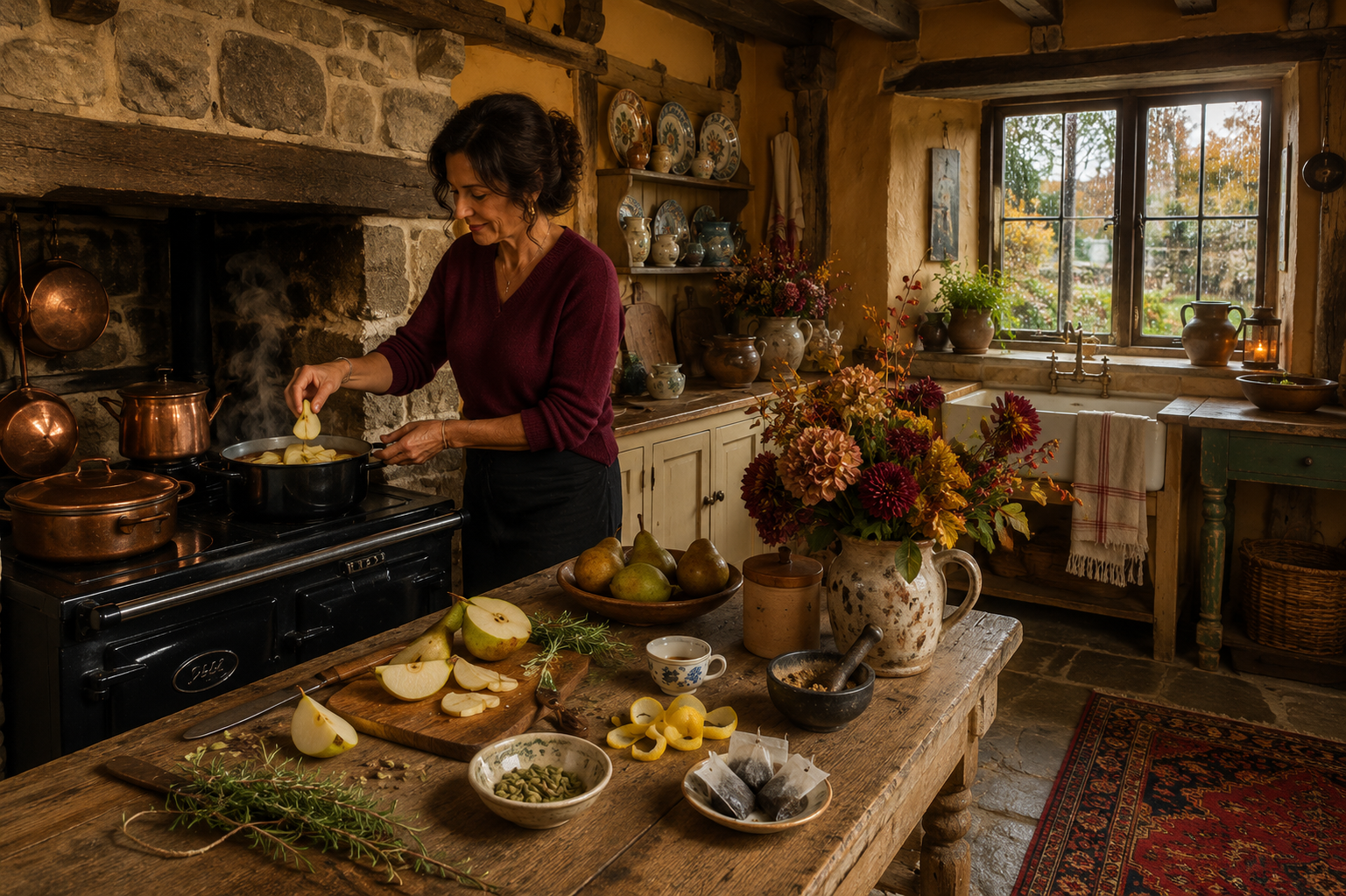
Five Simmer Pots for a More Sophisticated Autumn Scent
A simmer pot is one of the quiet luxuries of autumn — a fragrance that feels lived‑in rather than sprayed on. When the windows close and the house begins holding warmth again, a pot on the stove can shape the entire mood of an afternoon.
Fill a small saucepan with 4–6 cups of water, add the ingredients, bring everything to a gentle simmer, then lower the heat. Check the water occasionally and add more as needed. Never leave a simmer pot unattended.
These blends are designed to feel layered, grown‑up, and atmospheric — the kind of fragrance that makes a home feel settled into the season without drifting into the predictable cinnamon‑pumpkin territory.
Pear, Cardamom & Black Tea
1 ripe pear, sliced 4 green cardamom pods, lightly crushed 2 black tea bags, 2 strips lemon peel and 1 small sprig rosemary
Simmer the pear, cardamom, lemon peel, and rosemary for about 15 minutes. Add the tea bags for the final 5 minutes, then remove them so the tea stays smooth rather than tannic.
Pear gives the pot a mellow fruit note, while cardamom and black tea deepen the fragrance and keep it from becoming sugary. Rosemary adds a fresh herbal lift that makes the blend feel clean and modern.
Fig, Bay & Bergamot
2 fresh figs, halved 3 fresh bay leaves, 3 strips orange or bergamot peel, 1 teaspoon black peppercorns and 1 small sprig thyme
Press the figs gently with the back of a spoon before adding them to the pot. Add the remaining ingredients and let everything simmer slowly.
This is autumn’s greener side — aromatic, slightly earthy, and quietly sweet. Fig softens the sharper herbal notes, bay and thyme add depth, and the citrus peel keeps the blend bright enough for daytime.
Apple, Cedar & Rosemary
1 crisp apple, sliced 2 sprigs rosemary, 3 strips lemon peel, 1 teaspoon juniper berries, lightly crushed and 1 small piece food‑safe cedar (optional)
Simmer the apple, rosemary, lemon peel, and juniper together. If using cedar, make sure it is specifically sold for culinary use and untreated.
This blend feels like an autumn walk through the woods — crisp fruit, evergreen, and a hint of resin. Apple softens the sharper notes so the fragrance stays balanced and inviting.
Plum, Vanilla & Star Anise
2 ripe plums, quartered ½ vanilla bean, split lengthwise, 2 whole star anise, 2 strips orange peel and 3 whole cloves
Add everything to the pot and simmer gently, pressing the plums as they soften.
Plum brings a deeper fruit note than apple or citrus, giving the pot a richer, evening‑appropriate warmth. Vanilla rounds the edges, while star anise adds spice without drifting into the familiar “holiday candle” profile.
Orange, Ginger & Earl Grey
½ orange, thinly sliced 1‑inch piece fresh ginger, sliced 2 Earl Grey tea bags, 3 green cardamom pods, lightly crushed and 1 small sprig thyme
Simmer the orange, ginger, cardamom, and thyme for about 15 minutes. Add the Earl Grey for the final 5 minutes, then remove the tea bags.
The bergamot in Earl Grey gives this blend its distinctive citrus‑floral character. Ginger and cardamom add warmth underneath it, while thyme keeps the fragrance aromatic and fresh.
A Few Notes for a Better Simmer Pot
Keep the heat low enough that the water barely moves. These blends can be refreshed with additional water for several hours, and the ingredients can be refrigerated after cooling and simmered again the next day if they still smell vibrant.
A simmer pot doesn’t just scent a home — it sets the tone for the afternoon. These blends are designed to feel layered, subtle, and grown‑up, the kind of fragrance that makes people pause for a moment when they walk through the door.
Color: Borrow From Nature’s Palette
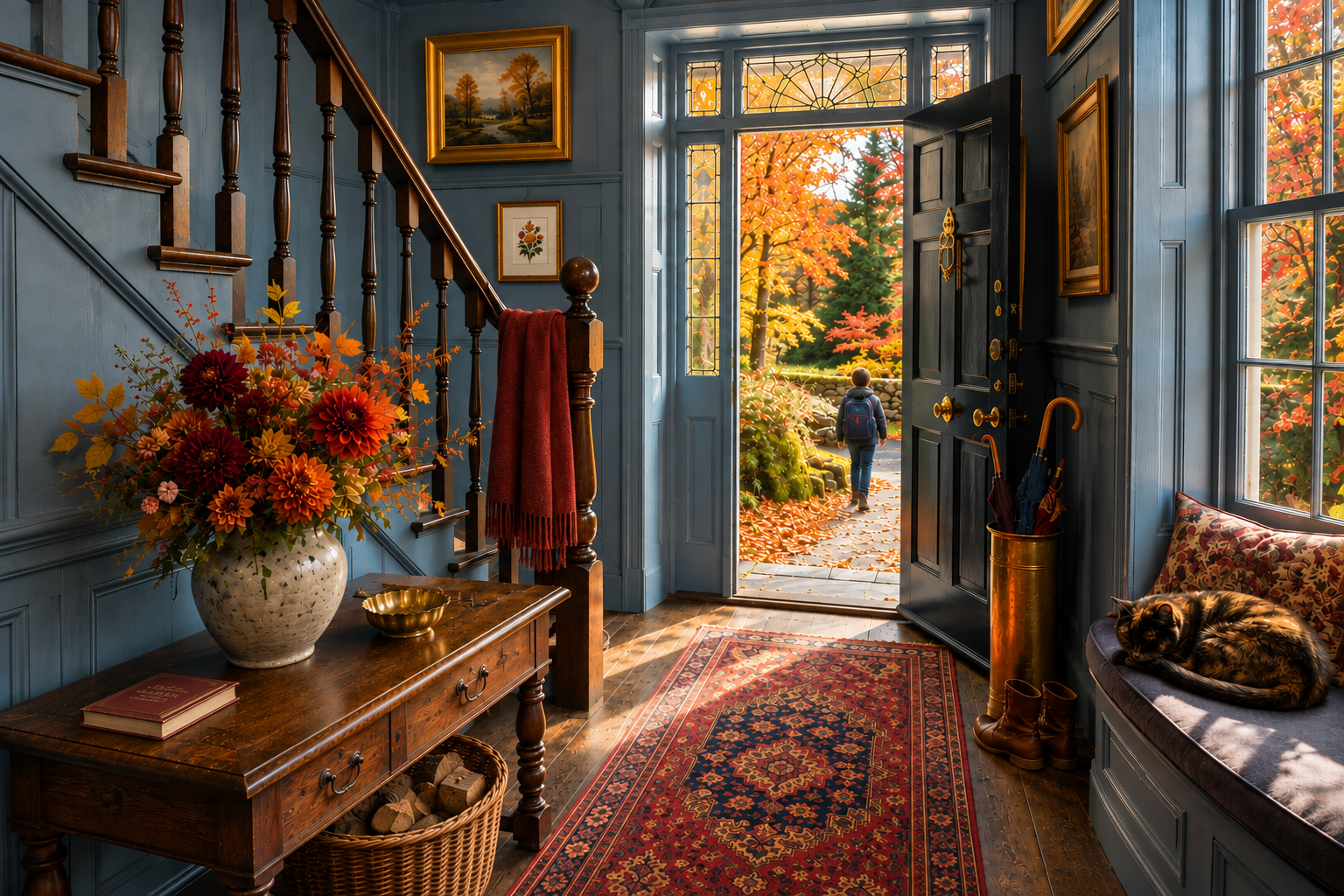
Autumn color becomes far more interesting when you look beyond orange. Walk through a neighborhood in October and you might see burgundy leaves scattered across gray pavement, moss darkened by rain, golden grasses along the roadside, and oak trees turning shades of tobacco and bronze. Even the brightest foliage is surrounded by quieter colors. The air itself seems to soften the palette, especially on mornings when everything is still damp from overnight rain.
Bringing that broader palette indoors gives you more freedom with autumn decorating. Rust, ochre, olive, aubergine, deep red, chestnut, muted gold, and warm brown all belong to the season. So do softer shades of mushroom, oatmeal, faded green, smoky blue, and cream. Many of these colors already appear in the textures and materials you use every day, which makes them feel familiar the moment they enter a room.
Your existing rooms can help determine which colors make sense. A home with blue upholstery might take on deeper navy, cognac, and burnished gold for autumn. Warm wood furniture works beautifully with olive, rust, or dark red. In a pale neutral room, even a small amount of ochre or tobacco brown adds seasonal richness. Often the most successful choices echo something outside your window, like the color of wet bark or the muted green of late garden foliage.
You do not need every autumn color in every room. Choose a few that already work with your home and repeat them in places where seasonal changes feel natural. A deep green runner on the dining table might pick up the color of the garden outside. Burgundy dahlias clipped before the first frost can bring a richer note to a pale entry. Ochre napkins tucked into a kitchen drawer are ready for the next weekend breakfast. These small touches often carry more impact because they feel connected to the season happening outdoors.
Nature’s autumn palette extends far beyond the obvious colors of changing leaves. Look at wet bark, dried grasses, late flowers, stone, seed heads, fields after harvest, and the deep green that remains after brighter summer color has faded. There is an entire autumn palette outside the front door, waiting to be borrowed.
Five Autumn Color Stories
Most autumn palettes online show the same familiar colors: orange, rust, burgundy, gold. They are beautiful, but they do not explain how to use them or why they work. A palette becomes far more useful when it teaches you how to build a room around it, not just what shades belong together.
These five palettes do more than offer color inspiration. They show you how autumn light, materials, and everyday life shape the way color behaves in a room.
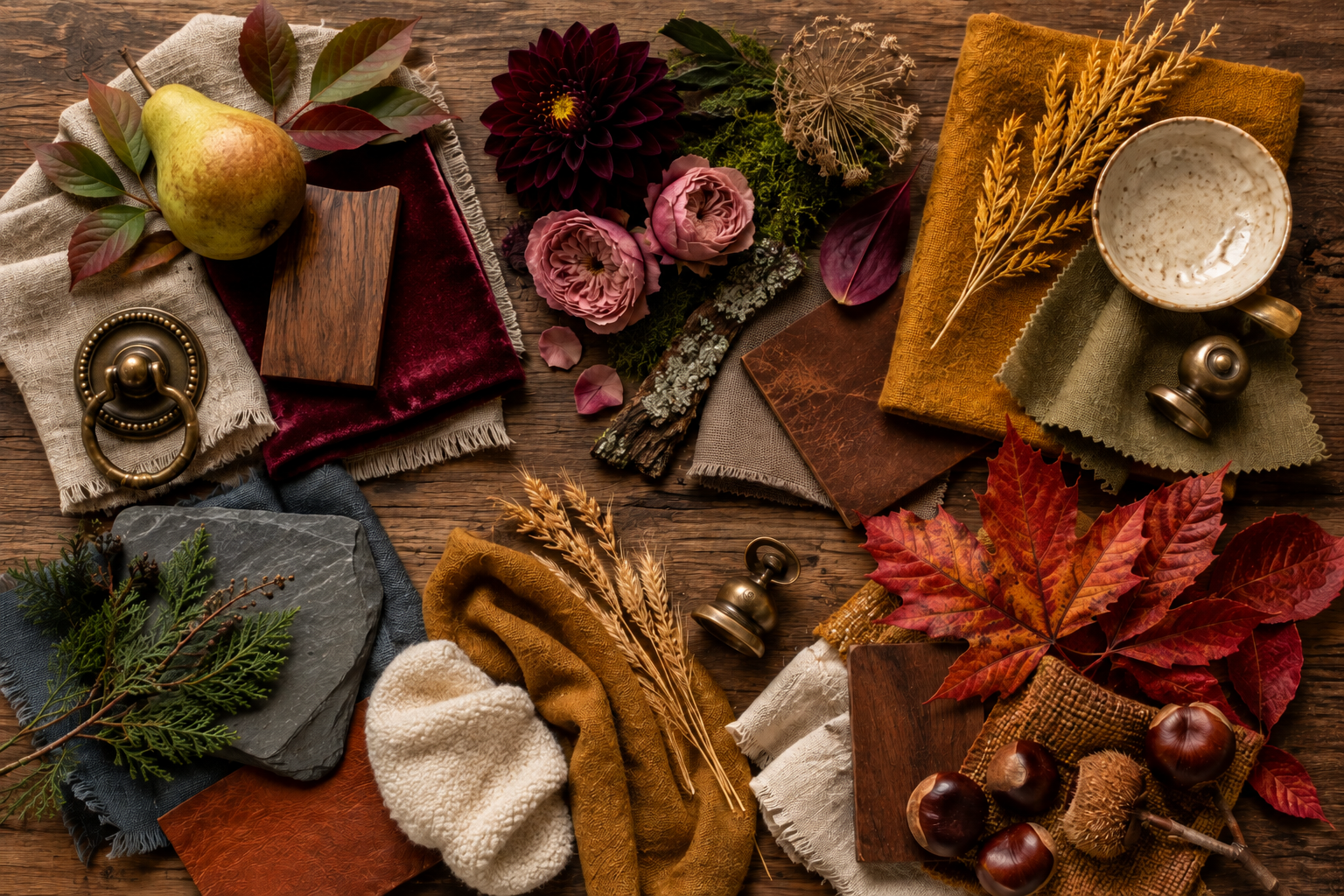
Autumn Orchard
Pear Green · Burgundy · Warm Walnut · Oatmeal · Antique Brass
This palette works because it mirrors the way orchard colors deepen as the season progresses. Pear green stays bright in early autumn light, while burgundy and walnut settle into the room as evenings arrive earlier. Use oatmeal and brass to soften the contrast. They keep the palette grounded and prevent it from feeling heavy.
Where it thrives: Rooms with warm wood, antiques, or traditional architecture. What to avoid: Cool gray walls. They mute the warmth that makes this palette shine.
October Garden
Aubergine · Moss Green · Faded Rose · Mushroom · Deep Brown
This palette is built from the garden after its peak: dahlias, seed heads, damp foliage, and earth. Aubergine adds depth without overwhelming the room, while faded rose keeps the palette from tipping too dark.
Where it thrives: Bedrooms, dining rooms, and spaces with soft natural light. What to avoid: Bright white walls. They flatten the subtlety of the palette.
Harvest Gold
Ochre · Tobacco Brown · Cream · Olive · Aged Bronze
This palette works because it echoes late season fields: grasses, soil, and the last warm afternoons. Ochre and olive pair easily with wood furniture, while cream keeps the palette from feeling weighty.
Where it thrives: Living rooms with warm wood or leather. What to avoid: Overusing ochre. It is strongest as an accent, not a dominant color.
Rainy Autumn
Smoky Blue · Deep Forest Green · Stone Gray · Cognac · Soft Cream
This palette captures the cool side of autumn: wet stone, evergreen branches, and cloudy skies. Cognac adds warmth so the palette does not feel cold.
Where it thrives: Homes already decorated with blue, gray, or cooler neutrals. What to avoid: Too many competing blues. Smoky blue works best when it is the only blue in the room.
Turning Leaves
Deep Russet · Claret Red · Muted Gold · Chestnut · Warm Ivory
This is the richest palette, the one that feels most like October at its peak. Russet and claret bring drama, while chestnut and ivory make the palette livable.
Where it thrives: Dining rooms, entries, and spaces used at night. What to avoid: Pairing with bright primary reds. They disrupt the sophistication of the palette.
Sound: Give Autumn Its Own Soundtrack
Some evenings have a soundtrack without anyone choosing one. Rain begins against the roof while you are finishing a crossword puzzle, and somewhere the sound of a clock ticking drifts through the quiet. A dog softly huffs while settling onto its bed. Later, a record is set spinning and left to play while everyone goes about whatever they were already doing. The house feels different when these sounds gather, especially on nights when the windows are closed and the warmth inside contrasts with the weather outside.
Sound contributes to atmosphere because we continue hearing a room even when our attention is somewhere else. A television playing continuously creates a different background from music, rain through an open window, or a house that has been allowed to become still for a while. Many people remember autumn evenings by their sounds as much as by their colors or scents.
This gives you another way to shape autumn evenings. Put on an album while making Sunday breakfast and let it drift through the house as the morning settles in. Keep a speaker near the dining area if music is part of having people over, so conversation and melody can move easily between rooms. Listen to an audiobook while working on a puzzle or finishing something with your hands, letting the narrator’s voice become part of the background.
On a stormy afternoon, you may decide the rain is enough. The steady rhythm of it can fill a room more completely than anything you choose.
Think about volume as well. Background music should sit comfortably beneath conversation when people are together. A playlist for cooking can have more energy than the music you choose later in the evening. If you enjoy records, choosing one and turning it over halfway through brings a natural pause to the night. It becomes a small ritual that lets the evening unfold at its own pace.
A good autumn soundtrack feels warm, familiar, and easy to live with. Keep a few favorites ready for different parts of the day.

Sunday Morning Carole King · James Taylor · Norah Jones
Rainy Afternoon Vince Guaraldi · Chet Baker · Bill Evans
Dinner With Friends Ella Fitzgerald and Louis Armstrong · Stan Getz · Oscar Peterson
After Dinner Nat King Cole · Van Morrison · Simon and Garfunkel
For an especially autumnal starting point, listen to a favorite recording of “Autumn Leaves.” Nat King Cole gives it a romantic, nostalgic quality, while jazz interpretations let the melody settle easily into the background of an afternoon or evening at home.
There are familiar sounds that return with the season as well. A fire crackles and shifts in the fireplace. Leaves scrape along the sidewalk on windy mornings. Football drifts from an open window down the street, geese pass overhead, and rainwater runs through the gutters after a long dry summer. After months without them, these sounds become part of the experience of autumn at home.
Ritual: Taking Time to Celebrate The Season
The Saturday farmers market changes near the end of September. Tomatoes and berries begin disappearing from familiar stalls while grapes, mushrooms, winter squash, nuts, and late flowers take their place. You arrive home with ingredients you had not planned to buy, then spend part of the afternoon deciding what to do with them. The kitchen already smells like the season before you have even begun cooking, with cool air following you inside and a quiet coziness rising to meet it.
Come back the following Saturday and the trip begins to feel like part of the season. The air is cooler, the colors have shifted, and you start recognizing the same growers and the same ingredients week after week.
Autumn rituals do not need to be elaborate traditions or special occasions. They grow from things you enjoy enough to repeat. You might walk the same wooded trail each October to watch the leaves change, spend one Sunday making preserves, keep Friday night free for a movie at home, or invite a family member or friend over for an afternoon of cooking before Thanksgiving. These rituals often carry their own sensory memories, like the smell of simmering fruit or the sound of leaves underfoot.
Home naturally becomes part of these rituals. The kitchen gets busy before a yearly pie baking day. A card table comes out when the family puzzle begins. The mudroom has to handle everyone returning from a rainy hike. The good glasses are washed because an old friend is coming over for the first bottle of Beaujolais Nouveau. Even the lighting and music begin to follow familiar patterns.
Seasonal decorating can support those traditions in practical ways. A large tray keeps everything together for movie night and goes back into the cupboard afterward. A stack of board games moves somewhere easier to reach during the months when everyone spends more time indoors. A sturdy basket waits in the car for trips to the market or orchard.
After a few years, certain weekends begin to have their own shape. You know when the annual drive to see the leaves will happen, which recipe everyone will request first, and who will stay late enough to help clean the kitchen afterward. These are the parts of autumn worth making room for at home.
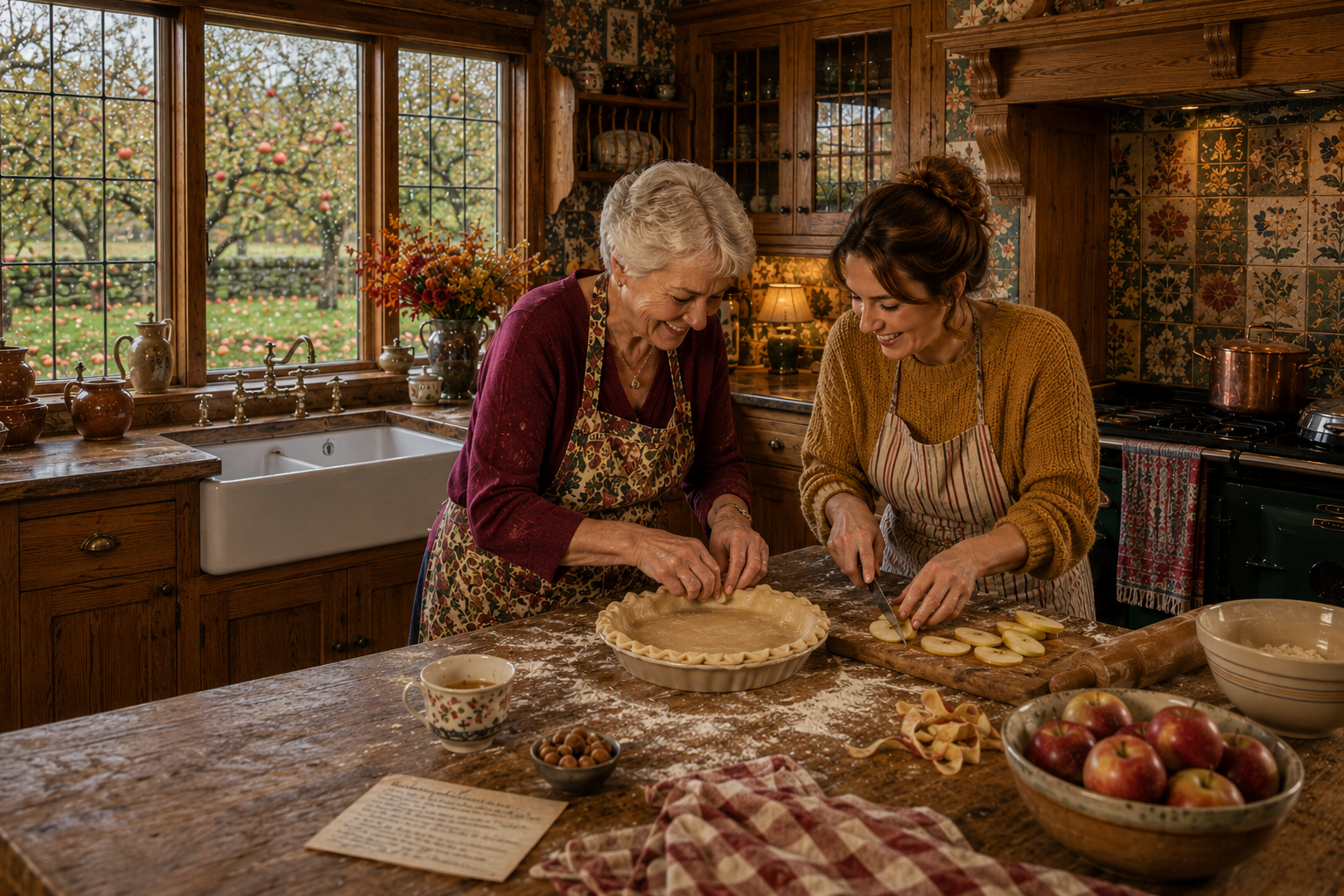
Beautiful Fall Ritual Ideas
New Book
Comforting · Quiet · Intentional
There is something deeply comforting about choosing a book specifically for autumn. A cozy, feel‑good story or a suspenseful mystery becomes part of the season itself, waiting for those rainy Sunday afternoons when the house feels quieter and the light softens earlier. Set it beside the sofa or comfy chair with your favorite blanket folded nearby. The simple act of opening it, hearing the faint crack of the spine, and settling deeper into the warmth around you becomes a small ritual that makes the afternoon feel intentionally yours.
Seasonal Altar
Reflective · Tender · Symbolic
A small altar on a shelf or windowsill can become a gentle way of celebrating the season. Pressed leaves, a found feather, colorful river stone, a single candle, or a small vase of late flowers each carry their own quiet meaning. Together, they create a place where gratitude gathers. You notice it in passing, the way the light touches the leaves or how the candle shifts the mood of the room. It does not need to be elaborate. It simply needs to feel like a moment you made for yourself, a reminder of the season settling in.
Autumn Release
Grounding · Freeing · Restorative
Autumn has always been a season of letting go, and choosing one thing to release can feel surprisingly grounding. It might be a book you are finished with, a scarf you no longer wear, or something that has been waiting too long for a new home. Gift it to a friend or donate it to someone who will use it. The act itself becomes a ritual, quiet and intentional, and symbolic of the way the season encourages us to clear space for what feels more meaningful.
Leaf Mandala
Mindful · Earthy · Ephemeral
On a walk in the park or in your own backyard, gather fallen leaves, stones, petals, or anything the season offers. Arrange them into a circle on the ground, letting the colors and textures guide you. Breathe deeply as you create, noticing the cool air, the scent of damp earth, and the way the leaves shift under your hands. When you are finished, leave it exactly where it is. It becomes a small offering to the season, a moment of beauty that does not need to be kept to be meaningful. It blesses all who get to enjoy it’s beauty.
Seasonal Baked Goods
Fragrant · Nostalgic · Cozy
Cooler days invite a return to the kitchen, especially when the season’s spices begin appearing on the counter again. Cinnamon, nutmeg, ginger, and apple have a way of warming a room long before anything is finished baking. Choose a recipe that feels comforting, perhaps one you have not made since last year, and let the process unfold slowly. As the ingredients come together and the scent begins drifting through the house, the afternoon takes on a different rhythm. Baking becomes a small autumn ritual, a moment of creativity that fills the home with a fragrance that feels both familiar and deeply seasonal.
Autumn Wreath or Garland
Tactile · Natural · Welcoming
Gathering natural materials for a wreath or garland can be one of the most enjoyable ways to welcome autumn indoors. Holly, berries, dried fruit, leaves, and spices each bring their own texture and color, and arranging them by hand creates a quiet, tactile pause in the day. Twist the stems, tie the branches, and choose pieces that echo what you see outside your window. Hang your creation on the door or place it across a mantel where it can catch the light. Each time you walk past it, you are reminded that the season has arrived and that you took a moment to bring a bit of its beauty into your home.
Flavor: Let the Season Change What You Serve
Cooler weather brings foods back to the table that have not sounded appealing for months. Mushrooms, squash, pears, root vegetables, and late‑season greens begin filling market baskets, and the oven stays on long enough for roasting and baking again. The kitchen feels different when these ingredients return, especially on afternoons when the windows are closed and the warmth from the oven begins to gather.
Let what is available inspire the menu, because autumn has a way of filling your basket for you. Butternut squash roasted with sage can accompany a weeknight chicken. Add pear and toasted walnuts to a salad, or make a pot of chili for an afternoon of football. When a few pieces of fruit on the counter are ripening faster than anyone can eat them, turn them into a galette for Sunday dessert. The scent of it baking often becomes part of the afternoon.
Autumn entertaining suits food that can be passed around and shared. Bring a roast to the table family‑style, set out a pot of soup with plenty of bread, or put together a board for everyone to graze from before dinner. Dishes move around the table, glasses are refilled, and a friend asks for the recipe before the evening is over.
Certain recipes return because of the people attached to them. A handwritten lovingly worn recipe card tucked inside an old cookbook comes out when its season arrives. You remember whose handwriting is on it, and which family member always insists theirs is the better version. These small rituals often carry as much meaning as the food itself.
A charcuterie board works especially well for an autumn gathering because most of it can be assembled before anyone arrives. It can be scaled for two people or a roomful and built around whatever looks best at the market or cheese counter that week.
Autumn is a wonderful season for cheeses with deeper, earthier flavors and richer textures. Aged cheddar, nutty Alpine cheeses, creamy washed‑rind varieties, smoky Gouda, and a good blue pair beautifully with pears, figs, toasted nuts, preserves, and hearty bread.
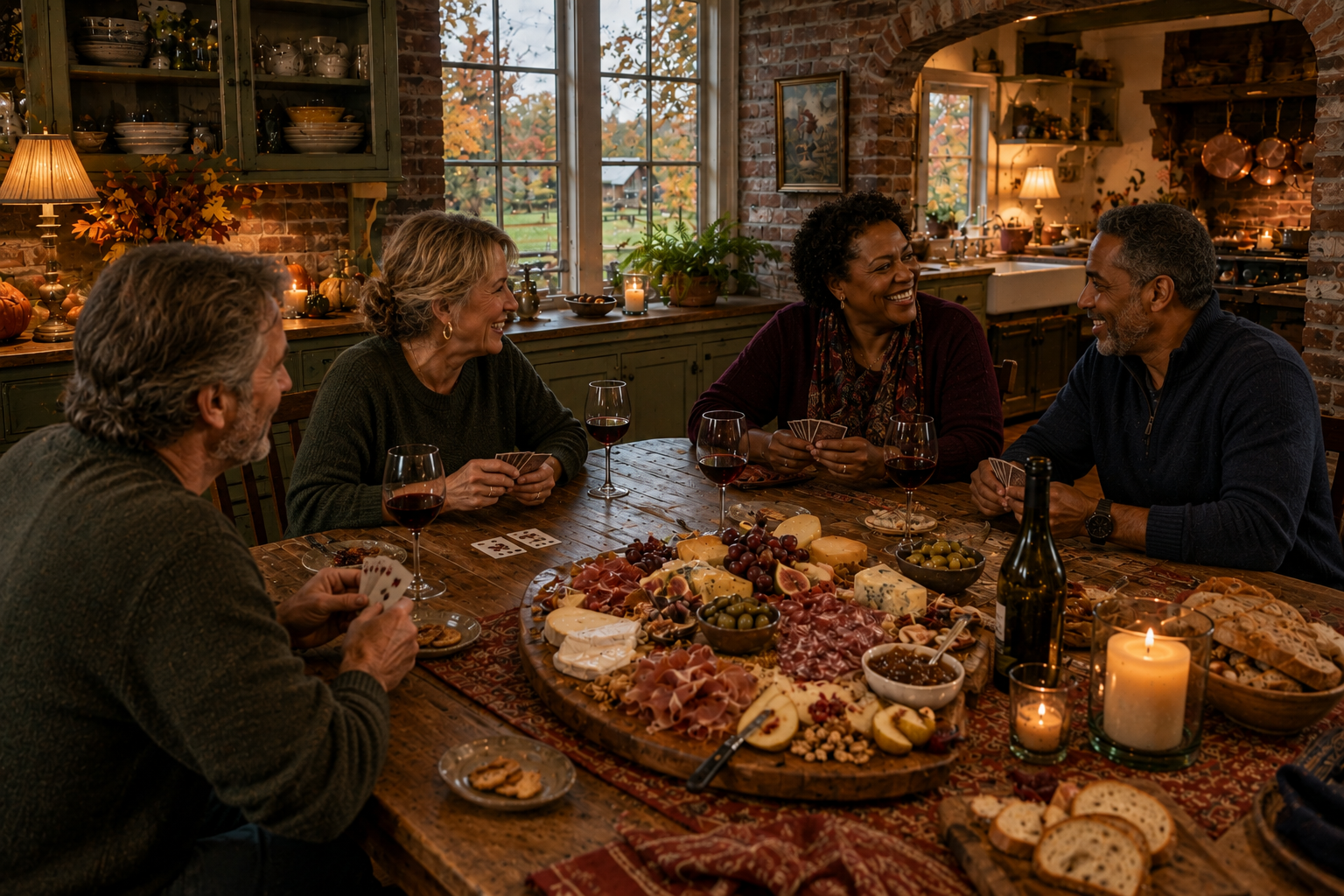
The Autumn Board Formula
3–4 Cheeses
Choose cheeses that respond well to cooler temperatures.
· Creamy: Brie, Camembert, washed‑rind cheeses
· Aged & nutty: clothbound cheddar, aged Gouda, Gruyère
· Bold: blue cheeses like Bayley Hazen
· Seasonal: smoked Gouda, spruce‑wrapped cheeses, maple‑washed rinds
Why this works: Cooler air brings out deeper flavors, so autumn cheeses can be richer without overwhelming the palate.
2 Cured Meats
Prosciutto and salami offer contrast in texture and saltiness. Speck adds a gentle smokiness that suits autumn evenings.
2 Seasonal Fruits
Apples, pears, figs, grapes, pomegranate.
Why this works: Autumn fruit has more natural sweetness, which balances aged and smoky cheeses.
1 Bright, Savory Bite
Cornichons, olives, pickled vegetables.
Why this works: Acidity cuts through richness — essential for boards served in warm rooms with low lighting.
1–2 Nuts
Walnuts, pecans, hazelnuts, Marcona almonds.
Why this works: Texture. Autumn boards need crunch to balance soft cheeses and fruit.
Something Sweet
Fig preserves, apple butter, quince paste, honey, dark chocolate.
Why this works: Sweetness anchors the board and pairs beautifully with blue cheese and aged Gouda.
Crackers or Bread
A crisp cracker + sliced baguette or crostini.
Dry cider pairs easily with rich cheese. Full‑bodied red wine suits aged cheddar and Gouda, while Riesling works well with creamy and washed‑rind cheeses. For beer drinkers, a stout complements aged, smoky, and blue cheeses.
Start with the cheeses and leave room around each for its best companions. Add the meats next, folding the slices loosely. Small bowls keep olives, pickles, honey, and preserves contained. Tuck fruit, nuts, crackers, and bread into the remaining spaces.
Let the food provide the seasonal color. Figs cut open just before serving, ruby pomegranate seeds, clusters of grapes, golden pears, toasted nuts, and preserves already give the board the abundance we associate with harvest season.
As everyone begins eating, the combinations become part of the fun. Cheddar is paired with apple and pickle, blue cheese with pear and honey, and each combination is shared around the table. Before long, the board has become part appetizer, part conversation.
Welcome: Begin Before Guests Reach the Table
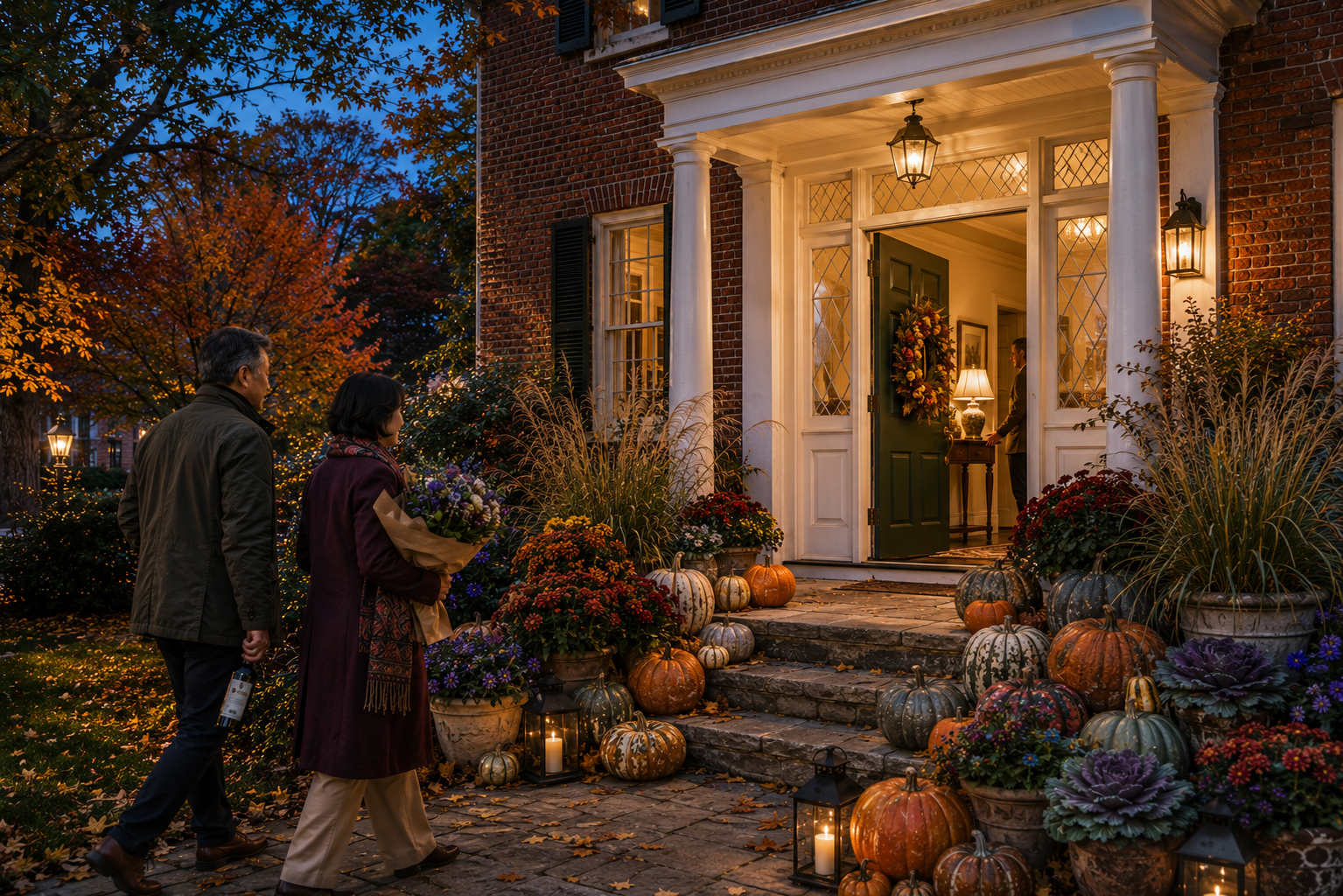
Friends coming for dinner see the porch before they see anything you have done inside. In autumn, that short walk toward the door becomes part of the experience, and it sets the tone for everything that happens afterward. A good entrance does not simply look seasonal. It prepares people to feel at home before they have even stepped inside.
If your porch has steps, pumpkins can follow their line toward the door. Mix familiar orange pumpkins with heirloom varieties in cream, dusky green, deep red, or mottled shades. Chrysanthemums or ornamental grasses can fill pots left from summer, and the front door is a natural place for a wreath made from dried leaves, berries, grasses, or preserved foliage. On cool evenings, the scent of those materials often reaches guests before they step onto the porch, creating a quiet moment of recognition.
Pumpkins can be abundant if that is part of what you love about fall. Vary their size, shape, and color, and add to the arrangement when an interesting one comes home from a farm stand or weekend outing. On a smaller porch, an oversized heirloom pumpkin beside a weathered terracotta pot may be all you want. A single, well‑chosen piece can say more than a crowded display.
By October, friends coming for dinner may be arriving in the dark. Lanterns near the door or along wide steps bring light closer to the path, and battery‑operated candles make them easy to use throughout the season. Check the view from the street too. A porch light that seemed perfectly adequate in July may leave the entrance surprisingly dark once sunset comes before dinner. A warm pool of light near the door can make the walk toward the house feel more inviting and more intentional.
Inside, continue the story you began outdoors. A deeper‑toned runner can lead into the house, and a large ceramic vessel on the console gives you somewhere to arrange seasonal flowers, dried hydrangeas, or foliage clipped from the yard. Turn on the table lamp before guests arrive so the entry is already illuminated when the door opens. That first glow often becomes the moment people remember most because it signals that they have stepped fully into the evening.
Leave some open space too. Guests arrive carrying wine, flowers, overnight bags, or something they have baked. A coat is slipped off just inside as the next person comes through the door. A clear section of the console gives people somewhere to put things down, and an open path keeps everyone moving comfortably through the entry. A welcoming entrance is not only beautiful. It is easy to use.
When you have finished decorating, walk outside and come back through your own front door. Notice what you see from the sidewalk, what catches your eye as you approach, and what greets you just inside. Those few steps can carry the autumn story from the outside of your home all the way in.
Bringing the Seven Layers Together
By this point, several of the seven elements may already be part of your home. The next step is deciding where a small change would make everyday autumn moments more enjoyable.
Imagine Sunday dinner has ended and everyone is still sitting around the table. The food was wonderful, the table looked beautiful, and no one is ready to get up. As the evening grows darker, the chandelier suddenly feels much brighter than it did during dinner. The moment has changed, but the lighting has not. A dimmer or a nearby lamp would make more sense for the conversation that happens after the plates are cleared, when the room naturally asks for softer light.
In the living room, the lighting may already be lovely and the furniture comfortable, yet everyone tends to drift into separate rooms after dinner. This is not a flaw in the room. It is simply missing a cue that invites people to stay. Bringing the cards out of a cupboard or leaving a puzzle underway gives the room a reason to be used together again. Even one small invitation to linger can change how the evening unfolds.
This is where the Autumn Atmosphere Framework becomes especially useful. Consider the moments you already enjoy at home and what would make them better. A reading chair may need better light. The dining room may be ready for deeper color as the landscape changes outside. Music might make Saturday morning more enjoyable, or a fragrance you return to every October could become part of winding down at the end of the day. The goal is not to decorate more. It is to support the experiences you want to have.
Some rooms may already feel exactly right. You can leave them alone.
When something does feel unfinished, use the seven elements to help identify what is missing before buying another decoration. Look at the way the room is used, the time of day you use it, and the experiences you want to have there. Then choose the layer that supports that particular moment. This is how a home becomes more enjoyable without becoming more complicated.
A home does not need all seven elements expressed equally in every room. The framework is there to help you make thoughtful choices throughout the season and recognize when you have already done enough.
Decorating Through the Season: September to November
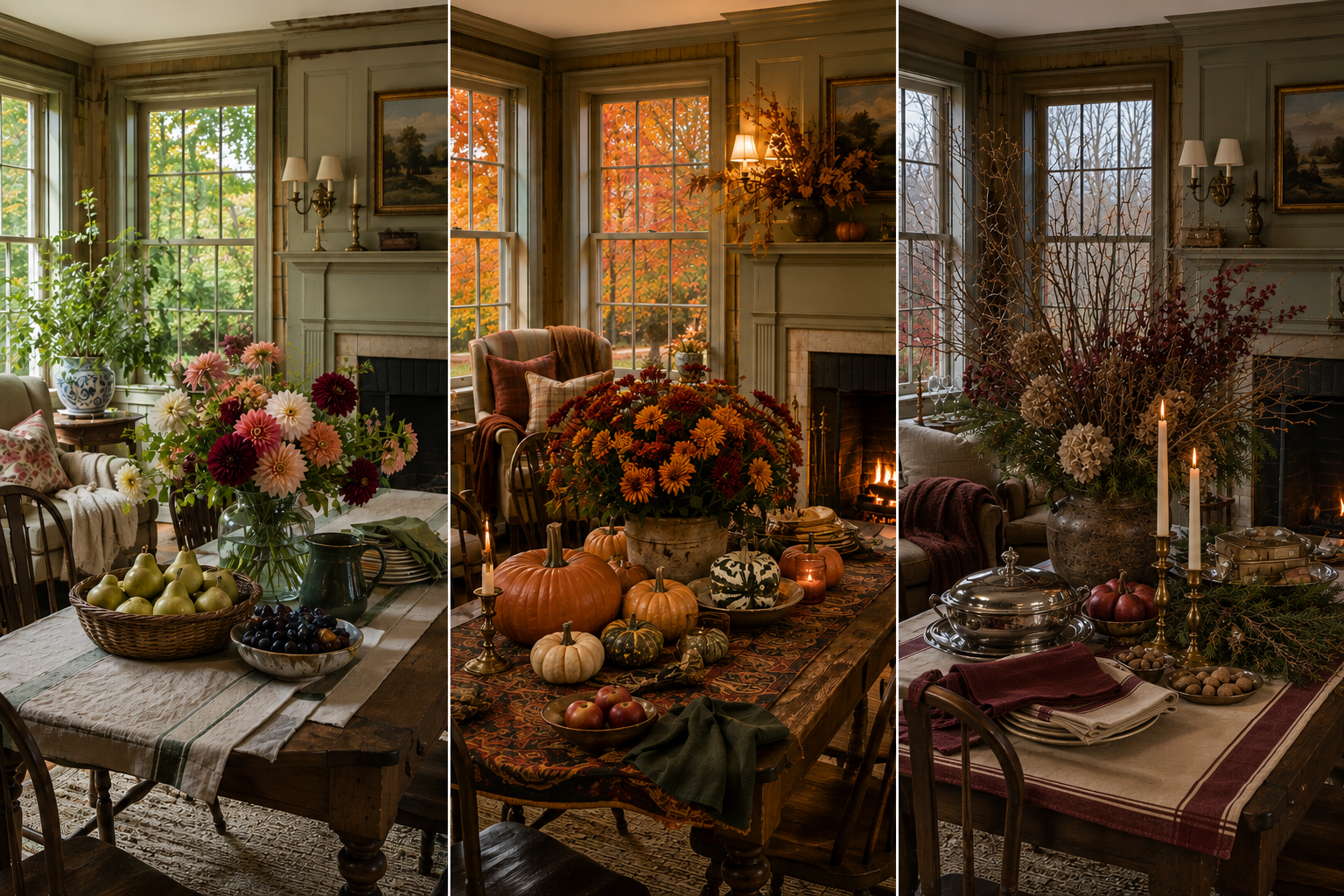
Early September can still feel like summer by afternoon. The garden is full, dinner may happen outside, and the trees haven’t begun their show yet. Autumn decorating can begin with what is changing first: pears and grapes at the market, late dahlias from the garden, dried grasses, deeper linens at the table, or a richer color introduced to a room that still carries much of its summer character.
October gives you more to work with. Maples turn red and gold, mornings sharpen, and evenings arrive earlier. Pumpkins collected from a farm stand can gather on the porch, while hydrangeas dry into muted shades that are beautiful indoors. This is a good time for the richer colors, substantial fabrics, lanterns, and seasonal pieces you’ve been waiting to bring out. The first genuinely cold evening may also send you looking for the fireplace matches.
November has a quieter palette. Much of the brilliant foliage is on the ground, branches are becoming bare, and the garden has changed from flowers to seed heads, berries, herbs, and evergreens. Indoors, the dining table begins getting more attention as Thanksgiving approaches. Brass candlesticks, serving pieces, table linens, bowls of walnuts, and branches gathered from outdoors suit this later part of autumn.
Waiting for these moments gives each part of the season its own character. You don’t need to bring out everything you associate with fall at the beginning of September. Let the chrysanthemums arrive when you find the ones you want for the porch. Bring out the heavier bedding after the first cold night. Gather branches when their leaves reach a color too beautiful to leave outside.
This keeps autumn decorating interesting for more than a few weeks. There is something new to enjoy in September, another change waiting in October, and a final shift in November before the house begins preparing for the holidays.
When Autumn Decorating Starts to Feel Like Too Much
You finish the entry table, step back, and something still bothers you. Another candle goes on one end. A small pumpkin fills an empty spot. You bring in a basket from the other room, rearrange everything, and step back again.
The table is fuller, yet the original problem is still there.
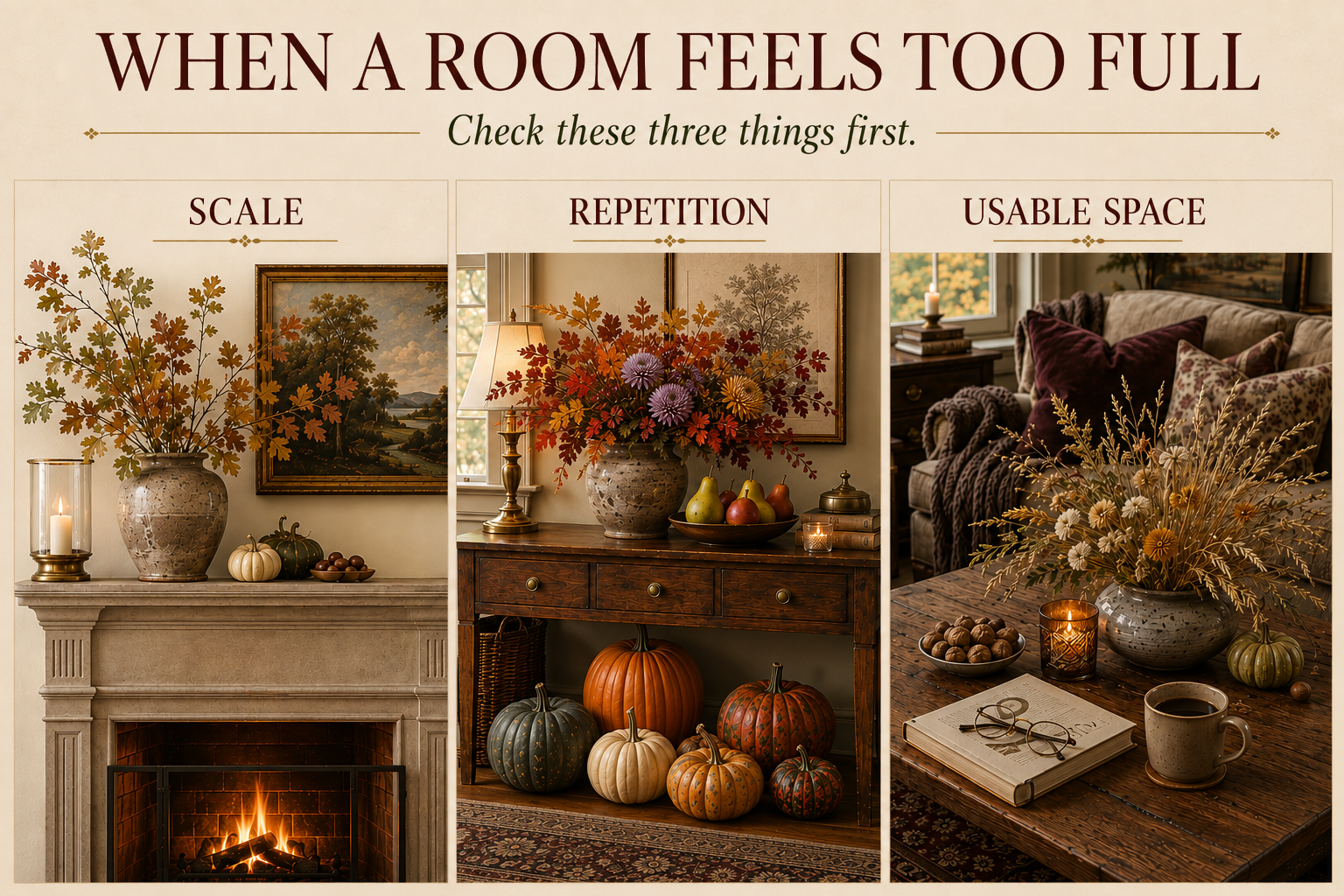
Before adding anything else, look at what is already competing for attention. Several small decorations spread across a mantel can make it difficult to appreciate any one of them. On a long dining table, a generous arrangement of late‑season flowers may be all the scale the room needs. Favorite pieces often look their best when they have enough space around them to be seen.
Repetition can create the same problem. If pumpkins have made their way onto the porch, entry console, mantel, kitchen island, dining table, and bookshelves, choose the places where you enjoy them most. Other rooms can draw from a different part of autumn: the burgundy of late dahlias, the texture of woven materials, an arrangement of branches, or the deeper light of an October evening.
Then look at the surfaces you use every day. A coffee table still needs room for a book, a cup, or whatever ends up there during an evening on the sofa. Kitchen counters need space for cooking. When friends come for dinner, serving bowls need somewhere to land.
Editing a room sometimes begins by clearing the places where life keeps bumping into the decorating.
Scale, repetition, and usable space are worth checking whenever a room feels crowded. After that, return to the Autumn Atmosphere Framework. The mantel may already have enough decoration while the room itself needs better evening light. The dining room may have plenty of seasonal color, while music would do more for the next gathering than another centerpiece.
When you find yourself repeatedly adding things to a room and still feeling dissatisfied, stop adding and look for the actual problem. The answer may be removing something, moving something, or changing one element that affects the room as a whole.
A room often feels complete not when it holds more, but when it holds exactly what the moment needs.
A Room‑by‑Room Autumn Edit
Once you’ve worked through the seven elements, walk through the house one room at a time. Each space has its own rhythm, and some will need far less seasonal attention than others. The goal isn’t to decorate every corner. It’s to understand how each room is actually used once autumn settles in.
Entry
Notice what you see when you come home. Clear away anything left from summer that no longer belongs, then decide whether the entry needs one seasonal arrangement, a deeper color, or better light after sunset. If the porch already makes a strong autumn statement, the entry can stay simple. A single gesture often feels more intentional than a full display.
Living Room
Spend an evening here before changing anything. Sit where you actually sit and pay attention to what would make the room more comfortable or enjoyable. You might bring back a substantial rug, change a few cushion covers, move a lamp closer to a chair, or make the games everyone reaches for easier to find.
Mantels and coffee tables are tempting places to decorate because they’re so visible. They don’t both need elaborate seasonal displays. If the mantel holds an arrangement you love, the coffee table may only need enough clear space for whatever ends up there during the evening. A room feels more welcoming when it leaves room for life to happen.
Kitchen
The kitchen acquires autumn character through use. Produce comes home, cookbooks stay open on the counter, and roasting pans and baking dishes begin seeing more action. The season arrives through scent and activity long before you add anything decorative.
Keep seasonal touches away from your main work areas. Flowers at the end of the counter, a small painting near the breakfast table, or a beautiful wooden board left out because you use it regularly can bring in the season while leaving plenty of room to cook. The kitchen works best when beauty and practicality share the space.
Dining Room
Think about how frequently you use the table. If dinner happens there every night, choose an arrangement that can stay put while everyone eats. A room reserved for weekends and gatherings gives you more freedom with scale.
Table linens, flowers, glassware, ceramics, and serving pieces make this an easy place to explore one of your autumn color palettes. You can change the table several times during the season while the rest of the room stays much the same. The dining room often carries the season through repetition rather than abundance.
Bedroom
The bedroom responds beautifully to changes you can feel. Add the next layer of bedding when the nights become cold enough to need it, check the light beside the bed, and consider what your feet land on first thing in the morning.
Keep fragrance subtle where you sleep. Clean bedding, fresh air, or a familiar scent you already enjoy may be plenty. Autumn comfort in a bedroom comes from touch and temperature more than decoration.
Bathroom
A bathroom needs very little. Deeper hand towels, beautiful soap, or a small vase of late garden flowers can introduce the season without taking over the counter.
If baths return to your routine when the weather cools, keep the things you use within reach. Bath salts, a good brush, and a robe hanging nearby make an ordinary evening bath easier to enjoy. Autumn in a bathroom is more about ease than display.
Outdoor Spaces
Don’t pack away every chair after the first cold night. A covered porch or sheltered patio may still have weeks of use left, especially on sunny afternoons. Keep a comfortable place to sit and enough light for the occasional mild evening. Outdoor rooms often stay usable longer than we expect.
As you finish your walk through the house, give the most attention to the rooms where autumn life actually happens. Other spaces may need one small change, or none at all. A thoughtful edit is often more effective than a full seasonal overhaul.
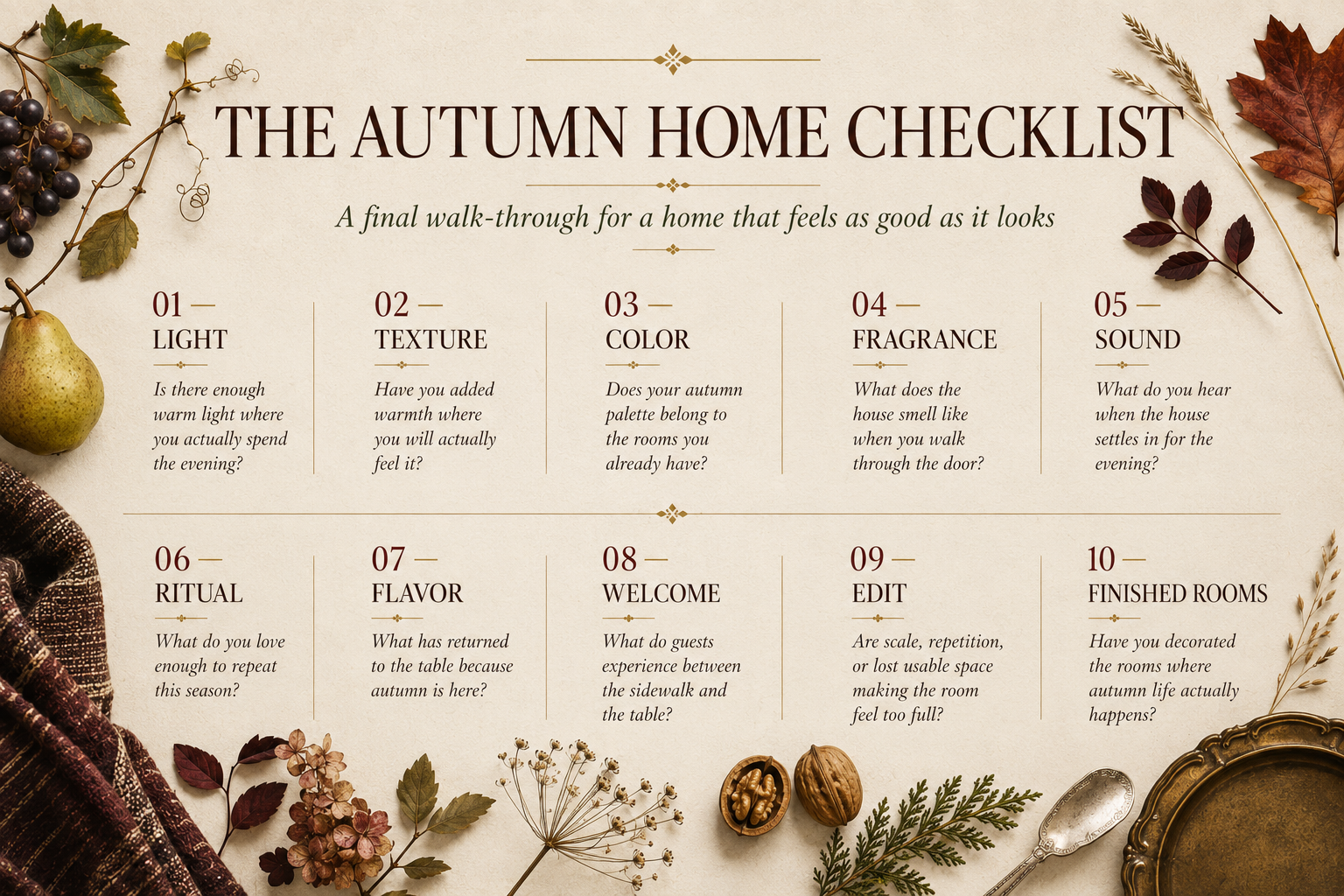
Closing Reflection
By late autumn, the house carries signs of the months you’ve spent there. The linen brought out in September has already been through several dinners. The serving pieces are back in regular use, and the book beside your chair isn’t the one that was there at the beginning of the season.
Some of what you brought out will be packed away when autumn ends. A few things may stay because you remembered how much you enjoy living with them.
What you’re more likely to remember are particular days. The stormy Saturday when plans changed and everyone stayed home. The dinner that lasted much later than expected. A November morning when you came downstairs and paused because the house looked especially beautiful in the early light.
These are ordinary moments, which is precisely what makes decorating for the season worthwhile. We live with our homes on rainy weekends, during hurried breakfasts and evenings when nobody has anywhere else to be.
Autumn gives us a reason to pay a little more attention to those days. When the season ends, that is what remains: the memory of a home you genuinely enjoyed being in.
Continue Exploring
If you enjoyed creating an autumn home through light, texture, fragrance, color, sound, ritual, flavor, and welcome, there are many ways to explore those ideas more deeply throughout the season.
The Harvest Table Gathering: How to Create an Autumn Gathering People Remember
Create a warm, welcoming autumn table with timeless ideas for entertaining, centerpieces, menus, and meaningful hospitality.
The Complete Guide to Luxury Home Fragrance
A guide to scent and atmosphere for every space
Create the Atmosphere
Editor’s Note: I choose pieces for these collections because they add something useful or beautiful to the way a home is lived in. You don’t need everything here. Start with what your home is missing, and choose the pieces you’ll be glad to bring out again next autumn.
For Warmer Evenings
Look for lighting that makes the rooms you use after sunset more comfortable: a small table lamp for a dark corner, a shaded lamp for the kitchen or entry, dimmable bulbs, or lanterns for the porch. Antique brass, aged bronze, ceramic, and glass work particularly well with autumn interiors and continue to look beautiful beyond the season.
Bedroom Lamps (little extra magic)
For Texture You’ll Use
A wool throw, substantial linen tablecloth, velvet or woven pillow covers, a heavier coverlet, or a well-made basket can add texture without introducing another seasonal motif. Choose materials you want to touch and pieces sturdy enough to return year after year.
For Autumn Fragrance
Choose one or two scents you genuinely want to live with for several weeks. Fig, black tea, cedar, sandalwood, bergamot, pear, cardamom, vetiver, and subtle smoke offer plenty of alternatives to traditional pumpkin-spice fragrance. Candles, reed diffusers, and simmer-pot ingredients each suit different rooms and occasions.
Ultrasonic Aromatherapy Diffuser
For the Table
Autumn is a wonderful time to bring serving pieces back into regular use. A substantial wooden board, beautiful cheese knives, linen napkins, ceramic serving bowls, glassware, and a platter large enough for family-style meals all earn their place when they’re used throughout the season.
For Evenings at Home
Consider the things that make you want to stay awhile: a beautiful edition of a book you’ve been meaning to read, a puzzle worth leaving out, playing cards, a record you love, or a tray that keeps everything together for an evening in.
For the Entrance
Lanterns, a substantial doormat, weather-resistant planters, and a beautiful vessel for the entry are useful well beyond a single autumn. Let pumpkins, flowers, grasses, foliage, and other natural materials provide the elements that change from year to year.
Faux Pumpkins
Choose slowly. The pieces worth bringing home are the ones that become part of how you live during the season and make you happy to see them again when autumn returns.
Disclosure: This article may contain affiliate links. If you make a purchase through these links, I may earn a commission at no additional cost to you.
