

A Collected Autumn Home: Thrifted Finds & Ten Vintage Color Stories You Can Make Your Own
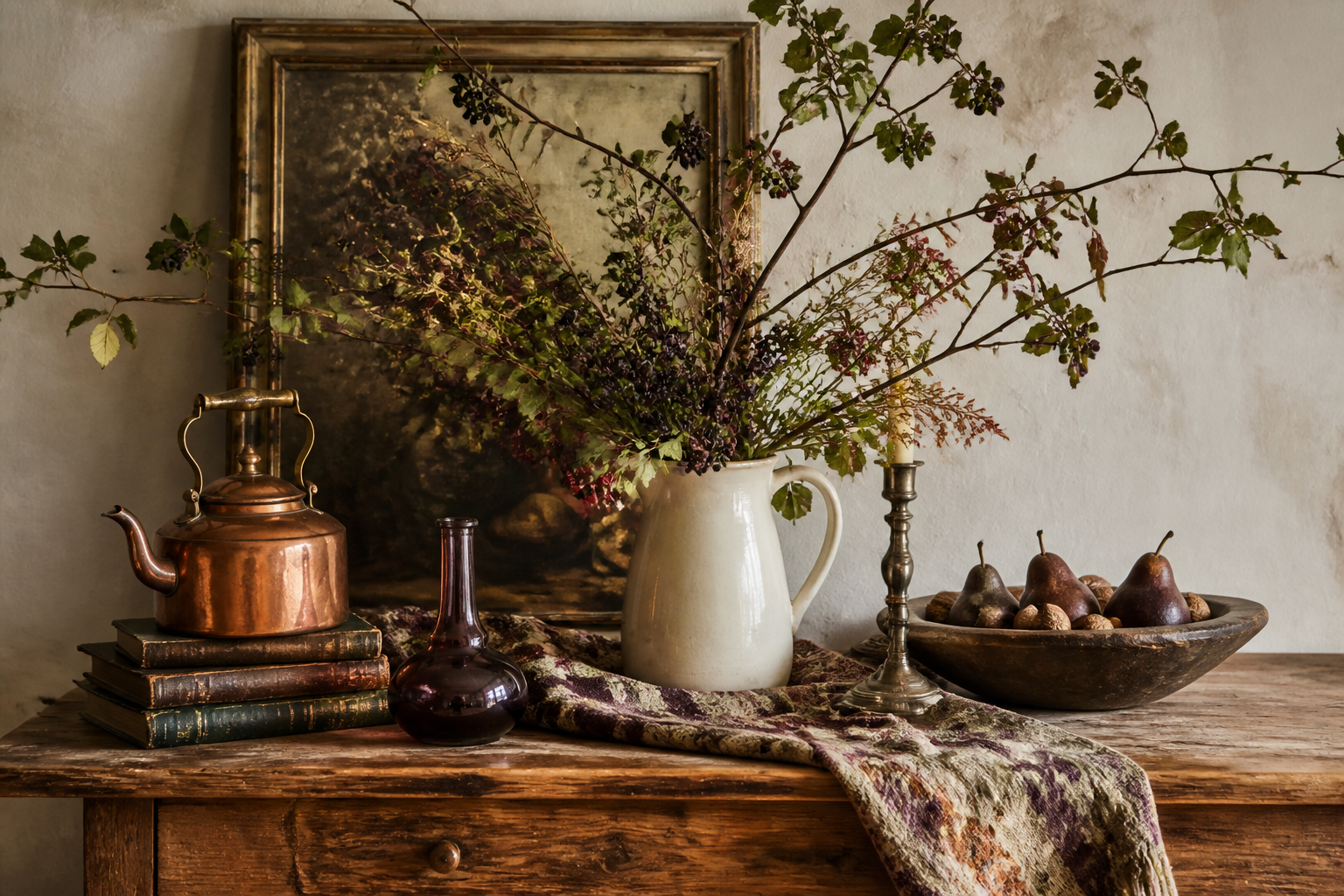
The first cool morning of fall always makes me look at the house differently. While pulling the quilt higher on the bed, I notice that the brass candlestick on the dresser looks much better in this light than it did in July. Later, downstairs, the old wooden bowl on the kitchen table seems to have taken on a deeper color too. I haven't redecorated. I am simply noticing the room again.
What I enjoy most is how many autumn moods these pieces suggest. A driftwood frame beside tarnished silver feels natural in a coastal room, and indigo pottery deepens the color while still belonging there. In another room, charcoal wool and deep plum bring to mind an old tailor’s worktable. They are less predictable than the usual fall colors and much more interesting to work with.
Before shopping, I like to pull out the pieces I already own and try them in a new place. Usually, I only need one or two unique finds to make the room feel different.
How to Make Thrifted Pieces Look Intentional
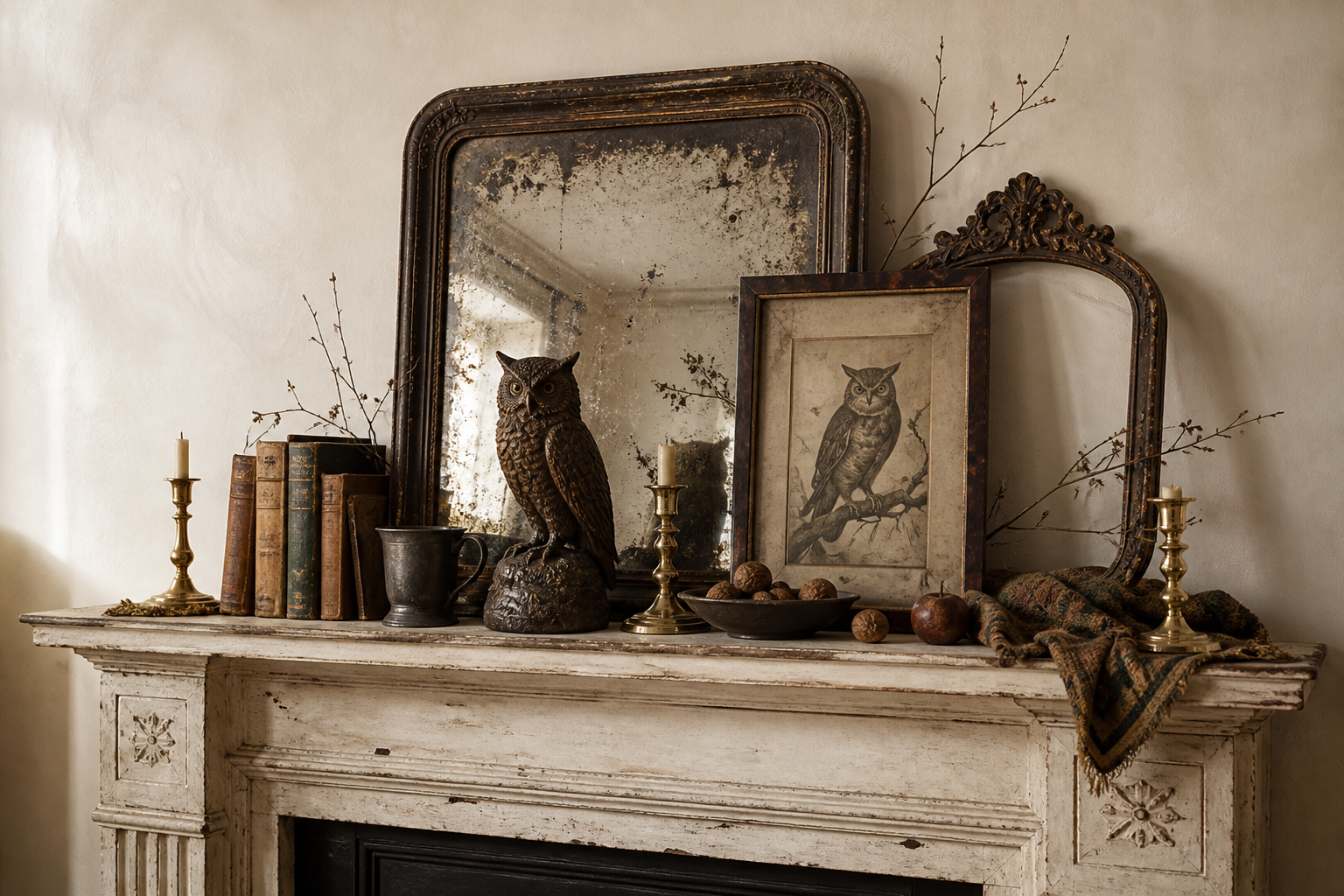
When I refer to an anchor, I mean the piece your eye lands on first. Picture an entry table with a round mirror above it, a bowl for keys, and a small lamp. The mirror is the anchor because it is larger than everything around it. On a kitchen shelf, the anchor might be a tall white pitcher with smaller bowls and cups arranged nearby. Without one piece taking the lead, everything competes for attention.
Once the anchor is in place, use contrast to keep the smaller objects from blending together. Put something reflective beside something matte, or a dark object against a pale one. Two pieces with the same color and finish may need to overlap slightly or be separated so you can see the shape of each.
The pieces do not have to match. Repeating one small detail is usually enough to connect them. You might place a brass candlestick at each end of a mantel or repeat the color of a book spine in a folded textile nearby. If the arrangement starts to feel busy, I look for the extra pattern first. That is often the piece I remove.
Ten Vintage Fall Color Stories
Each palette begins with one clear anchor, then uses contrast and a repeated color or material to connect the smaller finds. The arrangements are meant to suggest real rooms and real habits, not displays that have to remain untouched.
1. The Copper Kettle Hearth Corner
Burnished Copper | Moss Green | Soot | Walnut | Aged Brass
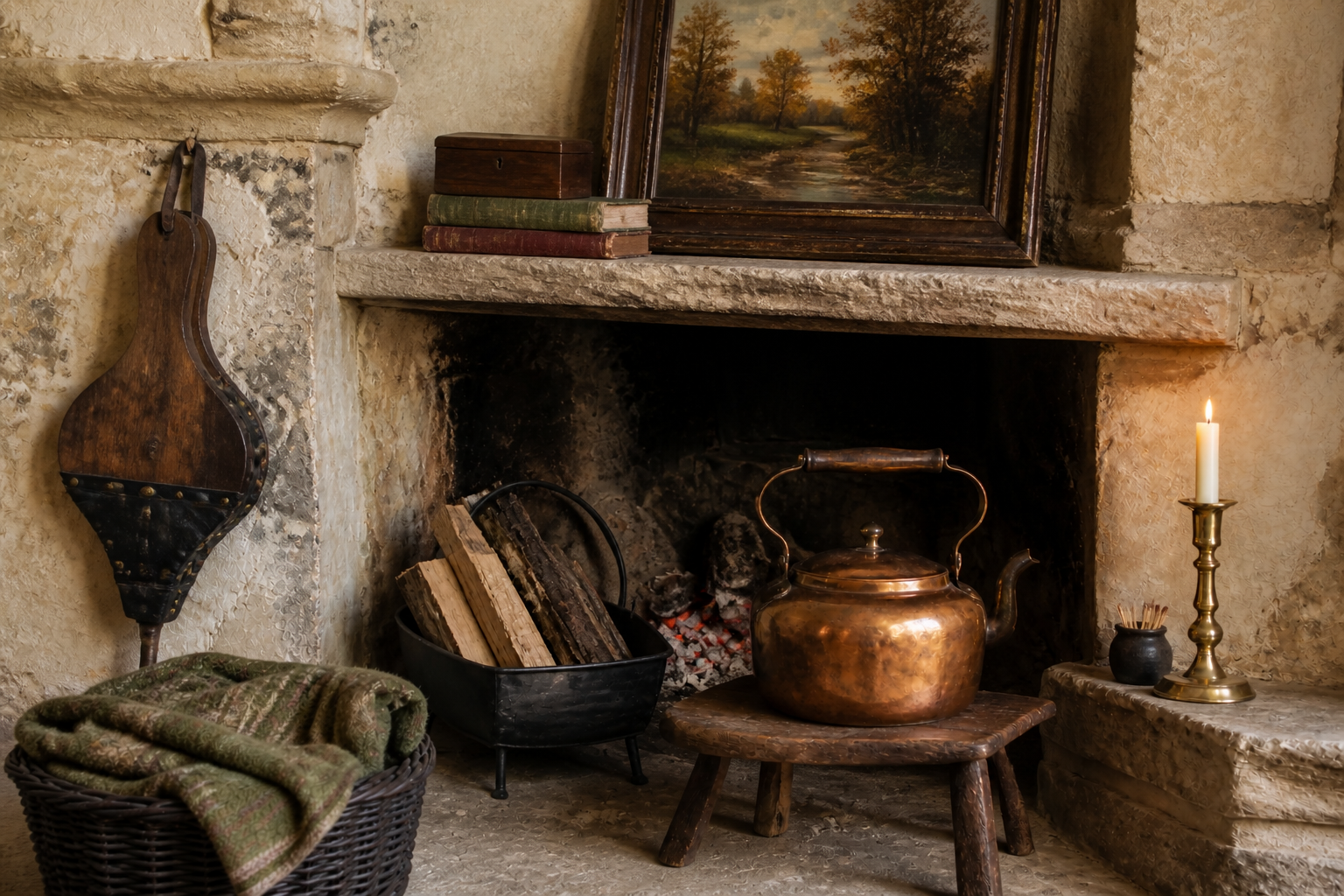
Here, the copper kettle gets to be the brightest object. Moss green and soot belong in the wool blankets and kindling basket, while the stool brings in worn walnut. I would keep the brass to one candlestick. A second reflective metal would compete with the kettle rather than help it.
Set the kettle on the hearth or a low stool, then place the folded military blankets nearby so their edges form one broad block of color. A dark handwoven basket of kindling adds weight at floor level. Put the candlestick on the opposite side, high enough to catch the same lamplight as the kettle. The corner should look ready for tea and the first fire, not staged for a catalog. A stray piece of bark is allowed.
2. The Autumn Field Guide Table
Loden Green | Parchment | Terracotta | Pewter | Faded Tartan
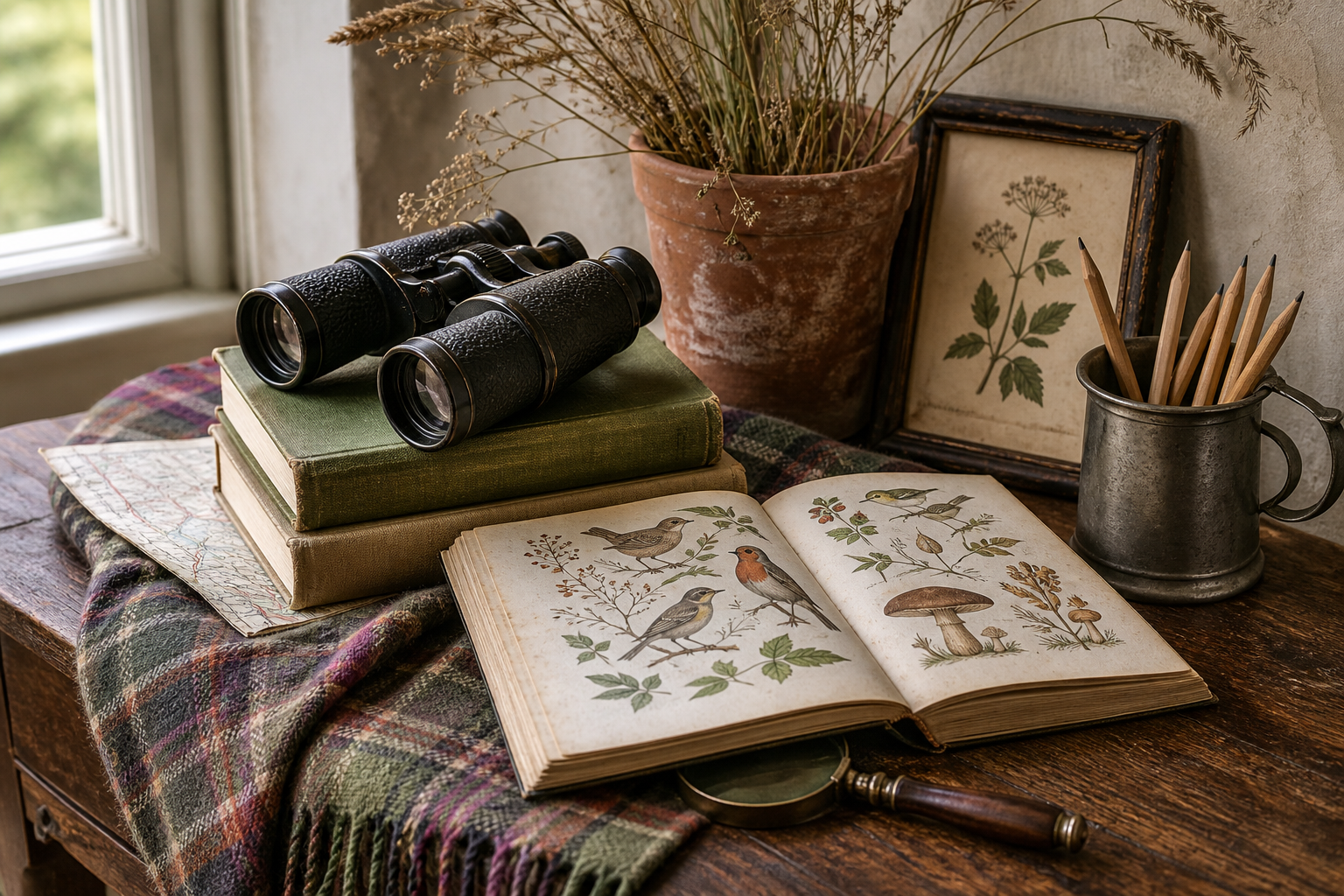
The field guides supply most of the color through worn green cloth and pale paper. Terracotta warms the palette without turning it orange, and a pewter cup adds a cooler note. Use the tartan once, in a scarf, so the pattern does not overwhelm the book covers.
Begin with the binoculars because their dark shape will catch the eye first. Stack two or three field guides beneath them and leave one open to a page you would actually stop to read. A terracotta pot of dried grasses gives the arrangement height, while the pewter cup keeps pencils close at hand. Let the scarf fall across one corner of the table rather than circling every object. It should feel as though someone came in from a walk and has not quite finished looking something up.
3. The Harvest Weigh Station
Pear Green | Pumpkin | Stoneware | Wheat | Faded Black | Old Pine
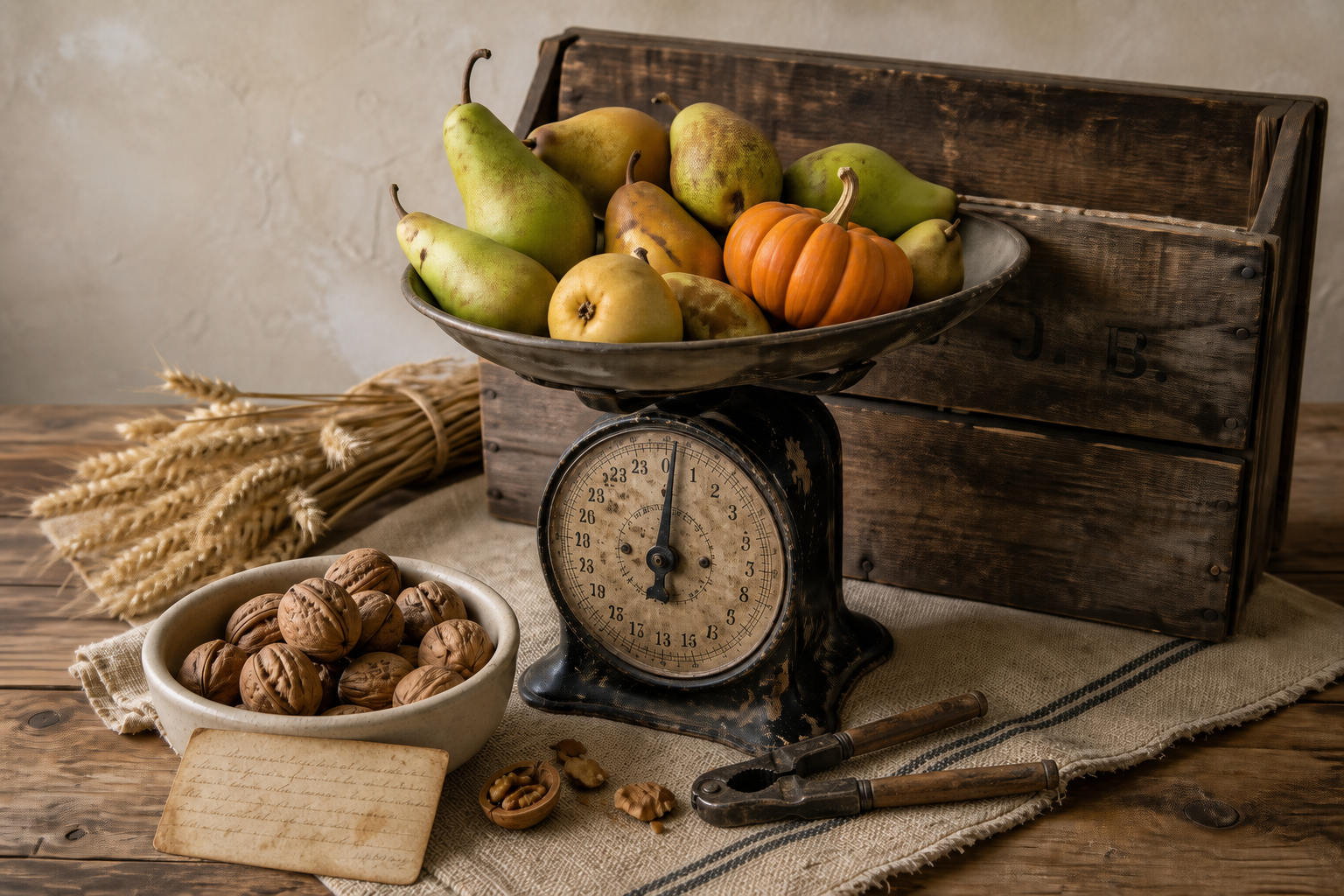
Let the pears and pumpkin carry the freshest color. Stoneware and wheat soften the black iron of the scale, and the old pine crate provides a darker background that makes the fruit easier to see. If the crate has lettering, avoid introducing another printed object nearby.
Place the kitchen scale slightly off center and pile the fruit loosely in its tray. Lean the wooden crate behind it, turning the best lettering toward the room, then set a creamware bowl of walnuts lower on the counter. A grain sack can run beneath the group, but leave enough fabric beyond the scale to show its weave. The result feels like the useful aftermath of a farm-stand stop. It also gives the bruised pear somewhere respectable to wait.
4. The Letter-Keeper's Entry Shelf
Sepia | Tarnished Silver | Terracotta | Ink | Amber
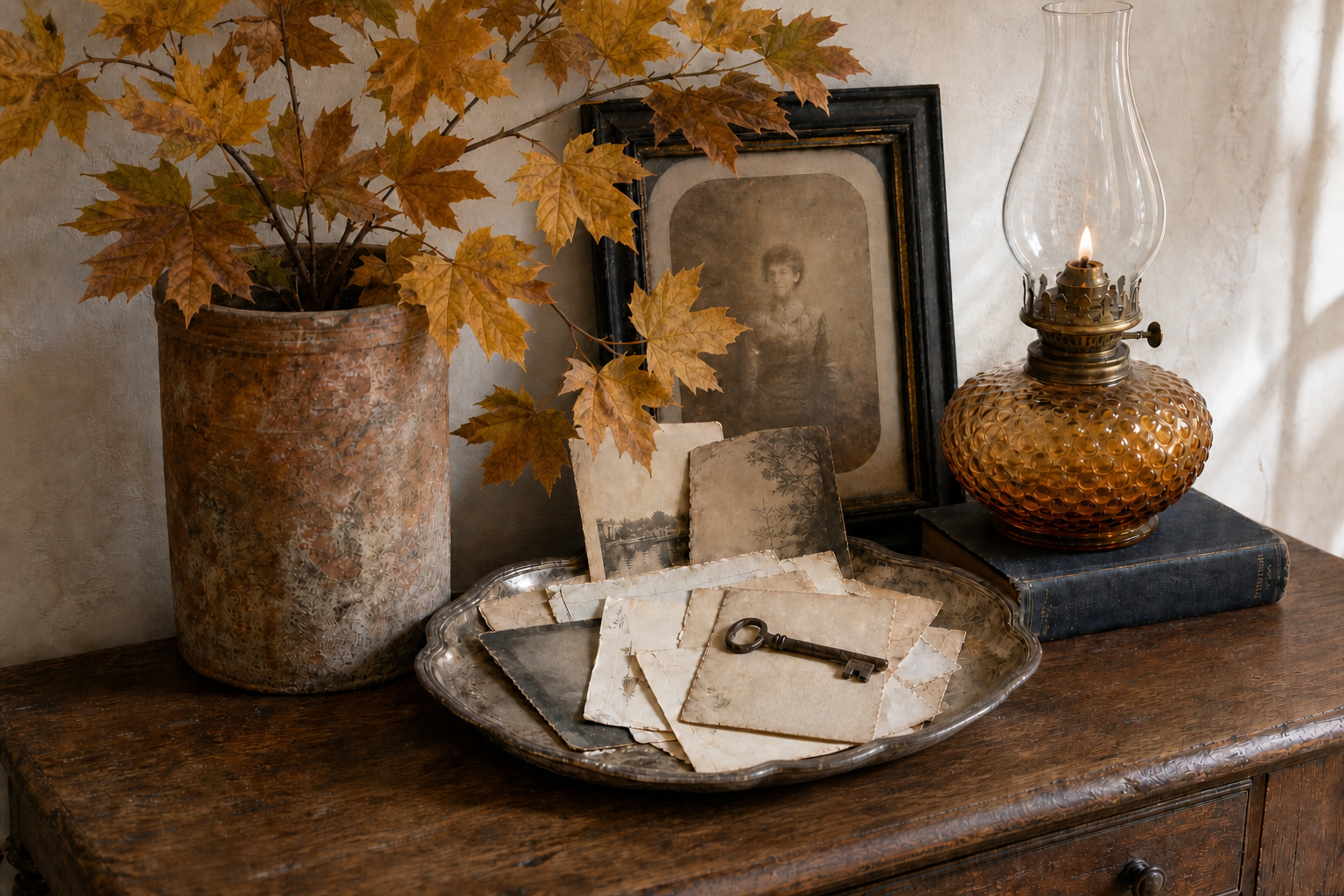
Old paper sets the quiet sepia tone, with ink appearing in handwriting or a dark book cover. Terracotta and amber bring warmth, while the silver tray keeps the group from becoming uniformly brown. Choose one metal finish here; polished brass would pull attention away from the letters.
Fan a few postcards or letters on the silver tray rather than stacking them into a tidy block. The tray becomes the visual base, while a terracotta chimney pot filled with bare branches adds height. Place a wooden bowl for keys toward the front and an oil lamp at the far end. If you light the lamp, keep the paper comfortably out of reach. The shelf should still work when you come through the door with gloves, mail, and no free hands.
5. The Still-Life Coffee Table
Mulberry | Dusty Rose | Olivewood | Sepia | Copper
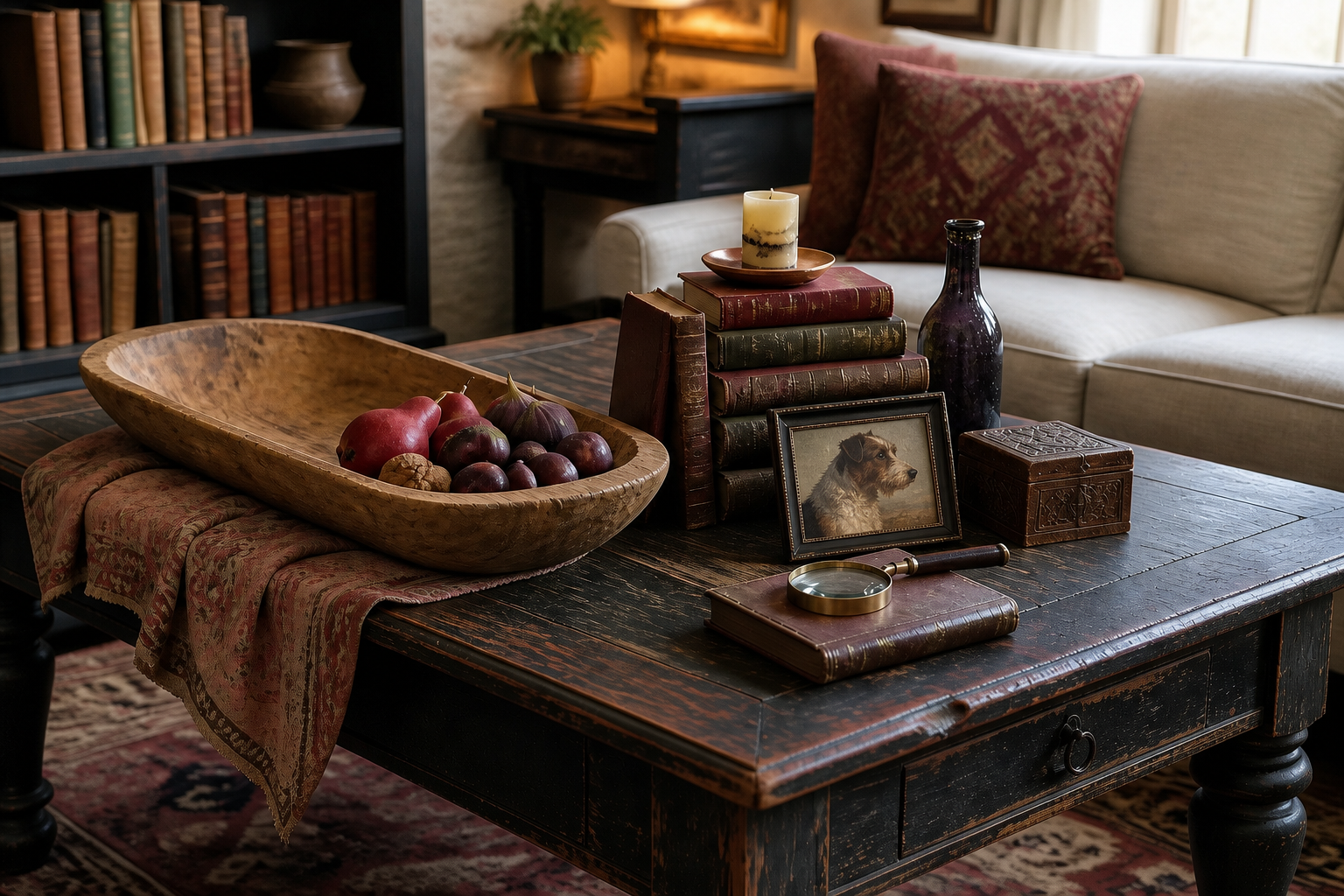
Mulberry is strong enough to use once, in plums, figs, or a dark glass vessel. The dough bowl and sepia books take up most of the space, while dusty rose softens the move from dark fruit to pale paper. Copper belongs at the edge, where it can catch light without becoming the center of the arrangement.
Set the weathered dough bowl slightly off center and fill only part of it with dark fruit, leaving enough wood visible to appreciate its worn surface. Tuck a folded dusty-rose linen under one end. Place two sepia-toned books nearby and use a copper tray for a candle on the open side of the table. The changes in height keep the arrangement from becoming one low mound. It has the richness of an old still life, but you can still put down a cup of coffee.
6. The Coastal Storm Window Ledge
Storm Gray | Driftwood | Indigo | Parchment | Tarnished Silver
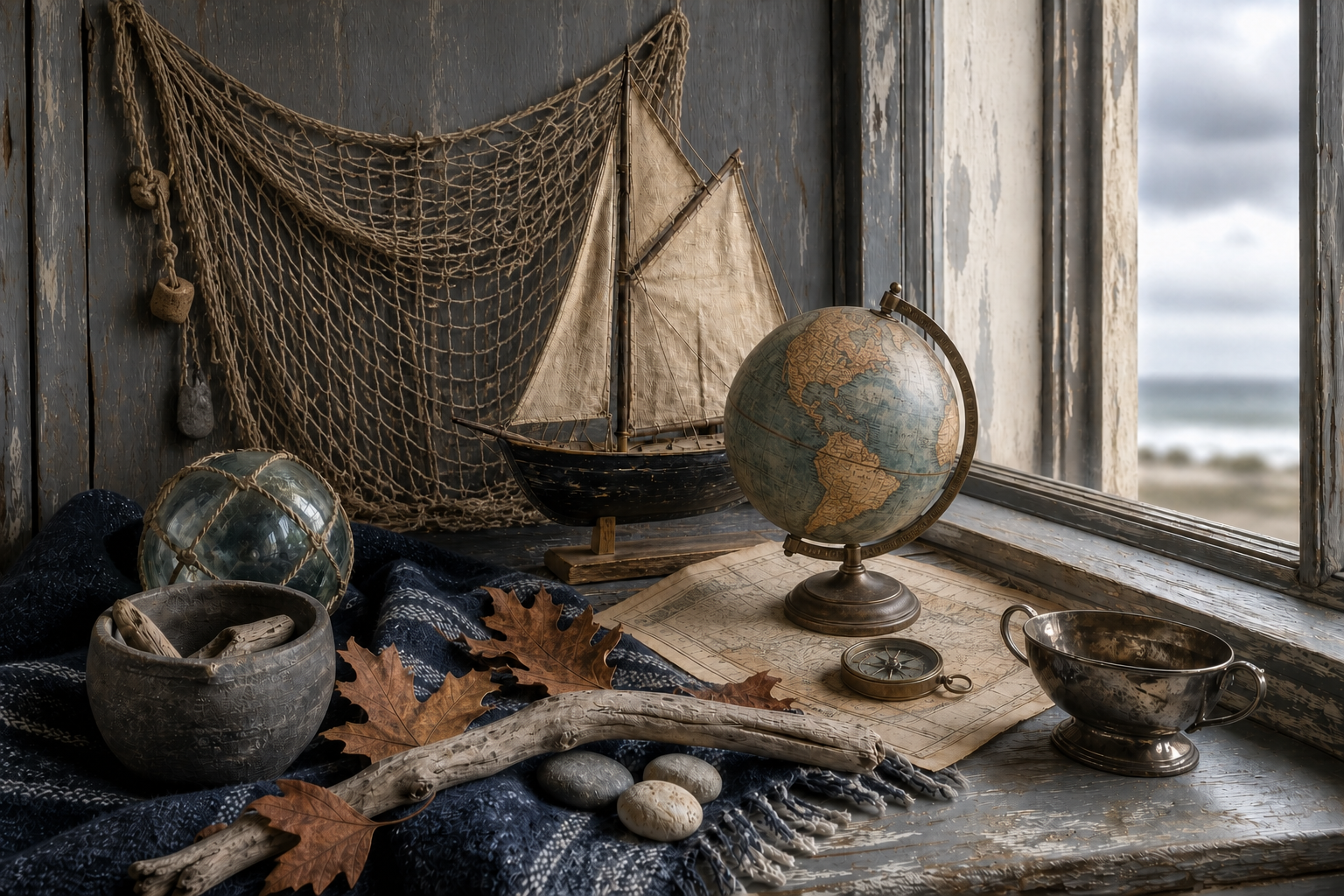
A cool palette can feel right for fall when the materials have some weight. Driftwood and wool do most of that work here. Indigo is the deepest color, parchment lifts the sails, and tarnished silver catches the little light that reaches the window on a gray afternoon.
Hang an old fishing net loosely against the wall, allowing its uneven edges and knots to show. Set a model sailboat in front of it, then place a vintage globe on a folded nautical chart nearby. A brass compass adds a smaller point of interest, while the glass fishing float, storm-gray pottery, driftwood, and indigo blanket bring in different textures. A few russet oak leaves are enough to move the palette into autumn without turning the arrangement into seasonal décor.
7. The Tailor's Autumn Workbench
Charcoal Wool | Tobacco Leather | Chalk | Copper | Deep Plum
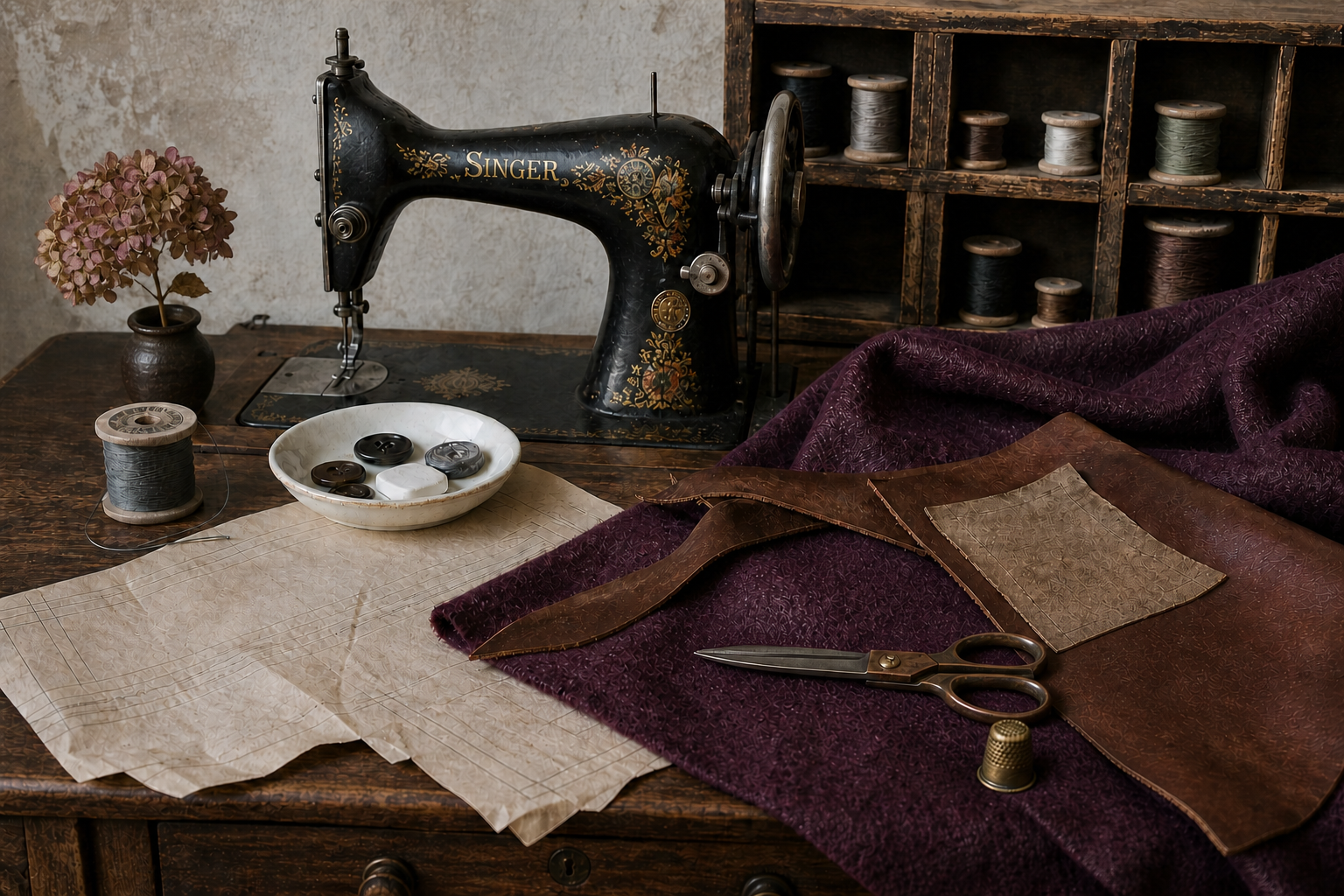
Charcoal wool and tobacco leather absorb light, so I like a chalk-white dish between them. Deep plum should appear in one generous piece of fabric rather than several small accents. The copper scissors provide the only shine the table needs.
Make a loose cluster of wooden spools the anchor, varying their heights with the yarn still wrapped around them. Lay the plum textile across the work surface as though it has just been measured, then leave the leather scraps and scissors where a hand might reach for them. The white dish creates a pause among the darker materials and gives small notions a sensible home. Do not line up the tools. A workbench with perfect posture is not fooling anyone.
8. The Enamel Mug Morning Shelf
Enamel White | Faded Tartan | Rosemary | Terracotta | Worn Maple
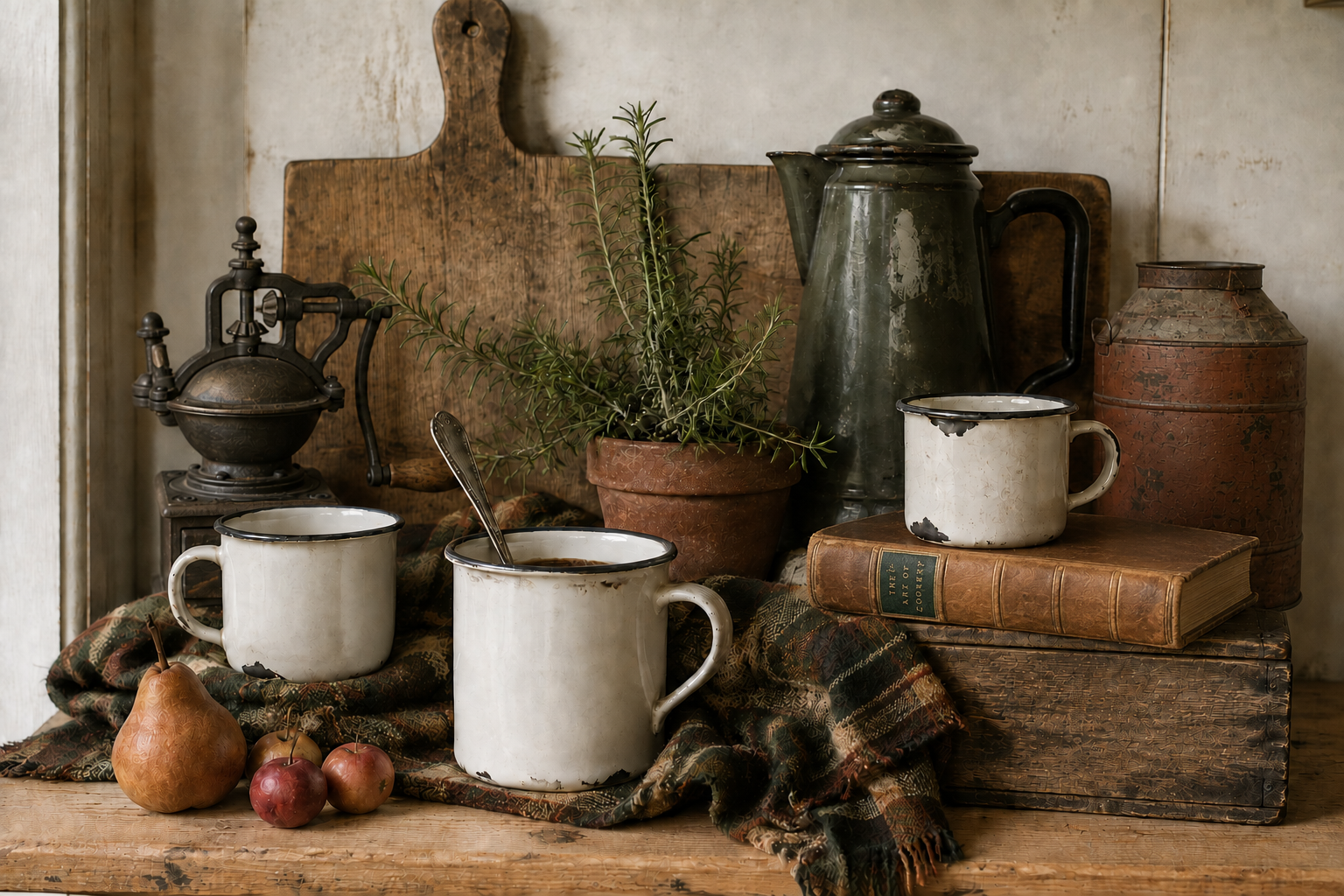
White enamel gives the shelf a clean starting point, but small chips and dark rims keep it from feeling new. Worn maple and terracotta warm the white, while rosemary supplies a living green. Let the plaid scarf be the only pattern so the cookbooks can contribute color without adding more visual noise.
Lean a dark cutting board behind the mugs to make their pale outlines visible. Stack the cookbooks at one end, then place a small pot of rosemary between the books and mugs rather than arranging everything in separate groups. Fold the scarf on the shelf below or let one end hang from a nearby basket. It feels like the beginning of a cool morning, especially once the coffee joins the scene and leaves its usual evidence.
9. The Autumn Naturalist’s Cabinet
Bronze | Fern | Amber | Cream | Brown

Begin with a large brown transferware platter at the back of the cabinet, where the pattern can be seen behind the smaller pieces. Tuck pheasant feathers into a dark stoneware crock and let them lean across one side rather than standing straight up.
Amber apothecary jars will catch the light through the glass doors, especially if some are left empty. Add fern fronds to break up the brown and cream, then place a few realistic woodland mushrooms beneath a glass cloche or beside a patch of preserved moss. Small wooden specimen boxes or a low brass stand can raise the shorter pieces without bringing in another stack of books. Leave a little room between the shelves and the glass doors. A curio cabinet should invite a closer look, not require careful excavation.
10. The Flea Market Console Table
Persimmon | Flax | Blackberry | Moss | Aged Ivory
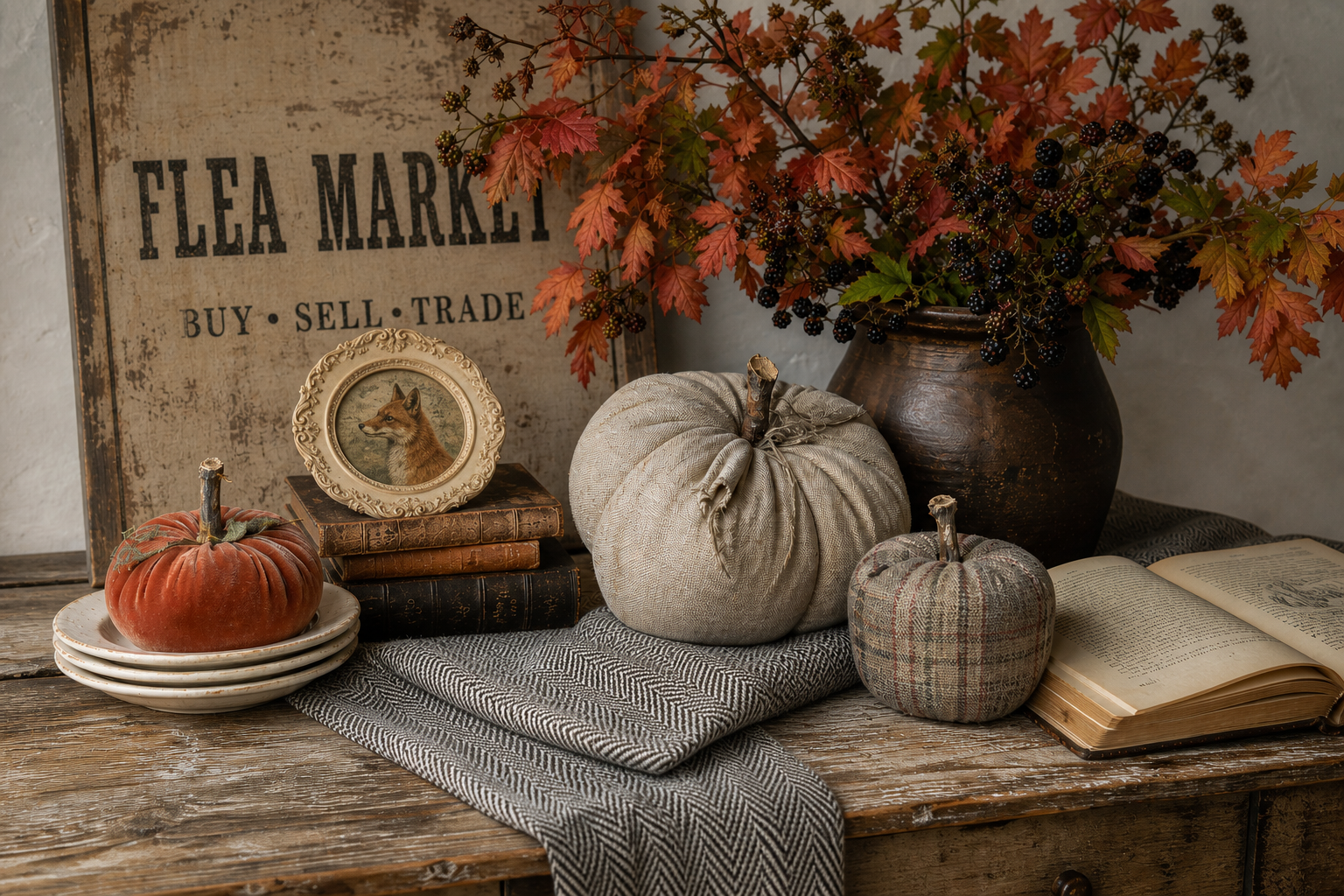
Old linen and velvet pumpkins give this arrangement its autumn color, while the books provide height rather than becoming the main event. Begin with a weathered market sign or framed ledger page at the back, then set a full arrangement of russet leaves, blackberry stems, and loose greenery slightly off center.
Raise a small framed print on two worn books and bring the fabric pumpkins forward, mixing faded persimmon with flax and oatmeal instead of using several shades of orange. A short stack of ironstone saucers adds a clean break between the textiles and wood. Let one open book, a length of twine, or a visible hand-sewn seam suggest that someone has been making things here. The finished table should feel creative and collected, with enough imperfection to keep the pumpkins from looking as though they came home in a matching set.
What to Look for While Thrifting
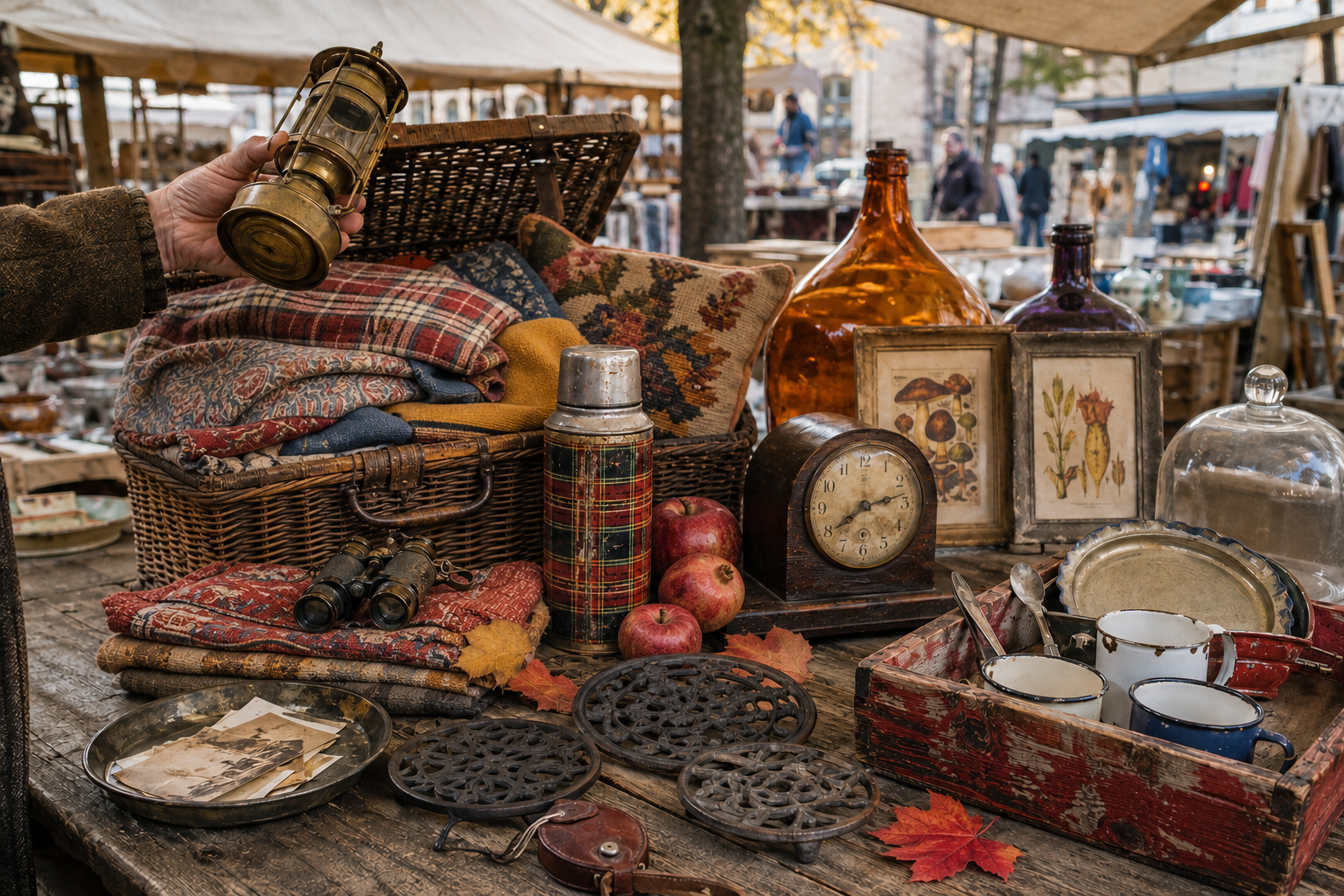
Objects With Warmth & Glow
These pieces deepen autumn light in ways modern decor rarely does.
Tarnished copper kettles: The patina warms instantly under lamplight and looks beautiful on a stove or shelf.
Oil lamps (even if used decoratively): Their silhouettes alone feel like October evenings.
Amber apothecary jars: Fill them with dried botanicals, spices, or nothing at all. The color does the work.
Vintage lanterns: Metal, glass, or wood-framed; perfect for porches or mantels.
Objects With Texture & Weight
Fall loves materials that feel substantial.
Handwoven baskets with age: The darker, worn ones look especially beautiful filled with firewood or blankets.
Antique grain sacks: Use them as table runners, pillow covers, or draped casually over a chair.
Old wool military blankets: Their muted greens, browns, and grays are perfect for autumn.
Vintage needlepoint pillows: Florals, landscapes, or geometric patterns add instant coziness.
Objects With Story & Craftsmanship
These pieces feel like they have lived through many seasons.
Framed vintage botanical plates: Ferns, mushrooms, and seed pods are perfect for fall walls or shelves.
Antique kitchen scales: Beautiful on counters with pears, apples, or small pumpkins.
Old wooden dough bowls: Fill them with dried hydrangeas, pinecones, or seasonal fruit.
Vintage thermoses: Especially plaid or metal ones. They are charming in entryways or on shelves.
Weathered cutting boards: The darker and more worn, the better.
Objects With Quiet Nostalgia
These pieces evoke memory without feeling themed.
Vintage postcards or letters: Tuck them into frames or place them on entry tables.
Old clocks with patina: Their ticking adds sound to the season.
Vintage binoculars or field guides: Perfect for a woodland-walk vignette.
Plaid wool scarves: Drape them over chairs or baskets for a soft autumn touch.
Objects With Natural Materials
Fall feels most alive when nature enters the room.
Antique terracotta chimney pots: Use them as planters or candle holders.
Old wooden crates with typography: Stack them for storage or display.
Vintage seed boxes: Beautiful for holding dried flowers or herbs.
Antique glass cloches: Place them over candles, botanicals, or small objects.
Objects With Moody, Painterly Presence
These pieces create depth and atmosphere.
Vintage still-life paintings: Fruit, flowers, or landscapes work especially well when the palette is dark.
Old brass or copper trays: Perfect bases for candlelight vignettes.
Antique wine bottles or demijohns: Their green and brown tones feel inherently autumnal.
Vintage barware: Look for cut crystal, tarnished silver, or smoky glass.
Objects With Seasonal Utility
Practical pieces that become part of fall rituals.
Antique pie plates: Display them or use them. Both feel seasonal.
Old enamel mugs: Perfect for a cozy kitchen shelf.
Vintage picnic baskets: Fill them with blankets or firewood.
Cast-iron trivets: Beautiful on counters or tables.
Mixing Vintage and Modern Without Clutter
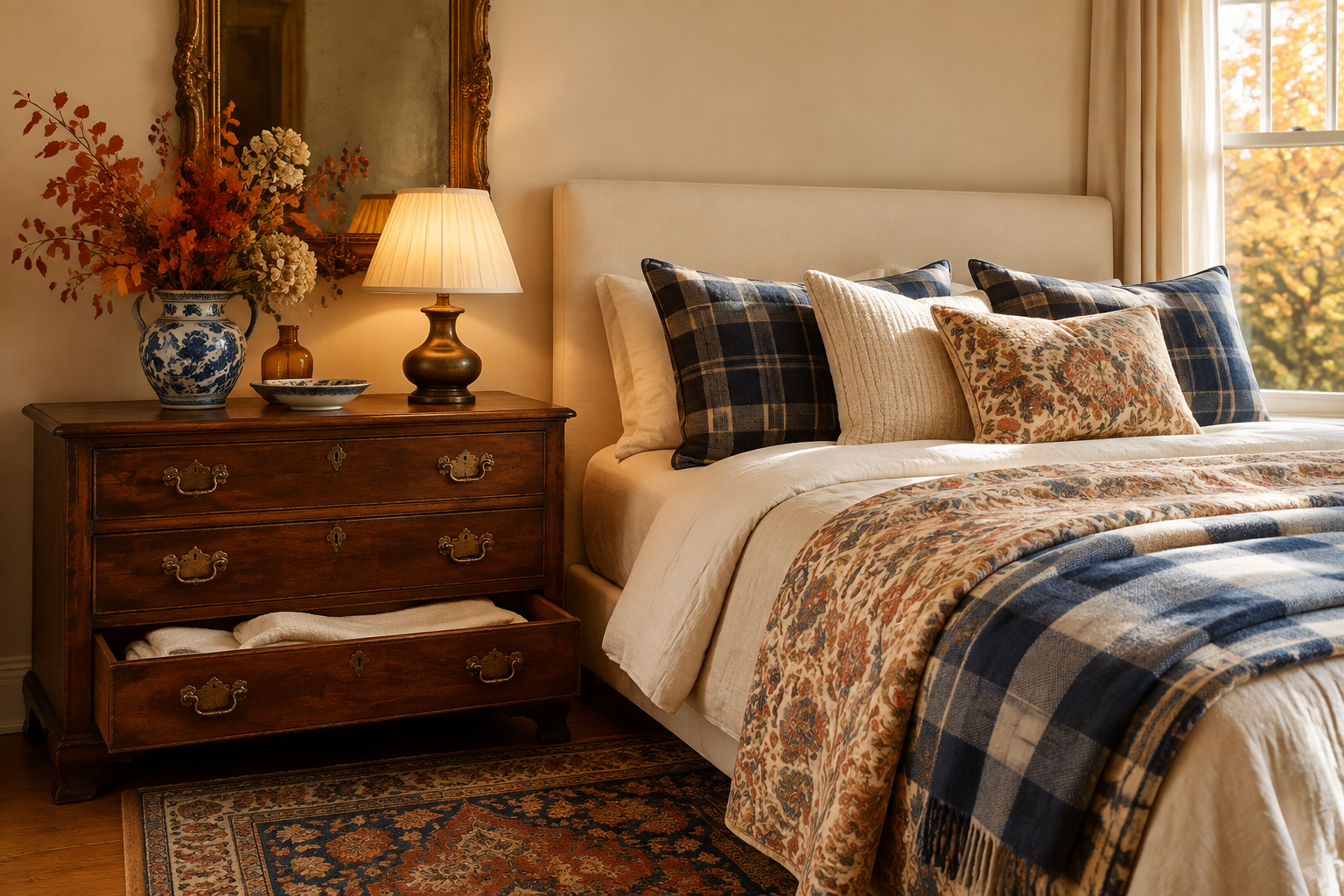
A simple modern piece gives a more detailed vintage piece some breathing room. An ornate frame works well over a clean-lined console because the detail is concentrated in one place. If the furniture and the frame are both heavily carved or patterned, separate them.
Start with one vintage anchor in each small area. Take a photograph and look at it again later. I often notice a crowded corner or an awkward gap in the picture that I missed while standing in the room. If nothing looks wrong, do not add anything yet.
Live with the arrangement for a day. If you have to move something every time you open a cabinet, prepare food, or sit down, it does not belong on that surface.
Collecting Over Time
Keep a short list of the gaps you have actually noticed, along with the relevant measurements. That list makes it easier to recognize the right candlestick or crock when it appears and easier to leave behind pieces that merely happen to be inexpensive.
Notice which pieces you bring out and use every year. Perhaps the ironstone pitcher holds branches each September, while the same quilt comes out during the first cold week. If something has stayed in the cupboard for several years, I would let it go.
Sometimes I buy the piece I keep circling back to, even when I have no plan for it. Once I bring the fall things out again, I usually know where I want it.
Continue Exploring
You may also enjoy:
Autumn Decorating Ideas That Make Your Home Feel Beautiful All Season
The Harvest Table Gathering: How to Create an Autumn Gathering People Remember
Shop This Story
True vintage pieces are usually one of a kind, which is part of the fun and occasionally part of the frustration. These sources are intended for useful finishing pieces or vintage-inspired alternatives when the thrift store refuses to cooperate.
Copper Kettles
Look for a low, rounded shape and a handle that can be seen clearly when the kettle is displayed on a shelf.Vintage Oil Lamps
Even an oil lamp that is no longer functional can bring a beautiful silhouette to a mantel or side table.Vintage Lanterns
Search for aged metal, old glass, or a wooden frame. Larger lanterns can anchor a porch arrangement without needing much around them.Aged Handwoven Baskets
The darker examples tend to look especially good beside wool blankets, firewood, and painted furniture.Vintage Needlepoint Pillows
Florals and landscapes introduce color without making the room feel overtly decorated for fall.Antique Kitchen Scales
Choose a scale with a generous tray so it can hold pears, apples, onions, or whatever is already coming into the kitchen.Wooden Dough Bowls
A long, shallow bowl is easier to arrange than a very deep one and leaves fruit, pinecones, or clipped branches visible.Antique Glass Cloches
Check the measurements carefully. Many cloches are smaller than they appear in photographs.Vintage Still-Life Paintings
Look for fruit, flowers, or landscapes with enough shadow to hold their own among dark wood and autumn textiles.Vintage Demijohns
Green and brown glass works particularly well near a window, where the color becomes more noticeable during the day.Vintage Picnic Basket
The best examples are large enough to store blankets, games, or the collection of things that usually gathers near the door.
A Few Vintage-Inspired Smaller Finds
Postcards and Letters
Affiliate disclosure: This section may contain affiliate links. If you make a purchase through one of these links, I may earn a small commission at no additional cost to you. I only share pieces I would use or recommend.
