

The Harvest Table Gathering: How to Create an Autumn Gathering People Remember
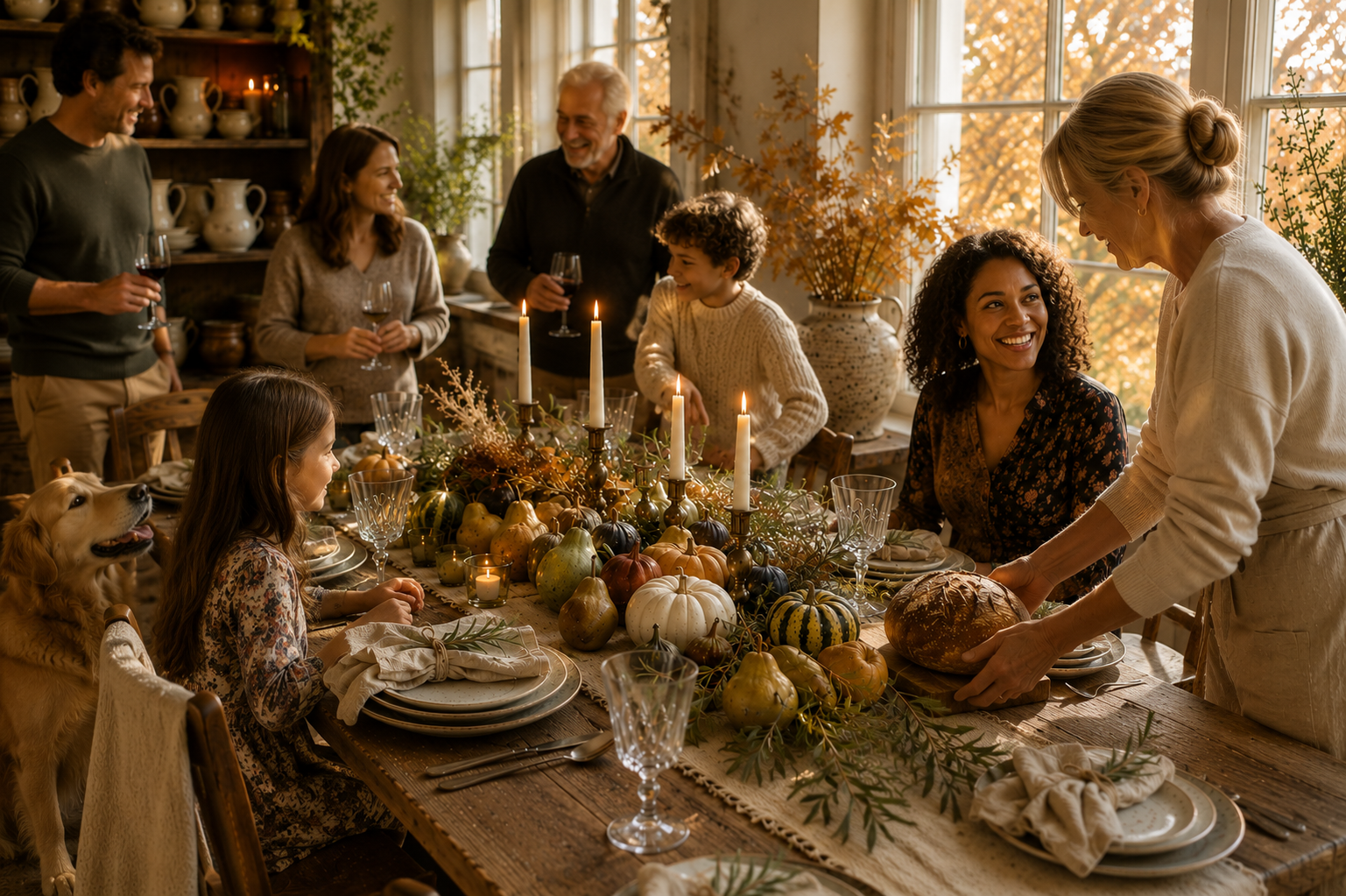
Welcome to the Harvest Table
The last light of the afternoon stretches across the table, catching the folds of a linen runner and the soft glow of beeswax candles waiting to be lit. Outside, the trees have begun their slow shift into autumn. Leaves drift across the yard, the air carries that familiar coolness, and from the kitchen comes the mingled scent of rosemary, thyme, roasted vegetables, and bread warming in the oven.
A weathered wooden table is layered with stoneware, clear glass, linen napkins tied with sprigs of rosemary, and a small gathering of branches, pears, and heirloom gourds gathered from the season itself. Nothing feels staged. It’s as if the outdoors wandered in and settled comfortably.
Guests arrive with cheeks still touched by the evening air. Coats find their way onto chairs, greetings linger a little longer, and glasses are poured before anyone thinks about sitting down. Conversation drifts easily. Stories are shared, the sound of laughter in the kitchen, introductions that don’t feel rushed. The evening finds its pace on its own.
When everyone finally gathers, candlelight softens the room, reflecting gently off glassware and the muted shine of old brass. Platters move from hand to hand, second helpings appear without comment, and conversations meander with ease. Quiet moments settle naturally between bursts of laughter, giving the evening its own comfortable rhythm.
By the time dessert plates have been replaced with coffee cups, no one seems ready to leave. Candles burn low, and the table carries the familiar evidence of a meal enjoyed together. The room feels unhurried, the kind of evening people remember long after they’ve forgotten what was served.
The Heart of a Memorable Gathering
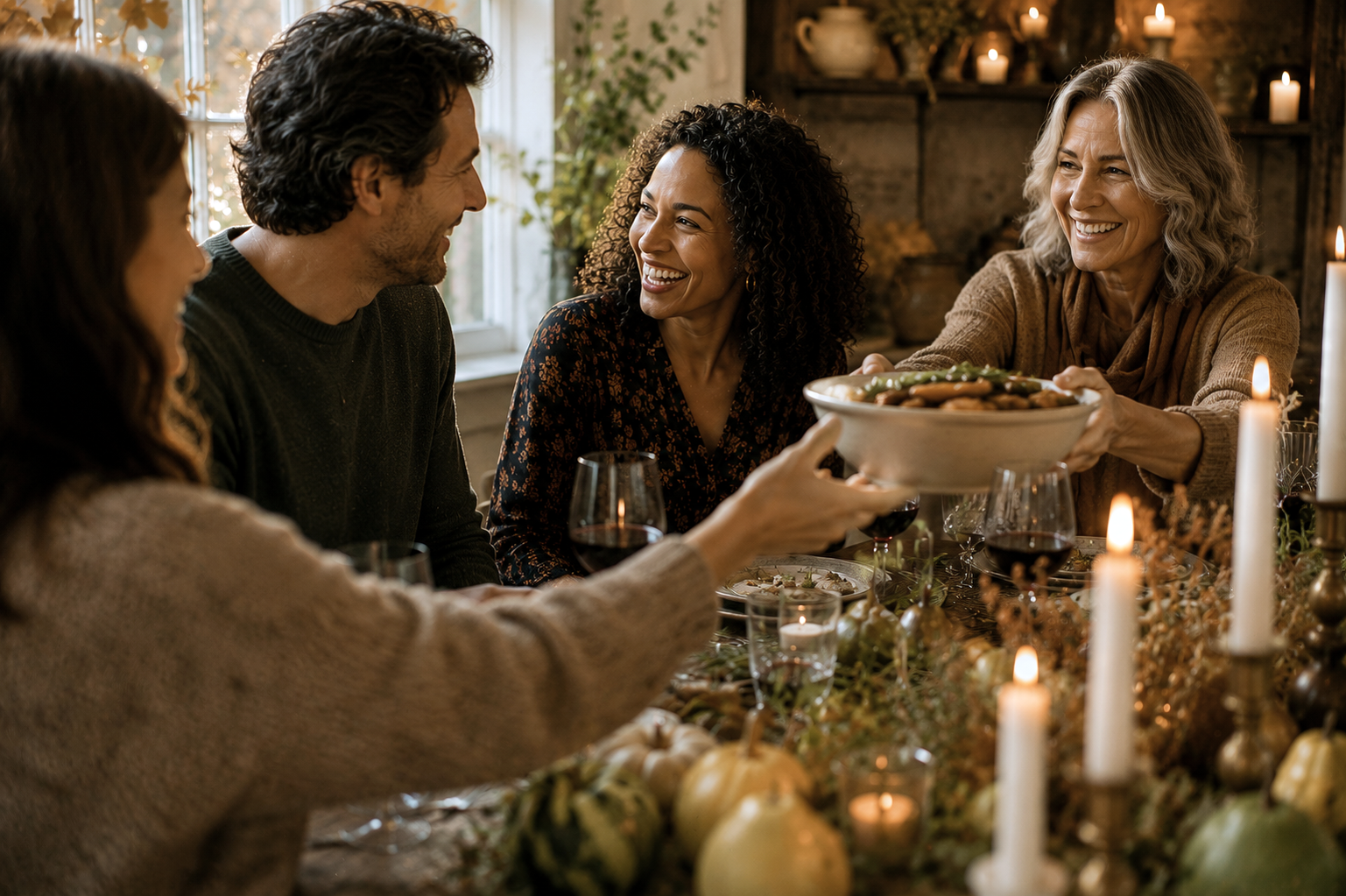
The real beauty of a harvest gathering isn't measured by perfectly folded napkins or an elaborate menu. It's found in the conversations that linger, the shared meal, and the gratitude that seems to arrive as naturally as the season itself. When guests leave feeling welcomed, relaxed, and a little more connected than when they arrived, you've created something they'll remember long after autumn has passed.
Hospitality has very little to do with having the right décor. Magazine-worthy tables are lovely, yet they quickly fade into the background. Long after the flowers have faded, people remember the conversations, the laughter, and how welcome they felt around your table.
Everything begins with intention.
Flowers, candles, linens, and a seasonal menu all contribute to the atmosphere. The gathering itself is defined by the people around the table. Atmosphere should always support connection. A thoughtfully set table invites people in; genuine warmth is what keeps them there.
The rhythm of welcoming guests is simple. Offer a seasonal drink while everyone settles in. Seat people with conversation in mind, letting familiar friends and new acquaintances find their own common ground. Serve the meal family‑style when you can, with platters passed from hand to hand and guests helping themselves at their own pace. Before the meal begins, pause for a small toast or a quiet moment of prayer or gratitude for the season, the harvest, or simply the chance to gather.
The moments people remember are rarely planned. They appear in a story that takes an unexpected turn, in laughter that fills the room, in the comfortable silence shared between close friends, and in conversations that linger long after dessert. When guests leave feeling welcomed and at ease, the gathering has already done what it was meant to do. Everything else simply created the space for those moments to unfold.
The Six Elements of a Beautiful Harvest Gathering
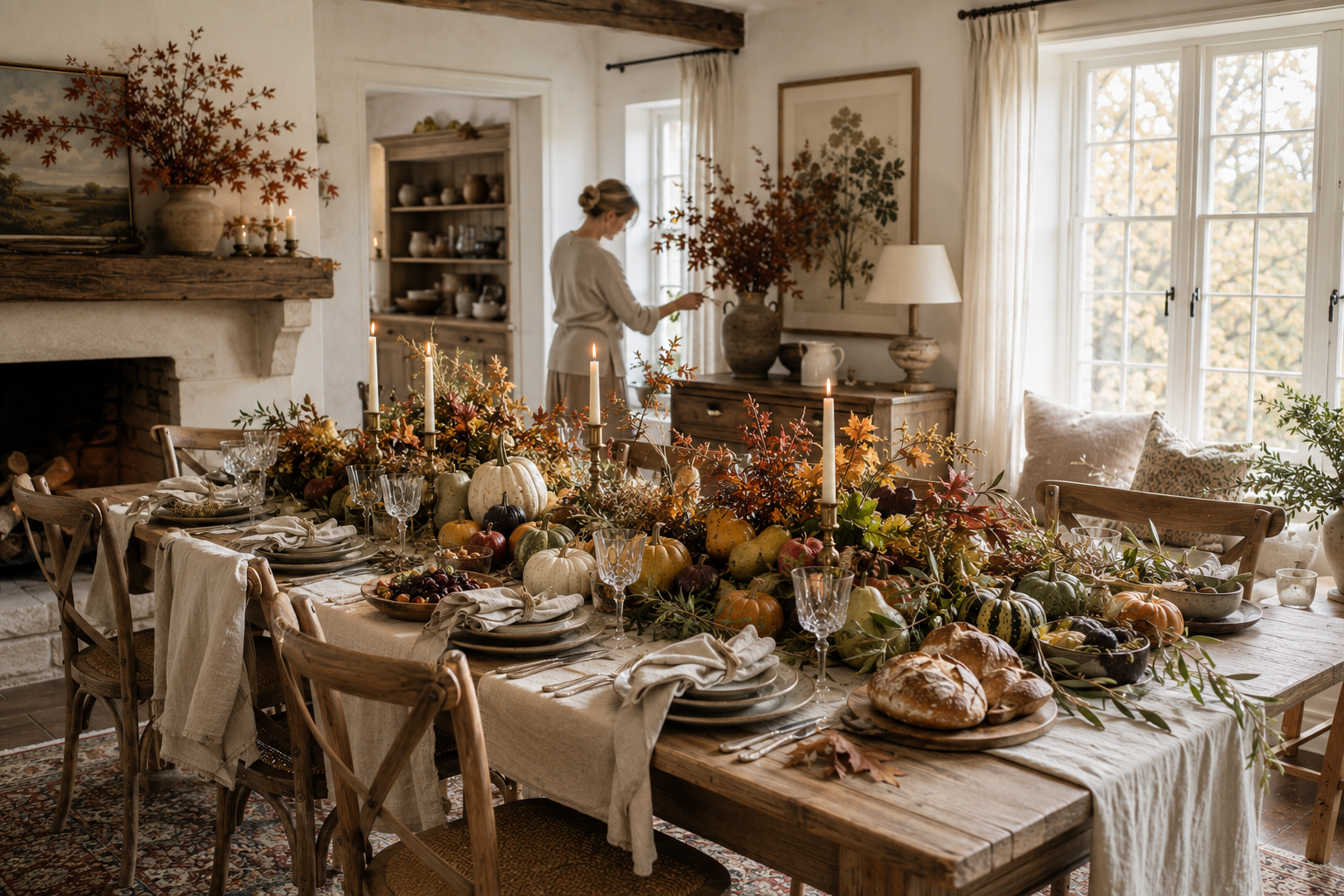
A memorable harvest gathering doesn’t come together all at once. It builds slowly, one thoughtful layer at a time. Each table looks a little different, but the gatherings that linger in memory often share the same quiet, timeless elements.
Every memorable gathering begins with a feeling before it begins with a table. Each choice, from the linens to the lighting to the way the food is served, shapes that experience.
Setting: Create a Sense of Place
Long before anyone sits down, the setting begins to speak.
A formal dining room has never been a requirement. A weathered table, a linen runner you've used for years, stoneware collected over time, or a vase filled with branches from the yard can establish the mood with very little effort. The room simply needs to feel welcoming and connected to the season.
Color: Establish the Emotional Tone
Before a single word is spoken, color quietly shapes how an evening feels.
Colors are inspired by nature, with soft oat, weathered linen, muted greens, warm ochres, terracotta, walnut, and the gentle shine of antique brass in candlelight.
Let the palette feel layered and gathered rather than perfectly matched, much like autumn itself.
Nature: Invite the Outdoors In
Autumn offers everything needed for a centerpiece.
Branches, dried grasses, seed pods, pears, apples, figs, heirloom gourds, and fallen leaves bring texture and authenticity to the table. A loose, natural arrangement often feels most convincing. Often the most striking displays look as though they were collected during an afternoon walk and set down just as they were found.
Light: Shape the Evening Through Illumination
As daylight fades, lighting becomes one of the most meaningful elements.
Clusters of candles at different heights, a fire glowing in the hearth, lanterns on the porch, or warm lamps placed around the room create an atmosphere where people naturally slow down. Soft light encourages conversation and makes it easy to linger.
Food: Encourage Conversation, Not Perfection
Harvest meals are at their best when they’re generous rather than complicated.
Family‑style dishes passed around the table create a rhythm that plated meals often can’t. Guests reach for seconds, offer dishes to one another, and continue talking without interruption. Seasonal ingredients prepared with care are often all that's needed.
Hospitality: Help Every Guest Feel They Belong
More than any menu or centerpiece, hospitality is what stays with people.
It’s the welcome at the door, the seat chosen with care, the unhurried pace of the evening, and the attention paid to each guest’s comfort. When people feel included and at ease, the gathering becomes about far more than the table. It's in those moments that a beautiful table becomes a meaningful memory.
The Harvest Color Palette
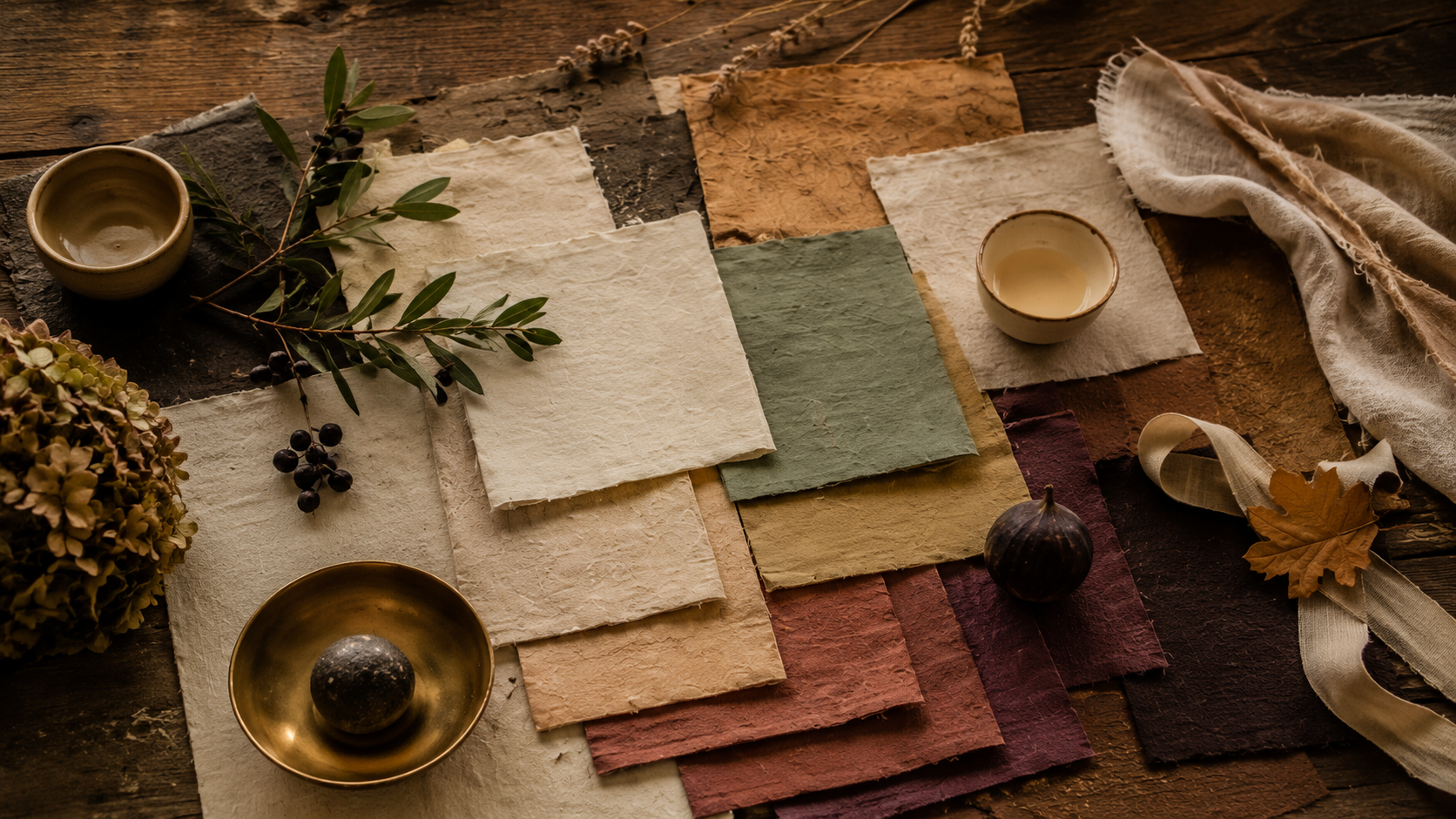
Autumn has a way of softening the landscape. Summer's bright greens give way to weathered grasses, turning leaves, rich earth, and the muted tones of a season settling into its slower rhythm. A harvest table feels most inviting when it echoes that same gentle shift.
Harvest color is rarely experienced all at once. It unfolds in layers. A few well‑chosen shades, repeated with intention, often create a more welcoming atmosphere than a table crowded with competing tones.
Foundation Neutrals
Every harvest palette begins with quiet, grounding neutrals.
Soft wheat, warm oat, weathered linen, ivory, and natural wood form a calm backdrop that lets seasonal details stand out without overwhelming the table. These lighter tones catch candlelight beautifully, giving the room a relaxed, unhurried glow.
Earthy Tones
Earthy colors bring warmth and a sense of connection to the season.
Warm ochre, terracotta, olive, sage, pear green, and walnut brown mirror the fields, orchards, and forests of autumn. They add depth without feeling heavy, creating a palette that feels gathered rather than styled.
Harvest Accents
Once the foundation is in place, a few richer tones add the feeling of abundance.
Deep burgundy, muted rust, softened orange, and fig plum introduce seasonal richness without dominating the table. Used thoughtfully in fruit, foliage, textiles, or a single serving piece, they create small moments of interest that feel natural to the season.
Candlelight Metallics
Metallics become most beautiful when they simply catch the changing light.
Antique brass, muted gold, aged bronze, and warm copper add depth through their patina and gentle shine. Whether in candleholders, flatware, or a serving bowl, these finishes become even more beautiful as the evening light fades and candles begin to glow.
A harvest palette doesn’t need strict rules or perfect coordination. Nature rarely repeats itself, yet everything feels beautifully connected. When your table reflects that same balance of soft neutrals, earthy warmth, seasonal accents, and gentle candlelight, it creates a setting that feels timeless, welcoming, and unmistakably autumn.
Bringing Autumn to the Table with Flowers & Nature
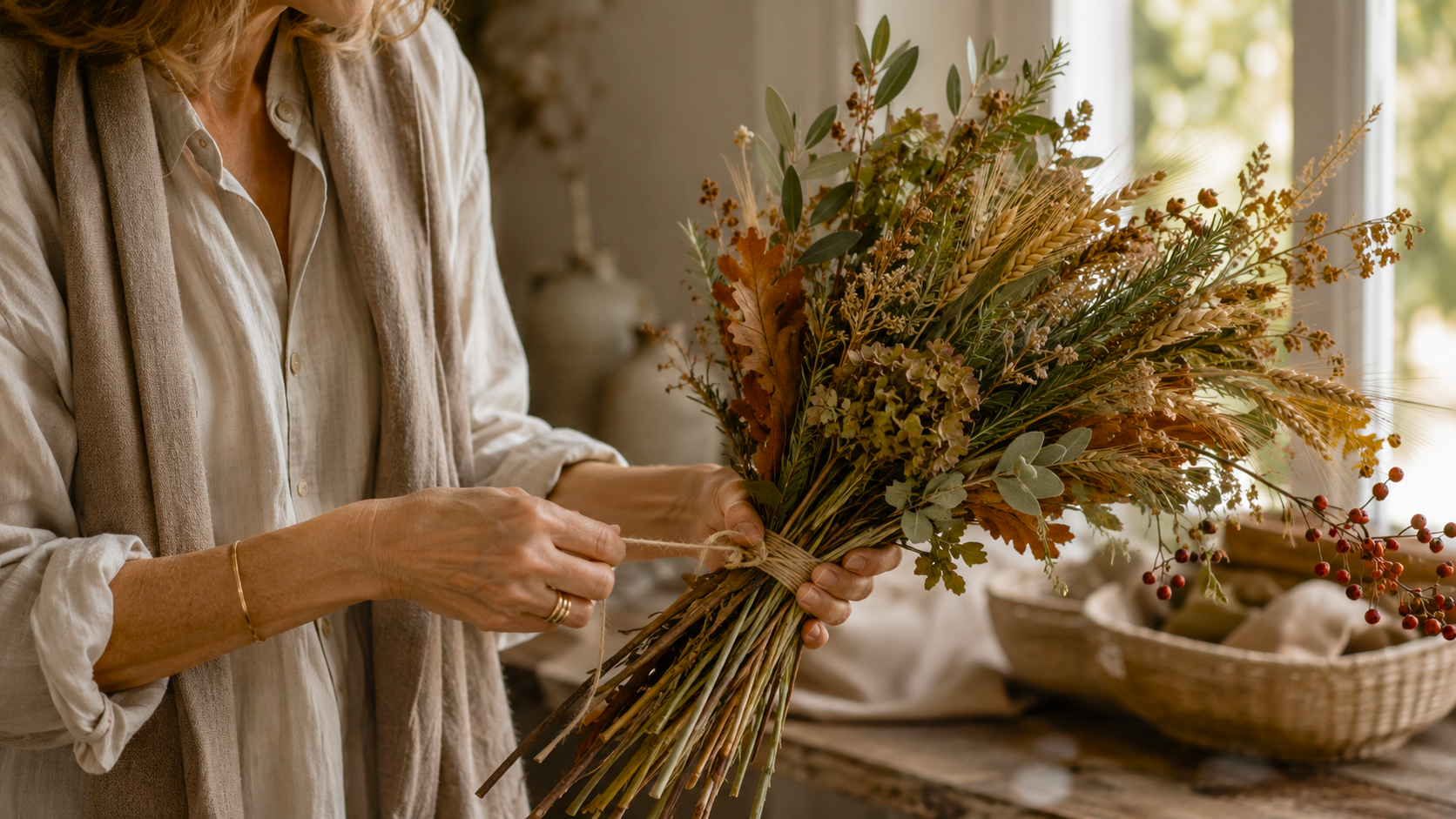
The easiest way to bring autumn to the table is to begin outdoors.
The season offers more than enough on its own, with turning branches, dried grasses, seed pods, late berries, and leaves that shift color by the day. A walk through the garden, a nearby park, or even your neighborhood can provide everything needed for a table that feels grounded in the moment. Orchards and markets add their own offerings: pears, apples, figs, heirloom pumpkins, and gourds that bring texture and quiet abundance.
Small collections usually feel more inviting than a single formal centerpiece.
A few branches gathered in a ceramic pitcher. Pears resting in a wooden bowl. Small gourds tucked between candleholders. Sprigs of rosemary tied around linen napkins. Each detail is simple on its own; together, they create a table that feels as though the season has simply found it’s place indoors.
Not every element needs perfect balance. Some of the most beautiful tables have an easy, unstudied quality, as if each piece found its place naturally. Let branches reach a little higher. Allow a few leaves to fall where they may. Mix textures and shapes without worrying about symmetry.
Nature has been layering color and form long before we began bringing it indoors. When you take your cues from what’s already happening outside, the result feels relaxed and timeless.
As you gather pieces for your table, choose what genuinely speaks to you. Every garden, neighborhood, and landscape has its own character. Let your surroundings shape the story your table tells.
When you trust the season, the table almost seems to arrange itself.
Creating Atmosphere with Light
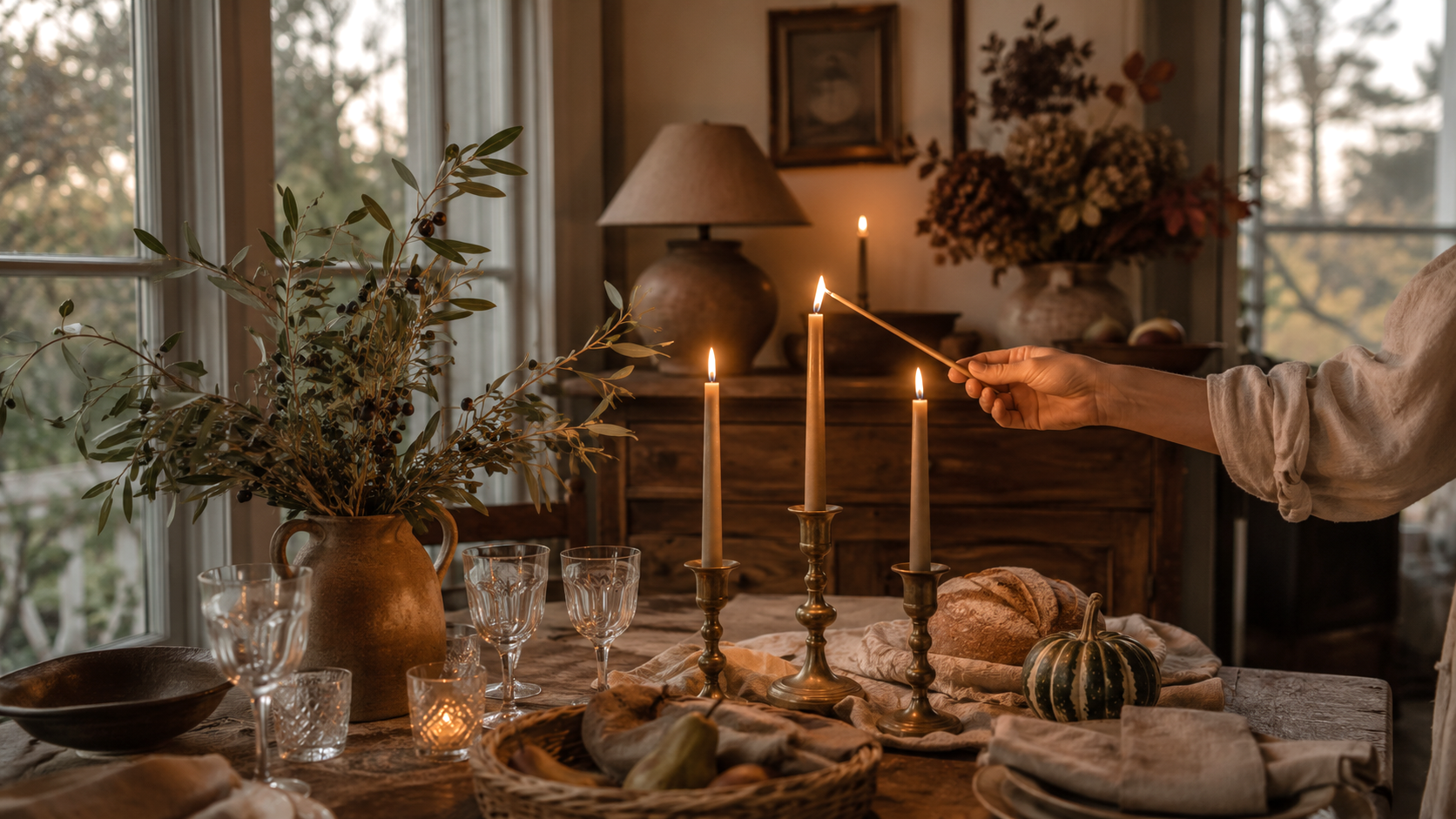
As afternoon slips into evening, the character of a gathering begins to shift. Colors soften, conversations slow, and light becomes part of the experience rather than simply a way to see the room.
Evening light behaves differently from daylight. It doesn’t fill a space evenly; it gathers in corners, warms familiar surfaces, and draws people closer. A few thoughtful layers can make a home feel welcoming, no matter its size or style.
The most welcoming rooms rarely rely on a single source of light.
Candlelight, lamps, and fading daylight each contribute something different.
Clusters of taper candles at different heights bring movement to the table. Lanterns by the front door offer a quiet welcome before guests even step inside. Lamps with warm bulbs cast a gentle glow around the room, and a fireplace, if you have one, creates both warmth and a natural place for people to gather.
Overhead lighting is best softened or dimmed. If that isn’t possible, turn it off once everyone is seated and let candles and lamps take over. The shift is subtle, but it changes the mood almost instantly.
Candles belong at nearly every harvest table, not for decoration alone but for the way they influence the evening. Their flicker catches the edges of glassware and antique brass, adds movement to the table, and encourages everyone to slow down without noticing why.
Lighting doesn’t need to be elaborate to be effective. A few well‑placed candles often create more atmosphere than an entire room filled with bright light.
When the evening is softly illuminated, conversation feels easier, meals stretch a little longer, and the transition from daylight to candlelight becomes part of the memory itself.
Building a Harvest Table That Feels Effortless
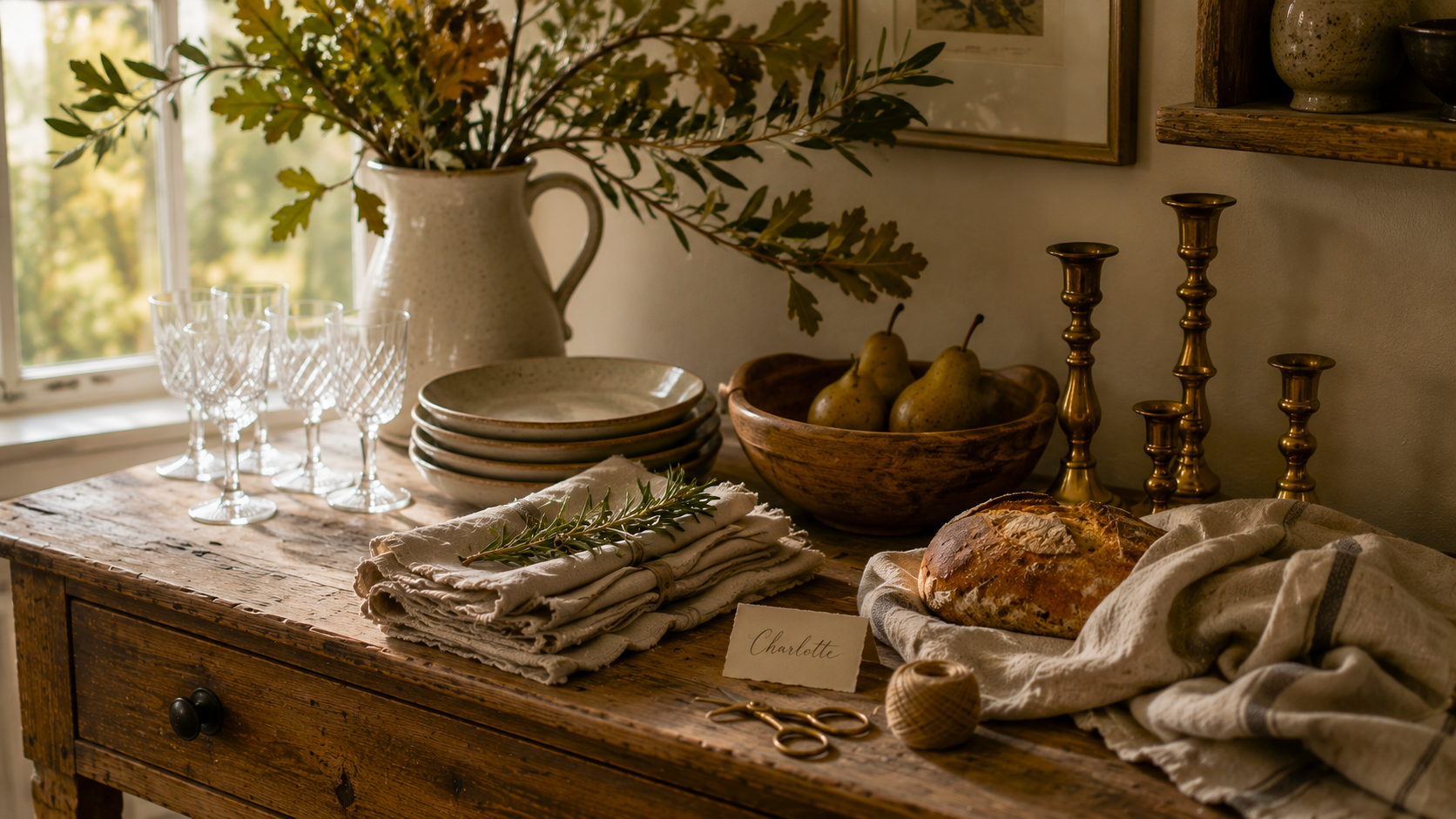
The most welcoming harvest tables are rarely the fullest ones. It comes together through pieces chosen with intention.
The most inviting tables often begin with things gathered over time: stoneware with a handmade feel, linen napkins softened through years of use, simple glassware, serving pieces that have earned their place. These elements carry a beautiful authenticity that new collections sometimes lack.
Layering is what gives the table its warmth.
Start with a natural foundation, such as a wooden table left uncovered or a linen cloth in a soft neutral. Add dinner plates, glassware, and flatware that feels comfortable in the hand. If you enjoy using a linen runner, it can gently anchor the center of the table without competing with what rests on top of it.
For the centerpiece, resist the urge to fill every inch.
A ceramic pitcher with branches, a wooden bowl of pears, a few heirloom gourds, or clusters of candles often create more presence than a single large arrangement. Leaving space between these pieces allows the table to breathe and gives guests room to serve themselves, pass dishes, and meet each other’s eyes across the table.
Small details often do the quiet work.
A sprig of rosemary tucked into a napkin. A handwritten place card. A loaf of bread wrapped in linen. These touches communicate care without feeling overly styled.
And then there’s the space left empty.
Negative space keeps the table from feeling crowded and makes room for serving bowls, shared platters, reaching hands, and the easy movement that happens when people gather around a meal.
An effortless table leaves room for people before it leaves room for decoration. It’s one that feels comfortable to gather around, simple to share from, and welcoming enough that guests forget about the table itself and settle into the evening together.
Building a Harvest Centerpiece
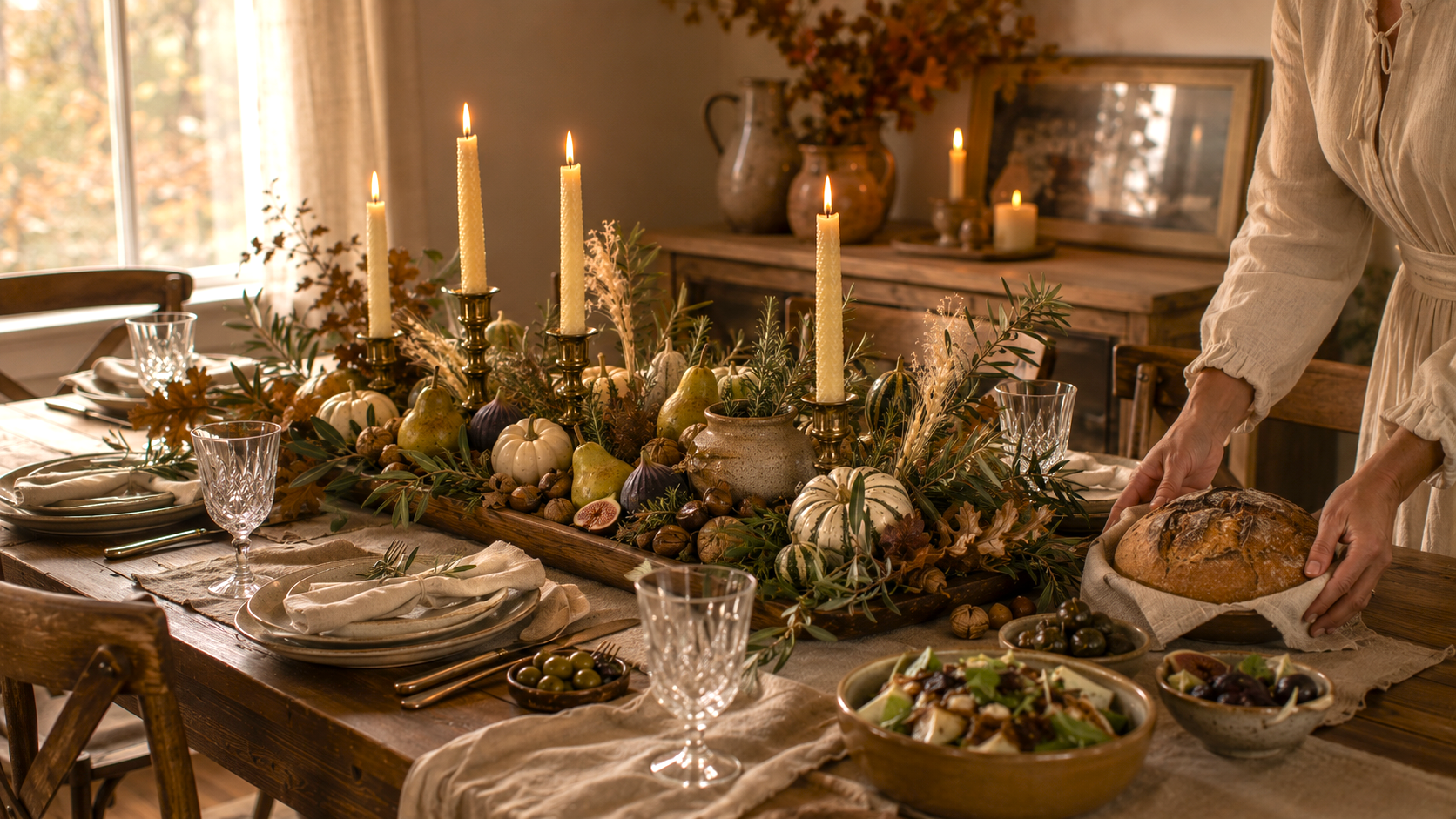
A harvest centerpiece doesn’t need to be elaborate to make an impression. Like every part of a memorable gathering, it comes together gradually, one thoughtful layer at a time.
Begin with the season itself. Look for natural textures, gathered branches, orchard fruit, candlelight, and simple pieces that feel as though they’ve always belonged together. Aim for something that feels generous, relaxed, and unmistakably autumn.
1. Begin with a Natural Foundation
Ground.
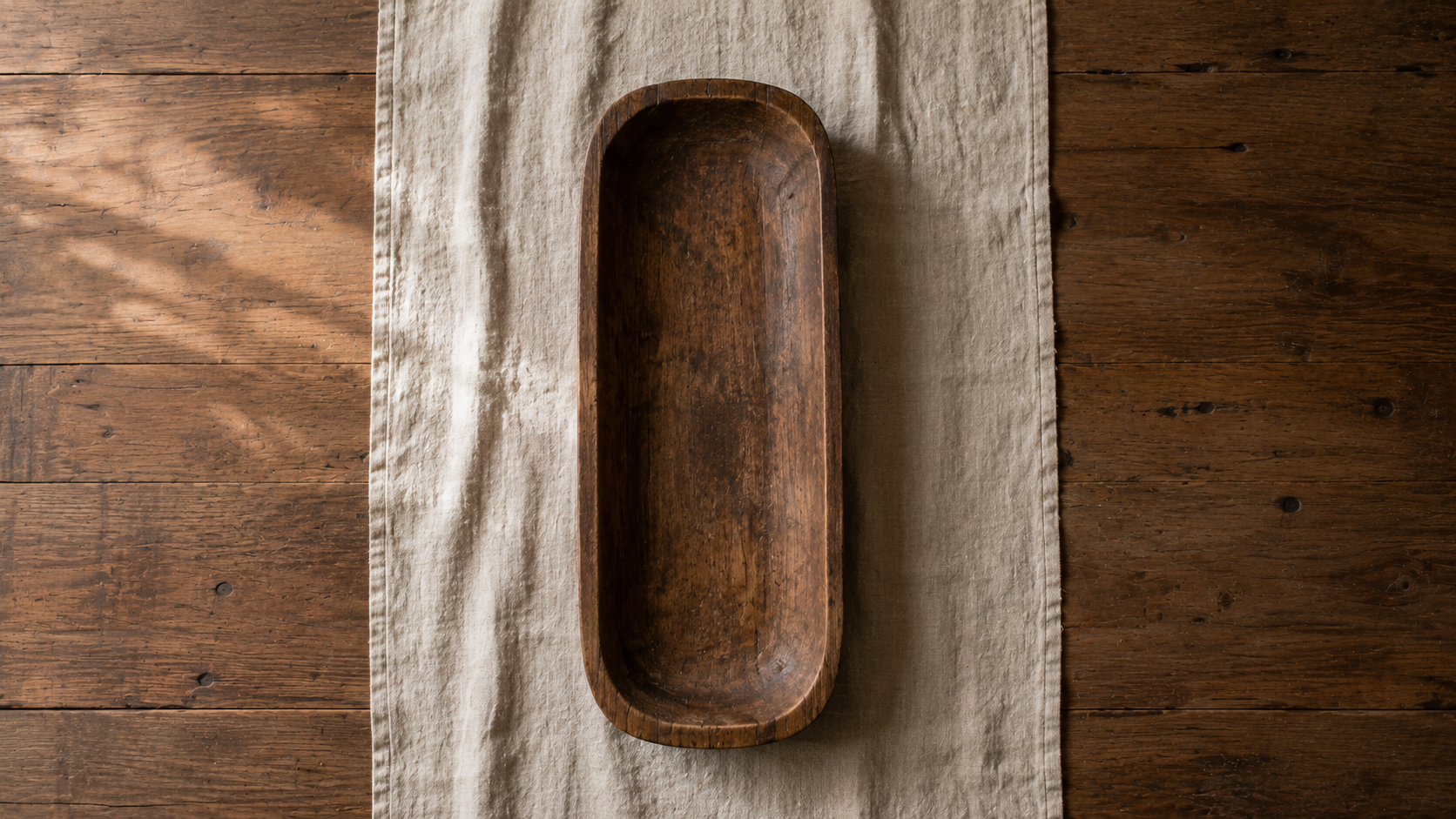
Create the foundation your centerpiece will grow from.
A linen runner in wheat, oat, or flax, a wooden board, or a rustic tray running down the center of the table creates a quiet base. This first layer anchors everything that follows and introduces the warmth and texture that define a harvest gathering.
It’s the ground from which the rest of the arrangement naturally unfolds.
2. Build the Seasonal Structure
Lift.
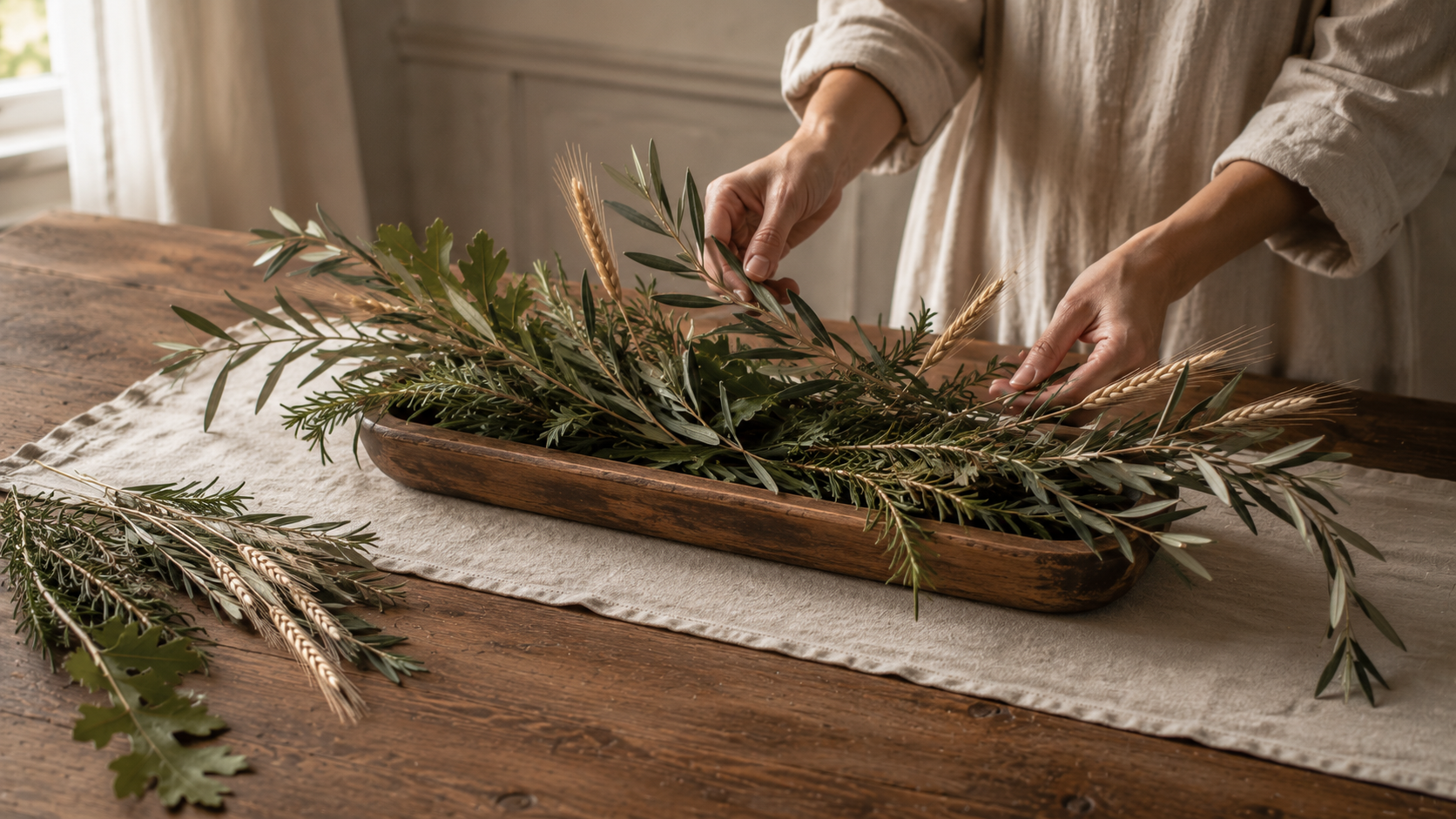
Establish height, movement, and natural flow.
Arrange wheat bundles, olive branches, eucalyptus, or early autumn foliage so they arc naturally across the table. Don’t worry about symmetry. Let stems overlap and reach in different directions, much as they would outdoors.
The structure should feel gathered rather than designed.
3. Add the Harvest
Gather.
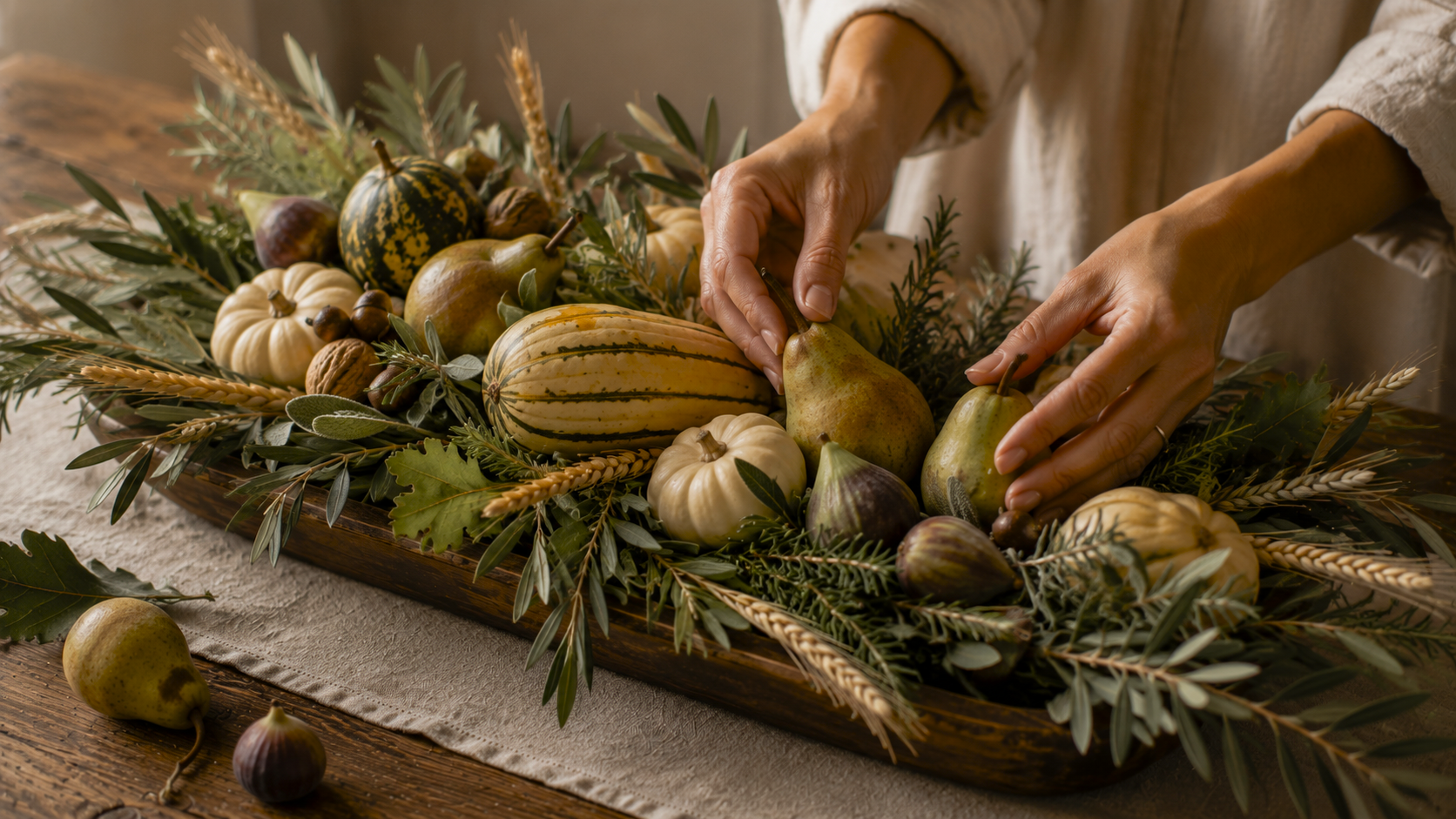
Layer in the abundance that defines the season.
Mix heirloom gourds, pears, figs, apples, or small squash in varying shapes and sizes. Group them in odd numbers and leave pockets of open space so the arrangement feels collected instead of crowded.
A harvest centerpiece should celebrate the season without trying to display all of it at once.
4. Introduce Candlelight
Glow.
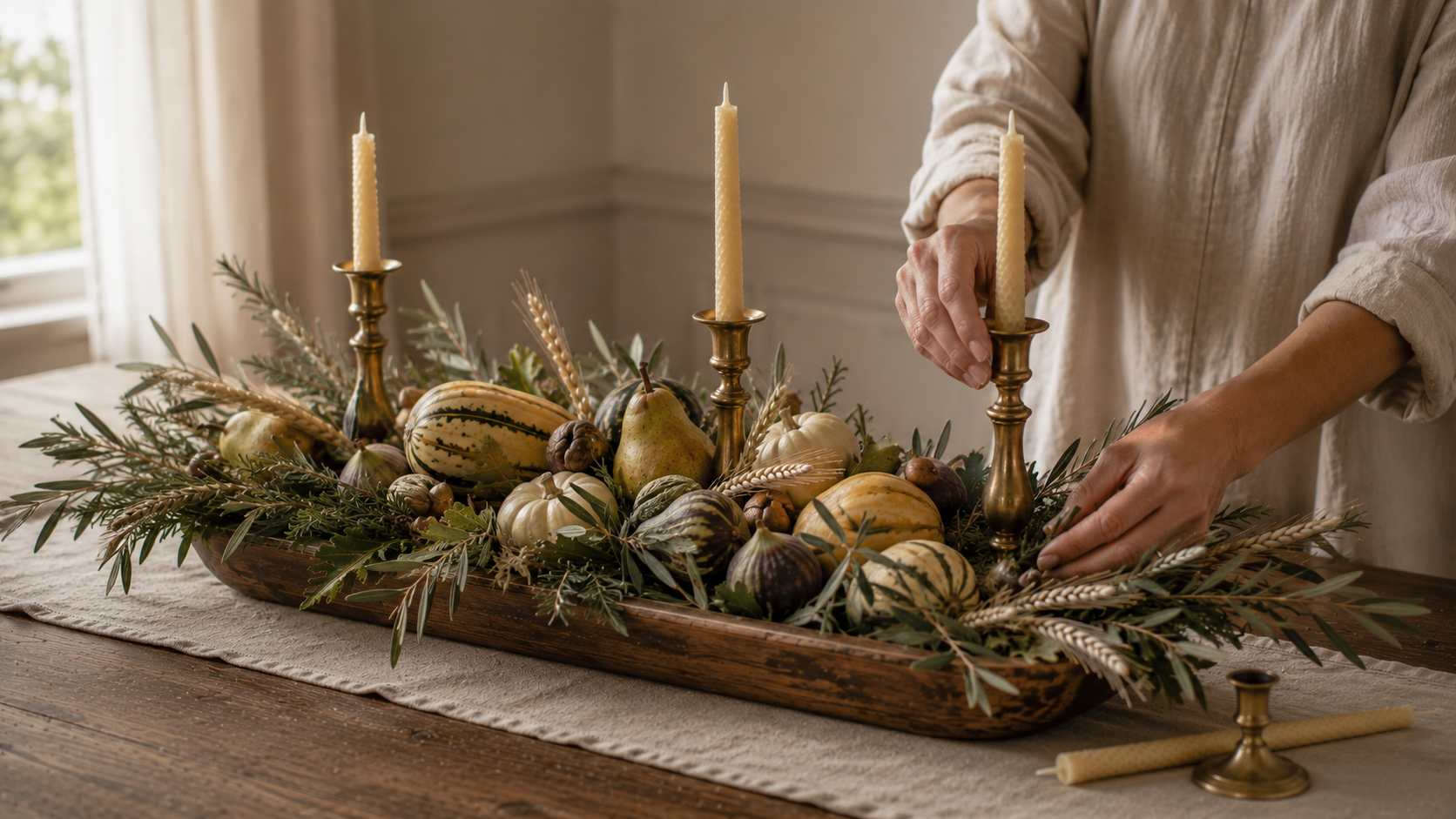
Bring warmth, depth, and an inviting glow.
This is where the centerpiece begins to come alive.
Place taper candles in antique brass holders at varying heights, tuck a few votives between the produce, or add pillar candles for depth.
As evening approaches, candlelight softens every texture and deepens every color, turning the table into a place where people naturally want to linger.
5. Layer in Texture
Soften.
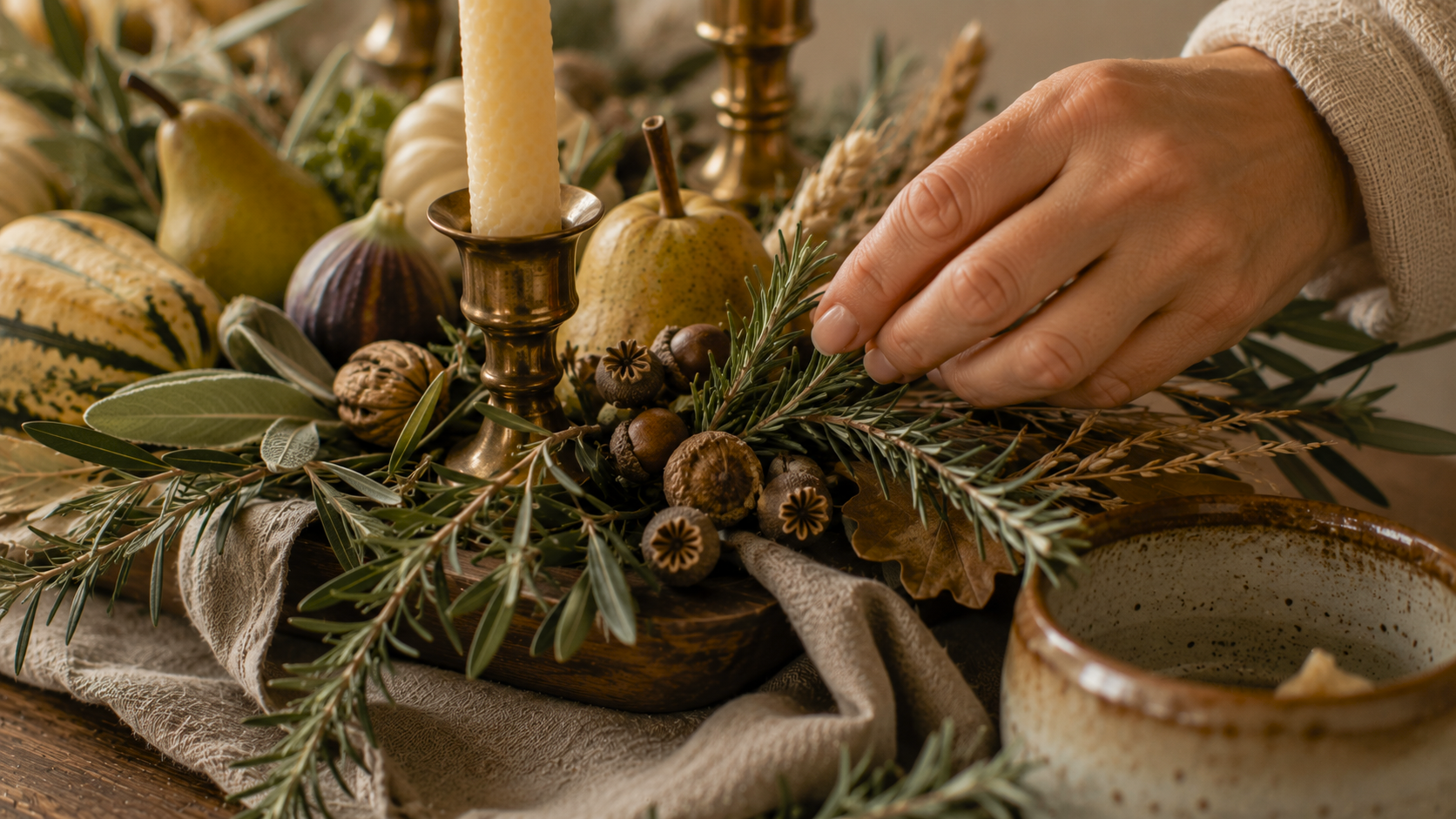
Add the subtle details that make everything feel collected.
Sprigs of rosemary beside folded napkins, a ceramic bowl, a weathered wooden spoon, acorns, dried seed pods, or a few fallen leaves add richness without clutter.
Texture feels most authentic when it seems to have found its own place.
6. Repeat One Accent Color
Unify.
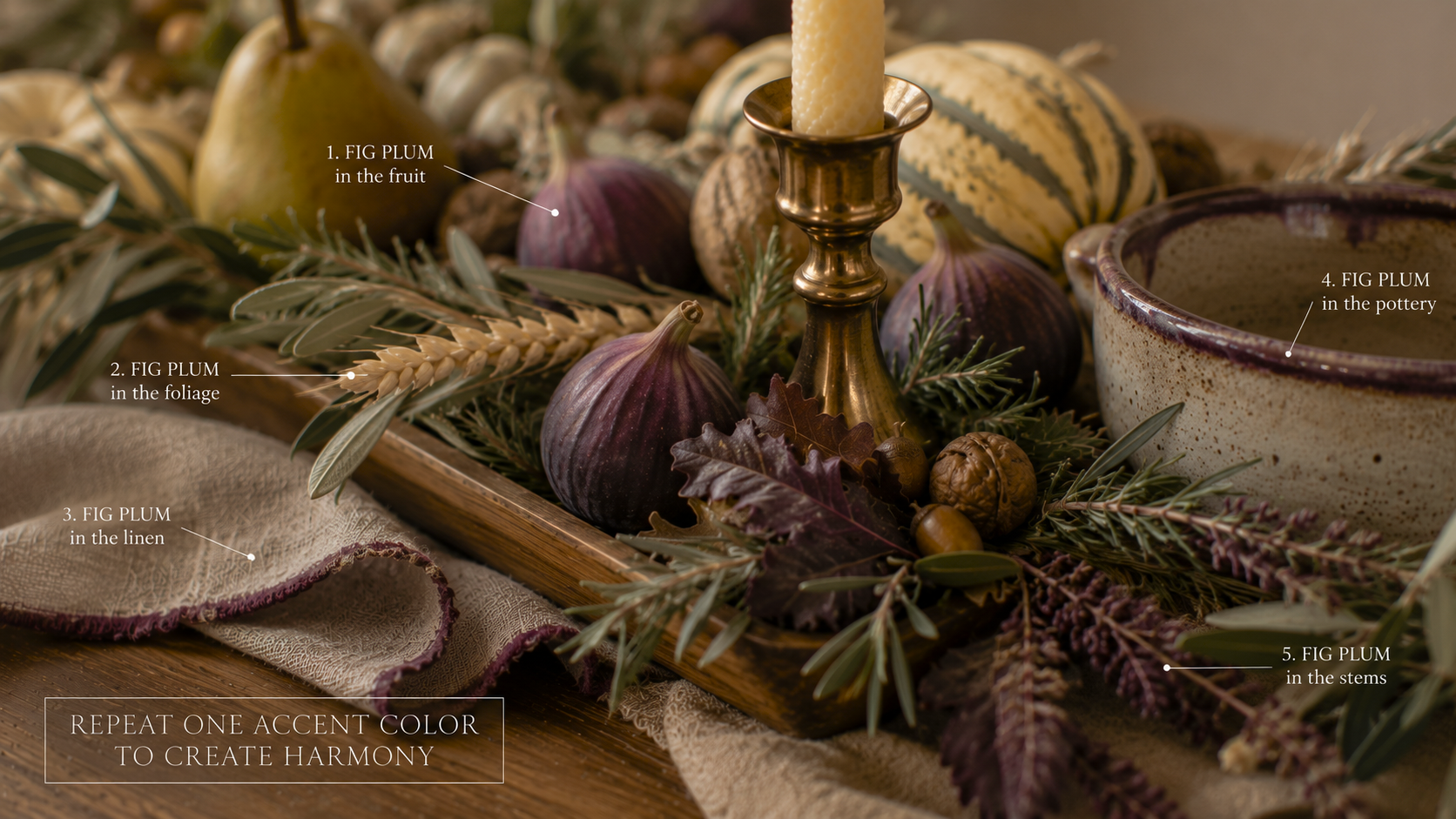
Create harmony through thoughtful repetition.
Choose a single harvest color and let it appear naturally throughout the centerpiece.
Deep fig plum, warm rust, pear green, or terracotta repeated in fruit, foliage, candles, or linens unifies the arrangement allowing it to feel relaxed and naturally cohesive.
One repeated color brings the entire table together.
7. Step Back and Edit
Refine.
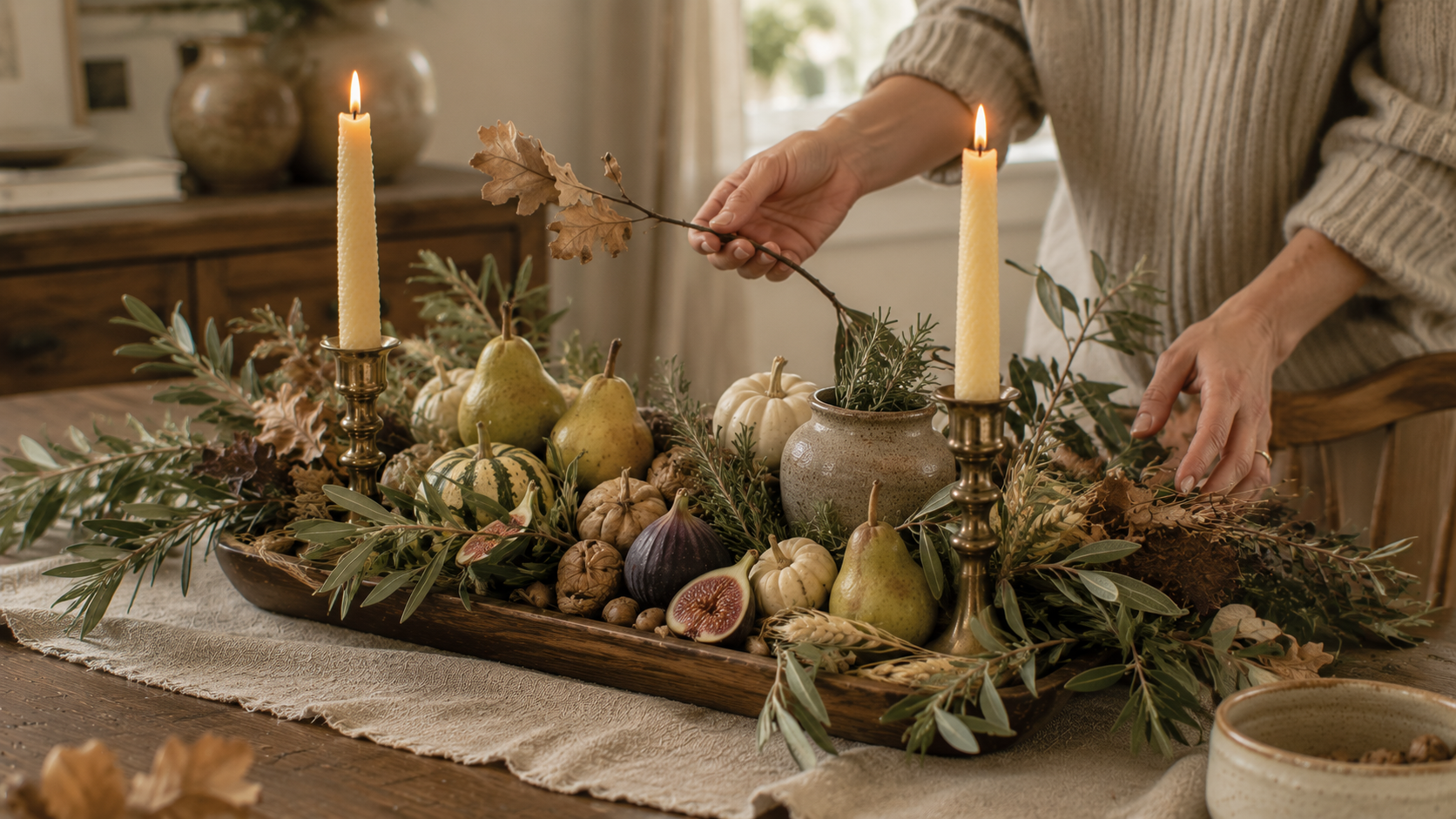
Leave room for beauty, conversation, and the season to breathe.
Before lighting the candles, pause for a moment.
Remove a piece or two if the arrangement feels crowded. Leave room for serving dishes, comfortable conversation, and clear sightlines across the table. Make sure candle flames have space around them and nothing obstructs the view between guests.
A harvest centerpiece should feel abundant, and it’s the thoughtful intention behind that abundance that gives it lasting beauty.
By the time the candles are lit, the centerpiece should feel as though it has grown naturally from the season itself. Branches, fruit, candlelight, and simple textures come together to create something warm, welcoming, and timeless, not because every element is perfect, but because every element belongs.
Seasonal Menu Inspiration
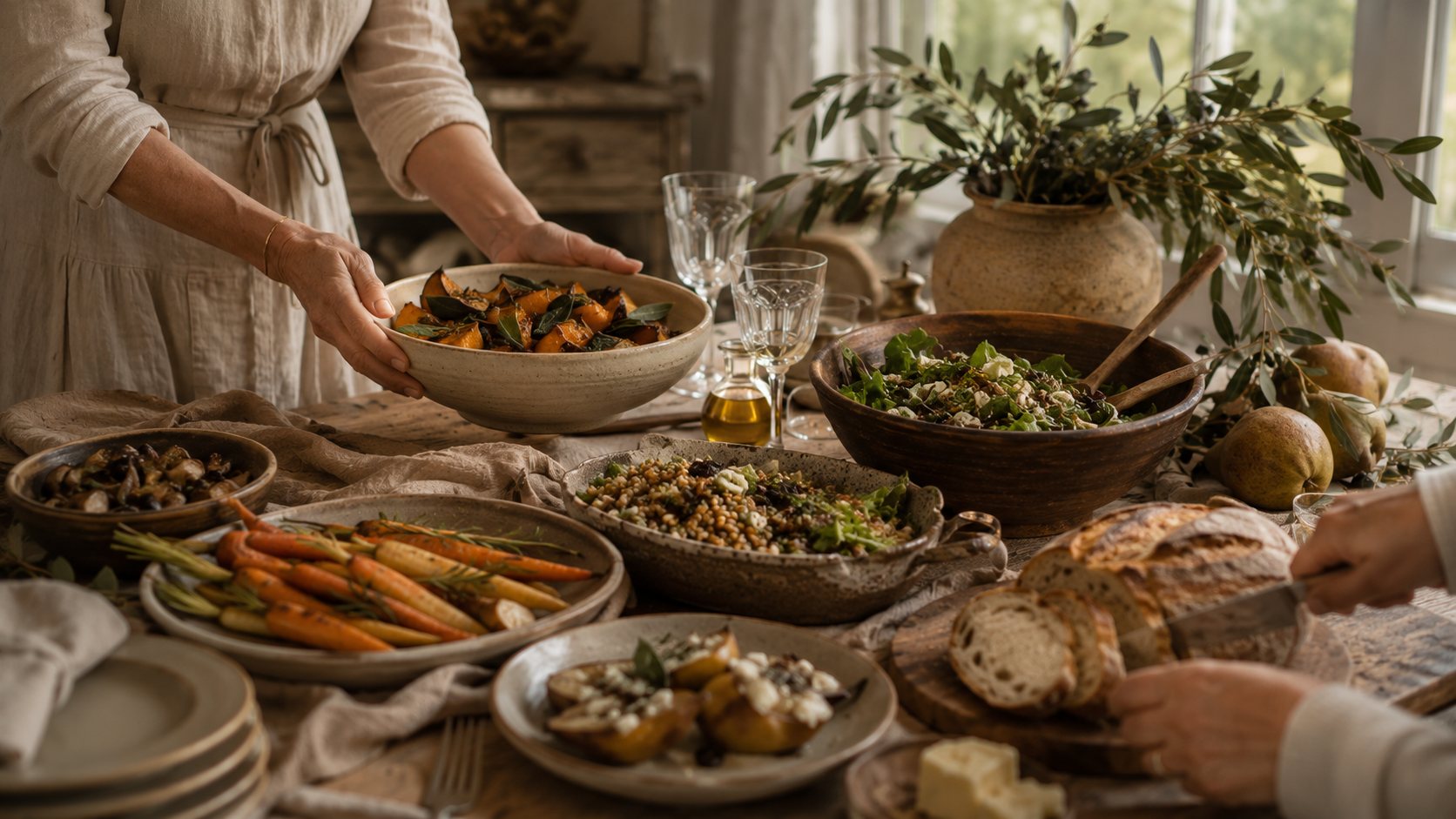
The harvest meals people remember most are usually the simplest and because they invite people to slow down, share, and enjoy the season together.
When planning a harvest menu, begin with ingredients that naturally belong to autumn. Crisp apples, ripe pears, fresh herbs, winter squash, wild mushrooms, figs, root vegetables, toasted nuts, and warm spices all bring a sense of the season to the table without requiring elaborate preparation.
Consider choosing dishes that encourage sharing. Family-style meals naturally create conversation as platters are passed from hand to hand and guests help themselves at their own pace. Before long, the food becomes part of the conversation instead of the focus.
One simple harvest menu might begin with warm herbed nuts or crostini topped with whipped goat cheese and roasted grapes. For the main course, herb-roasted chicken with thyme, rosemary, and lemon pairs beautifully with roasted squash finished with brown butter and sage, a wild rice pilaf with dried cranberries and toasted pecans, and a simple salad of pears, figs, and seasonal greens dressed with a light vinaigrette.
Dessert doesn't need to be elaborate to feel special. An apple galette served warm with vanilla bean ice cream, a rustic pear cake, or a simple berry crumble offers a comforting finish that feels perfectly at home on an autumn table.
To accompany the meal, consider a lightly oaked Chardonnay, a Pinot Noir, warm spiced cider, or sparkling water with slices of citrus and fresh herbs. Offering both festive and non-alcoholic choices helps every guest feel equally welcomed.
The goal isn't to prepare the most impressive meal. It's to create one that allows you to spend less time in the kitchen and more time around the table. When the food supports the conversation instead of competing with it, everyone including the host, has the opportunity to enjoy the gathering.
Seasonal food has a wonderful way of reminding us that some of life's simplest pleasures are also the most memorable. A shared meal, prepared with care and enjoyed without hurry, is often all that's needed.
The Evening Begins
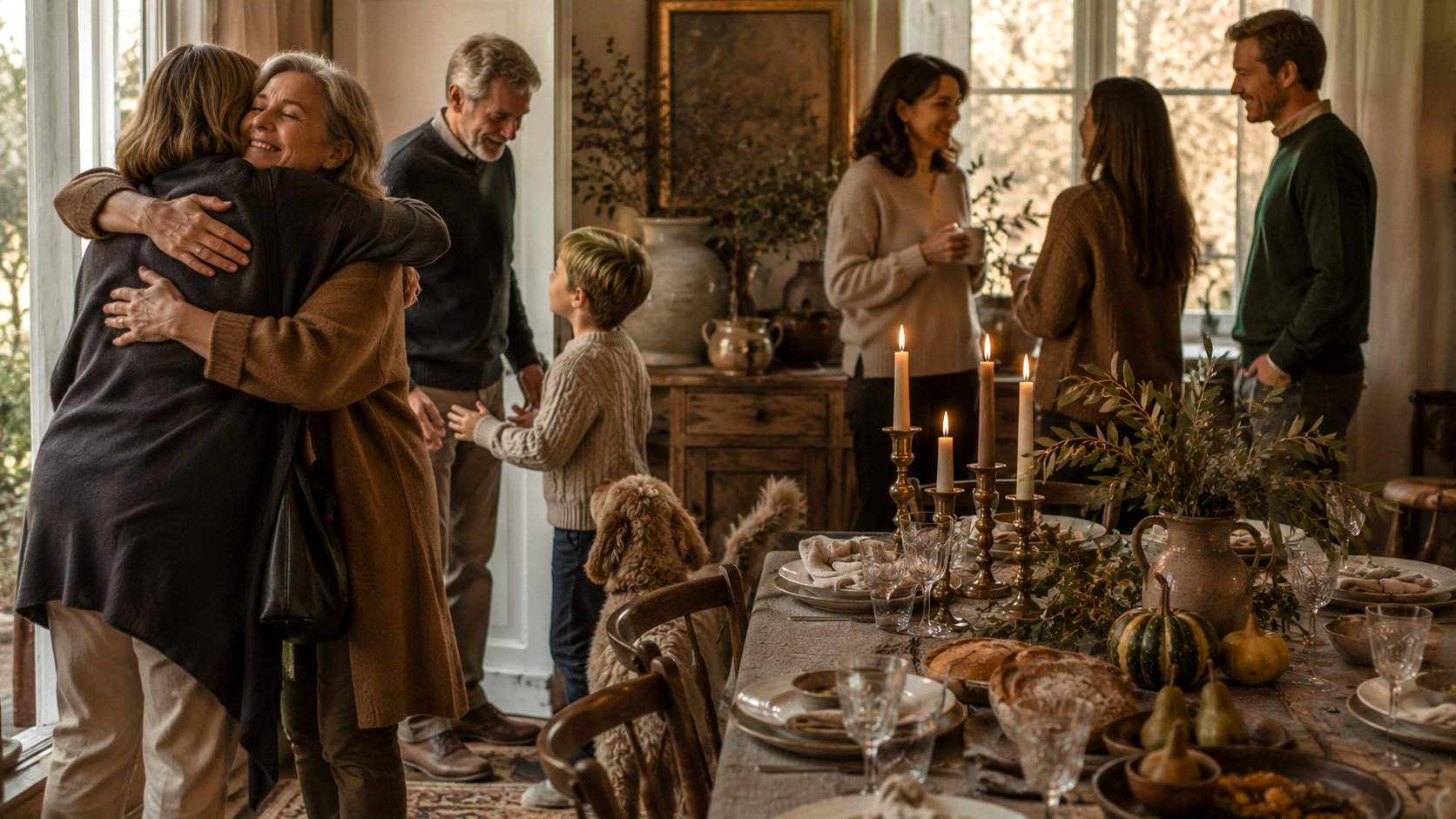
A harvest gathering has a way of slowing the pace for everyone. It doesn’t rush or demand attention. It simply unfolds, giving guests room to settle into the night rather than move from one moment to the next.
The evening often begins before anyone reaches the table.
Guests arrive, coats are set aside, and a seasonal drink is offered while conversations begin in their own time. Some naturally drift toward the kitchen, drawn by the aromas of dinner. Others pause by the fireplace or step outside for a breath of cool air before candlelight gathers everyone indoors.
When it’s time to sit down, there’s no need to hurry.
Family‑style serving lets the meal find its own rhythm. Platters move easily from hand to hand, stories continue between bites, and quiet pauses feel as natural as laughter. The table becomes less about the meal itself and more about the time shared around it.
Before the first dish is passed, a small moment of gratitude can anchor the evening.
It doesn’t need to be formal. A few simple words acknowledging the season, the harvest, or the pleasure of gathering with familiar faces is often enough. These traditions often become the moments people remember most.
As the night continues, let it linger.
Dessert arrives when it feels right. Coffee is poured. Candles burn lower. Conversations drift toward old stories, shared memories, and plans for the months ahead. There’s no need to move the evening along. Some of the most meaningful moments happen after the plates have been cleared.
A memorable gathering isn’t measured by how closely it follows a timeline. It’s found in the ease of the evening when guests relax, linger, and enjoy the simple pleasure of being together.
Creating Your Own Harvest Tradition
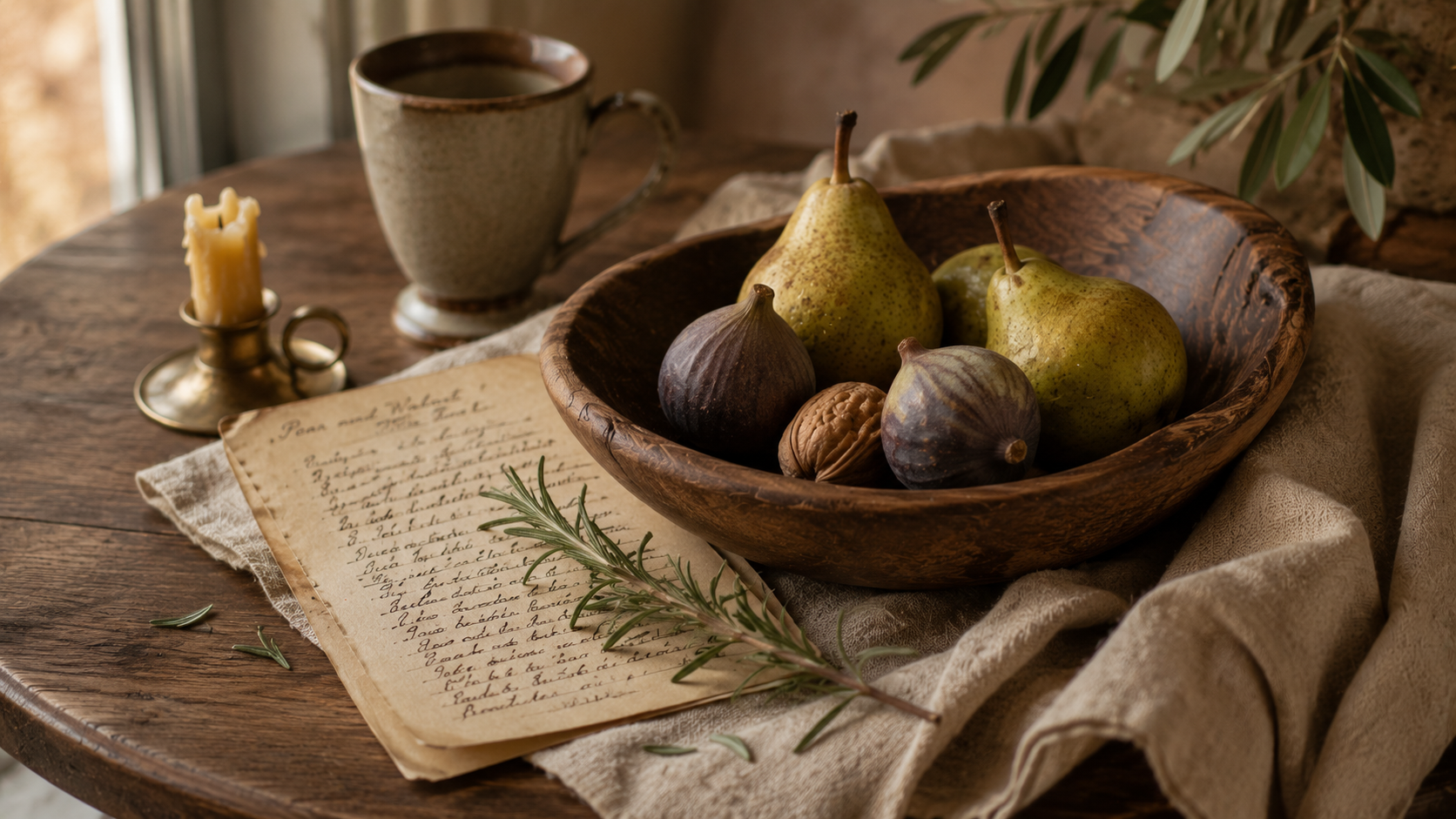
Every home carries its own story, and a harvest gathering should feel like an extension of that story rather than an imitation of someone else’s.
The ideas in this guide aren’t meant to be followed line by line. They’re meant to spark a way of thinking, one that favors thoughtful hospitality, seasonal beauty, and time shared without hurry.
A harvest gathering can feel just as meaningful around a small apartment table as it does in a spacious dining room or an outdoor courtyard. It might be a Sunday meal with extended family, an evening with close friends, or a quiet dinner for two as autumn begins to settle in. The size of the table matters far less than the welcome offered around it.
Your home already holds the beginning of the tradition.
Bring out the linen napkins you’ve used for years. Fill a favorite pitcher with branches gathered on an afternoon walk. Light a few candles. Prepare a simple meal with ingredients that belong to the season. Let conversation become the centerpiece. Beautiful gatherings rarely depend on buying more. They often come from seeing familiar things with fresh appreciation.
Over time, small rituals will begin to take shape.
Maybe it’s the soup that appears every autumn, the toast shared before the first course, the apple dessert everyone looks forward to, or the candleholders that always find their place at the center of the table. Over time, these small rituals become woven into your family's rhythm and giving each gathering a sense of continuity.
Meaningful traditions rarely arrive all at once. They grow gradually, shaped by the people who gather, the seasons that pass, and the memories created along the way.
Let this year's harvest table become the first chapter in a tradition that's uniquely your own. One that will grow richer with every season and every gathering around it.
Shop the Harvest Table
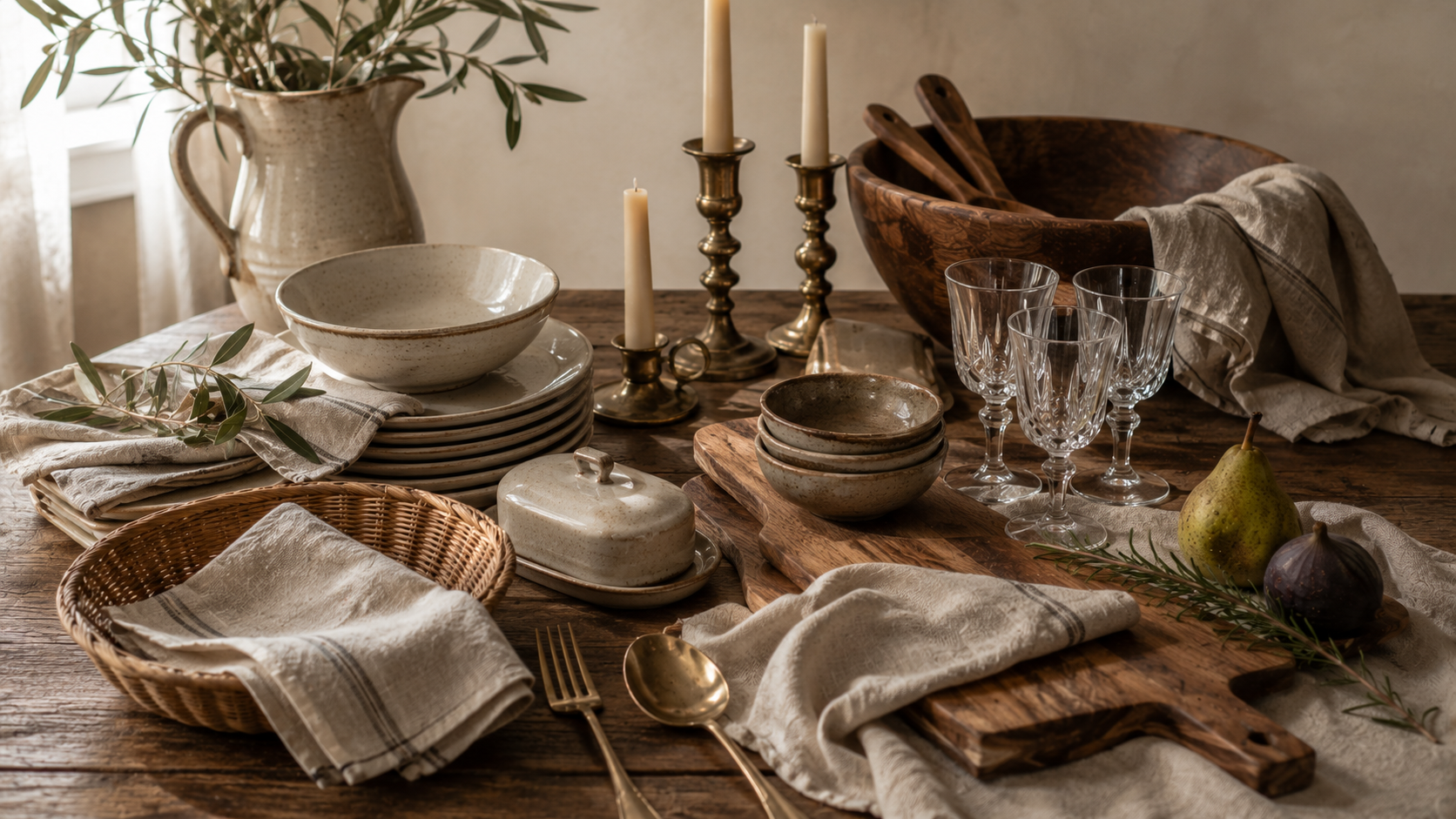
If you’re gathering ideas for your own harvest table this season, here’s a collection of pieces inspired by the style and atmosphere woven throughout this guide. These are the kinds of pieces that stay beautiful regardless of changing trends.
Harvest Table Essentials
If you’re beginning to build a small collection, these pieces create a strong foundation:
Linen table runner or tablecloth in a warm neutral
A ceramic pitcher vase for branches
A favorite serving bowl for family‑style dishes
Table Linens
Natural linen brings softness and texture to the table while letting seasonal colors take the lead. Ivory, oat, flax, and warm taupe work beautifully year‑round and blend easily with whatever the season offers.
Dinnerware & Glassware
Stoneware and clear glass create a relaxed foundation that suits both everyday meals and special gatherings. There’s no need for perfect matching. Subtle variations in texture and finish make the table feel collected over time rather than assembled all at once.
Candles & Lighting
Candlelight transforms a room more than almost anything else. Tapers, pillars, lanterns, and warm‑toned candleholders create the gentle glow that encourages guests to slow down and linger.
Serving Pieces
Family‑style dishes become part of the experience when they’re served in bowls, platters, wooden boards, and baskets meant to be passed around the table. These pieces encourage sharing, making the meal feel as relaxed as the conversation around it.
Botanical Vessels
Simple ceramic pitchers, vintage crocks, glass bottles, and understated vases are often all that's needed to display branches, dried grasses, or seasonal foliage. Their role isn't to compete with nature, but to let it take the lead.
Seasonal Details
Branches from the garden, pears and apples, heirloom gourds, linen napkins tied with rosemary, and handwritten place cards are often the finishing touches that make a harvest table feel personal rather than perfectly styled.
These pieces aren't meant to match one another perfectly. Over time they'll collect small scratches, deepen in patina, soften through use, and become part of your family's celebrations. Choose what you'll enjoy using for years to come and let each gathering add another chapter to your story.
A Final Thought
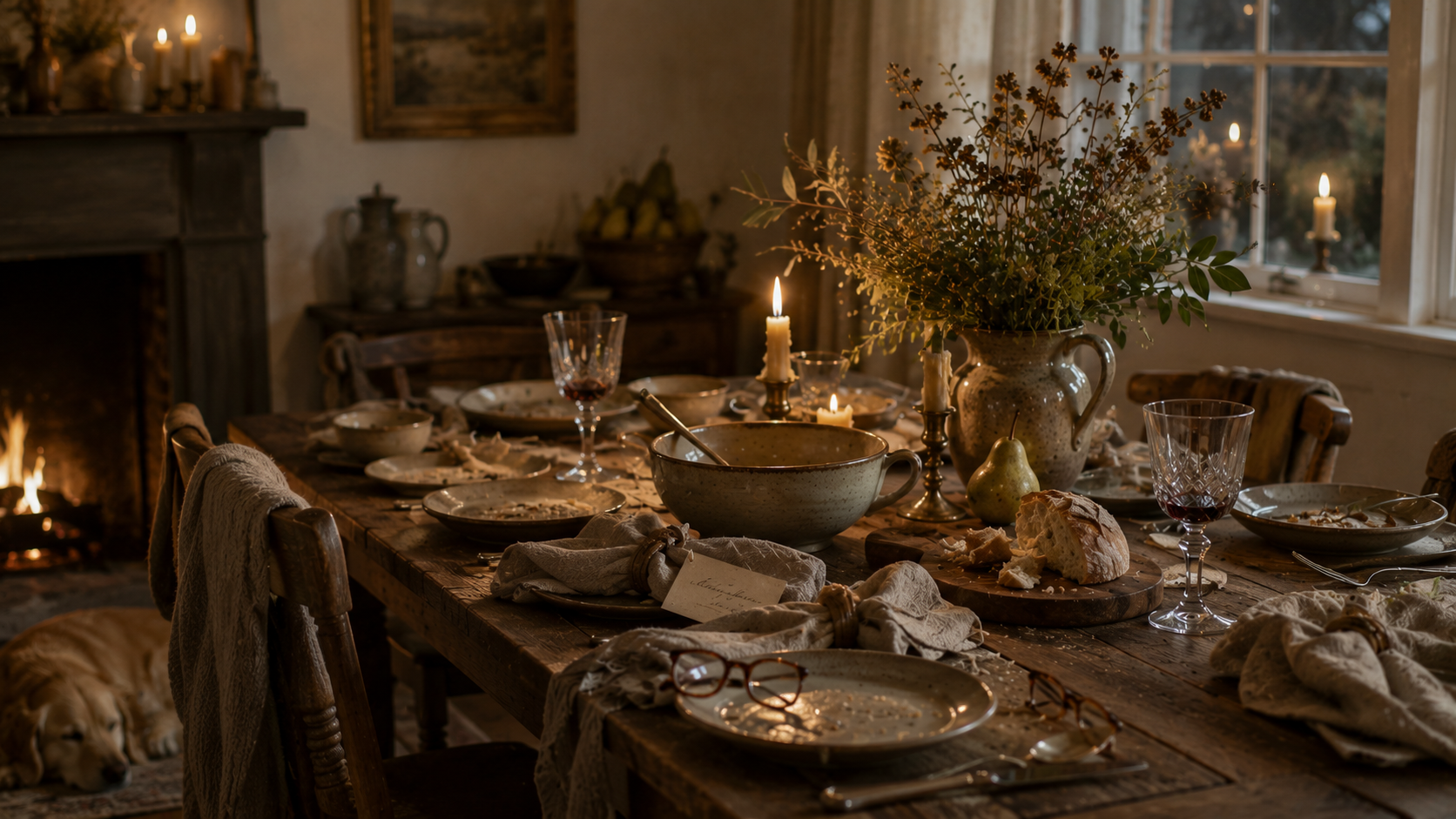
When the last candle has burned low and the dishes have been carried to the sink, it’s rarely the table people remember.
They remember the conversation that lingered longer than expected. The warmth of being welcomed at the door. The easy rhythm of passing dishes from hand to hand. The laughter that rose and settled throughout the room, the shared moments between old friends, and the feeling that, for a few hours, there was nowhere else they needed to be.
That’s the true gift of gathering.
Autumn colors and carefully chosen linens certainly have their place, but a memorable harvest table begins with the people who gather around it. It’s about creating a space where people feel comfortable enough to slow down, share a meal, and enjoy one another’s company. The table simply gives those moments a place to land.
As the seasons shift, your table will shift with them. Recipes will evolve. New traditions will take shape almost without noticing. Candleholders will deepen in patina, linen napkins will soften, and each autumn will add another layer to the memories created around your table.
Years from now, those small details will still be waiting each autumn, ready for another gathering.
Whether you’re hosting a large family dinner, inviting a few close friends, or sharing a quiet meal with someone you love, the same principles remain. Welcome people warmly. Let the season guide your choices. Keep the table comfortable rather than complicated. Allow the evening to find its own pace.
The gatherings that stay with us aren’t remembered for what was served or how perfectly everything was arranged.
They’re remembered because, for a little while, everyone around the table felt at home.
I hope this guide encourages you to create a harvest gathering that reflects your own home, your own traditions, and your own way of welcoming others. Begin with what you have. Gather the people you love. Let the season do the rest.
The most enduring traditions aren’t created in a single evening.
They’re gathered, one autumn at a time.
Disclosure: This article may contain affiliate links. If you make a purchase through these links, I may earn a commission at no additional cost to you.
