

How to Make Every Room Feel Beautiful
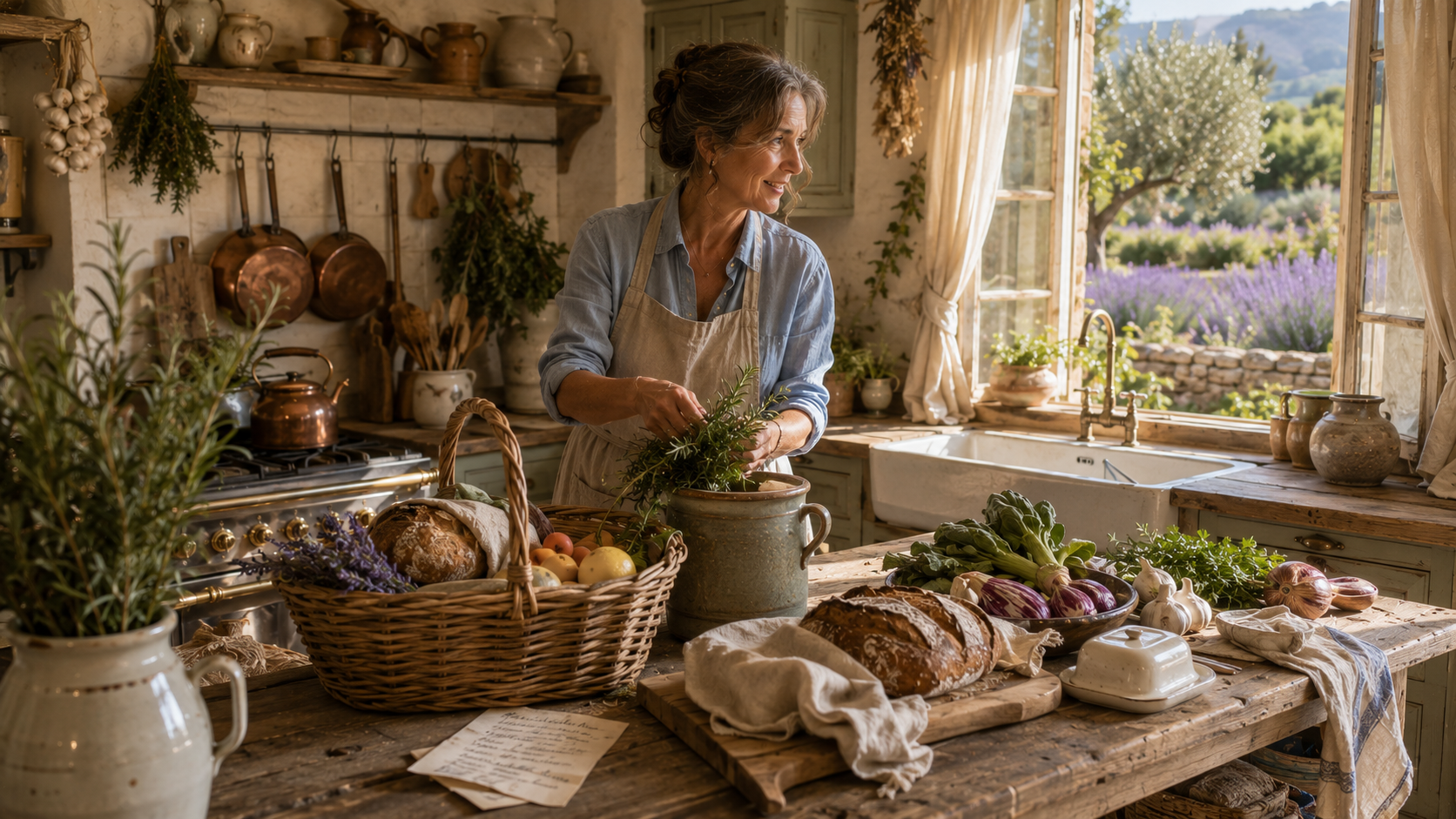
I’ve always remembered my grandmother’s house by scent before anything else. The air carried the sweetness of ripe raspberries drifting in from the sun warmed cedarwood deck. Even now, that combination brings her home back to me more quickly than any photograph could.
Years later, I learned how scent can define a place in a completely different way. A high school friend’s home smelled of pipe tobacco and old books. Her father smoked, and the fragrance settled into every shelf. It was comforting. I can still picture that living room just by remembering the smell.
You probably have a memory like that too. A scent that brings back a room, a person, or a moment you haven’t thought about in years. It is the fastest way back to a place that mattered.
That is where home fragrance really begins: with the way a scent shapes how we experience a room.
Why Fragrance Is Part of Beautiful Living
Scent is one of the quickest ways to change how a room feels. It can soften the edges of a long day, make a space feel more welcoming, or help you settle into a moment you want to remember. We tend to think of home fragrance as decoration, but it is closer to atmosphere. It shapes how we move through our homes and how our homes meet us when we walk through the door.
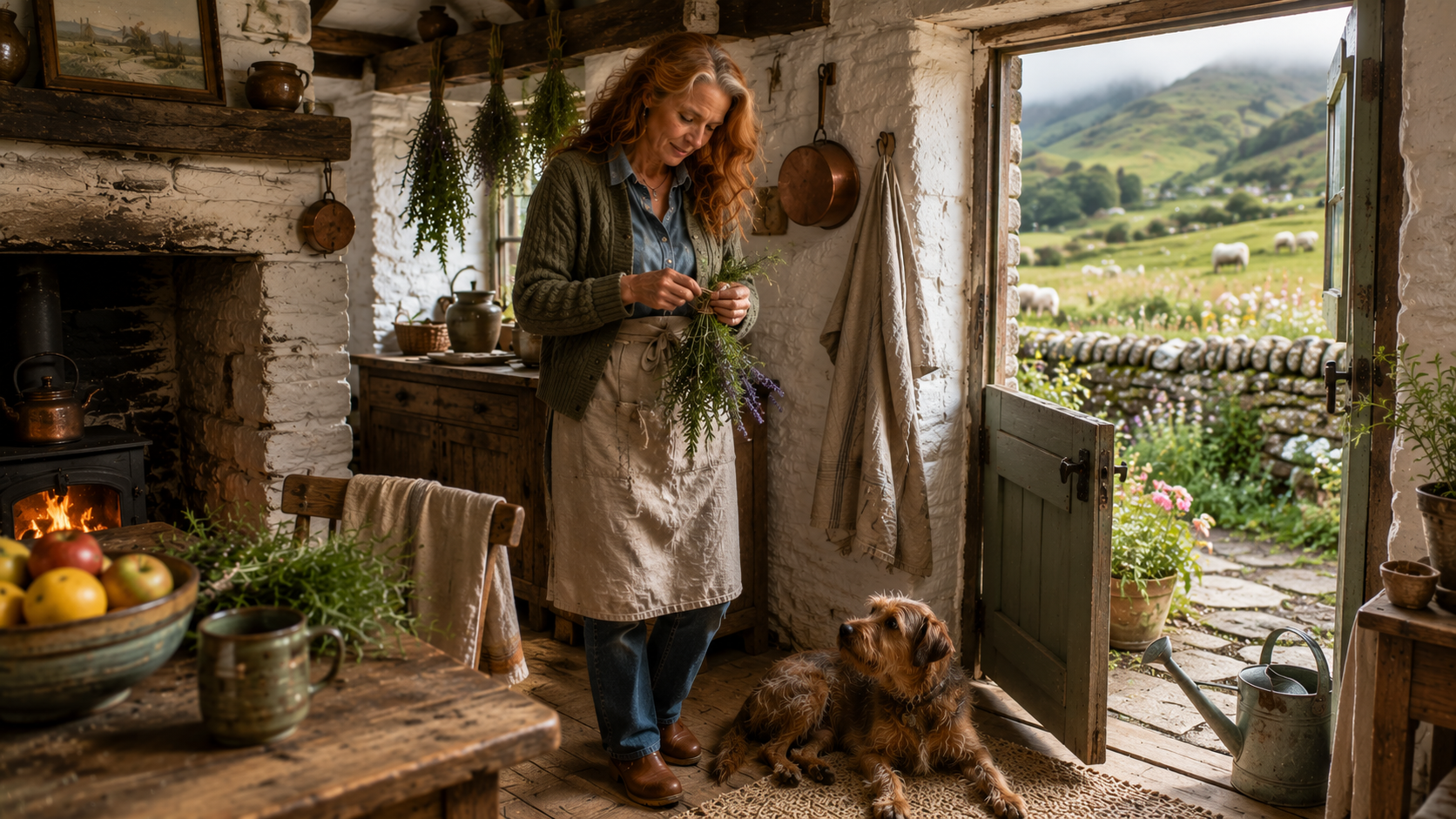
A beautiful room is as much about the air as what you see: the light, the calm, the scent that meets you at the door. Even simple choices make a difference. Opening a window for a few minutes, letting fresh air move through the house, or clearing out lingering odors from cooking or pets can change the entire mood of a space before you add anything scented.
Fragrance becomes most meaningful when it works with the life you already live. A kitchen that smells like citrus after breakfast feels different from one that still carries last night’s dinner. A living room with a soft wood or amber note makes evenings feel more grounded. A bedroom with a gentle floral or herbal scent helps you slow down at the end of the day.
Home fragrance is about creating a feeling that supports the way you want to live in your home. A scent should never be a way to cover something up.
The Science of Scent
Scent reaches the brain faster than any other sense. When you smell something, the signal travels directly to the parts of the brain that handle memory and emotion. This is why a single fragrance can bring back a moment you have not thought about in years. It is also why home fragrance changes how a room feels almost instantly.

Scientists call this connection the Proust Effect. It describes the way a familiar scent unlocks a memory with no effort at all. You do not have to think about it. The memory simply arrives. Lilacs bring back a childhood spring while a certain type of spice reminds you of a kitchen you loved.
This is the foundation of home fragrance. When you choose scents for your home, you are choosing the feelings and memories you want to bring forward. You are also shaping the way new memories will form in your space. A scent you use often becomes part of how your home is remembered by the people who visit it.
Understanding Fragrance Families
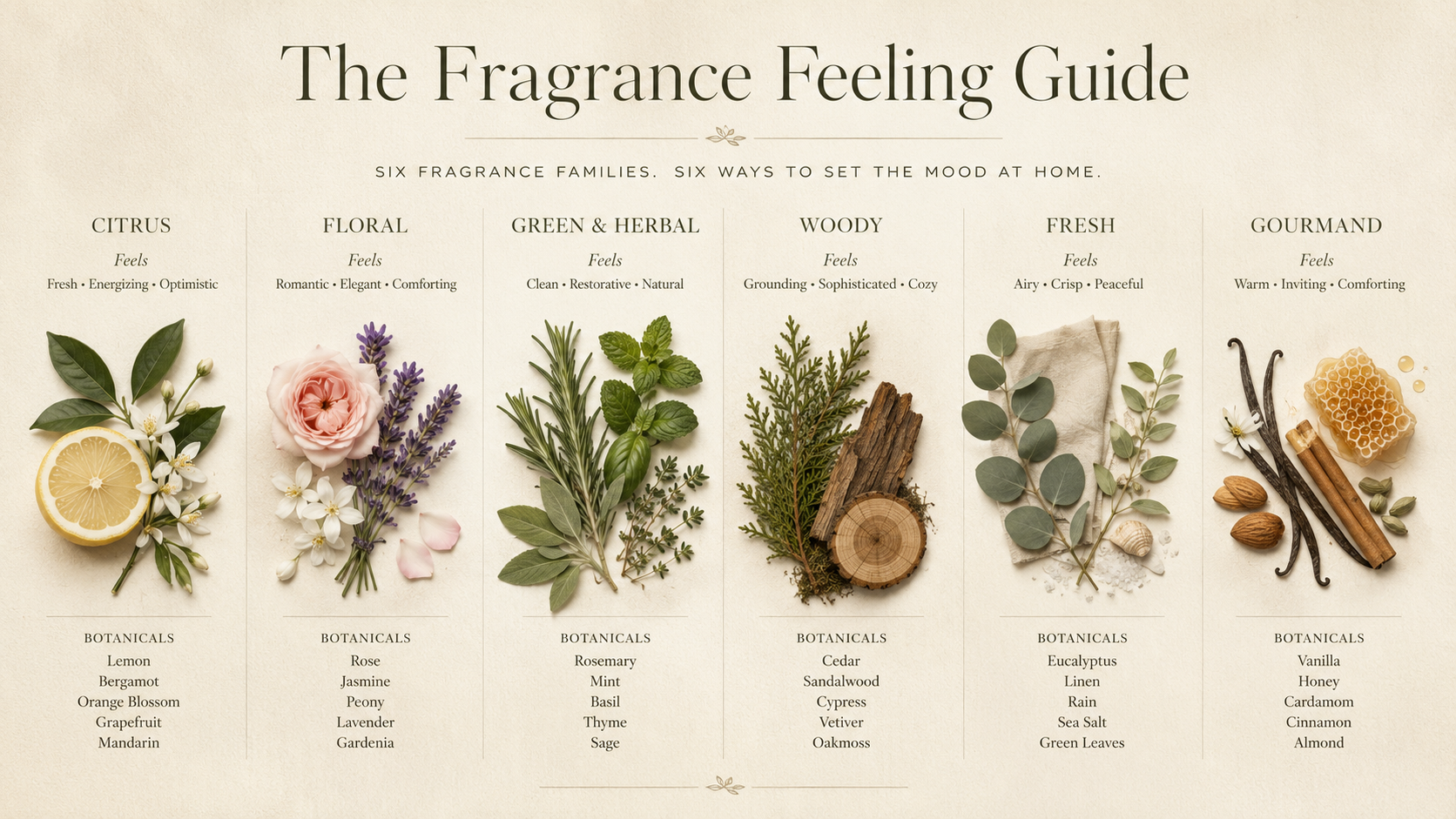
Before you choose scents for your home, it helps to understand the basic fragrance families. Each one carries a different mood and behaves differently in a room. Knowing the families makes it easier to choose scents that match the feeling you want to create.

Citrus
Citrus scents feel bright and clean. They suit kitchens, entryways, and any space where you want a sense of freshness. Lemon, bergamot, grapefruit, and orange are common notes. Citrus is also one of the easiest families to blend with others.
Herbal and Green
Herbal scents feel natural and calming. They remind people of gardens or fresh air. Rosemary, basil, sage, mint, and green leaves fall into this family. Use them in kitchens, bathrooms, and bedrooms.
Floral
Floral scents can be soft, powdery, fresh, or warm depending on the flower. Rose, jasmine, peony, lilac, and tuberose are common notes. Florals make a room feel more inviting or more romantic, depending on how they are blended.
Fruity
Fruity scents feel playful and approachable. They can be sweet or tart. Apple, pear, berry, fig, and peach are common notes. Fruity scents work well in living rooms and bedrooms when you want a softer, more relaxed mood.
Wood
Wood scents feel grounded and warm. They add depth to a room and make a space feel more settled. Cedar, sandalwood, oak, and pine are common notes. Wood scents are ideal for living rooms, offices, and evening spaces.
Amber and Resin
Amber scents feel rich and layered. They have a warm, enveloping quality. Amber, labdanum, benzoin, and resin notes fall into this family. Reach for these in cooler months or in spaces where you want a sense of comfort.
Spice
Spice scents feel warm and energetic. Cinnamon, clove, cardamom, nutmeg, and pepper are common notes. Spice is made for kitchens, dining rooms, and fall or winter spaces.
Fresh and Aquatic
Fresh scents feel clean and airy. They remind people of water, linen, or open windows. Coastal and fresh linen/cotton fall into this family. These scents compliment bathrooms, laundry rooms, and minimalist spaces.
Gourmand
Gourmand scents smell edible. Vanilla, caramel, chocolate, almond, and baked goods fall into this family. Gourmands make a space feel cozy and familiar, especially in kitchens and living rooms.
Smoky and Leather
Smoky scents feel bold and atmospheric. Leather, tobacco, smoke, and charred wood fall into this family. These scents work well in offices, dens, or any space where you want a more dramatic mood.
Understanding these families helps you choose scents that support the feeling you want in each room. It also makes blending easier, since some families naturally complement each other.
Choosing Your Signature Home Scent
Choosing a signature scent for your home comes down to how you want your space to feel. A scent becomes part of your home’s personality. It sets the tone for the moments you create there and becomes something people remember when they think of your space.

A signature home scent can be as simple as a fragrance you return to because it feels comfortable in the space. It needn’t appear in every room or stay unchanged all year.
Begin With Your Actual Routine
Think about how you use each room and how you want it to meet you. Morning spaces feel best with something fresh or bright. Evening spaces usually benefit from something warm or grounding. Rooms where you gather might call for something welcoming. Rooms where you rest might need something softer.
Pay Attention to the Scents You Already Love
If you reach for citrus when you clean, you might enjoy a citrus‑based candle in your kitchen. If you prefer wood or amber in your personal fragrance, you may want those notes in your living room. If herbal scents help you slow down, they can work beautifully in a bedroom or bathroom.
Your signature scent does not have to be one single fragrance. It can be a small group of scents that work together. A citrus‑herbal blend for daytime, a soft floral for evenings, and a warm wood for cooler months can all feel like part of the same story.
The goal is to choose scents that support the way you live and make your home feel more like itself.
Room by Room Fragrance Guide
Every room in your home has its own rhythm. The way you use a space should guide the scent you choose for it. When fragrance supports the natural flow of a room, it feels effortless. It becomes part of how the space welcomes you and how it settles around the people who spend time there.

Rooms place different demands on fragrance. In a home with open doorways, the first decision is where to put the source, because scent won’t stop at the edge of the rug.
The Entryway
Your entryway sets the tone for the rest of your home. A fresh or bright scent works well here because it creates an immediate sense of clarity. Citrus, herbal, or soft green notes make the space feel open and welcoming. The goal is to create a first impression that feels clean and intentional.
The Living Room
This is often the heart of the home. Choose scents that make the space feel comfortable and lived in. Wood, amber, soft floral, or warm spice notes work well here. They help the room feel grounded without overwhelming it. If you gather here in the evenings, deeper scents can make the space feel more settled.
The Kitchen
The kitchen already has its own natural scents from cooking and daily use. Choose fragrances that complement what is already happening in the kitchen. Citrus, herbal, and fresh green notes work beautifully. They help the space feel clean and bright. Avoid heavy gourmands unless you want to lean into a cozy, baked‑goods atmosphere.
The Dining Room
In this space, fragrance should support the meal. Light herbal, soft floral, or gentle wood notes work well. They add atmosphere without competing with food. If you host often, choose scents that feel elegant and understated.
The Bedroom
Bedrooms benefit from scents that help you slow down. Soft florals, herbal blends, gentle woods, or light amber notes can make the space feel restful. Avoid anything too sharp or energizing. The desired effect is to create a sense of calm that helps you transition into evening.
The Bathroom
Fresh and clean scents work best here. Aquatic notes, linen, citrus, and herbal blends help the space feel crisp. Bathrooms often benefit from scents that lift the air and make the room feel open.
The Office or Workspace
Choose scents that help you focus. Wood, herbal, and soft spice notes can make the space feel grounded. Avoid anything too sweet or too heavy. Create a scent that supports concentration without becoming a distraction.
The Laundry Room
Fresh, airy scents work well here. Linen, soft citrus, and clean floral notes help the space feel bright. These scents also blend well with the natural fragrance of laundry products.
How Luxury Hotels Layer Fragrance
Luxury hotels understand that scent is part of the experience. When you walk into a well‑designed lobby, the fragrance is never accidental. It is chosen to match the architecture, the lighting, the materials, and the feeling the hotel wants you to carry with you.

Hotels use fragrance in layers. They start with a base that sets the overall mood. This is usually something soft and steady, like wood, amber, or a gentle floral blend. Then they add lighter notes that shift throughout the day. Morning might feel brighter with citrus or herbal accents. Evening might feel warmer with spice or deeper wood notes.
When a hotel creates a feeling that stays with you long after you leave, the scent becomes part of the memory. You remember the way the lobby felt, the way the hallways carried a certain warmth, or the way the rooms had a soft, calming fragrance that made it easier to settle in.
You can use the same idea at home. Choose a base scent that feels like your home’s personality. Then add lighter accents that shift with the time of day or the season. This creates a layered experience that feels intentional without being complicated.
Choosing Quality Home Fragrance Products and Methods
Quality matters more than marketing when it comes to home fragrance. A beautiful scent should feel balanced, safe, and true to the notes listed on the label. When a product is made well, it fills a room without feeling heavy. It also burns or diffuses cleanly, which protects both your home and the air you breathe.
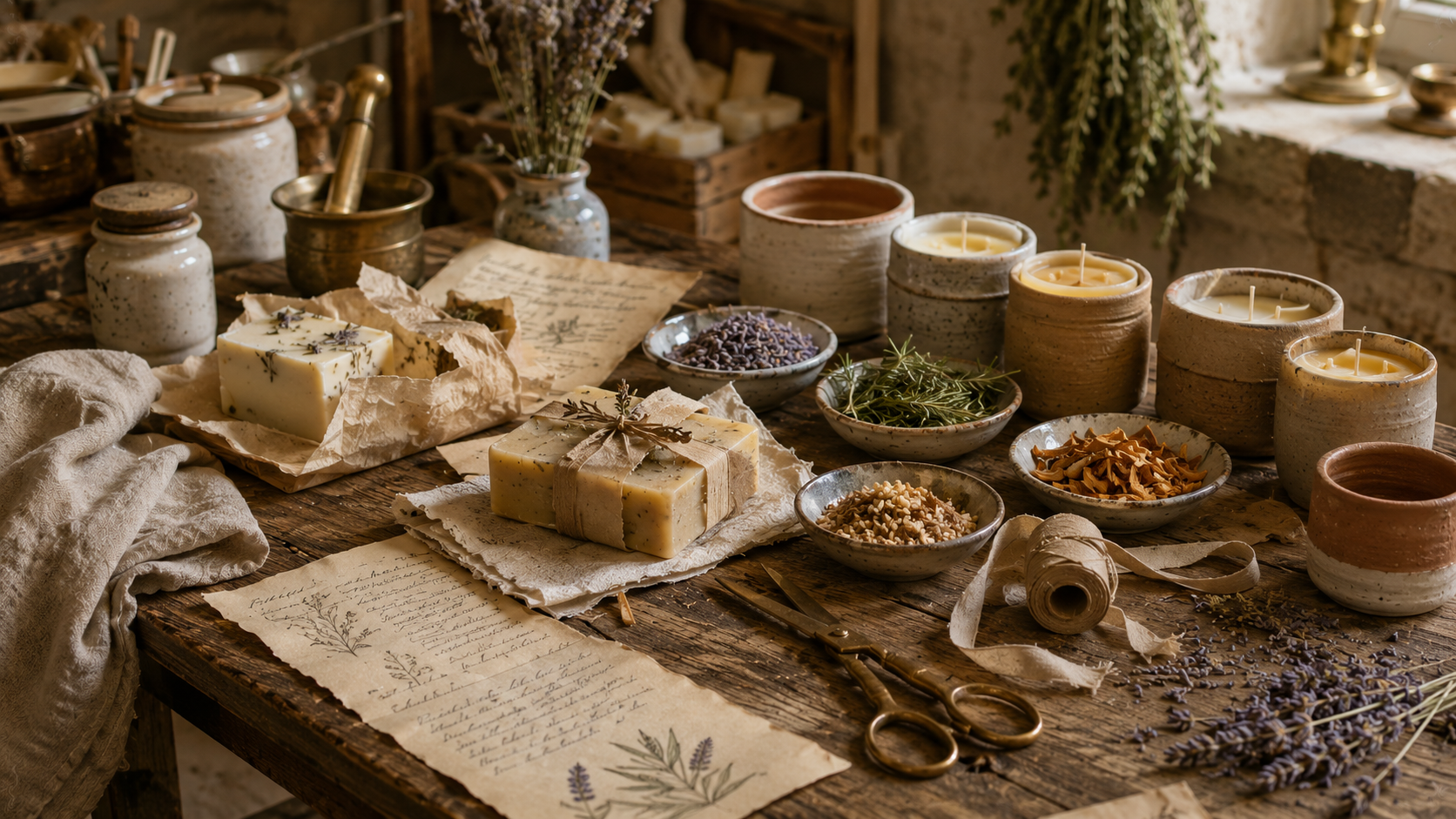
Start by reading beyond the front label. Look for details about the wax blend, wick type, essential oil quality, or fragrance composition. A candle made with a clean burning wax and a properly sized cotton wick will perform better and last longer. A diffuser with well crafted oils will hold its scent without turning sharp or overly sweet.
Pay attention to how a product behaves in your home. A candle should burn evenly and leave minimal residue. A diffuser should release fragrance at a steady pace. Room sprays should settle into the air without feeling heavy or chemical. If something feels off, it usually is.
You do not need a large collection to create a beautiful atmosphere. A few well chosen products can shape your home more effectively than a shelf full of items that do not perform well. Choose pieces that feel aligned with your home’s personality and with the way you want each room to feel.
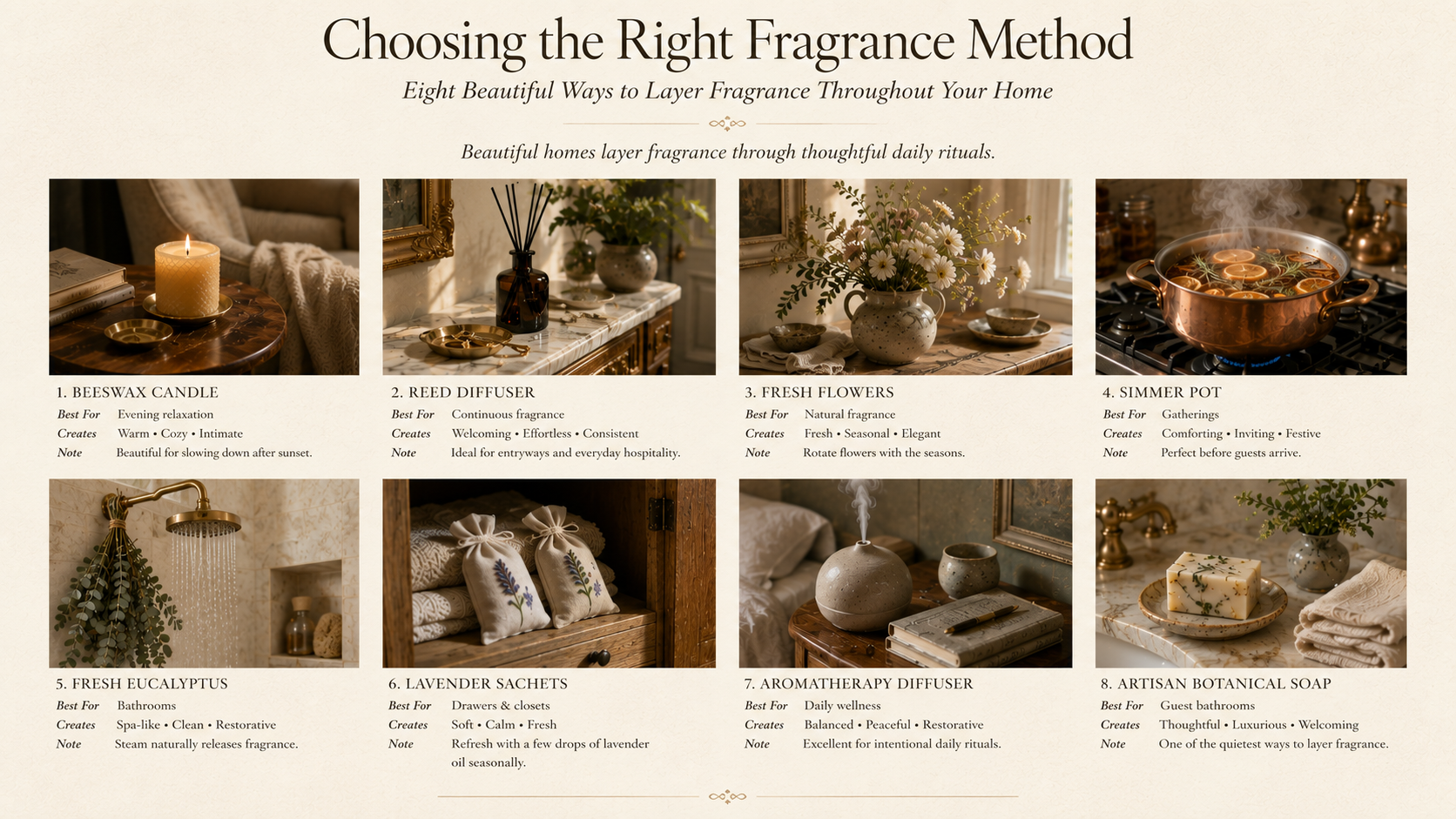
Different fragrance methods suit different rooms and routines. Choosing the right one helps you control both intensity and safety.
Candles
Candles add both scent and visual warmth. They work well in living rooms, dining rooms, and bedrooms when you can be present while they burn. Use them where you want a more intentional, focused moment.
Reed Diffusers
Diffusers provide a steady, low effort fragrance. They are ideal for entryways, hallways, bathrooms, and offices. Once placed, they quietly shape the air without needing attention.
Room Sprays
Sprays offer quick, flexible scent. They are useful for refreshing a space before guests arrive or after cooking. They work best as a finishing touch rather than a constant source.
Wax Melts and Warmers
Wax warmers give you candle like fragrance without an open flame. They are helpful in homes with pets or children, or in spaces where you prefer not to burn candles.
Essential Oil Diffusers
Oil diffusers use water and essential oils to create a soft, misted fragrance. They work well in bedrooms, offices, and wellness spaces. Choose oils carefully, especially if you have pets or scent sensitivities.
The method you choose should match both the room and your lifestyle. If you are often in and out, diffusers and sprays may serve you better than candles. If you love evening rituals, candles and warmers can become part of how you close the day.
Home Fragrance Safety: Creating a Beautiful Home for Everyone
Safety is an essential part of creating a home that feels beautiful and comfortable. The products you choose should support your space without introducing unnecessary risks. A few simple habits can make a meaningful difference in how fragrance behaves in your home.
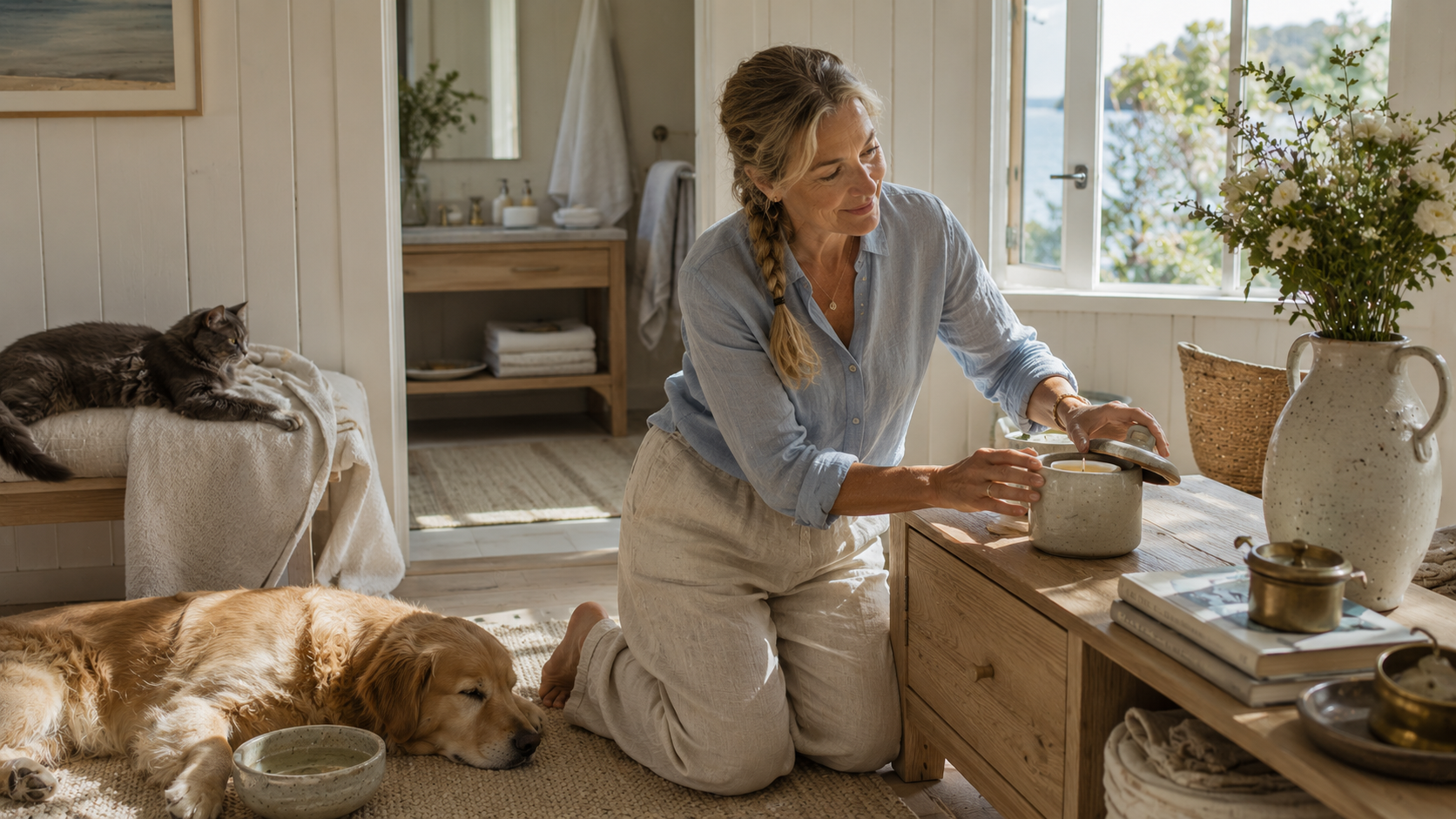
Candle Safety
Candles should always be used with care. Keep them on a stable, heat‑safe surface away from anything that can catch fire. Trim the wick before each burn to help the candle burn evenly and reduce soot. Never leave a candle unattended, and always keep it out of reach of children and pets. Extinguish it when you leave the room or when the wax reaches the end of the container.
Diffuser Safety
Reed diffusers are low effort, but they still need thoughtful placement. Keep them where they cannot be knocked over. If you have pets, place diffusers in areas they cannot reach. Some essential oils can be harmful to animals, so choose blends carefully and monitor how your pets respond.
Room Spray Safety
Room sprays should be used lightly. Spray into the air rather than directly onto fabrics unless the product is designed for textiles. Avoid spraying near open flames or hot surfaces. If you have scent sensitivities, start with a small amount and see how it settles in the room.
Essential Oil Safety
Essential oils are concentrated and should be used with care. Some oils can irritate skin or cause reactions in pets. Always dilute oils properly when using a diffuser. If you have animals, research which oils are safe for them and avoid anything that may cause discomfort.
Ventilation Matters
Fresh air is one of the simplest ways to keep your home safe and comfortable. Open windows when you can, especially when using stronger scents. Good airflow helps fragrance settle naturally and prevents buildup.
It’s important to choose products that support your home and the people who live in it.
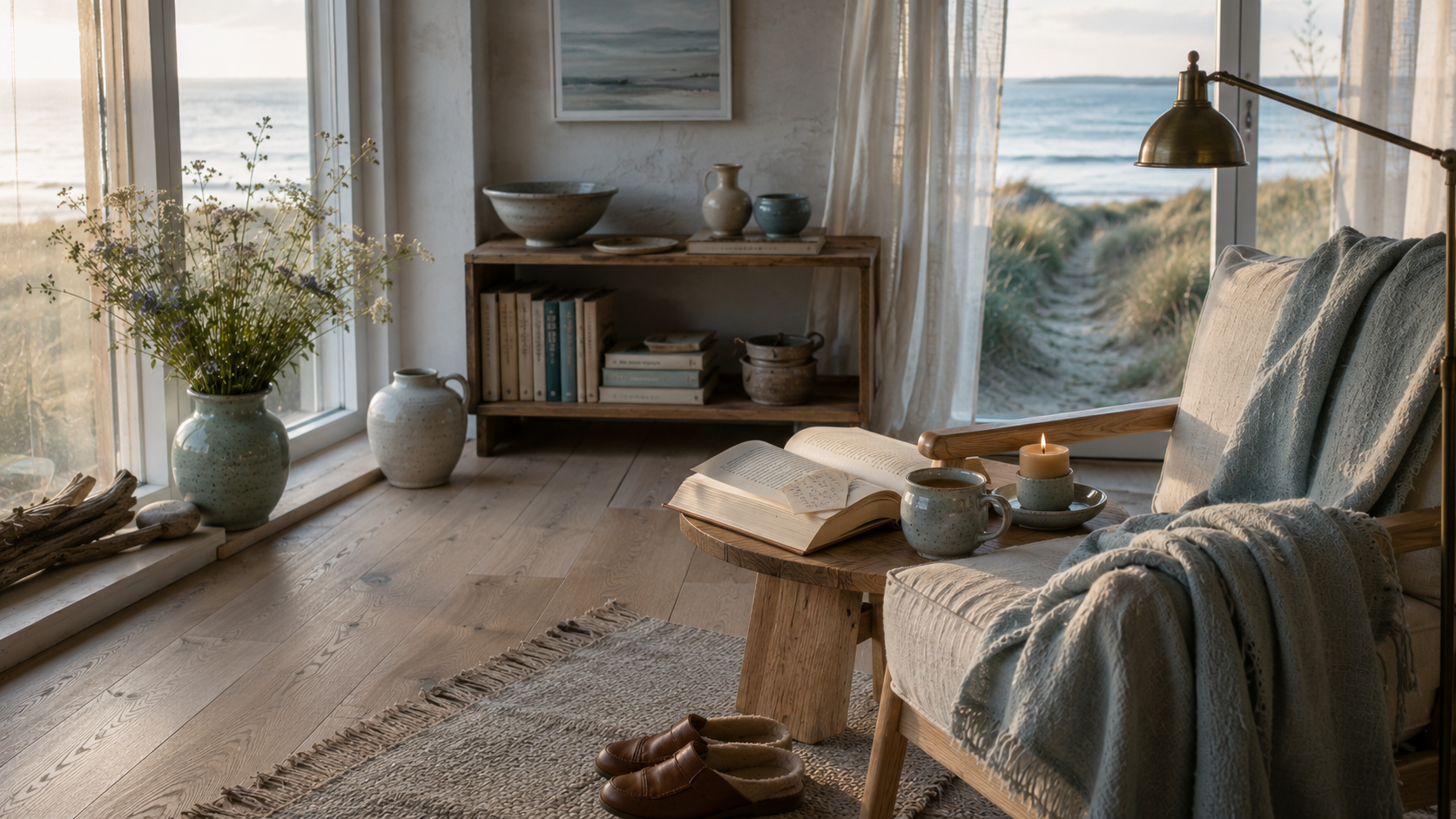
Create the Atmosphere
Choose a method you expect to use, then check the product’s size and care requirements. The links below are grouped by how each method fits into everyday use.
Essential Foundations
Atmosphere & Entertaining
Natural Beauty
Inspiration
Disclosure: Some links on this page may be affiliate links. If you make a purchase through certain links, I may earn a small commission at no additional cost to you. B'Inspired combines original photography, properly licensed imagery, product photography and AI-assisted editorial illustrations. AI-assisted visuals are used to interpret ideas and teach concepts, not to misrepresent actual destinations, products, people or personal experiences.
