

How to Build a Fall & Winter Capsule Wardrobe From Clothes You Already Own
A fall and winter capsule wardrobe is the clothes you already own, finally working together. Here is how to build one that works for your lifestyle.
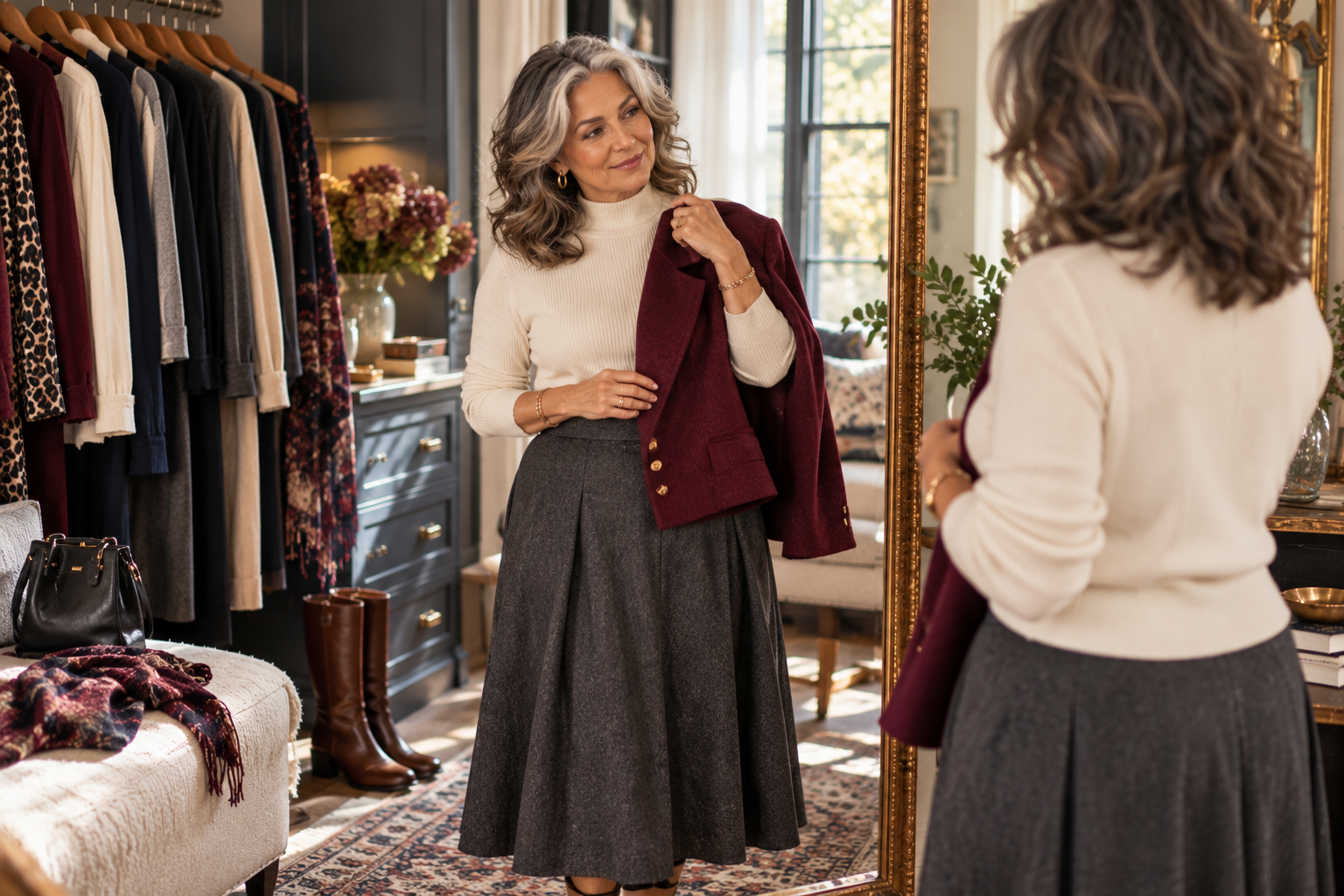
The first cold morning always arrives without warning. You reach for the sweater you love, the soft gray one, and for a moment everything is right. Then the coat goes over it and something pinches at the shoulders. You tug the sleeves down, they creep back up, and you stand there wondering how a closet this full can leave you with nothing to wear.
There’s nothing wrong with the sweater or the coat. They just weren’t made for each other. Most of us buy our clothes one at a time, choosing each piece for the day we are in, and then we expect them all to get along in the closet. That is what a capsule wardrobe is for, and it has nothing to do with owning less. It is about owning things that already complement one another, so you can quickly put together an outfit, not have another problem to solve before you even walk out the door.
The good news is that most of what you need is already hanging in your closet.
Start With the Clothes You Already Wear
Before you touch a single hanger, look at how your week actually goes - the one where most mornings are the dog, the laptop, and a walk, and the "nice dinner out" shows up once, maybe twice if the stars align. Your clothes should fit your life, not the other way around.
With that picture in front of you, pull the clothes you reach for without thinking. The jeans that stay comfortable all day. The trousers that just make you feel good. The dress that flatters your figure in the best ways. And keep that favorite jacket you wear all the time because it's already showing you what works for your real life.
Then go back for the ones you have been avoiding. Look at how they fit and how they have lasted. A loose button or a hem that needs taking up is rarely a reason to give something away. Most of the time, it is the only thing standing between a favorite and the back of the closet. Set those aside to be mended, and count how many there are.
This is where a wardrobe is built, and where a lot of money gets wasted instead. In my own writing on dressing beautifully through body shape and balance, I keep coming back to the same idea: a wardrobe should come from understanding what you already own, not from buying more, and from mending before you replace.
Find the Neutral That is Already There, Then Bring in Color
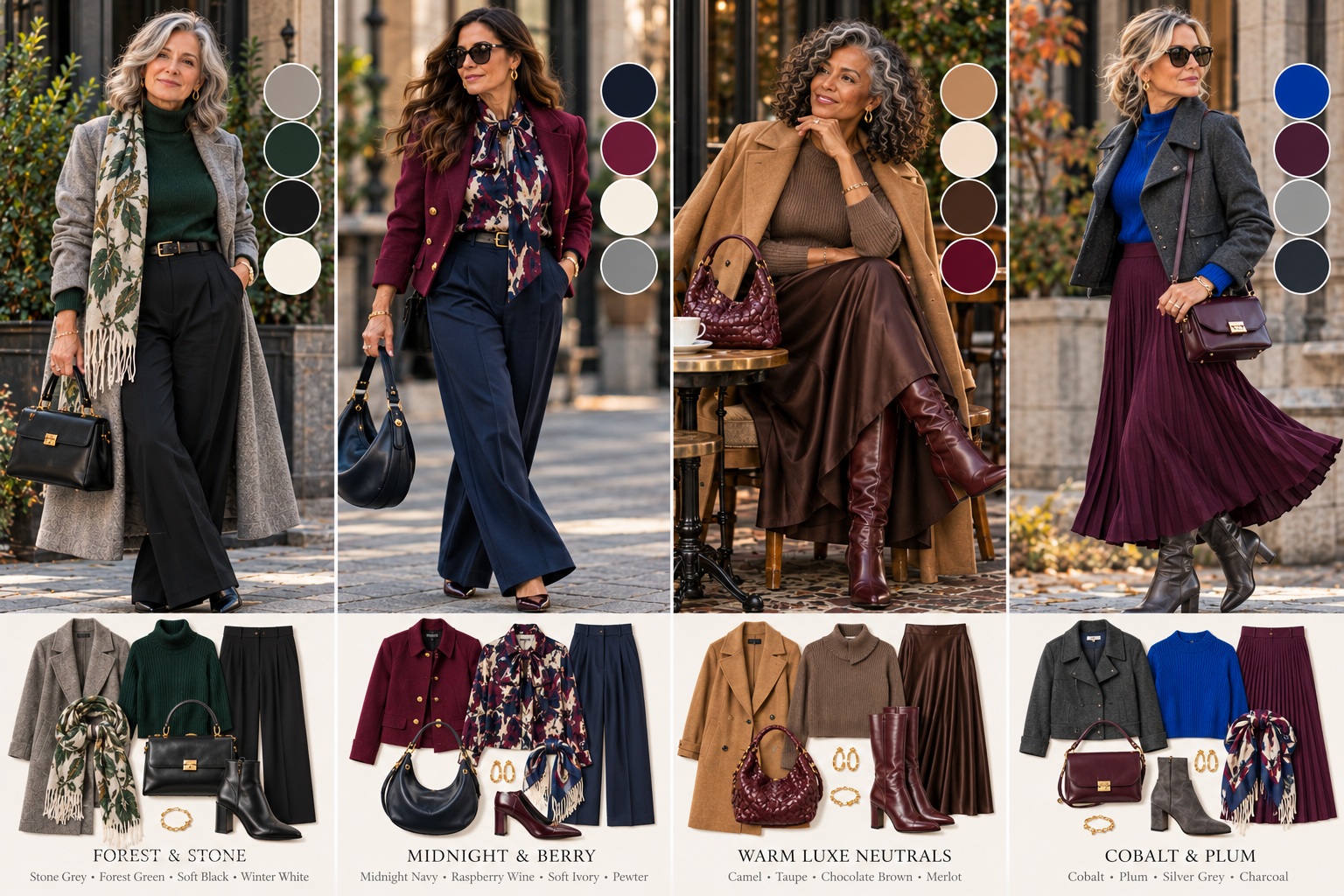
Now spread out what you have pulled and look for the neutral already doing the connecting. Navy trousers, dark denim and a navy jacket can hold a wardrobe together without a single purchase. Yours might be chocolate brown, charcoal, or a soft gray that turns up in half your closet.
A neutral isn’t a rule about being muted, and I wish someone had told me that sooner. It’s simply the color that helps everything else make sense, which frees you to bring in the colors you actually love. Charcoal trousers can look one way with a burgundy sweater and completely different with an ivory blouse and a forest green cardigan. And a printed scarf can open up pairings you’d never have planned, especially when its colors are already represented in your closet.
Color works hardest in the pieces you wear closest to your face, and seasonal color analysis is worth understanding for that reason alone. You don’t have to rebuild your closet around it. Keep the neutrals you love, and bring the colors that suit you most into the tops, sweaters, scarves, and jewelry that sit nearest to your skin.
Try Whole Outfits, Not Single Pieces
A wardrobe works in outfits, and you only really understand an outfit by wearing it, not by studying it on a hanger. Take one piece you enjoy, a fine burgundy knit for instance, and try it a few different ways with the shoes you’d actually reach for.
Start with your favorite jeans, then move to tailored trousers, then a midi skirt, and notice where the pieces meet, because that line is where an outfit either settles in or doesn’t. A sweater that sits beautifully at the upper hip can land awkwardly over a fuller skirt, and a small tuck can shift the whole balance. You’ll feel the difference right away. Add a jacket and the picture changes again: one that ends at the waistband keeps the skirt visible, while a longer blazer overlaps it and reshapes the entire line.
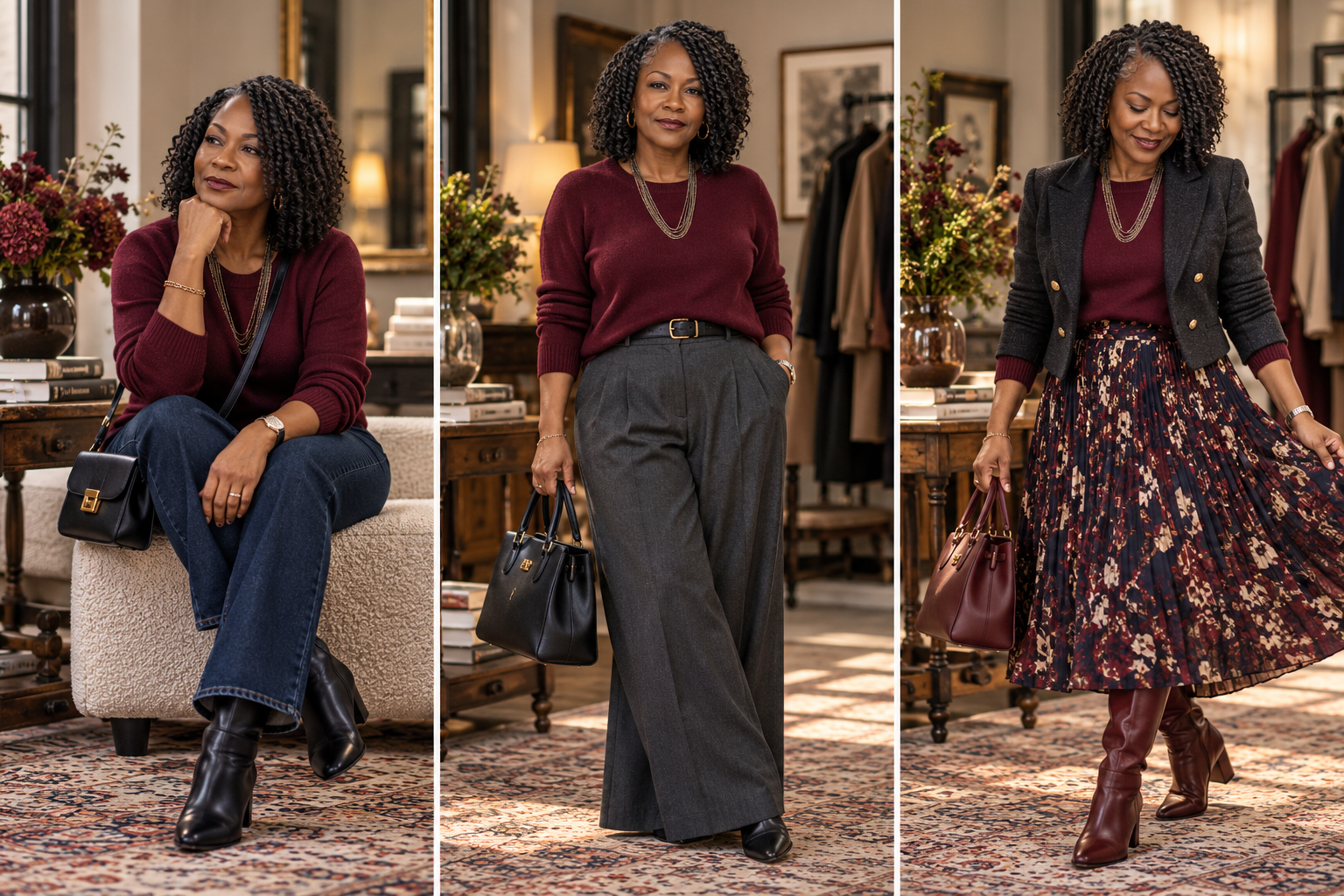
Put the shoes on, walk to the far wall, then sit down in them, because a hem that behaves while you’re standing can misbehave the moment you cross your legs. Then add the pieces you’d actually wear out the door, like your bag and your jewelry, and notice how they settle into the outfit. If you find yourself adjusting something every few minutes, that tells you everything you need to know about the pairing.
When an outfit works, keep it. Photograph it and create an album with a short note like “lunch and errands, dry day.” On a busy morning they do the remembering for you, and you never have to open an app to find them.
Make the Layers Work When the Weather Turns
Fall is forgiving. Winter is where a wardrobe is tested, and where the cold finds every gap you left. The trick, and it took me several unprepared winter trips to believe it, is that warmth starts underneath the outfit rather than on top of it. Thin silk or heat-tech base layers, a fine merino knit, fleece-lined tights under a dress and cashmere socks are a life-saver in cold temperatures. None of them add bulk, and all of them let you wear the lighter, better-looking version of an outfit when it is genuinely cold. My own notes on dressing for a European winter are full of this.
Test the coat over the sweater you mean to wear beneath it. Fasten it and reach forward as though you are holding a steering wheel. If your shoulders pull, or the sleeves squeeze everything under them, a finer knit will be far more comfortable. A dress that gives you space through the armholes can take a fitted knit underneath, and a cardigan is the layer you shed the moment you step into a warm room.
Dress for the for the weather you’ll actually be experiencing. A rainy coastal winter calls for a water‑resistant layer and shoes that keep your feet dry. A snowy morning in Minnesota, or a long walk through Vienna, calls for warmth, wind protection and steady footing. A short walk from the car to the door asks far less than an hour on standing on a cold train platform.
Borrow a Little Inspiration From Fall/Winter 2026

The Fall and Winter 2026 runways leaned into depth and contrast, with burgundy, oxblood, chocolate brown, charcoal and midnight navy forming the season’s darker base. Against those richer tones came concentrated brights like cobalt, electric blue, vibrant red, royal purple and even peach and melon shades in knits and dresses. Turquoise appeared in outerwear, and butter‑yellow accents showed up on pumps and bags. Pantone’s report balanced grounded earth tones such as Muted Clay, Arabian Spice and Burnt Olive with vivid shades like Festival Fuchsia, Neptune Green and All Aboard, creating a mix of the reassuring and the adventurous. The violet and marigold fine‑rib sweaters in Tory Burch’s Fall/Winter 2026 runway shop, for example, offer a reason to revisit a colorful knit you haven’t worn lately. Explore the collection.
Try yours with tailored trousers instead of its usual jeans, or bring a bright scarf into a familiar coat‑and‑trouser outfit. Your colors may be completely different; the useful part is noticing an idea that makes you want to experiment.
Choose one pairing and wear it for an ordinary afternoon. You’ll get a better sense of whether you enjoy it than you would from another hour of browsing.
Where a Wardrobe Breaks Down
I will be honest with you. The reason so many capsule wardrobes fall apart is not that the pieces were wrong. It is that the whole idea was sold as a number, and a number cannot solve a fit problem, a laundry problem or a climate problem. The fixed-count versions of this advice, some naming as few as ten pieces and others running into the thirties, are the most criticized part of the genre for exactly that reason: as one long-time writer puts it, focusing on a number "might make us feel deprived or even, that we have too much".
So before you buy anything to fill a gap, check four things, in this order.

So before you buy anything to fill a gap, check four things, in this order.
Does it fit? If not, the fix is usually an alteration, not a purchase. Trousers taken up at the hem will work with shoes you already own.
Does it survive a normal week? A wardrobe built on the assumption that a piece is always clean collapses the first time it is in the wash. If one top is doing all the work, you do not have a wardrobe. You have a favorite.
Does it suit your weather? A beautiful coat that is wrong for your winter is decoration, and an expensive one at that.
Could something you already own do the job? The scarf from a trip, the bag you stopped carrying, the wrap you forgot you had. Look in the closet before you look online, and give the closet a fair chance.
When you do buy, buy for a specific gap, because that is where most of the spending goes wrong. There is a clear tell: if a garment seems to need new shoes, a new top and another jacket to work, it is asking too much of you. One piece that rescues five outfits is worth five that each rescue one.
One Small Wardrobe, Put Together
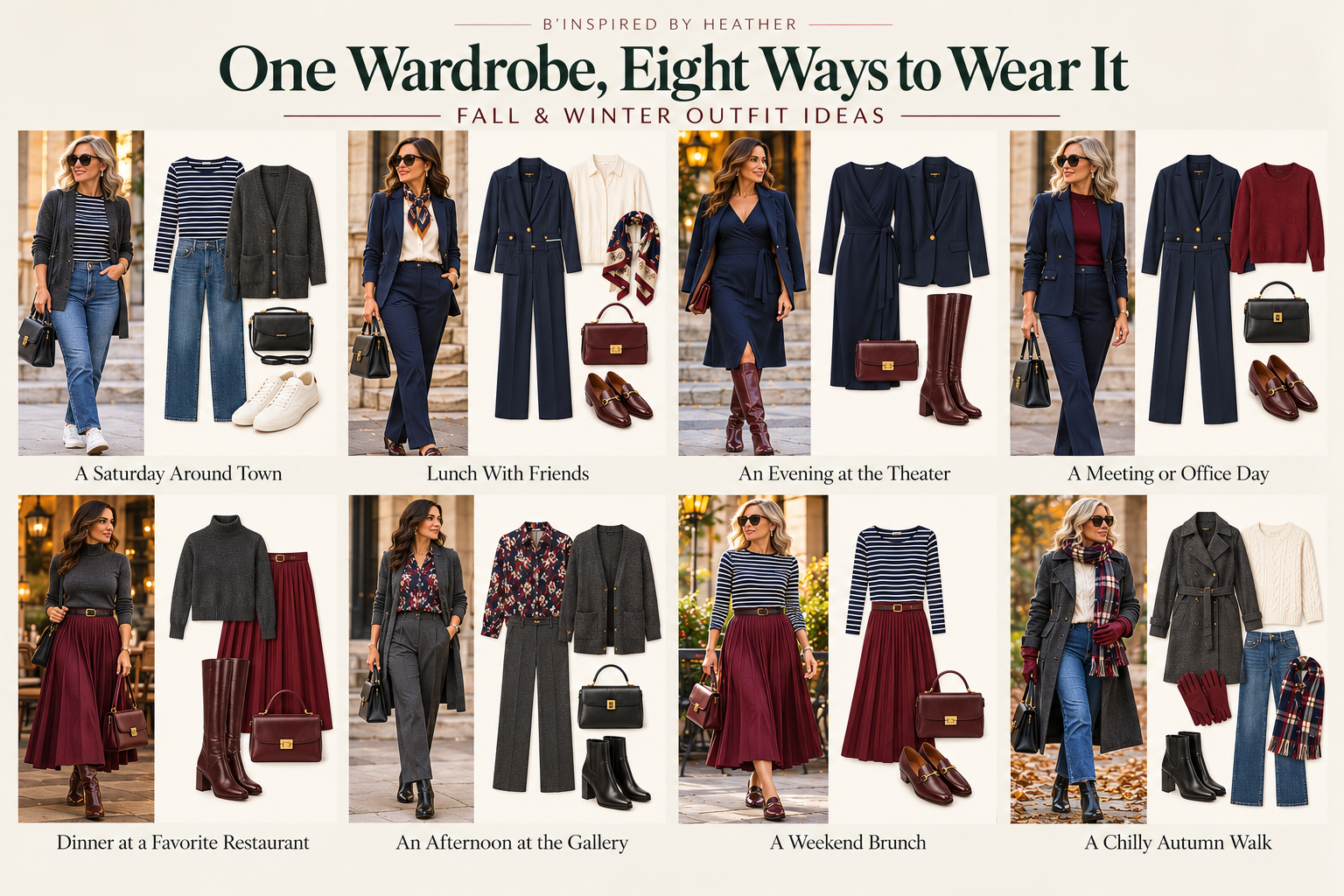
To make this concrete, here is a small fall and winter wardrobe in ivory, navy, charcoal and burgundy. The colors connect easily, and the difference in fabric and shape is what keeps the outfits from feeling like the same one worn over and over.
The tops. An ivory sweater with a little texture. A printed blouse that carries ivory, navy and a trace of burgundy, because a print ties everything else together. A fine charcoal turtleneck. An ivory blouse with a collar or cuff you enjoy. A burgundy fine knit, lighter than the ivory sweater and easier to tuck.
The bottoms. Navy tailored trousers. Charcoal straight-leg trousers in a fabric that feels good when you sit down. Dark denim, straight or a slim bootcut. A burgundy midi skirt with some movement, for the days you would rather not wear trousers again.
The layers. A navy blazer that goes over the blouses and the fine knits. A charcoal cardigan, long or cropped, whichever line you prefer. And one winter coat chosen for your climate, with room to layer beneath.
That is twelve pieces, outerwear included, with shoes and accessories sitting on top. Swap in the versions you already own. Then take one combination you have never worn, set the shoes beside it, and leave it out for tomorrow. Wear it, and notice what you reach for and what you avoid. A wardrobe is never finished in an afternoon. It gets a little better every week you pay attention to it, which is the part the shopping list always leaves out.
Find the Finishing Pieces
If your outfit experiments have revealed a gap, focus your search on the piece that would resolve it. Keep a photo of the outfit beside you while browsing so you can consider each possibility alongside the clothes you already own.
Fine-knit layers: Check sleeve volume and neckline to find sweaters or cardigans that fit beneath your existing jackets.
Everyday footwear: Compare loafers or boots with your trouser hems, walking needs, and local weather.
Cold-weather outerwear: Try coats and jackets over a representative winter outfit, allowing room to fasten them and move freely.
Accessories: Look for a color connection or finishing detail that gives a particular outfit something it’s missing.
Bring out your existing accessories before adding anything new. The cashmere wrap you bought on a trip or the bag you haven’t carried lately might be just what you were looking for.
Frequently Asked Questions
How do I start building a fall and winter capsule wardrobe?
Start with how your week actually goes, not the one you plan to have. Pull the clothes you reach for without thinking, then look at what links them, because that one neutral is your starting point. From there it is about outfits and mending rather than shopping, which is the heart of the Art of Dressing Beautifully approach.
How many pieces should a fall and winter capsule wardrobe have?
There is no number to hit. A working starter set can be around twelve pieces including the coat, but what matters far more is whether each piece fits, layers and survives a normal week. The fixed-count versions of this advice are the most criticized part of the genre for exactly that reason.
Do I need to buy a whole new wardrobe to do this?
No. Check fit, laundering and your climate first, then buy only for a specific gap. One piece that rescues five outfits is worth five that each rescue one. A seasonal color you already own can do more than a new purchase.
How do I stay warm in winter without looking bulky?
Warmth starts underneath the outfit. Thin base layers, a fine merino knit and fleece-lined tights let you wear the lighter, better-looking version of an outfit in real cold, which is the whole idea behind dressing elegantly for a European winter.
Why do most capsule wardrobes fail?
Usually because the idea was sold as a number. A number cannot solve a fit problem, a laundry problem or a climate problem, so the whole thing collapses the first awkward morning. Check fit, laundering, weather and what you already own before you buy anything.
Editors Note
A fall and winter capsule wardrobe is not a shopping list or a specific number of clothing items. It is the clothes already in your closet, finally working together. Start with what you wear in the course of an average week, find the one neutral already holding your wardrobe together, and try whole outfits instead of single pieces, because the shoes and the coat influence choices as much as the top does. Where something does not work, mend it before you replace it. You end up with a smaller, more cohesive wardrobe, and mornings that feel easier because they’re not asking you to decide.
If this way of dressing speaks to you, you will find more of it in the Art of Dressing Beautifully library and in the Refined Living stories, where color, proportion and the small details of a well-lived wardrobe are explored season by season.
Disclosure: Some links on this page may be affiliate links. If you make a purchase through certain links, I may earn a small commission at no additional cost to you. B'Inspired combines original photography, properly licensed imagery, product photography and AI-assisted editorial illustrations. AI-assisted visuals are used to interpret ideas and teach concepts, not to misrepresent actual destinations, products, people or personal experiences.
