

The Art of Dressing Beautifully: Understanding Body Shape, Balance & Personal Style
Why Dressing Beautifully Begins with Understanding, Not Changing
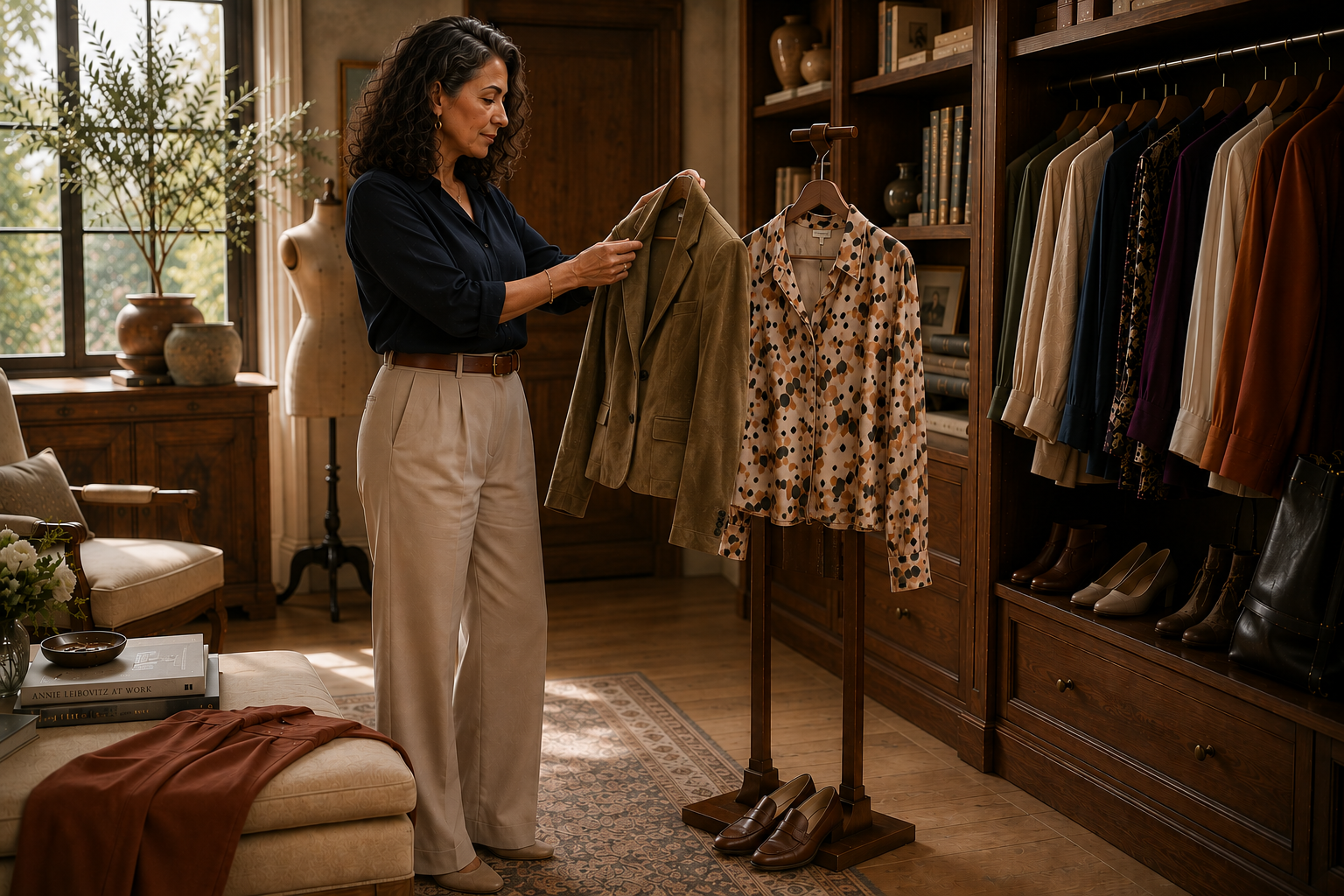
Some women have an instinct for putting outfits together that seems almost effortless. They walk into a room looking polished, comfortable, and unmistakably themselves. It is tempting to assume they were simply born with exceptional taste or inherited a wardrobe full of expensive clothes.
More often, what you're noticing is understanding. Those women have learned how clothing interacts with the body, how fabric moves, how a neckline influences balance, and why one jacket becomes a trusted favorite while another quietly spends three years hanging in the closet with the tags still attached. Most of us own at least one of those.
Beautiful style comes from understanding, not accumulation. Many style guides begin by asking you to identify what needs to be minimized, disguised, or corrected before offering a long list of rules. It isn't surprising that so many women eventually find shopping exhausting. You leave home feeling optimistic, carry six promising pieces into the fitting room, and somehow emerge wondering why perfectly reasonable trousers have decided to pick a fight with your hips. We've all had those moments.
Most fitting-room disappointments have surprisingly little to do with your body.
Clothing is a form of design. Every outfit is a composition of shape, line, color, texture, proportion, and movement. When those elements work together, the entire composition feels balanced. Your eye moves comfortably from one detail to the next because nothing is competing for attention. The result isn't dramatic or complicated. It simply feels right.
Your body is one part of that composition, but it is never the problem that needs solving.
As the years pass, our lives naturally evolve. Careers change. Families grow. We travel, celebrate, reinvent ourselves, and occasionally discover we've accumulated an impressive collection of nearly identical black cardigans because each one seemed just different enough to justify bringing it home. Personal style evolves right alongside those experiences, quietly collecting stories as we do.
That is why this guide begins with understanding instead of judgment. Once you understand the principles that create visual cohesion, shopping becomes more intentional. Your wardrobe starts working together instead of behaving like a group of polite strangers who happen to share the same closet. Getting dressed becomes calmer because your decisions have purpose, not because you're following an endless list of fashion rules.
In the articles ahead, we'll explore body shape, proportion, silhouette, fabric, color, and the many details that influence how clothing feels when you wear it. Each lesson builds on the last, creating a practical design language you can return to every time you step into your closet or a dressing room.
The goal is simple: understand yourself more deeply, dress with greater confidence, and discover that style has never depended on perfection. It grows from harmony.
Why Body Shape Is Only Part of the Story
Body shape has become one of the most popular ways to talk about style, and for good reason. It gives us a starting point. Understanding whether your shoulders, waist, and hips create an apple, pear, rectangle, hourglass, or inverted triangle silhouette can help explain why certain garments feel more balanced than others. Body shape provides a valuable starting point, but it represents only one piece of the larger picture.
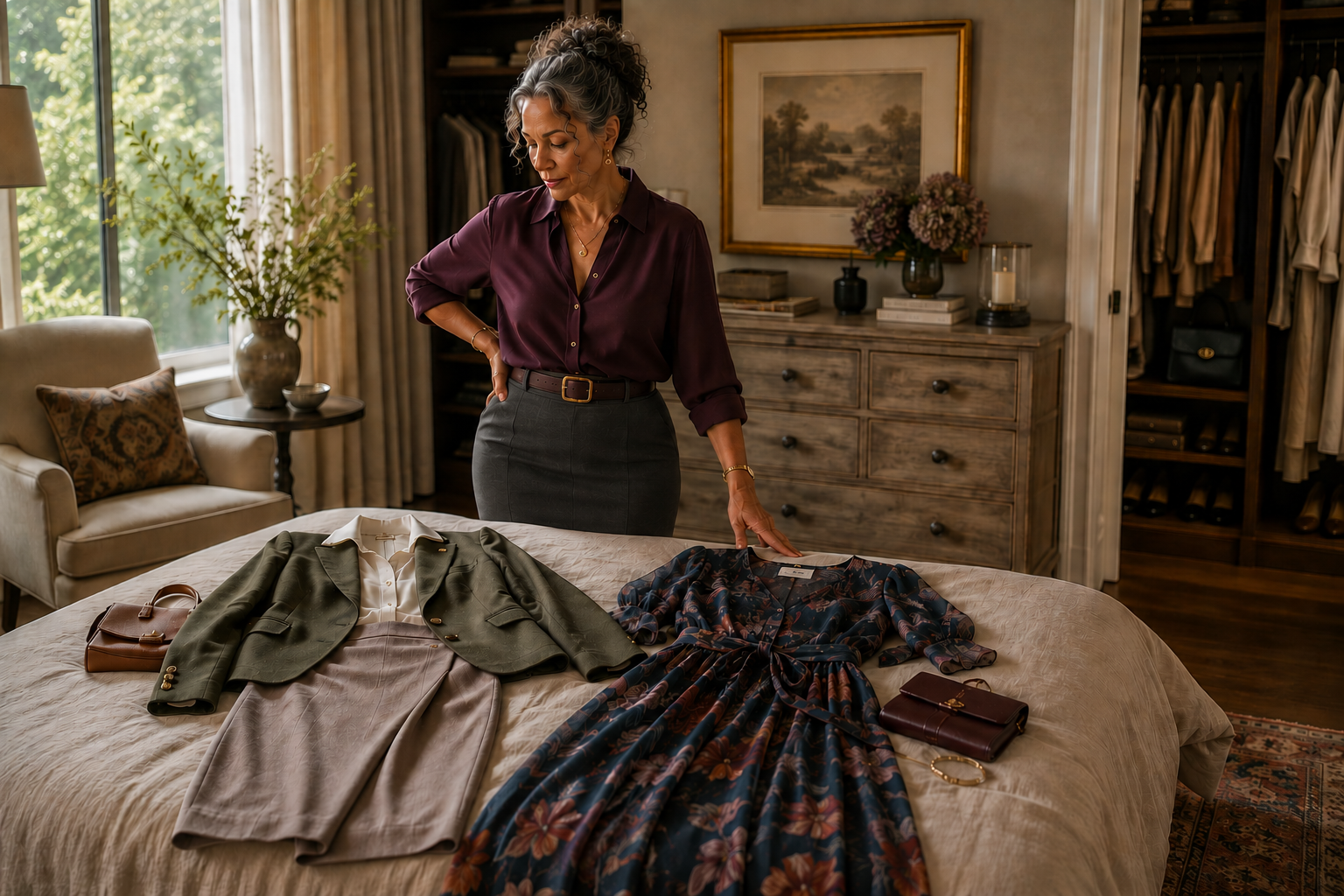
Imagine two women who both have a pear-shaped figure. They walk into the same boutique, try on the same dress, and leave with completely different opinions. One feels elegant and comfortable. The other can't wait to change back into her jeans. Their body shape didn't change between fitting rooms, so something else influenced the outcome.
Height changes proportion. Bone structure changes presence. Fabric changes movement. Personal style shapes what feels authentic. Even the details we rarely think about, a shoulder seam, the depth of a neckline, the stiffness of a jacket, the placement of a pocket can quietly change the way an outfit feels and the way our eyes experience it.
That's one reason fashion advice can become so confusing. A headline promises, "The Best Dresses for Pear Shapes," as though millions of women can be served by the same handful of recommendations. Real life has always been more interesting than that.
Think about the women you admire most for their style. Chances are they don't all have the same figure. They probably don't wear the same brands, follow the same trends, or even share the same aesthetic. One may gravitate toward tailored jackets and crisp shirting. Another practically lives in flowing linen dresses. A third has perfected the art of great denim and beautiful knitwear.
Yet they all seem effortlessly put together.
What they share isn't a body shape.
It's an understanding of balance.
They instinctively, or intentionally, choose clothing that works with their proportions instead of competing against them. Their outfits feel cohesive because every element supports the others. Nothing demands attention for the wrong reason. Nothing feels accidental.
That's encouraging news, because balance isn't a gift reserved for a fortunate few. It's a skill that can be learned.
Over the next few sections, we'll begin building that skill together. You'll discover that beautiful dressing has its own visual language, and once you understand it, you'll never look at clothing, or your own wardrobe, in quite the same way again.
The Design Principles That Matter More Than Rules
Fashion advice often comes packaged as a collection of rules.
Never wear this.
Always choose that.
Avoid these.
The problem isn't that those recommendations are always wrong. The problem is that they're usually offered without explaining why they work. A rule without understanding is difficult to adapt, and style becomes far more interesting when you understand the reasoning behind the choices.
Think of an accomplished chef. She doesn't rely on recipes because she has every instruction memorized. She understands how flavors work together, so she can adjust ingredients confidently. Dressing well follows a similar pattern. Once you understand the principles, you can make thoughtful decisions in any store, with any budget, and for any stage of life.
As we continue, you'll notice that we return to a handful of design principles again and again. They are not trends, and they don't expire when a new season arrives. They simply describe how our eyes naturally respond to shape, line, color, and movement.
Let’s begin with proportion. Every outfit is built from the way its individual parts work together. Jacket length, trouser rise, sleeve length, and hemlines all influence how those proportions are perceived. Small adjustments often create a surprising difference because they change the overall composition rather than a single garment.
Closely related is visual harmony. Visual harmony is the feeling that every element works together naturally. Colors relate naturally to one another. Fabrics share a similar visual language. Shapes support the silhouette instead of competing for attention. When harmony is present, an outfit feels intentional even when it's wonderfully simple.
You'll also discover the importance of scale. The size of a handbag, the width of a belt, the pattern on a blouse, or the shape of a piece of jewelry all interact with your own natural features. Details that feel beautifully balanced on one woman can feel overwhelming or understated on another, not because either choice is wrong, but because scale changes the conversation.
Other principles quietly influence every outfit you wear. Silhouette determines the overall shape. Fabric controls how clothing drapes and moves. Visual weight directs attention through contrast, texture, and structure. Focal points guide the eye toward the features you want to celebrate.
You don't need to memorize every one of these today.
As we continue through this series, each principle will become familiar through practical examples and real wardrobes. Before long, you'll find yourself noticing these relationships without consciously searching for them. It's much like learning the language of architecture or interior design. At first you admire a beautiful room without knowing exactly why it feels inviting. Eventually, you begin recognizing the details that create the atmosphere.
That's when getting dressed becomes less about following fashion advice and more about making decisions with confidence.
How Clothing Changes What the Eye Sees
Our eyes are constantly making quiet observations before we're even aware of them.
We notice balance before we notice details. We recognize shape before we appreciate texture. We take in the overall impression of an outfit long before we admire the stitching on a jacket or the buttons on a blouse.
Designers understand this instinctively. Artists study it. Architects rely on it. Clothing works the same way.
A simple change in proportion can completely alter the impression an outfit creates. A jacket that ends at one point on the body may feel balanced and polished. The same jacket, extended or shortened by just a few inches, can create an entirely different visual rhythm. Neither length is universally right or wrong. Each simply creates a different connection with the rest of the outfit.
Fabric has its own quiet influence. Crisp cotton holds its shape with confidence. Linen relaxes into soft folds as the day unfolds. Silk catches the light with graceful movement, while structured wool creates definition and presence. Even before you think about color or style, fabric is already communicating something about the outfit.
Color guides the eye in equally subtle ways. A column of similar tones creates visual continuity. Strategic contrast draws attention exactly where you place it. Soft transitions encourage the eye to move gently through an outfit, while bold contrasts create moments of emphasis. Understanding that relationship gives you remarkable control over the overall composition.
Small details matter because they contribute to the larger picture. The width of a belt, the scale of a print, the shape of a collar, or the length of a necklace may seem insignificant on their own. Together, they influence how an outfit feels as a whole. Style is rarely transformed by one dramatic decision. More often, it is refined through a series of thoughtful ones.
This is why getting dressed can sometimes feel surprisingly frustrating. You know the outfit isn't quite working, yet you can't identify the reason. It's a little like rearranging furniture in a room that feels awkward. The sofa isn't the problem. Neither is the coffee table. The way they work together is what needs attention.
Once you begin looking at outfits as compositions instead of individual pieces, your perspective shifts. You stop asking whether a blouse is flattering in every situation. Instead, you begin asking how it works with the trousers, the jacket, the shoes, and the person wearing them. That single change in thinking opens the door to more confident choices because you're evaluating the complete picture instead of isolated garments.
As you continue reading, you'll notice that every recommendation connects back to these relationships. That's intentional. Great style isn't built from disconnected tips collected over time. It grows from understanding how each decision influences the next until the entire outfit feels cohesive, balanced, and unmistakably your own.
How to Identify Your Body Shape
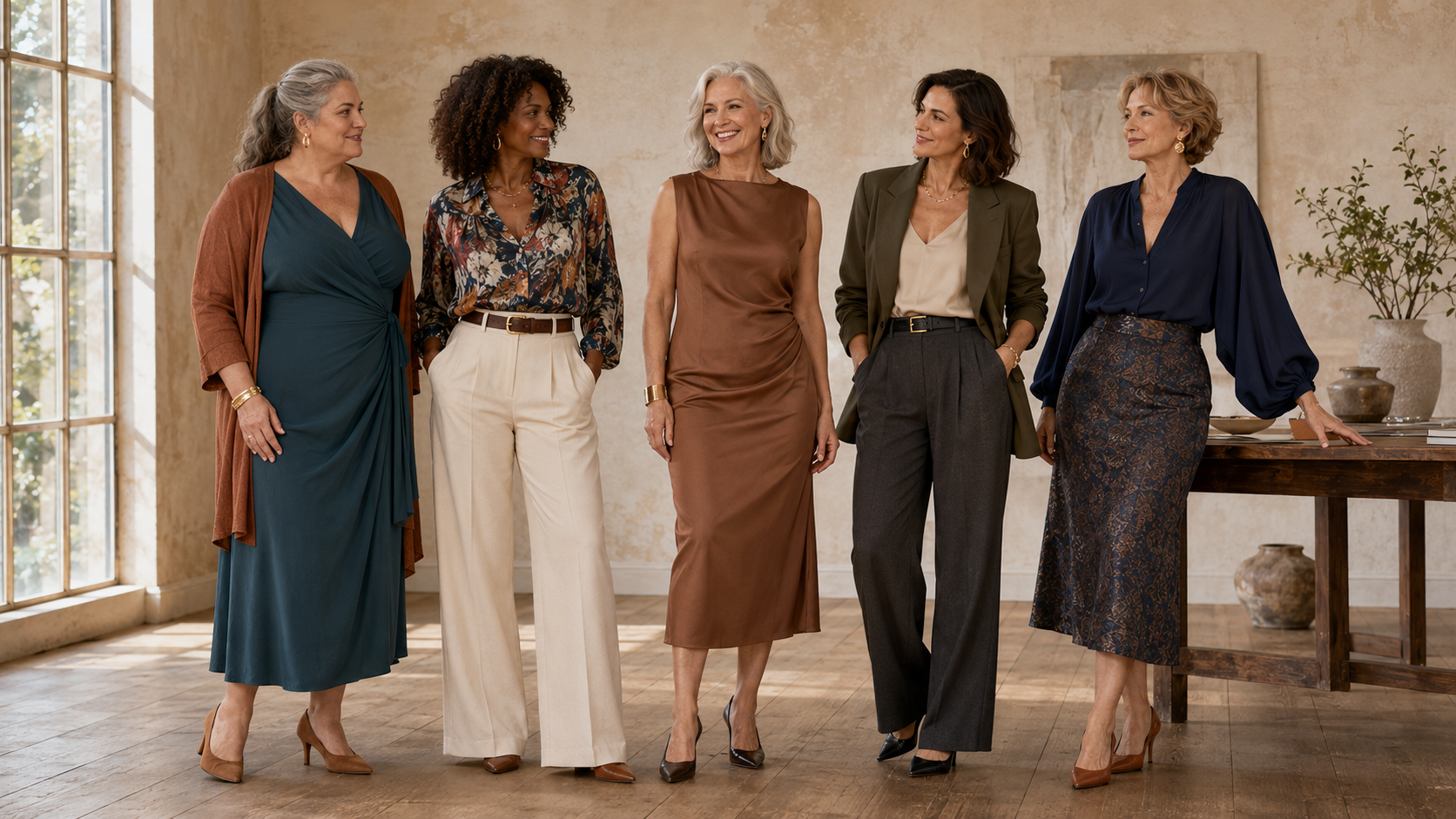
If you've ever searched for your body shape online, you've probably discovered that the process isn't always as straightforward as it seems.
One guide asks you to measure your shoulders. Another focuses on your bust. A third tells you to stand in front of a mirror and decide which fruit you resemble. Somewhere along the way, many women throw up their hands and decide they must be the only person who doesn't fit neatly into a category. You're not.
Body shapes are simply visual reference points. They help us recognize where the body naturally carries width and where it creates definition. Think of them as a map, not a label. A map helps you understand where you are. It doesn't tell you where you have to go.
The easiest place to begin is by observing three areas: your shoulders, your waist, and your hips. Notice how they relate to one another instead of focusing on individual measurements. Are your shoulders and hips similar in width? Is your waist softly defined or more pronounced? Does your upper body create the strongest visual presence, or does that emphasis naturally occur lower? Those relationships matter far more than chasing exact numbers.
You may also discover that you don't fit perfectly into a single category. That's completely normal. Human bodies aren't manufactured from five identical templates. Some women have the shoulders of an inverted triangle with the softly defined waist of a rectangle. Others find themselves somewhere between an apple and an hourglass. Bodies exist on a spectrum, and that's one reason personal styling is far more rewarding than memorizing formulas.
Height also changes the conversation. Two women may share the same body shape while creating entirely different visual impressions because one is five feet tall and the other is nearly six feet. Bone structure, posture, and the natural scale of facial features contribute their own influence as well. Those characteristics don't change your body shape, but they do affect how clothing interacts with your proportions.
As you identify your shape, resist the urge to judge it. Every body shape offers its own opportunities for creating beautiful balance. None is more stylish, feminine, or desirable than another. Fashion has a habit of declaring one silhouette the ideal of the moment, only to celebrate a different one a decade later. Timeless style has never been that fickle.
In the next section, we'll introduce the five classic body shapes you'll encounter most often. The goal isn't to place you in a box. It's to give you a practical starting point for understanding how clothing can create visual balance with the body you already have.
The Five Classic Body Shapes
Now that you have a general sense of how body shape is identified, let's meet the five classic silhouettes you'll encounter throughout this series.
Remember, these aren't rankings or definitions of beauty. They're simply visual descriptions that help explain how proportions relate to one another. Most women will recognize themselves in one shape more than another, while many will notice characteristics that overlap.
If you find yourself somewhere in between, welcome to the club. Human beings have always been wonderfully resistant to fitting into neat little categories.
Apple
Women with an apple shape often carry more visual emphasis through the upper body and midsection. Their shoulders may appear broader than their hips, and the waist tends to be less defined. Many also have beautifully shaped legs, something they often appreciate once they begin dressing with intention.
The goal isn't to disguise the upper body. It's to create an overall sense of balance that feels comfortable, elegant, and true to your personal style.
Pear
A pear shape is typically characterized by hips that are wider than the shoulders, with a naturally defined waist. Many women with this silhouette discover that jackets, tops, and dresses fit beautifully while finding trousers can require a little more patience—and occasionally a very understanding tailor.
This shape offers wonderful opportunities to create graceful visual balance while celebrating the natural curves that make it distinctive.
Rectangle
Rectangle body shapes usually have shoulders, waist, and hips that are similar in width, creating a beautifully balanced frame with gentle curves. Because the silhouette is naturally even, clothing has tremendous influence over the shape an outfit creates.
That flexibility allows for remarkable versatility. Structure, drape, color, and proportion can each become creative tools for expressing personal style.
Hourglass
The hourglass silhouette is generally defined by shoulders and hips that are similar in width, with a noticeably defined waist. Fashion magazines have spent decades presenting this shape as the universal ideal, but every body shape has its own strengths and styling opportunities.
Women with an hourglass figure often discover that maintaining the natural balance of their proportions creates the most harmonious results. The challenge is rarely adding shape. It's allowing beautiful tailoring to work with the curves that already exist.
Inverted Triangle
Women with an inverted triangle shape usually have shoulders that create more visual width than the hips. The overall silhouette often feels athletic, elegant, and naturally strong. Many swimmers, dancers, and lifelong athletes recognize themselves here, although you certainly don't need a trophy collection to belong in this category.
Thoughtful styling creates a beautiful conversation between the upper and lower body, producing outfits that feel balanced while preserving the confidence and presence this silhouette naturally conveys.
At this point, you may already recognize your own shape, or you may still be deciding between two possibilities. Either is perfectly fine.
Body shape is your starting point, not your destination.
Start with Balance, Not Rules
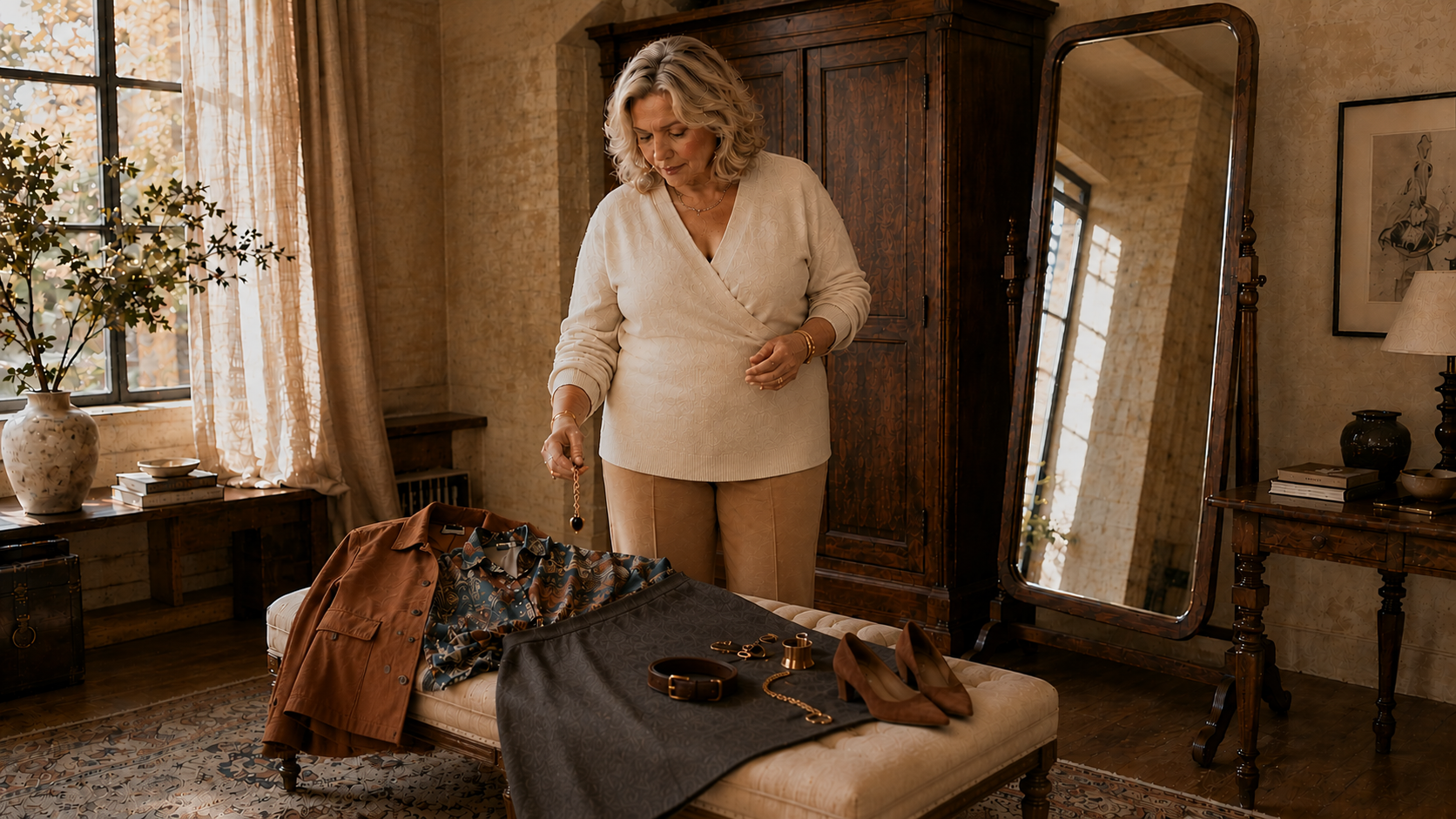
Once you've identified your body shape, it's tempting to start looking for a list of approved clothing. That's understandable. Rules feel reassuring because they promise certainty.
Real style is a little more interesting than that.
Instead of asking, "Can I wear this?" try asking a different question:
"What kind of balance am I trying to create?"
That single question leads to much more useful decisions.
Imagine you're arranging flowers in a vase. If every bloom leans to one side, the arrangement feels unsettled. Add a few stems with a different height or direction, and the entire composition becomes more pleasing to the eye. You haven't hidden anything. You've created balance.
Getting dressed works much the same way. Perhaps a jacket introduces a bit more structure. A softer fabric brings gentle movement. A longer necklace encourages the eye to travel vertically. A fuller skirt creates a graceful relationship with the shoulders. None of those choices exists in isolation. Each one contributes to the overall composition.
That's why a single garment rarely deserves all the credit or all the blame.
We've all experienced it. You buy a blouse that looked absolutely beautiful in the store. At home, it somehow loses its magic. A week later you try it again with different trousers, another pair of shoes, and a necklace you hadn't considered before. Suddenly it becomes one of your favorite outfits. Nothing about the blouse changed. The surrounding pieces simply created a stronger composition.
This way of thinking is remarkably freeing because it removes the pressure to find "perfect" clothes. Instead, you begin assembling outfits the way an artist builds a painting or a designer creates a room. Every element supports the others. Small adjustments often produce the biggest improvements because they strengthen the overall composition.
As your confidence grows, you'll find yourself making these decisions almost instinctively. You'll notice when an outfit feels visually heavy, when a silhouette needs a little more definition, or when one accessory quietly completes the composition. Those observations become second nature, and getting dressed begins to feel less like solving a puzzle and more like expressing yourself.
Body shape gives you a valuable place to begin. Balance shows you where to go next.
That's why every article in this series, whether we're discussing necklines, jackets, fabrics, dresses, or accessories, returns to the same guiding principle. A stylish wardrobe isn't created by memorizing hundreds of fashion rules. It grows from understanding how well-considered choices work together until an outfit feels harmonious, comfortable, and unmistakably your own.
The Building Blocks of Every Outfit
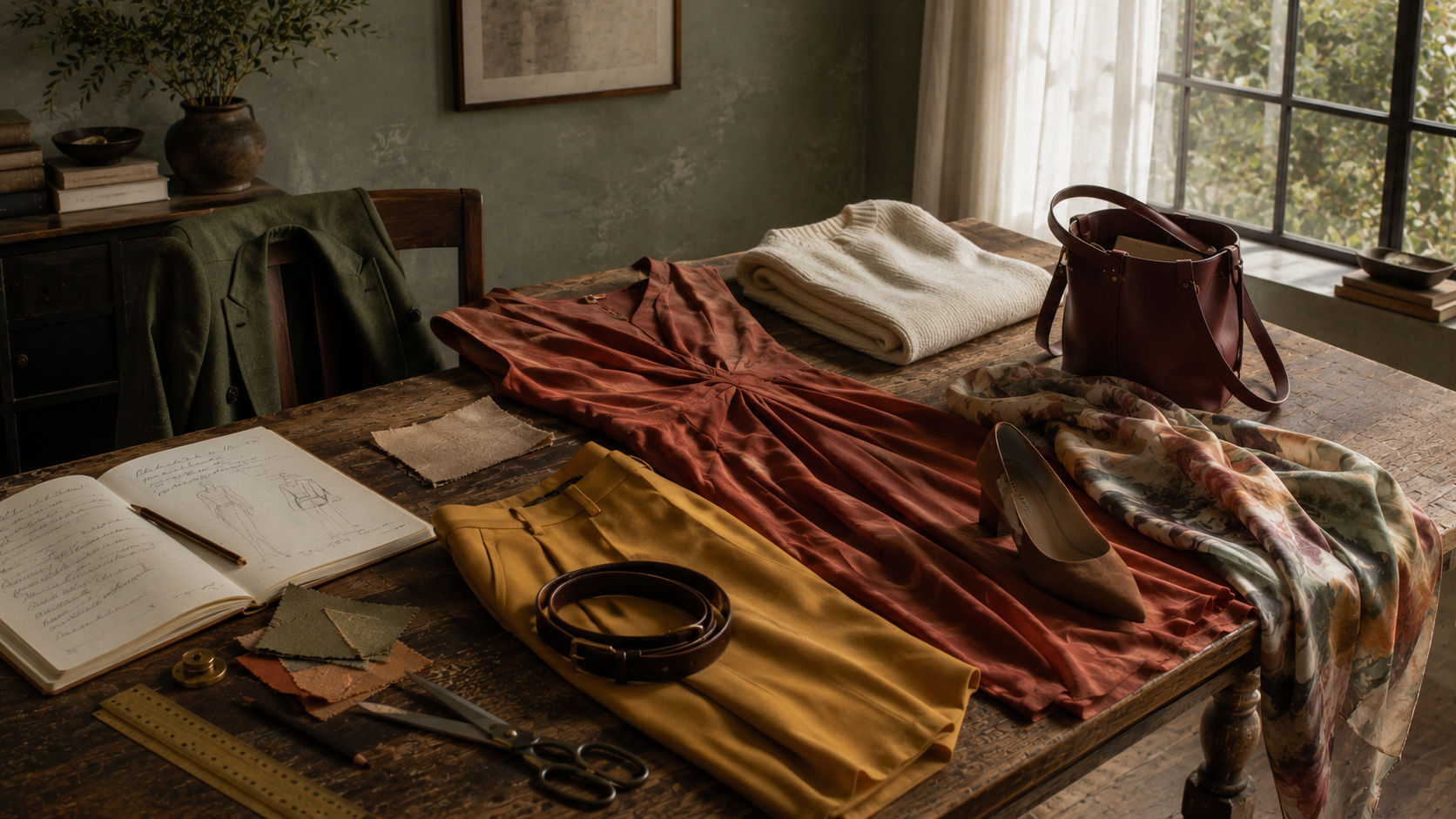
If balance is the destination, clothing provides the tools that help you get there.
Every garment, accessory, fabric, and finishing detail contributes something to the overall composition. Some pieces introduce structure, others create movement, soften a silhouette, or quietly guide the eye. Rarely does one dramatic item transform an outfit. More often, elegance emerges from a collection of well-chosen pieces working together so naturally that the composition feels effortless.
Think about the rooms that immediately make you feel at home. It's seldom one remarkable piece of furniture that creates the atmosphere. Instead, it's the interplay of lighting, textures, colors, materials, and scale. Building a wardrobe follows the same principle. Individual pieces matter, but they become their most successful when they support one another.
Throughout the articles ahead, we'll explore each of those building blocks in depth. We'll look at how necklines influence balance, why sleeves subtly change proportion, how jackets create structure, and the different visual stories told by dresses, skirts, and trousers. You’ll also discover the role of belts, shoes, handbags, jewelry, prints, fabrics, and texture, and see how even small details can shape the overall impression an outfit creates.
You don't need to master all of those elements today.
For now, simply begin noticing them.
Pay attention to the outfits that immediately feel harmonious and those that seem just slightly unsettled. Ask yourself what your eye is responding to. Is it the proportions? The fabric? How the pieces interact? Curiosity is a far better teacher than memorizing a list of fashion rules.
Over time, these observations become second nature. You'll begin recognizing why one outfit feels complete while another needs only a small adjustment. That growing awareness is what transforms getting dressed from a process of trial and error into an act of thoughtful design.
Why Personal Style Matters More Than Body Shape
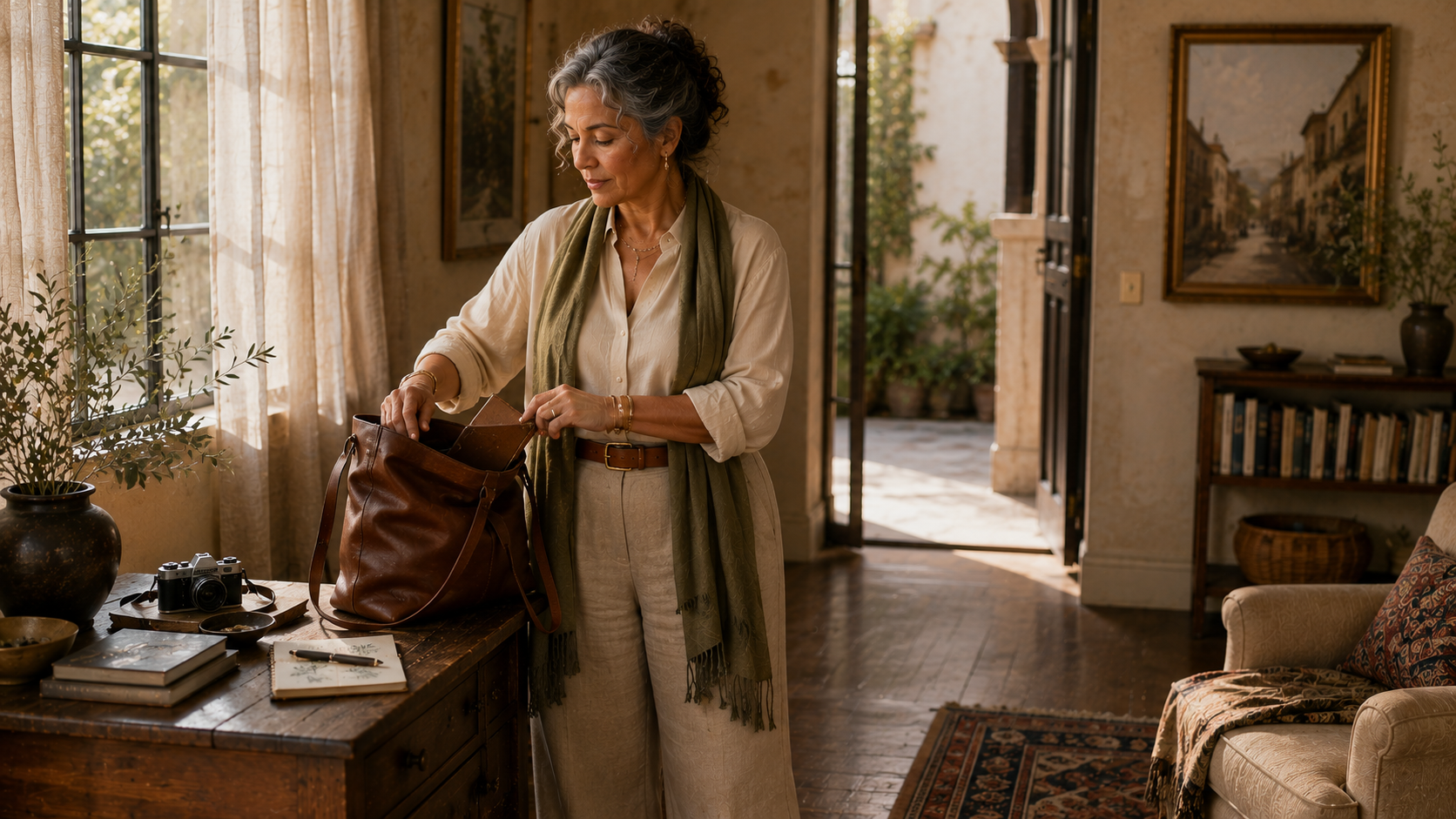
Have you ever noticed that some women are instantly recognizable, even when they're dressed quite simply?
It isn't because they own extraordinary wardrobes or follow every trend. Their clothes feel consistent with who they are. There's a quiet sense of authenticity that makes everything appear effortless.
Personal style grows from that place.
Two women can share the same body shape, wear the same size, and shop in the very same store. One fills her closet with softly tailored linen, woven leather, and natural textures because she feels most like herself in relaxed elegance. The other gravitates toward crisp white shirts, structured blazers, and clean architectural lines. Both are beautifully dressed because both have learned to make choices that reflect their personalities while respecting the principles of balance.
Clothing should support your life, not ask you to become someone else.
The wardrobe of a landscape painter naturally looks different from that of a corporate attorney. A retired teacher, an avid traveler, and a grandmother who spends every Saturday cheering from the sidelines each have different rhythms to their days. Great style makes room for those differences instead of trying to erase them.
Fashion often encourages us to chase someone else's identity. One season we're told everyone needs oversized tailoring. The next season we're encouraged to wear minimalist neutrals, followed by bold colors, dramatic sleeves, or the latest silhouette making headlines. Trends can be enjoyable, and they certainly add fresh ideas, but they make poor architects. They were never meant to build the foundation of your wardrobe. Your life should do that.
When your clothing reflects the places you go, the people you love, the work you do, and the experiences that bring you joy, getting dressed becomes much more satisfying. The question quietly changes from, "Do I look fashionable?" to, "Does this feel like me?"
That question has remarkable staying power.
It also explains why the best wardrobes are rarely assembled in a single shopping trip. They grow gradually. A beautiful jacket discovered while traveling. The handbag you've carried for years because it works with almost everything. The silk scarf that reminds you of an unforgettable afternoon. The perfectly fitting pair of pants that earned a second purchase because one simply wasn't enough.
As we continue exploring style together, we'll certainly talk about body shape, proportion, jackets, dresses, accessories, capsule wardrobes, and color. Each one contributes something valuable. None of them defines your style on its own.
Beautiful dressing happens where thoughtful design and personal identity meet.
Shopping with Confidence
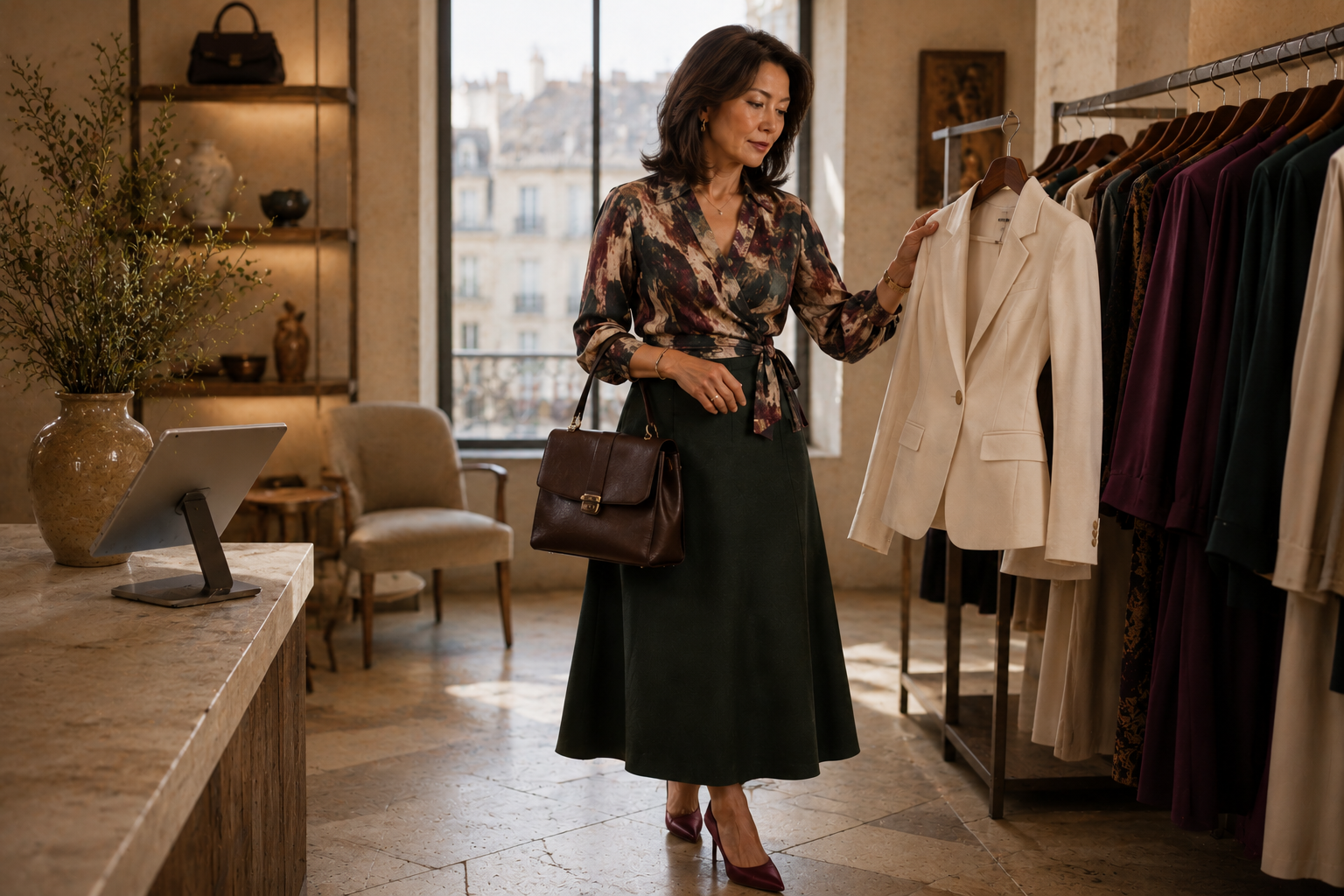
For many women, shopping has become a cycle of hope followed by disappointment.
A beautiful blouse catches your eye. The color is lovely. The fabric feels wonderful. You imagine all the places you'll wear it. Then you try it on, something feels slightly off, and you leave wondering if the problem is you. More often, the garment simply wasn't the right choice for your wardrobe.
One of the greatest gifts of understanding proportion and visual rhythm is that it replaces uncertainty with discernment. Instead of asking whether a garment is beautiful, you begin asking whether it's beautiful for the wardrobe you're intentionally creating.
A lovely jacket can still be the wrong jacket. A fashionable handbag may not support the way you actually live. A dress can be beautifully made and beautifully styled, yet still fail to earn a place in your closet because it doesn't relate to the rest of your wardrobe.
There is surprising freedom in realizing you don't have to love everything. You simply need to recognize what belongs.
That shift also changes the way you approach a dressing room. Rather than deciding whether you like a single garment, begin evaluating how it works as part of a larger collection.
Can you picture yourself wearing it with pieces you already own?
Does the fabric feel consistent with the wardrobe you're building?
Will you reach for it repeatedly, or is it exciting simply because it's different?
Questions like these have a quiet way of protecting both your closet and your budget. They also make shopping considerably less overwhelming.
Instead of wandering from rack to rack hoping inspiration strikes, you begin shopping with a sense of purpose. You recognize the colors that consistently flatter you. You become familiar with silhouettes that support your proportions. You notice fabrics that wear beautifully over time. Little by little, impulse purchases lose their appeal because you have something better guiding your decisions.
We've all experienced that fleeting excitement of bringing home an unexpected purchase, only to discover a month later that it's still waiting for its grand debut. At some point it quietly graduates from "new favorite" to "why did I buy this?" before eventually finding its way to the donation pile.
It's usually a planning failure rather than a shopping failure.
A well-planned wardrobe isn't built one exciting purchase at a time. It's assembled through hundreds of small decisions that support one another. Every piece earns its place because it contributes something meaningful to the whole.
In the articles ahead, you'll develop the confidence to recognize those pieces more quickly. Shopping won't become perfect. There will probably always be that sweater that looks irresistible under boutique lighting, but it will become far more intentional.
And intentional wardrobes have a remarkable habit of becoming the ones we enjoy wearing most.
Creating a Closet That Works Together
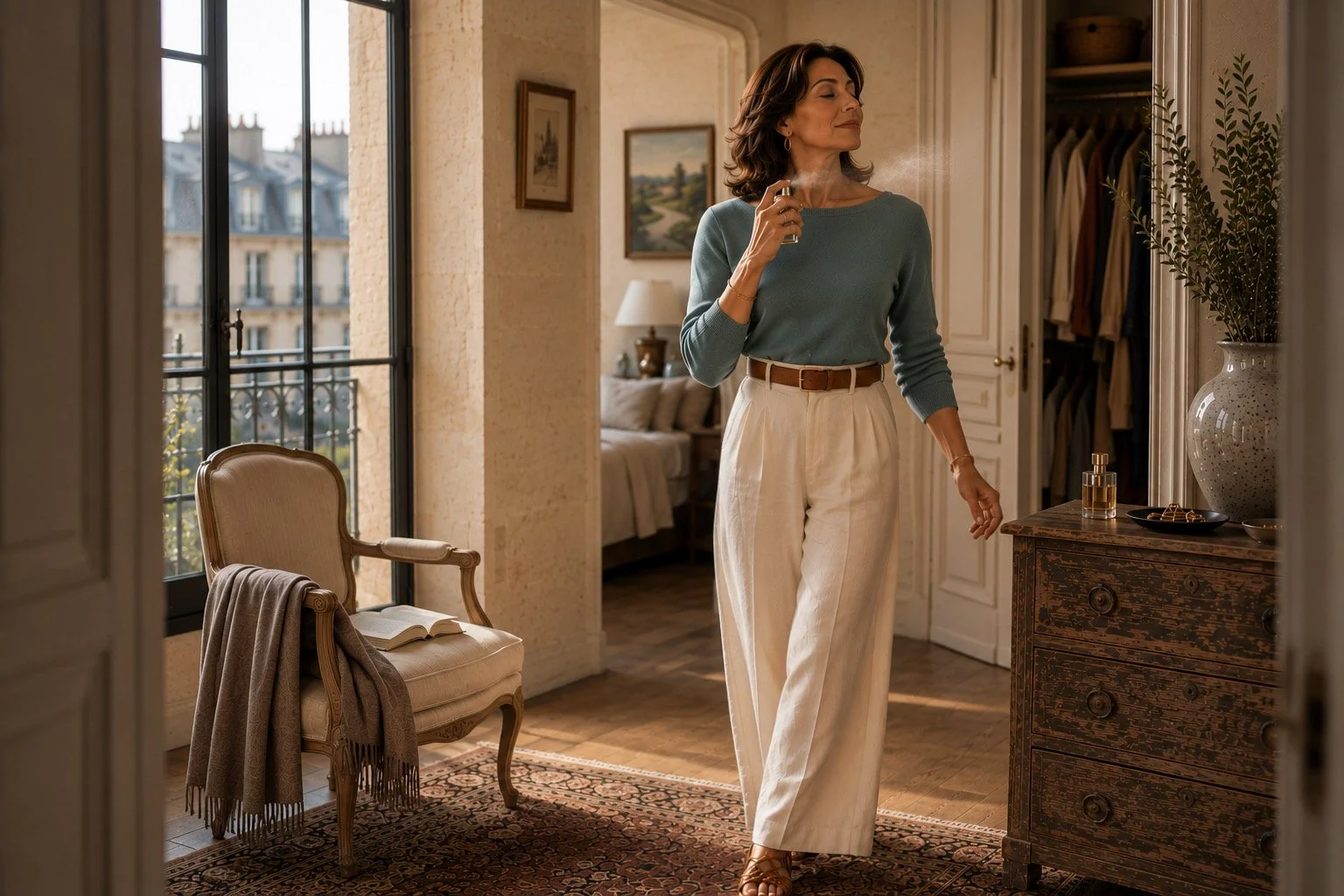
Open your closet and take a slow look around.
Not with the critical eye that immediately notices what no longer fits or what hasn't been worn in years. Look at it the way you might walk through a thoughtfully designed home. Notice the atmosphere. Notice the relationships.
Does everything seem to belong together?
For many of us, the honest answer is, "Not exactly."
Closets often evolve one purchase at a time. A sweater bought for a weekend away. Shoes for a wedding. A blazer that seemed too good to pass up. A dress purchased for an event that came and went three summers ago. None of those decisions is wrong, but when every item arrives with a different purpose, the wardrobe can begin to feel like a gathering of interesting strangers.
The frustration usually appears on an ordinary Tuesday morning.
You have plenty of clothes, yet you simply can't find an outfit. More often, it means your wardrobe hasn't yet become a collection.
A collection has relationships. Colors repeat naturally. Fabrics complement one another. Jackets work with multiple dresses. Shoes pair with several outfits instead of just one. Accessories become familiar companions rather than occasional guests. The result is a wardrobe that feels flexible instead of crowded.
This doesn't happen overnight, and it doesn't require replacing everything you own. In fact, some of the most successful wardrobes are built surprisingly slowly. One beautifully fitting pair of slacks becomes the foundation for several outfits. A versatile jacket earns its place because it works across seasons. A handbag is chosen because it complements the wardrobe as a whole rather than a single dress. Each intentional addition makes the next decision easier.
Over time, your closet begins to develop its own quiet rhythm. You recognize your favorite silhouettes before you reach for them. Colors naturally find one another. Getting dressed becomes less about searching for combinations and more about selecting from pieces that already work together.
This philosophy is the foundation of what we'll explore in future articles on capsule wardrobes. A capsule isn't defined by a specific number of garments or a strict shopping formula. It's the natural result of understanding your proportions, recognizing your personal style, and choosing clothing that contributes to the larger picture.
When every piece has a purpose, your wardrobe begins working for you instead of asking you to work around it. That doesn't mean you'll never fall in love with an unexpected jacket or an irresistible pair of shoes. Some purchases deserve to surprise us. The difference is that you'll know exactly why they belong when you bring them home.
Dressing Beautifully Through Every Season of Life
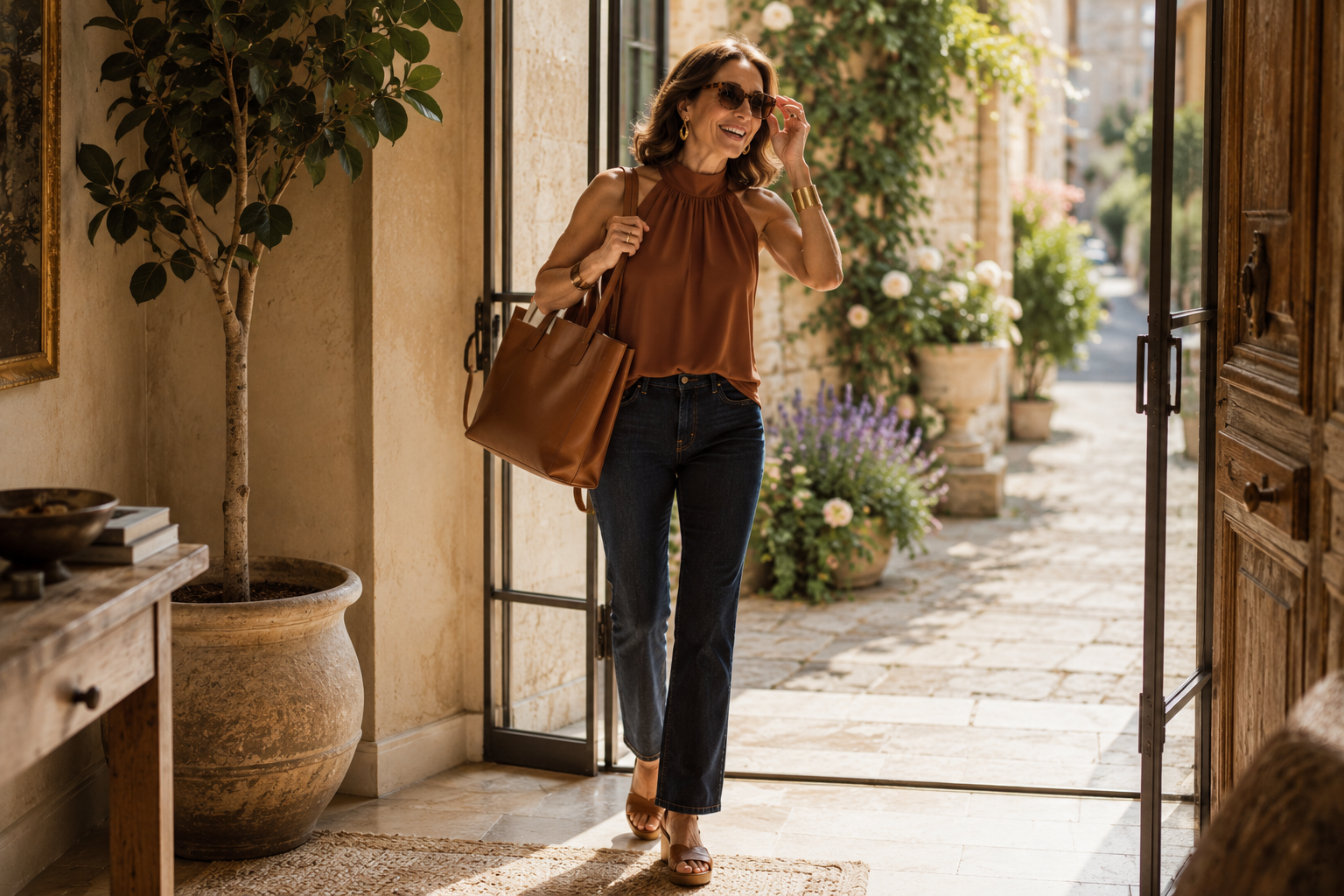
One of the greatest misconceptions about style is that it's something we figure out once and then simply maintain.
Life has other plans.
Careers begin and end. Children grow up. Travel becomes easier, or perhaps more adventurous. Hobbies appear that we never expected to love. Our bodies change and priorities shift. We gradually become more interested in quality than quantity, comfort than complication, and authenticity than impressing anyone else. Our wardrobes naturally evolve alongside those experiences.
The clothes that served you beautifully at thirty may no longer reflect who you are at fifty-five. The pieces you reach for today might have seemed far too classic years ago. Likewise, something you once considered "too bold" may suddenly feel exactly right because you've grown into it. Style has a wonderful way of keeping pace with confidence.
There is also tremendous freedom in letting go of the idea that every decade should look the same. Fashion often celebrates novelty for its own sake, encouraging us to replace what still works simply because something newer has arrived. Timeless style follows a different rhythm. It welcomes change thoughtfully, choosing what adds value while happily ignoring the rest.
Experience becomes one of your greatest style assets. You begin recognizing the fabrics that feel wonderful after a full day of wear. You appreciate the difference between a garment that photographs well and one that earns a permanent place in your wardrobe. You become less interested in collecting clothes and more interested in collecting favorites.
It also explains why confidence is so attractive. Confident women don't necessarily own more clothing or spend more money. They simply know themselves better. Their wardrobes reflect their lives instead of competing with them.
As our collection of articles grows, we'll explore every aspect of dressing beautifully, from body shape and proportion to capsule wardrobes, color, accessories, travel, and personal style. Every article builds on the same foundation you've begun creating here.
Great style isn't measured by age, size, or the label inside your jacket. It's measured by the quiet confidence of wearing clothes that feel completely at home on the woman wearing them. And that kind of elegance never goes out of style.
A Final Thought
Long before fashion magazines, social media, and seasonal trend reports, people dressed with intention.
They chose clothing that reflected their work, their community, the places they lived, and the lives they hoped to build. Garments were repaired, treasured, handed down, and worn often. A well-made coat wasn't simply another purchase. It became part of someone's story. There's something comforting about that.
Today we're surrounded by endless advice telling us to buy more, update faster, and reinvent ourselves every few months. It's easy to believe that the key to a more stylish wardrobe is always waiting in the next package on the front porch.
More often, it's waiting in the closet you already own because you're learning to see those pieces differently.
You'll begin noticing possibilities that were easy to overlook before. A jacket you've always worn with trousers suddenly feels perfect over a dress. A scarf tucked away in a drawer finds new life with your favorite handbag. A pair of shoes you once reserved for special occasions starts accompanying ordinary Tuesday errands simply because they make you smile.
Those are small moments. They're also the moments that gradually shape personal style.
More than information, I hope this guide has replaced uncertainty with curiosity. The next time you step into a fitting room or open your closet, you don't need to wonder whether your body measures up to someone else's standard. Instead, you can begin asking thoughtful questions about proportion, visual relationships, and the kind of wardrobe you want to create.
It has the power to change the way you shop, the way you dress, and perhaps even the way you see yourself.
Beautiful style has never belonged to one body shape, one age, one budget, or one definition of elegance. It belongs to women who understand themselves well enough to dress with intention and confidence.
And that is something worth cultivating for a lifetime.
Editor's Note
When I first began studying beauty and style, I assumed the most stylish women simply had better instincts than everyone else.
Years spent working as an esthetician, makeup artist, and event planner taught me something very different.
The women who consistently looked elegant weren't trying to become someone else. They understood themselves. They knew which colors energized them, which silhouettes felt comfortable, which fabrics they loved to wear, and how to choose clothing that supported the life they were actually living.
That realization changed the way I looked at style. It also changed the way I wanted to write about it.
You'll never find advice here that asks you to apologize for your body or chase someone else's definition of beauty. My goal is to help you understand the timeless design principles that allow you to dress with greater confidence, shop more intentionally, and build a wardrobe that feels authentically yours.
If this article encouraged you to see your closet with fresh eyes, then it has accomplished exactly what I hoped it would.
Thank you for spending part of your day with me. I look forward to continuing this journey together.
— Heather
Curated Collection
Understanding style is the first step. Finding well-made pieces that put those ideas into practice is the next. Every item I recommend has been chosen because it supports the timeless principles we've explored throughout this guide. You'll notice that I'm far less interested in fleeting trends than thoughtful design, quality materials, and versatility.
As you explore these recommendations, remember that no single garment transforms a wardrobe on its own. The magic happens when individual pieces naturally support one another.
Wardrobe Foundations
A beautifully tailored blazer is one of the most versatile pieces you'll ever own. It adds structure, creates polish, and works just as effortlessly with denim as it does over a dress.
A well-fitting pair of slacks offers remarkable versatility. Choose a fabric with enough structure to hold its shape while remaining comfortable throughout the day.
A classic dress in a silhouette you genuinely enjoy wearing becomes one of the hardest-working pieces in your closet. The goal isn't to follow trends, it's to find a shape that feels naturally at home on you.
Finishing Touches
A quality leather handbag in a versatile color quietly connects countless outfits without demanding attention.
Comfortable shoes that complement your lifestyle are an investment you'll appreciate every time you leave the house. Elegance has very little to do with uncomfortable footwear.
Beautiful jewelry with elegant lines often becomes the pieces you reach for most. They complete an outfit with confidence rather than competing for attention.
Looking Ahead
As The Art of Dressing Beautifully library grows, each article will include thoughtfully curated recommendations related to that specific topic. Whether we're exploring body shape, capsule wardrobes, jackets, dresses, accessories, or seasonal color, you'll find practical resources chosen to support the principles we've discussed, not simply fill a shopping list.
Dressing beautifully begins by choosing well.
Disclosure: This article may contain affiliate links. If you make a purchase through these links, I may earn a commission at no additional cost to you.
