

The Best Fall Haircuts for Women Over 45: Flattering Styles for Every Face Shape & Hair Type

A New Season, a Fresh Haircut
You save the photograph because you love the haircut. Later, you look again. Is it the bob you’re drawn to, or the way it curves beneath her cheekbones? Would those sweeping layers still appeal to you on a morning when you haven’t used a round brush?
A haircut photograph leaves quite a bit out.
This fall’s styles offer plenty to consider, from the relaxed boyfriend bob to the return of bouncy 90s layers. Choosing between them becomes easier when you notice which details caught your attention. Perhaps it’s the length just below the jaw, or a fringe that opens around the eyes.
Those details can be adapted. The same bob might sit at your chin or closer to your collarbone, depending on your features and how your hair falls. If your texture or density has changed, that deserves attention, too. You want a haircut you’ll enjoy once you’re home, doing your own hair.
How Your Face Shape Influences Your Haircut
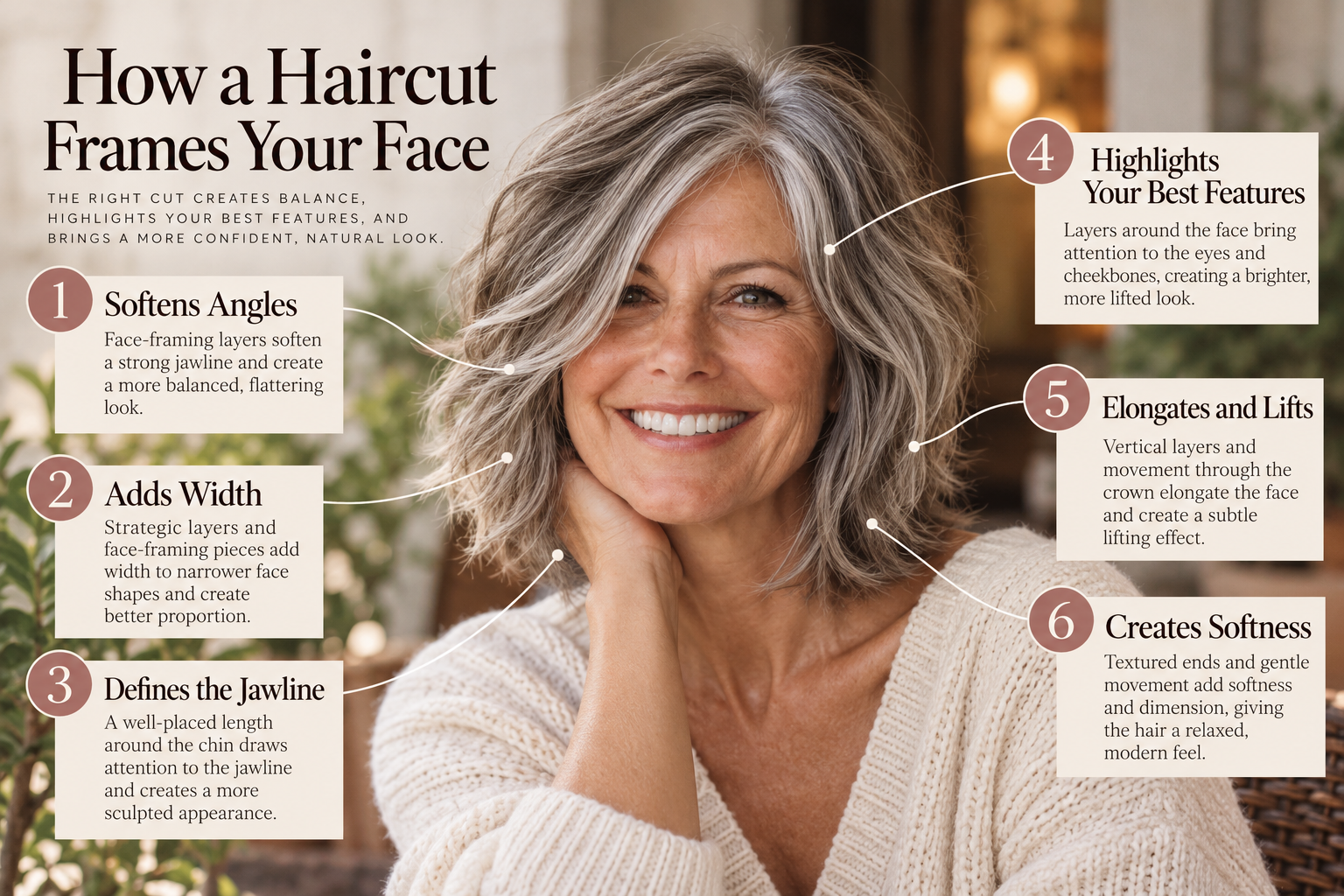
Pull your hair back and compare your face’s length with its width. Then notice how your forehead and cheekbones relate to your jaw.
You’ll probably recognize one of these descriptions:
Round: Similar facial width and length, with fuller cheeks and a gently curved jaw.
Square: Forehead, cheekbones, and jaw of relatively similar width, with a more angular jawline.
Heart: A wider forehead or cheekbone area tapering toward a narrower chin.
Oval: A face that’s longer than it is wide, with gently balanced proportions.
Long or oblong: More pronounced facial length, sometimes accompanied by a longer forehead or narrower width.
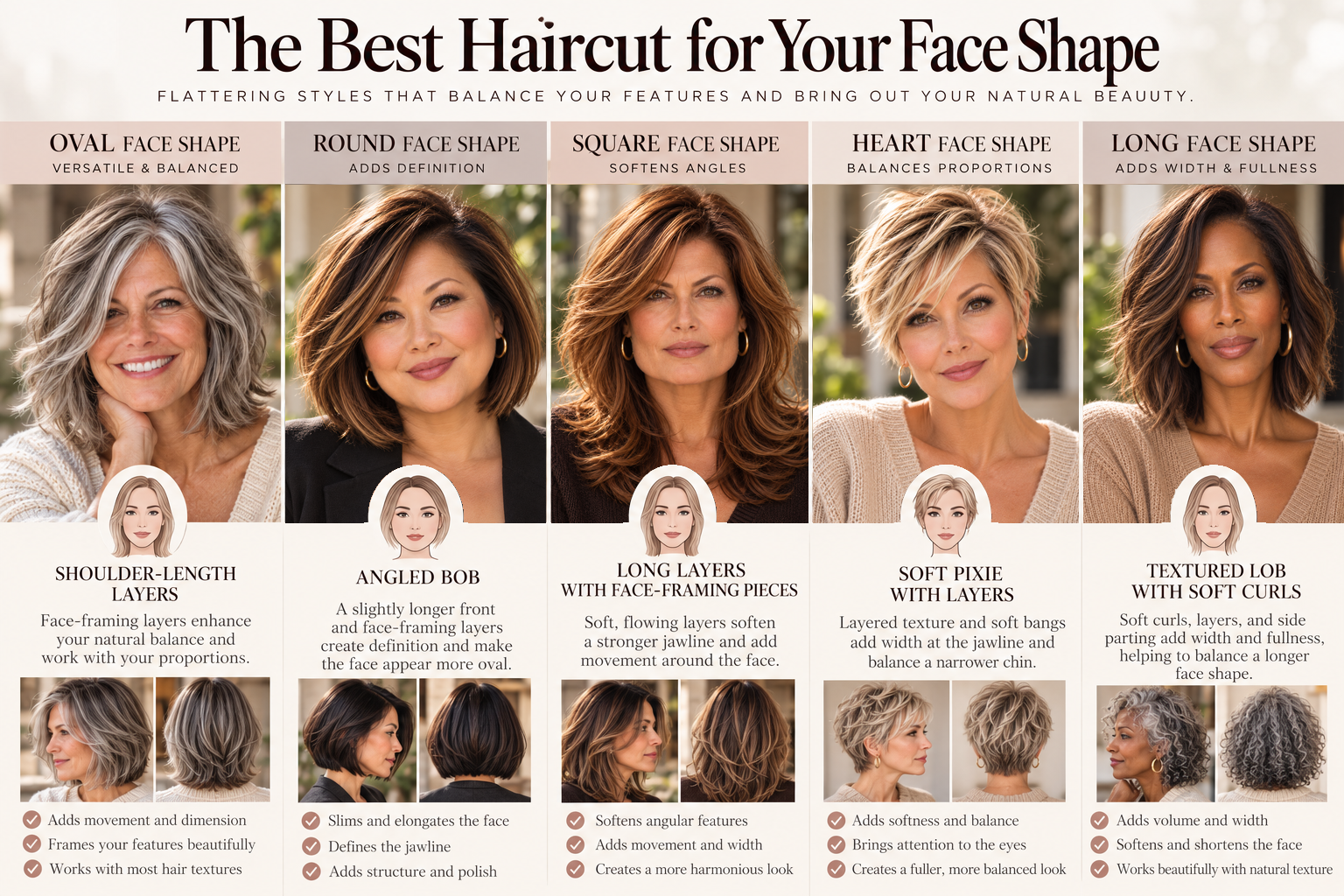
Some faces combine characteristics from different categories. A close description is enough.
Hair draws attention wherever it has a distinct edge or noticeable volume. A bob ending at the jaw emphasizes that area. Fringe changes how much forehead is visible; layers influence where the hair bends and separates, depending on texture and styling.
The suggestions below are ways to explore those effects with your stylist, rather than fixed matches between haircuts and face shapes. You might want more width beside a long face, or longer front pieces around full cheeks. You might also love your strong jaw and choose a cut that makes it more visible. Oval proportions aren’t a standard everyone else should imitate.
Five Fall Haircuts Worth Considering
This season’s forecasts include boyfriend bobs and softer shags, alongside Italian midis and slip bobs. Allure’s fall hair forecast, Marie Claire’s fall haircut forecast
Michael Van Clarke principal stylist Lamphane also anticipates fuller 90s layers and longer, more versatile interpretations of the bixie. Michael Van Clarke’s autumn/winter 2026 forecast
These are familiar haircut families with room for individual interpretation. Names vary between salons, so bring photographs and explain which details you want to borrow.
1. The Boyfriend Bob
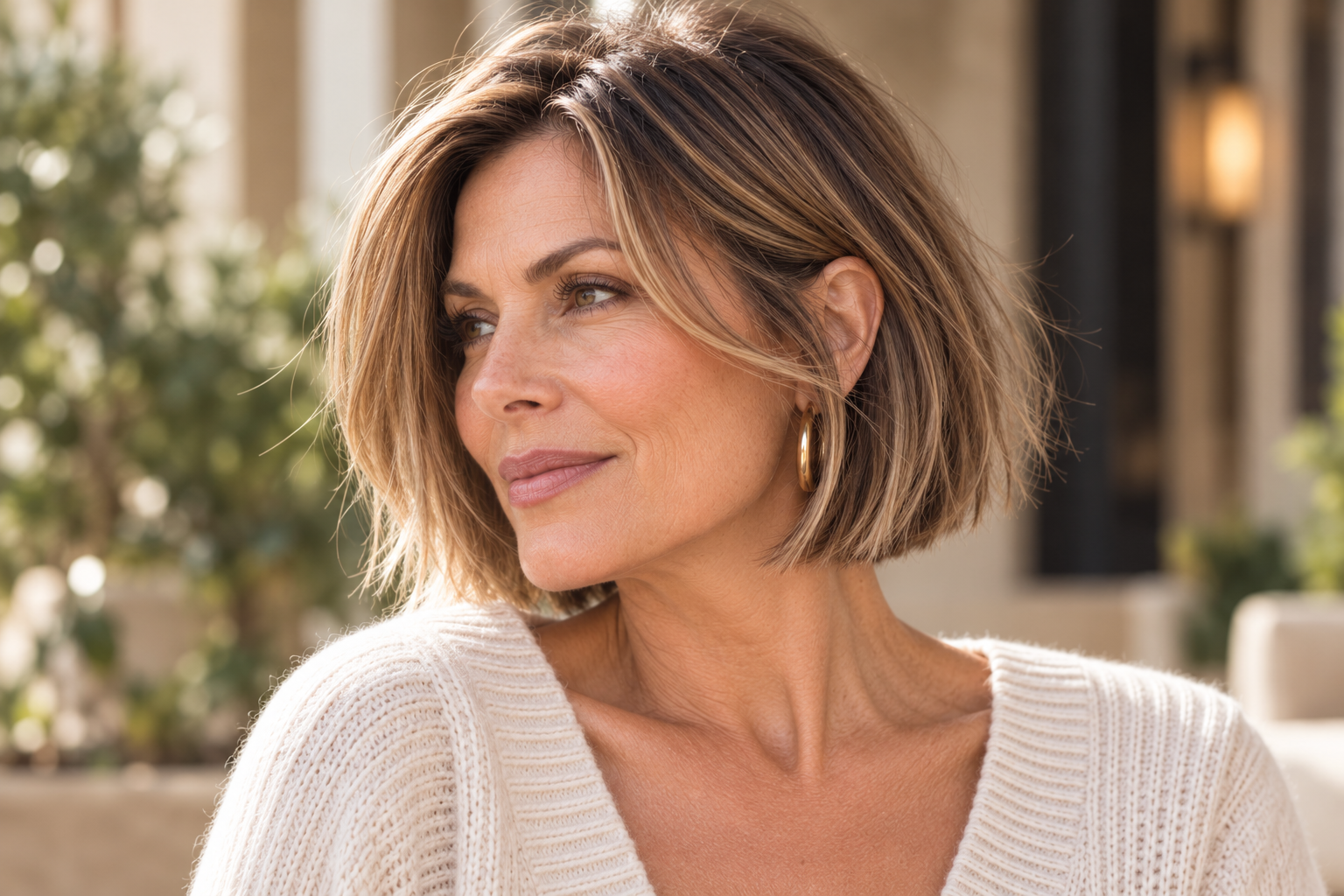
Worth exploring for oval, long/oblong, and heart-shaped faces.
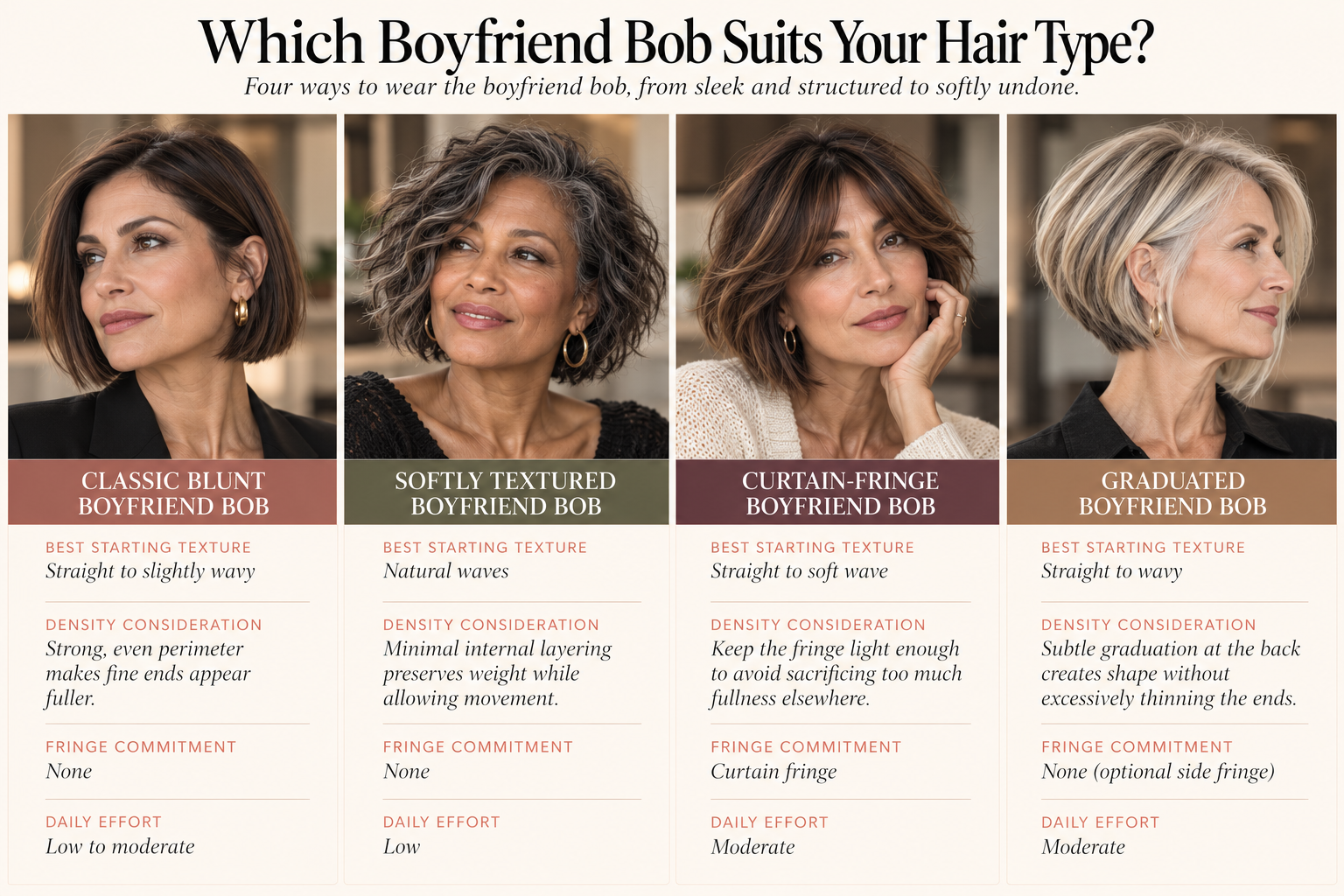
The boyfriend bob keeps enough substance at the bottom to hold its outline, with a relaxed finish and a little natural movement. It sits somewhere between chin and collarbone. The appeal is in that combination: a deliberate haircut that doesn’t require every strand to sit perfectly.
Start with the length. On a long or oblong face, a chin-length version with body at the sides offers a wider frame beside the cheeks. Letting it hang much longer and flatter gives a different effect. For a heart-shaped face, discuss an edge near the jaw, with a gentle bend around the chin that brings volume lower down.
If your face is round and you prefer a longer outline, consider taking the front below the chin. Beside a square jaw, curved ends or a little wave make the haircut’s edge less angular. A straighter edge emphasizes the jaw more. Oval faces have flexibility, so the hair’s natural bend becomes a useful deciding factor.
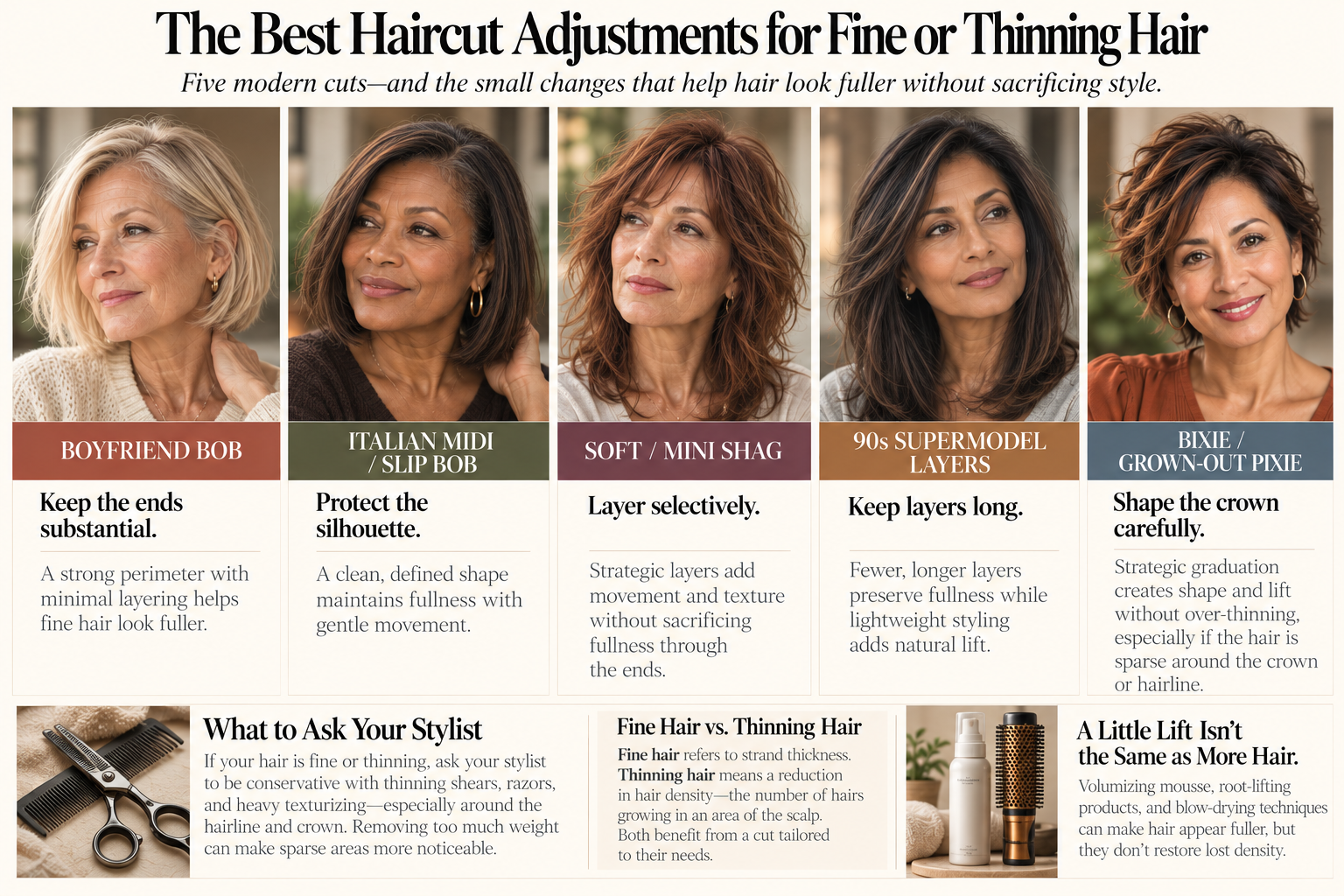
Fine hair benefits from ends that remain visibly full. Thick hair may need some weight removed internally so the sides don’t become bulky.
Natural waves lend themselves to the relaxed finish. With straight hair, a simple blow-dry might be enough, although cowlicks and outward-turning ends can change the daily routine.
In the Salon Chair: Ask where the bob will land when dry and how much weight should stay at the bottom. Mention whether you usually tuck your hair behind your ears.
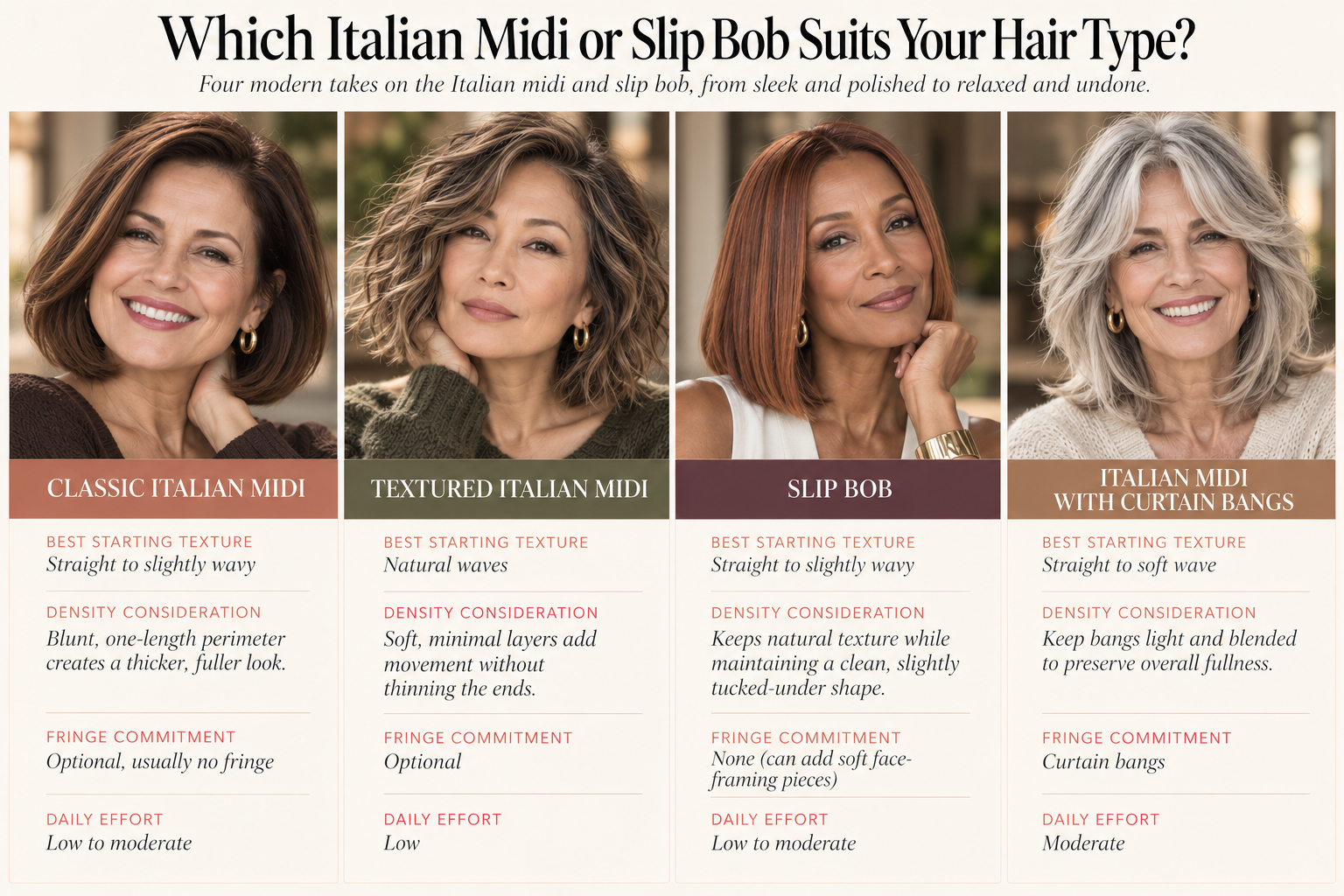
2. The Italian Midi & Slip Bob
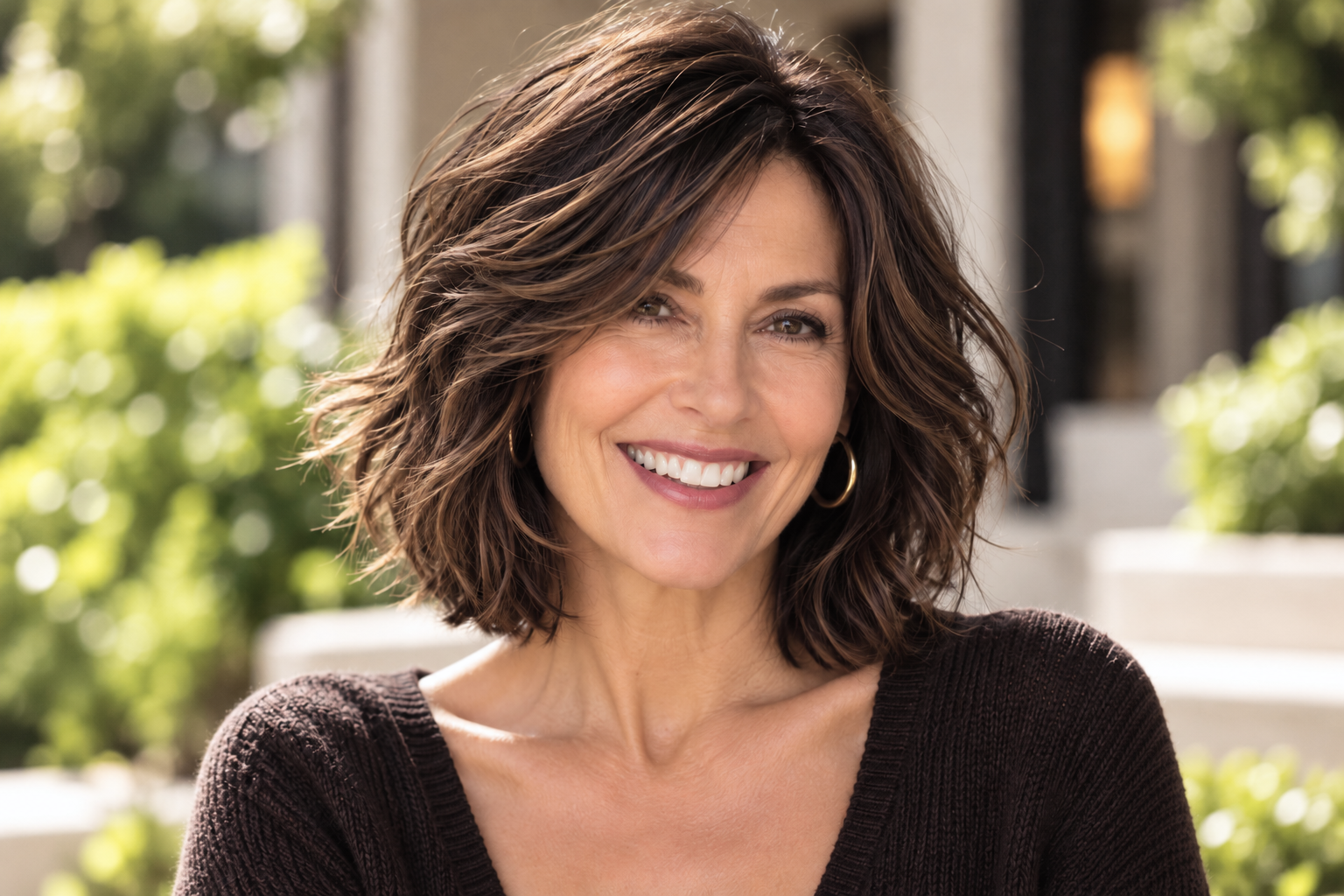
Worth exploring for round, square, and oval faces.
The Italian midi has rounded body through the lengths, often with a noticeable curve at the ends. The slip bob falls more smoothly and closer to the head, with less obvious volume.
You might love the collarbone length of both while wanting only the sleeker finish. Explain that before your stylist starts layering.
Medium and thick hair provide material for the fuller Italian version, though the cut still needs to distribute that weight carefully. With fine hair, discuss fewer layers and a substantial bottom edge so the ends retain enough substance.
The length is useful for round faces seeking a longer frame: it extends below the jaw, especially when the front falls without excessive width at the cheeks. Curved ends bring a gentler line beside a square jaw. Oval faces can explore either interpretation according to texture and preferred finish.
For a heart-shaped face, retaining some body in the lower lengths puts volume nearer the narrower chin. On a long or oblong face, consider the Italian midi’s width at the sides before choosing an extremely flat slip bob.
There’s a practical difference, too. Rounded ends need encouragement if your hair doesn’t bend that way naturally. A sleek slip bob worn on wavy hair may involve smoothing, even when the cut itself is straightforward.
In the Salon Chair: Describe whether you want rounded volume or a fluid fall closer to your face. Ask what each would require with your natural texture.
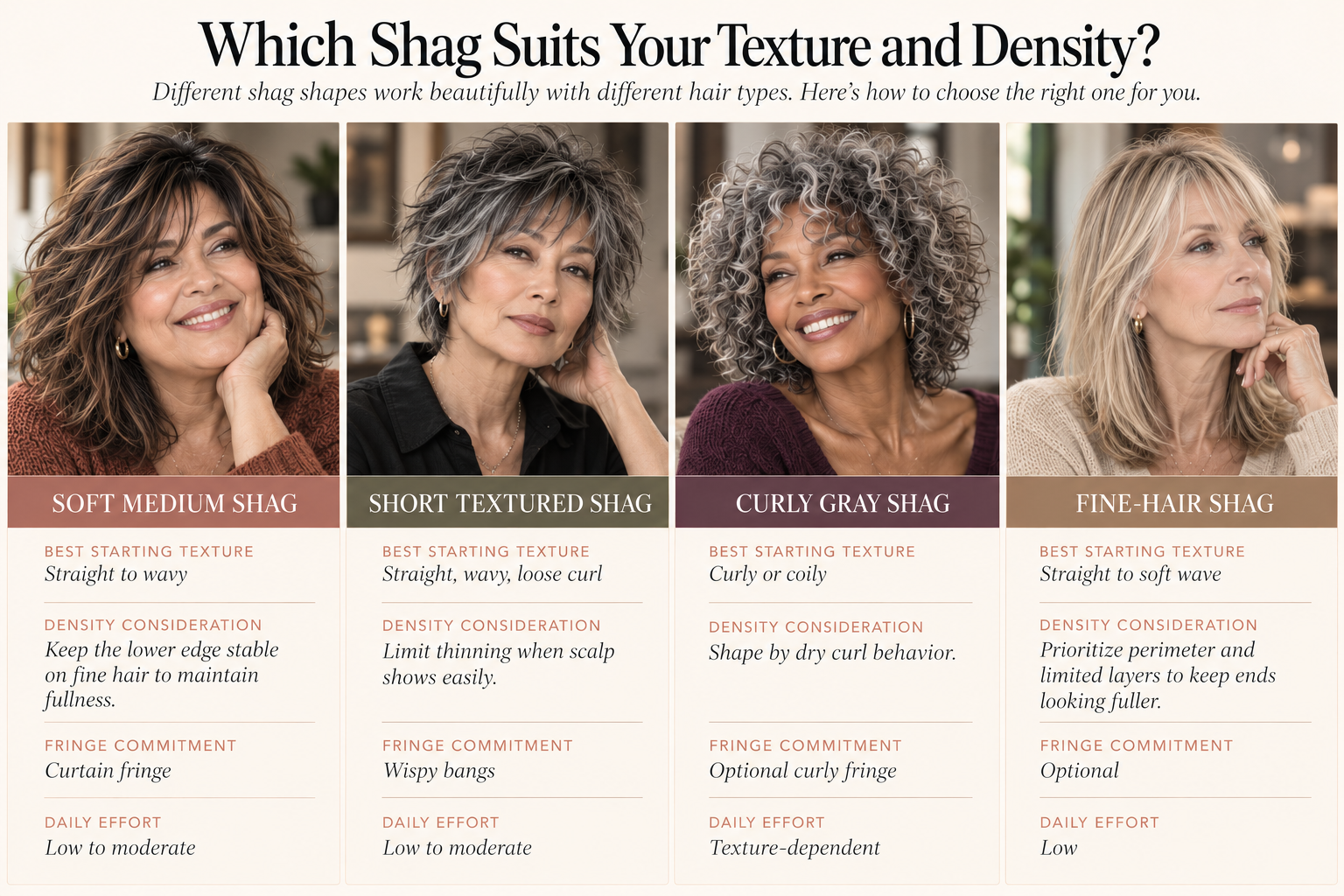
3. Soft & Mini Shags

Worth exploring for square, heart, and oval faces.
A shag is appealing when you enjoy texture around your face and prefer ends that separate into pieces. The softer modern version keeps the layered character without heavily disconnected sections. A mini shag brings it into a shorter length; a longer version lets the pieces fall toward the shoulders and beyond.
Look at the fringe and the shortest layers together. A fringe you love may sit above layers that are shorter than you’d want to wear.
For a square face, wispy fringe and layers around the cheekbones break up the outline beside the jaw. A heart-shaped face could suit fringe across the forehead, with enough length lower down to frame the chin. Oval faces have room to vary both the fringe and the overall length.
If your face is round and you prefer less width at the cheeks, keep the front pieces longer and avoid concentrating the fullest layers there. A long face can take fuller fringe and more outward movement around the cheekbones.
Waves and curls respond to changes in weight. Layers may let them spring up, so their dry length matters considerably. Fine hair needs a more restrained approach: abundant short layers can leave too little hair reaching the ends.
Think about the fringe separately from the rest of the cut. The lengths might air-dry as you like while the front needs a few minutes with a brush each morning.
In the Salon Chair: Ask where the shortest layers will fall when dry. Explain that you want texture while keeping the ends substantial, and discuss how the fringe behaves between washes.
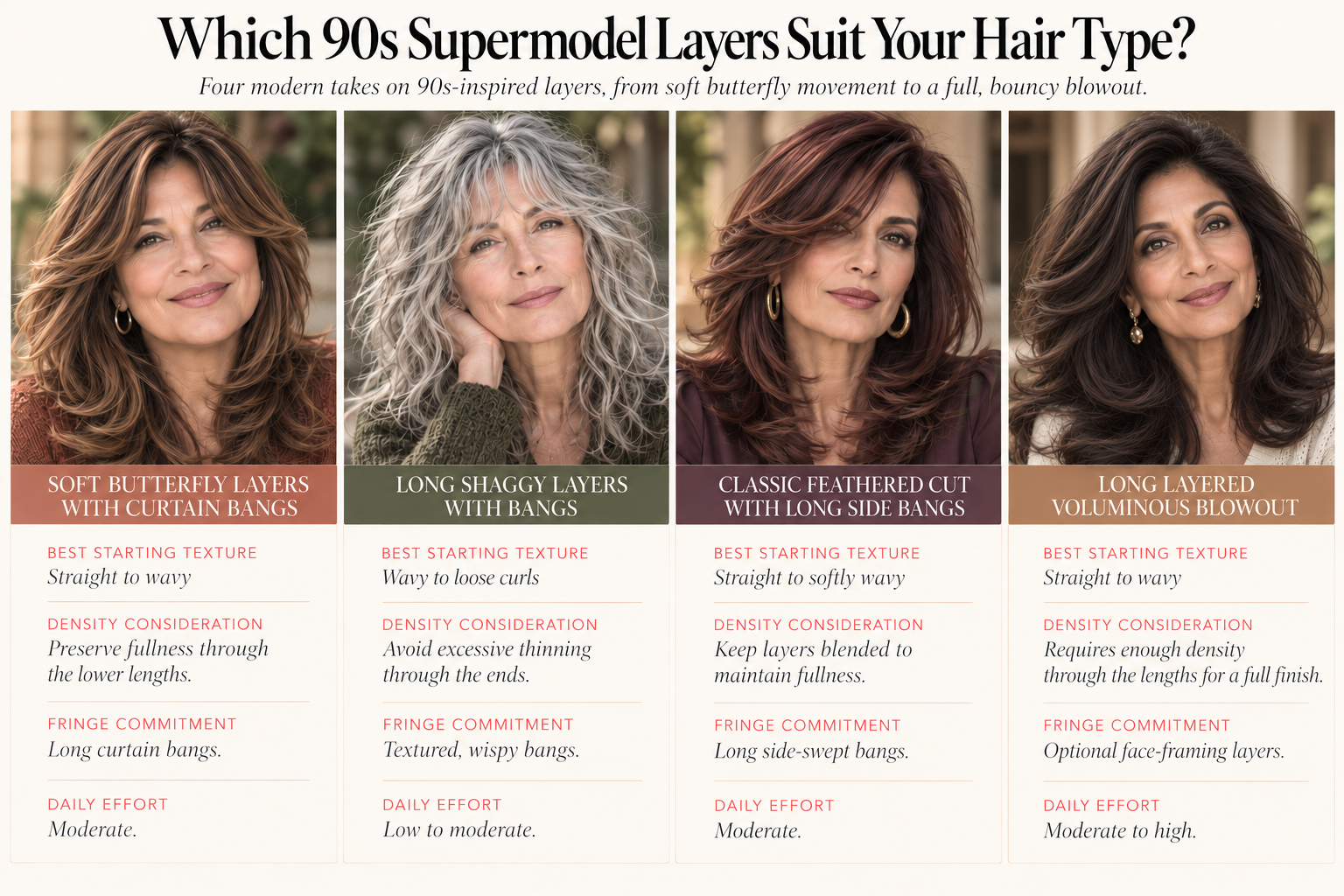
4. 90s Supermodel Layers
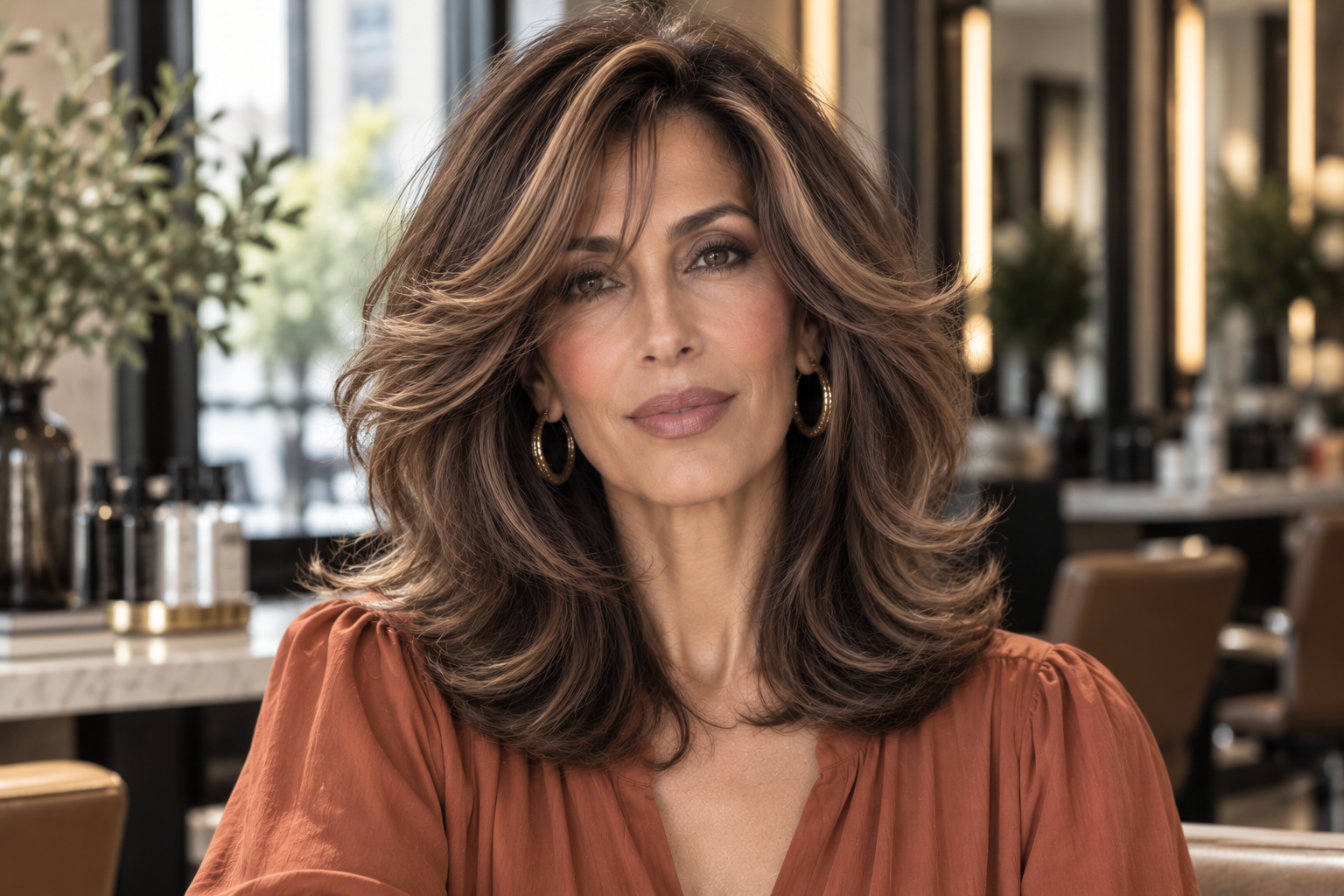
Worth exploring for round, square, and long/oblong faces, with different volume placement.
The appeal is unmistakable: lifted roots, a sweeping front section, and lengths that bounce when you turn your head. The modern interpretation allows a looser finish than the meticulously feathered styles of the original era, but it still depends on where the layers begin.
For a round face, longer front pieces extending below the cheeks and some crown lift draw attention vertically. Sweeping layers bring curves around a square jaw. On a heart-shaped face, discuss starting the face-framing lower so the fuller movement sits nearer the chin.
A long or oblong face needs a different version. Shoulder- or collarbone-length layers with body at the sides avoid putting all the volume above the forehead. Two women asking for “90s layers” may need quite different cuts.
Oval faces might choose longer cascading layers or a shorter Rachel-inspired interpretation. Medium-to-thick hair accommodates more extensive layering; fine hair benefits from fewer, longer layers that leave weight at the bottom.
The signature bounce requires styling. A round brush or rollers form the curve, and how well it lasts depends partly on your texture. If you enjoy a blowout, that may be part of the attraction. For simpler mornings, have your stylist demonstrate a less elaborate finish before you decide.
In the Salon Chair: Point out where you want the front layers to begin and where you want volume. Ask how much hair will remain through the bottom lengths.
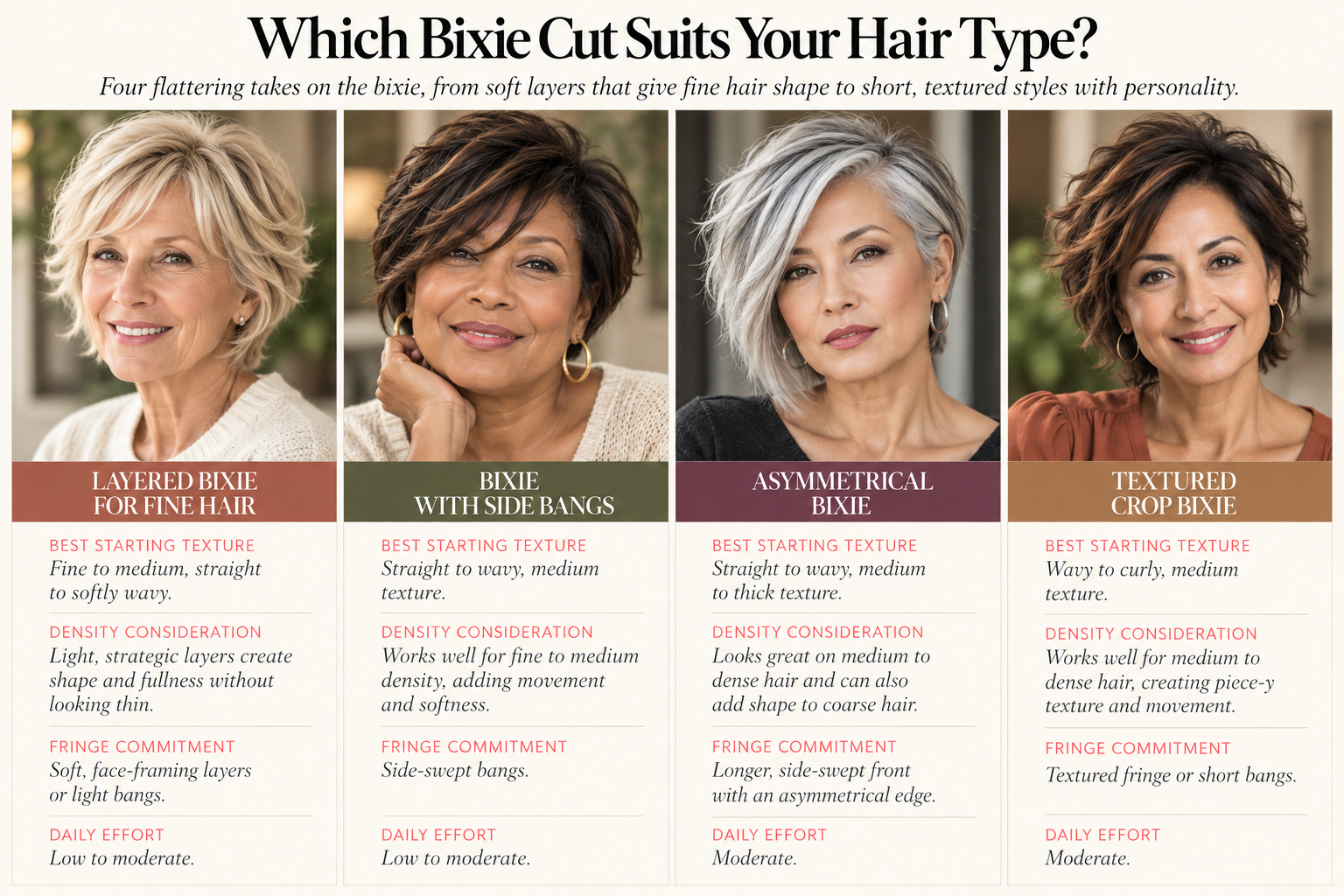
5. Bixies & Grown-Out Pixies
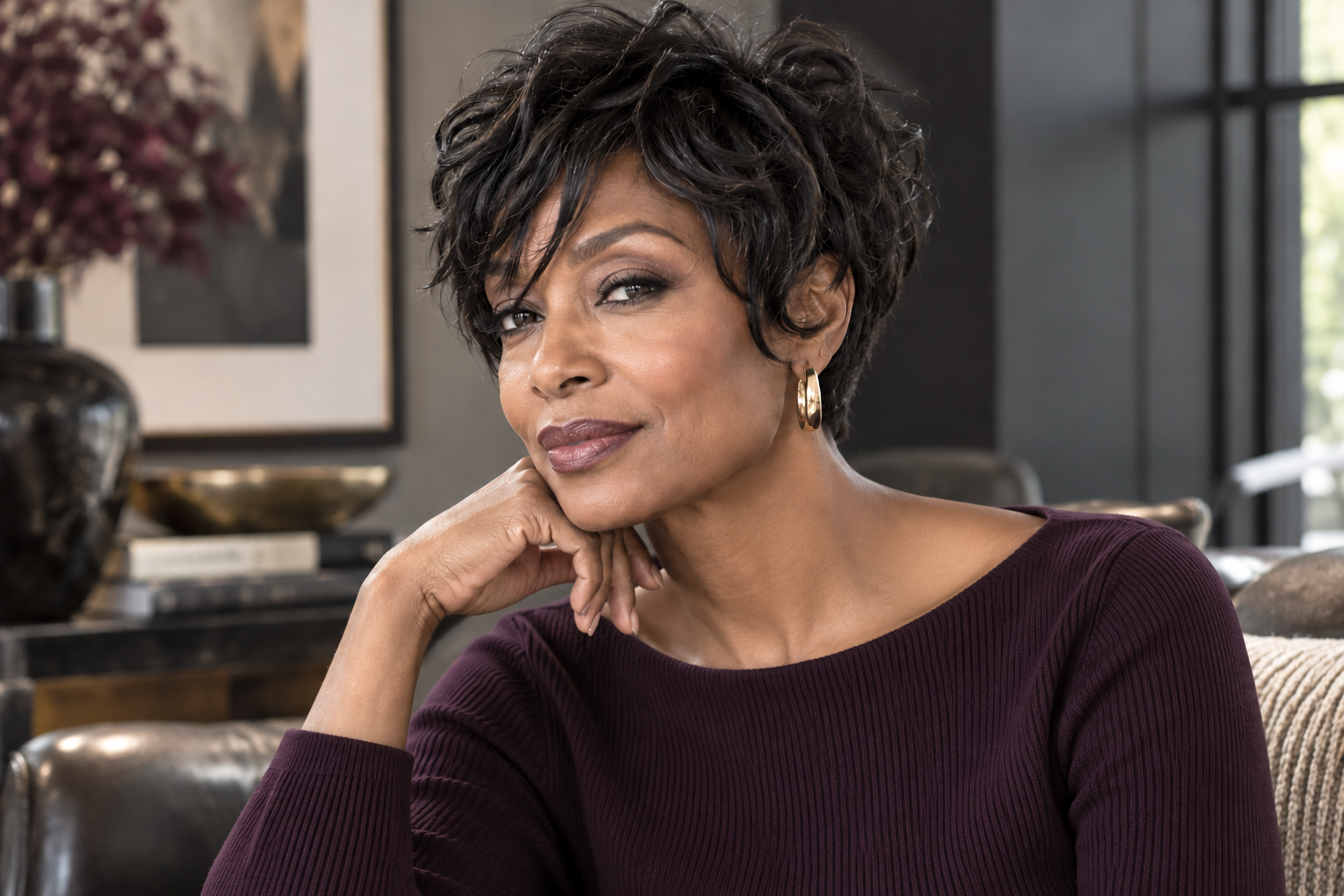
Worth exploring for heart, oval, and square faces.
Before choosing a short cut, look at the areas around the ears and neckline. Those small details affect how the haircut wears—and how soon you’ll want it trimmed.
A bixie combines a pixie’s shorter structure with some of a bob’s length. A grown-out pixie keeps longer sections through selected areas, giving the fringe and top more freedom to fall differently.
For a heart-shaped face, discuss a longer, sweeping fringe and where to retain fullness through the sides, especially near the jaw. Sweeping fringe, rounded movement, or longer side pieces also give a square face a gentler outline.
A round face seeking visual length might suit crown lift and closer sides. On a long or oblong face, side-swept fringe and controlled crown height keep the overall silhouette from becoming too tall. Oval faces have a broad choice, from sleek versions to more textured cuts.
Careful graduation—building the shape through changes in length—gives fine hair structure. Curly and coily hair requires an approach suited to shrinkage and the desired dry shape, rather than copying the lengths in a straight-haired photograph.
Less length can shorten drying time, though density and texture still matter. Maintaining a precise neckline and neat sides usually means more frequent trims. Decide how much salon maintenance you want before choosing the shortest version.
In the Salon Chair: Discuss fringe length, crown shape, and neckline together. Ask which areas will need attention first as the cut grows.
What If Your Hair Texture Has Changed?
Perhaps the cut you’ve worn for years now separates at the front, or a wave you used to brush straight has become harder to persuade. Hair may become finer, drier, curlier, straighter, or less dense.
Tell your stylist what happens during your normal routine. Dry lengths may need a different approach from a changing curl pattern; reduced density may call for retaining more weight. An older photograph can help explain what has changed.
Hormonal changes, genetics, and health factors can affect hair, but a haircut consultation won’t establish the cause. For new thinning, a dermatologist can distinguish female pattern hair loss from other conditions. American Academy of Dermatology guidance
Your stylist can reconsider layer placement and length around what your hair does now.
What to Ask Your Stylist Before Making the Cut
Bring photographs from different angles, ideally including someone with a similar face shape and natural texture. A beautiful front view may tell you very little about the back.
Explain what caught your attention. “I love the fullness below her cheekbones” gives your stylist more to work with than the haircut’s name alone.
These questions are worth saving for your appointment:
Will this haircut flatter my face shape, and where should the length fall?
Would fringe or face-framing layers suit my features?
Will this cut work with my natural texture and density?
If my hair is fine or thinning, how can we preserve fullness?
How much styling will I need to recreate the finished look?
How frequently will I need trims, and what will the haircut look like as it grows out?
Be honest about your routine before the cutting begins. If you air-dry most mornings, say so. If you enjoy an occasional blowout, ask how the cut will fall on the days you skip it.
When a technique is unfamiliar, ask your stylist to demonstrate it, then let you try a section yourself. It’s easier to correct your brush position in the salon than to puzzle it out at home.
The Best Haircut Still Looks Like You
At the end of the day, the photo you saved might still be the one you bring in. You may love its sharp, jaw‑length shape but want a longer fringe, or maybe you’re drawn to those soft, sweeping layers and imagine them with a little more weight at the ends.
Think about the parts you’ll actually enjoy on a daily basis. Maybe a polished blowout feels like a small luxury you’re happy to make time for. Maybe you prefer something you can style in five minutes and walk out the door. Whatever your routine looks like, it needs to be taken into consideration when speaking with your stylist.
You should leave with a haircut you genuinely like and a clear, simple understanding of how to wear it yourself.
A Few Styling Essentials That Make a Difference
A great haircut is the starting point, but a few well-chosen styling products can make all the difference in how your hair looks and feels. If your hair is fine or thinning, lightweight products are especially important. I love the idea of using a volumizing mousse like Color Wow Xtra Large Bombshell Volumizer to give roots a little lift without weighing down the ends. A good ceramic round brush, like one from Olivia Garden, can help create soft movement through a bob or bring those beautiful, bouncy '90s-inspired layers to life. And if you're looking for an easier way to style your hair at home, a hot-air brush can help create shape and volume without juggling a dryer and brush. You don't need a cabinet full of products, just a few essentials that work with your haircut, your hair texture, and the way you actually like to get ready.
Disclosure: This article may contain affiliate links. If you make a purchase through these links, I may earn a commission at no additional cost to you.
