

The Makeup Colors & Techniques That Brighten, Lift & Enhance Mature Eyes
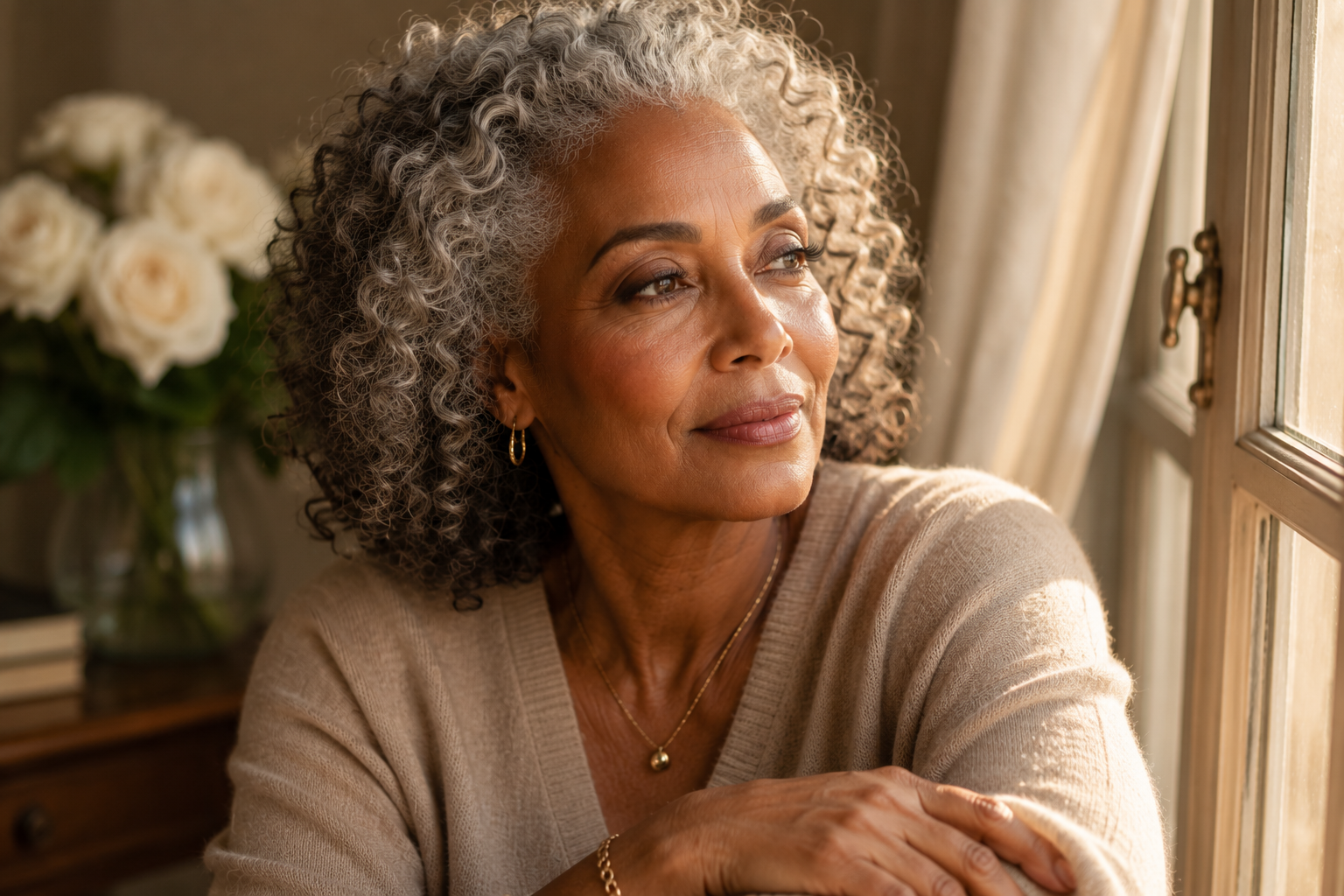
One of the first places many of us begin to notice subtle changes is around our eyes. Not in a dramatic or “something’s wrong” kind of way—just in those quiet, natural changes that come with living life. Skin becomes a bit thinner and drier, lids don’t spring back the way they used to, brows soften, and lashes aren’t quite as dense as they once were. And suddenly, the makeup techniques that felt perfect in our thirties or forties can feel heavier or less flattering. Not because we’ve lost any skill, but because our features have simply evolved.
The reassuring part is that beautiful eye makeup after 50 doesn’t require a complete overhaul or a drawer full of new products. Most of the time, it’s just a matter of gentle adjustments—tweaking color, texture, placement, and technique so they work with your features now. A satin shadow instead of a frosty shimmer, a softened eyeliner, or placing color slightly higher on a hooded lid can make your eyes look brighter, more open, and naturally lifted.
And eye makeup is so personal. What flatters blue eyes isn’t always what makes brown or green eyes glow. Techniques that lift hooded lids differ from those that balance downturned or close-set eyes. Then, when you add seasonal color analysis into the mix, everything becomes even more individualized. Your makeup starts harmonizing with your natural coloring instead of competing with it, creating a softer, more cohesive look.
So instead of chasing one-size-fits-all trends, this guide focuses on what truly matters: choosing colors that naturally enhance your eye color, refining those choices through your seasonal palette, adapting techniques to your eye shape, and working with the gentle changes that come with mature skin. The goal isn’t dramatic makeup—it’s eyes that look bright, open, expressive, and beautifully like you.
The Three Elements That Make Eyes Look Bright, Beautiful & Defined
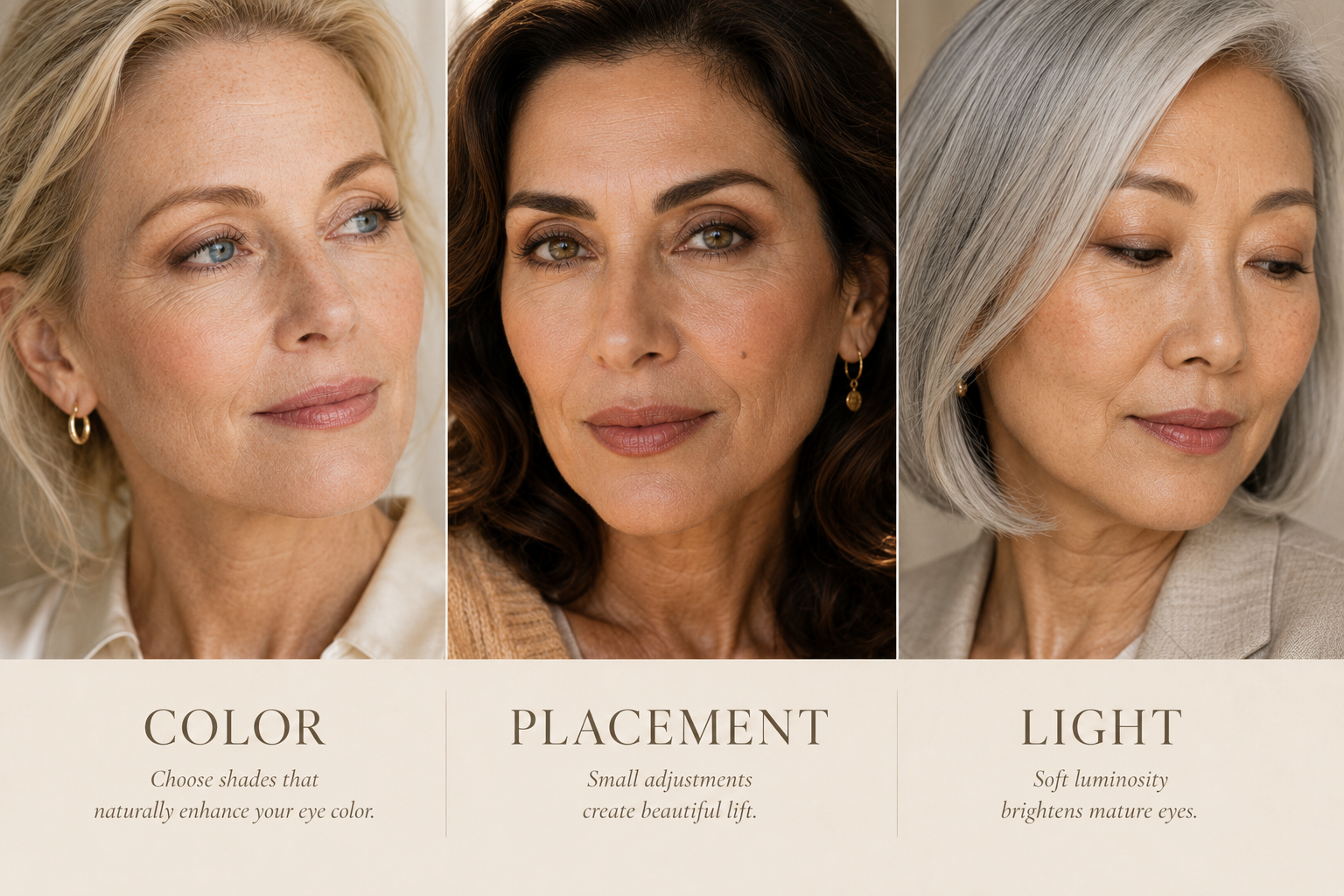
It’s funny how easy it is to get swept up in whatever eyeshadow palette or trend is making the rounds. But what truly makes eyes look bright and expressive has very little to do with trends at all. Instead, it comes down to understanding what naturally helps your eyes stand out—no matter their color, shape, or age.
Whether your eyes are blue, brown, green, hazel, or gray, three elements quietly work together to create makeup that feels fresh, flattering, and timeless: color, placement, and light.
Color
The right shades don’t change your eye color—they simply highlight what’s already beautiful. Warm bronze can make blue eyes glow, plum can bring out the depth in green eyes, and navy can make brown eyes appear even richer and more defined. When your eyeshadow complements both your eye color and your natural coloring, everything feels harmonious and effortless, like the colors were made for you.
Placement
Where you put your makeup matters just as much as the colors you choose. As our features naturally shift over time—lids becoming a little more hooded, creases sitting a bit differently—small tweaks in placement can make a world of difference. A slightly higher eyeshadow blend, a gentler eyeliner, or a softly shaped brow can help your eyes look more open and lifted. It’s not about changing your eyes; it’s about working with them in a way that feels natural and believable.
Light
Light is the quiet hero of mature eye makeup. The way products reflect light can brighten the entire eye area or, if we’re not careful, emphasize texture we’d rather not spotlight. Hydrating concealers, satin‑finish shadows, diffused color, and subtle highlighting help bring light back to the eye area in a soft, flattering way. It’s less about shimmer and more about gentle luminosity.
As you move through this guide, you'll see these three elements woven into every recommendation—whether we're choosing eyeshadow colors, adapting techniques for different eye shapes, or addressing common concerns like hooded lids or dark circles. The intention is always the same: makeup that works with your features, honors the natural changes that come with time, and helps you feel like the very best version of yourself.
Choose Colors That Naturally Enhance Your Eye Color
One of the easiest ways to make your eyes look brighter is by choosing eyeshadow shades that naturally enhance your unique eye color. It isn't about matching your eyes or creating dramatic contrast. Instead, it's about choosing colors that gently invite your eyes forward—softly, naturally, and without effort.
Think of your eye color as the starting point. Certain shades make blue eyes look more luminous, others bring warmth to brown eyes, and still others highlight the beautiful complexity in green, hazel, and gray eyes. The right colors don’t compete with your features. They simply help your eyes become the quiet focal point.
Blue Eyes
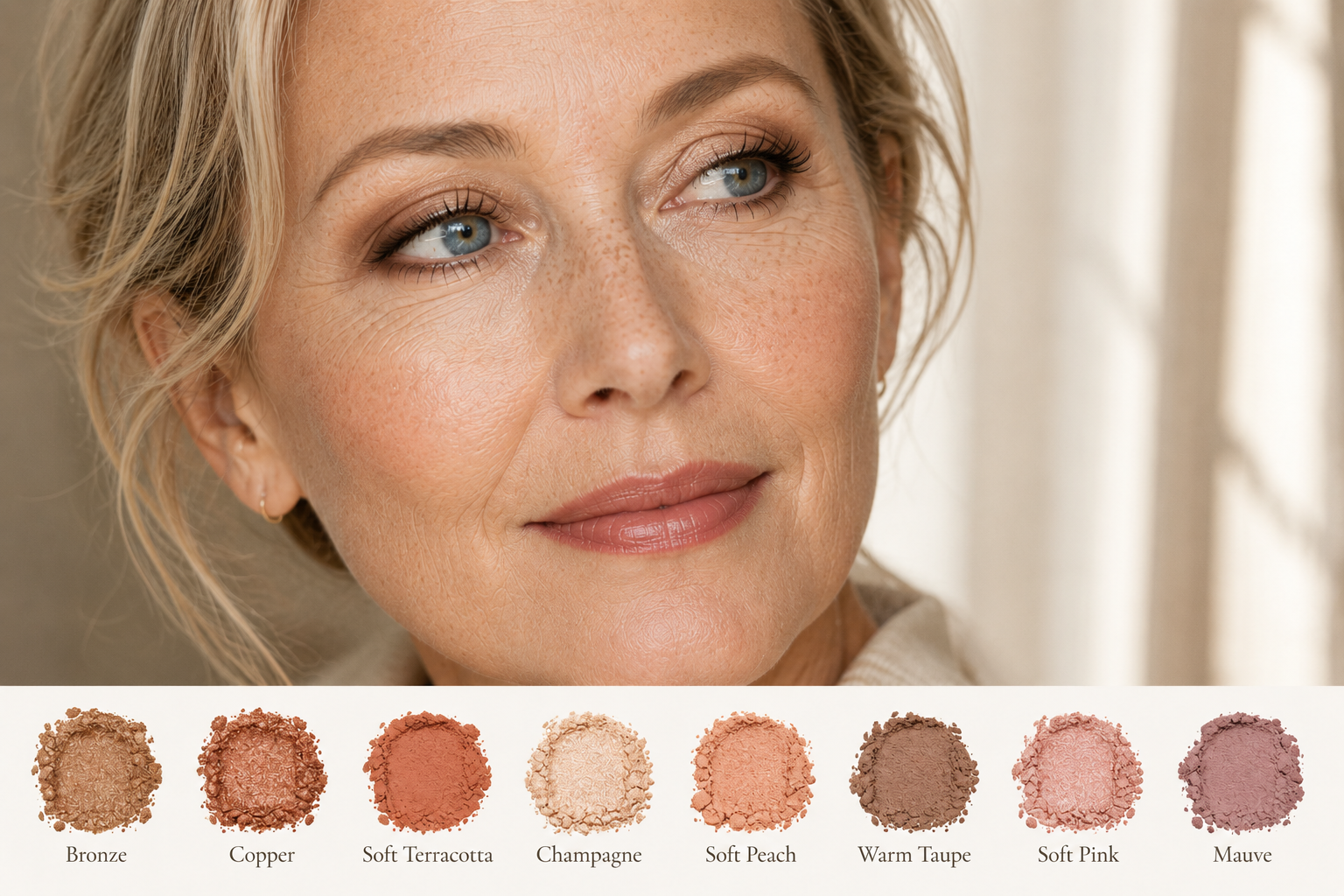
Blue eyes tend to glow when paired with warm, earthy tones. These shades create a soft contrast that makes blue look even brighter and more vivid.
Most Flattering Colors
Bronze, Copper, Soft Terracotta, Champagne, Soft Peach, Warm Taupe, Soft Pink and Mauve.
Try This:
For a look that feels easy and bright, start with a wash of warm taupe across your lid. Let a bit of soft bronze hug the outer corner — just enough to add warmth and gentle depth. Then tap a touch of champagne near the inner corner. It catches the light in a way that makes blue eyes appear brighter, fresher, and more radiant.
Green Eyes
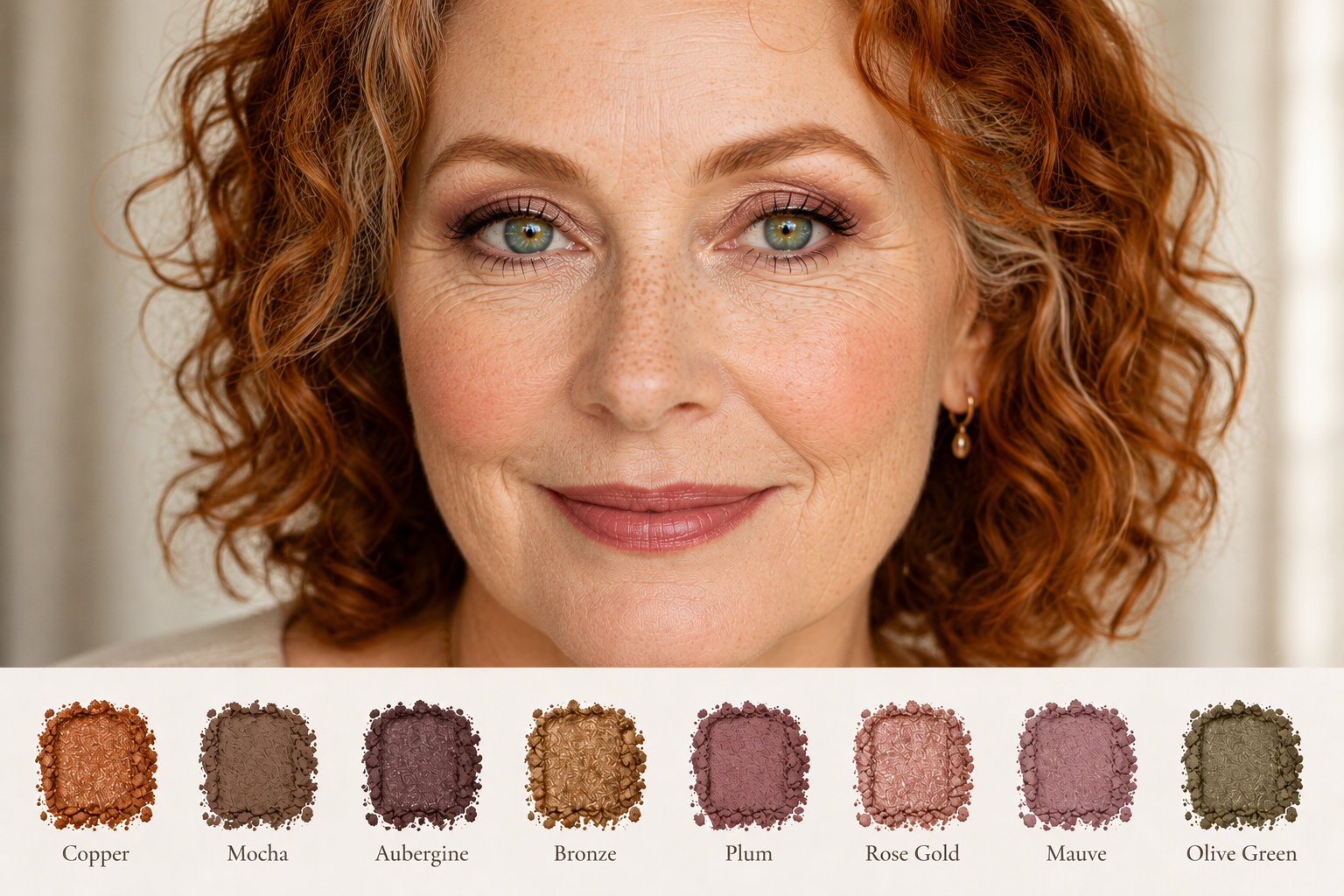
Green eyes have a lovely way of shifting with the light. Warm metallics, rosy tones, and rich plums enhance that depth without overwhelming it.
Most Flattering Colors
Copper, Mocha, Aubergine, Bronze, Plum, Rose Gold, Mauve, & Olive Green
Try This:
Sweep a soft layer of mocha over the lid, letting it melt into your natural crease. Then whisper a little plum into the outer corner and blend until it feels seamless. The combination creates a subtle, elegant contrast that makes green eyes look almost illuminated from within.
Hazel Eyes
Hazel eyes are wonderfully complex—often a mix of green, gold, and brown. Different eyeshadow colors can highlight different tones within the iris, which makes them one of the most versatile eye colors to enhance with makeup.
Most Flattering Colors
Copper, Olive Green, Gold, Burgundy, Plum, Mauve, Rose Gold, Chocolate Brown and Bronze.
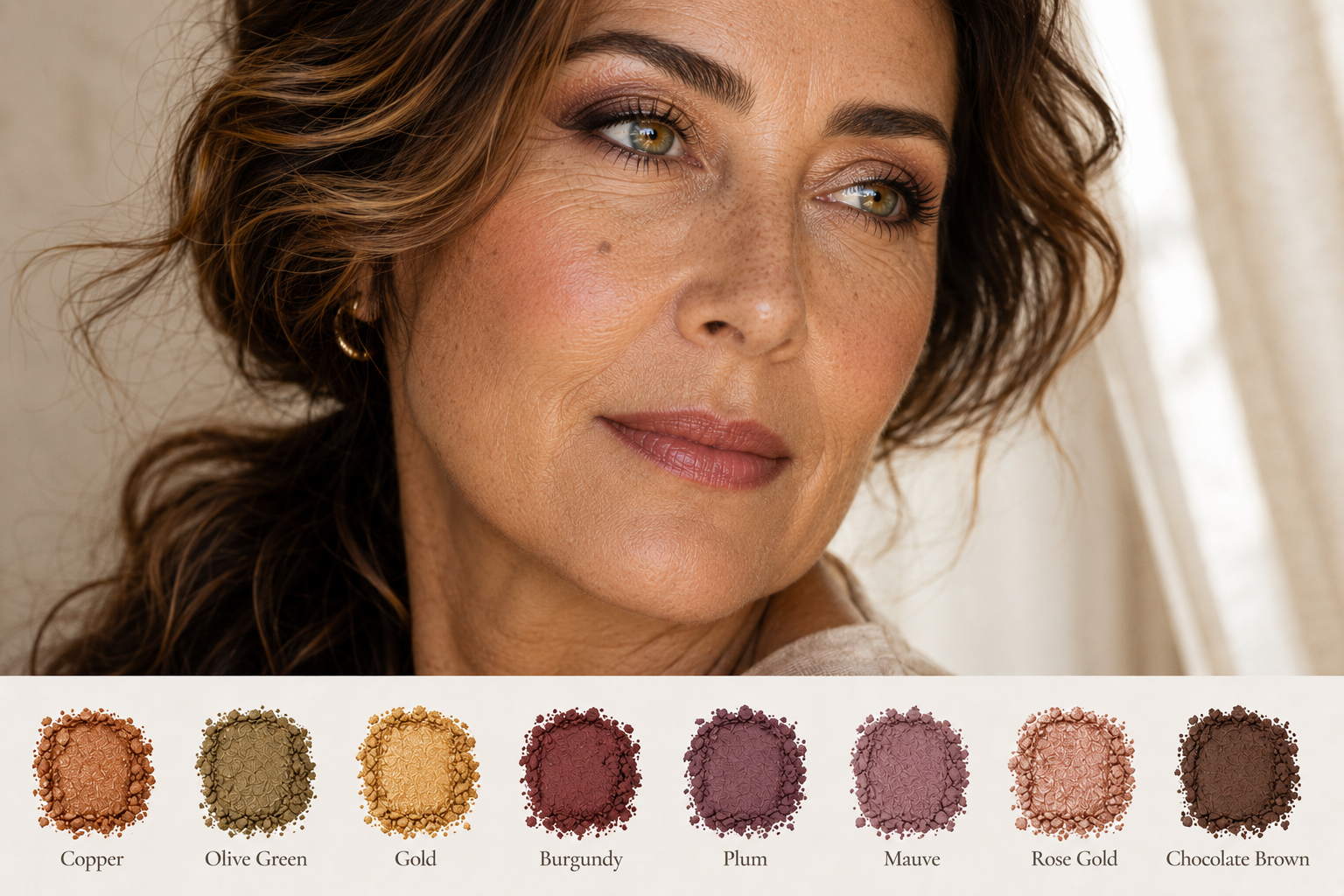
Try This:
If you want to bring out the green tones, reach for plum or olive and blend them softly through the outer corner. To highlight the golden flecks, choose bronze, copper, or gold — even a small amount on the lid or inner corner can make hazel eyes look warm, dimensional, and beautifully complex.
Brown Eyes
Brown eyes are beautifully versatile. Whether your eyes are light honey or deep espresso, they pair well with everything from soft neutrals to rich jewel tones.
Most Flattering Colors
Champagne, Bronze, Warm Brown, Gold, Copper, Plum, Emerald Green and Navy.
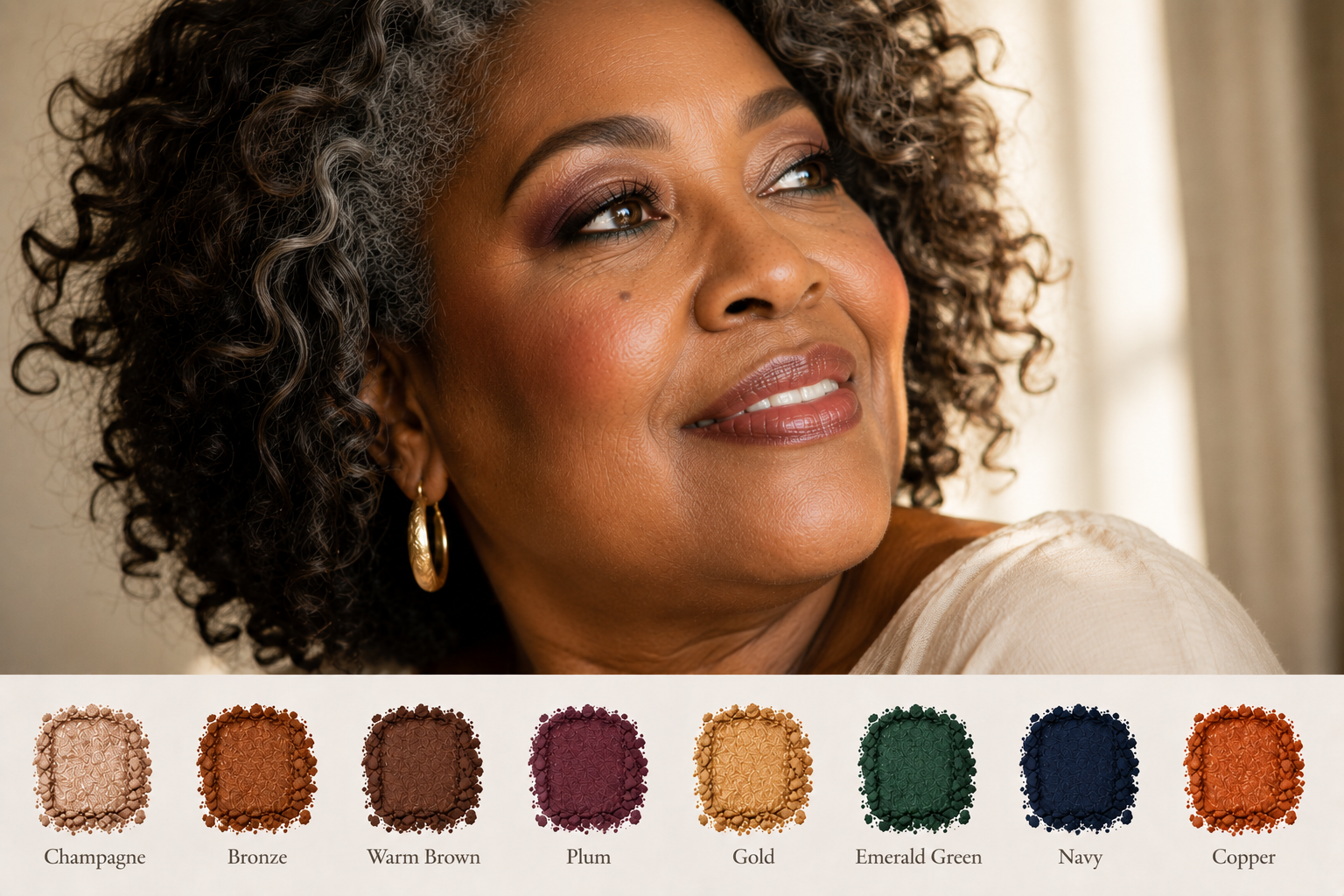
Try This:
For an effortless everyday look, pair champagne on the lid with a sweep of bronze through the crease. It’s simple, polished, and beautifully flattering. When you want something a little more striking, try emerald or navy along the lash line. The contrast is gorgeous without ever feeling heavy.
Gray Eyes
Gray eyes are rare and subtly mesmerizing, often shifting between silver, blue, and green depending on the light. Cooler neutrals and soft jewel tones help enhance their natural luminosity.
Most Flattering Colors
Silver, Charcoal, Cool Taupe, Soft Pink, Lilac, Mauve, Copper Rose and Plum.
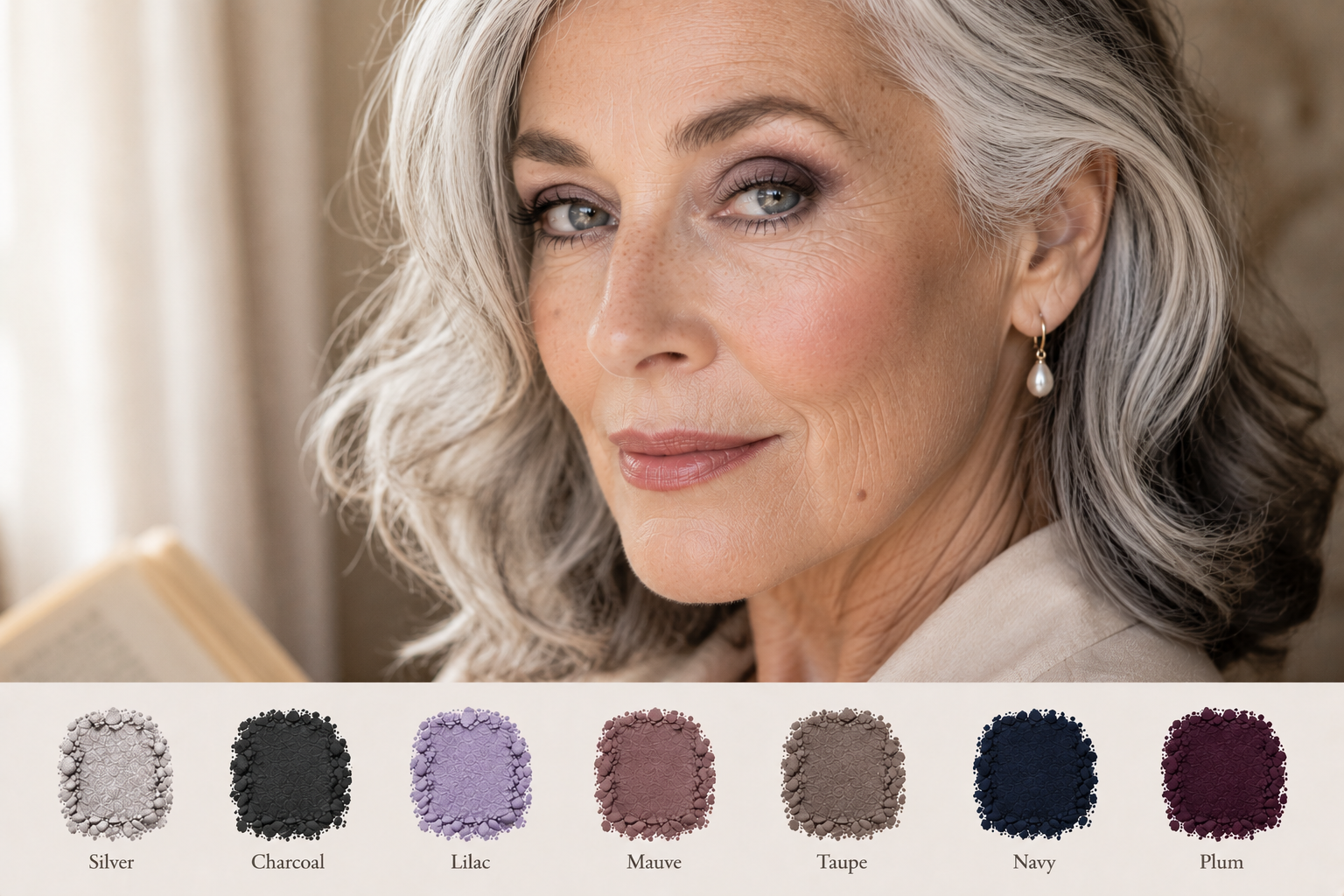
Try This:
Blend taupe across the lid for soft daytime definition, then add a touch of silver near the inner corner to brighten. When you want more depth, reach for plum or charcoal — they enhance the natural shifts in gray eyes without overpowering their quiet luminosity.
Remember
Eye color is only one part of the story.
Two women may both have blue eyes, yet look completely different in the same eyeshadow because their overall coloring is different. A warm bronze that flatters a Warm Autumn may feel too rich on a Cool Summer, while a cool taupe that looks beautiful on a Soft Summer may seem muted on a Bright Spring.
That’s where Seasonal Color Analysis becomes so helpful. It doesn’t replace these eye‑color suggestions—it refines them. It helps you choose shades that not only enhance your eyes but also harmonize with your skin, hair, and natural coloring, creating a look that feels cohesive, effortless, and beautifully authentic.
Refine Your Eyeshadow Choices with Your Seasonal Color Palette
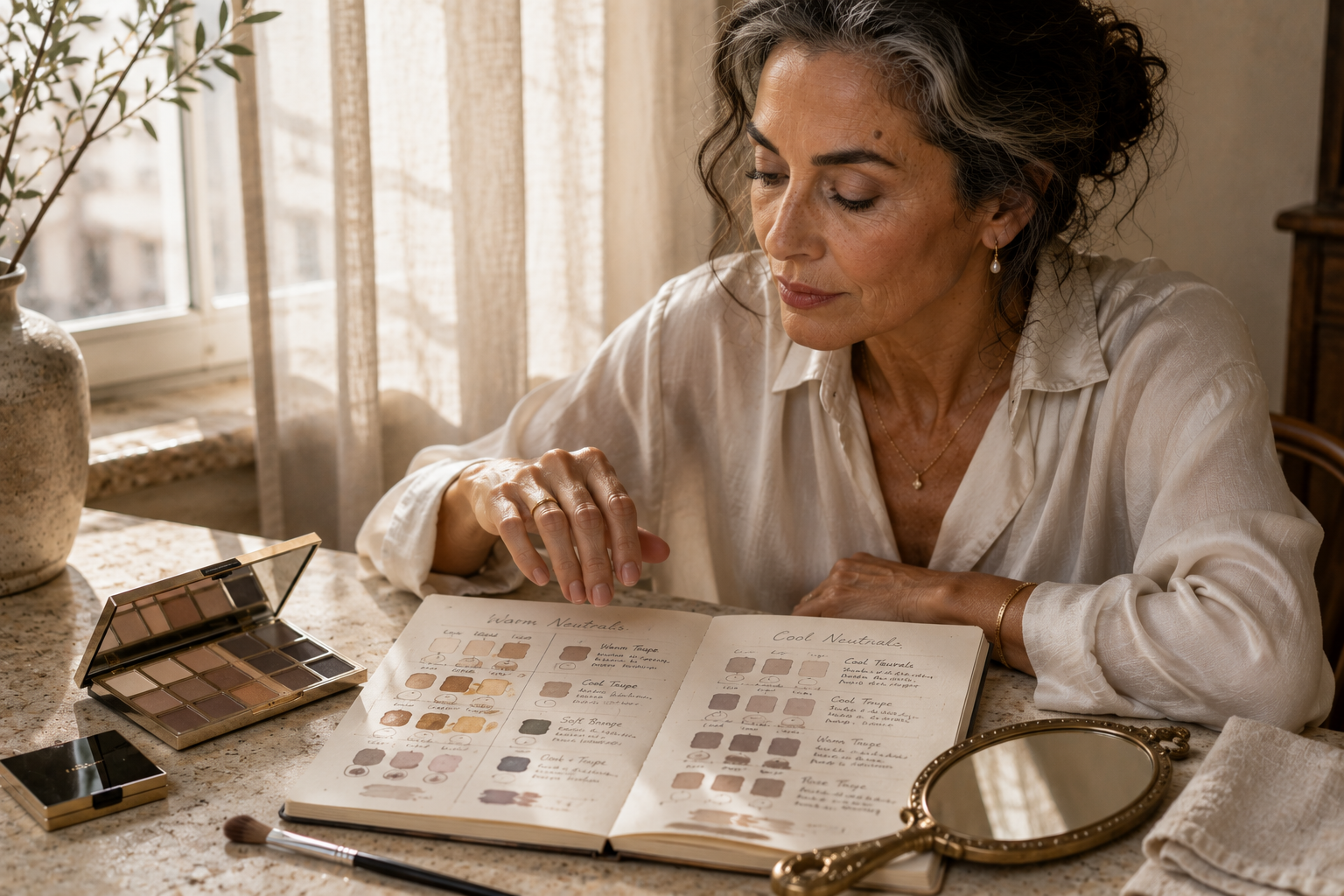
Your eye color is a beautiful place to start, but it’s only part of the story. Two women can have the same shade of blue or brown eyes and still look completely different in the exact same eyeshadow. That’s where your seasonal palette becomes such a helpful guide.
Think of your eye color as showing you which shades will naturally enhance your eyes. Your seasonal palette tells you which version of those shades will look most harmonious on you.
Take bronze, for example. It’s gorgeous on many blue eyes—but not every bronze is the same. A Soft Summer might glow in a muted, cool bronze with a hint of taupe, while a Warm Autumn looks radiant in a deeper, golden bronze. Both are beautiful because both are in harmony with the woman wearing them.
Your seasonal palette doesn’t restrict you—it simply helps your makeup feel balanced and effortless. Instead of colors sitting on top of your features, everything works together, allowing your eyes to stand out without overpowering the rest of your face.
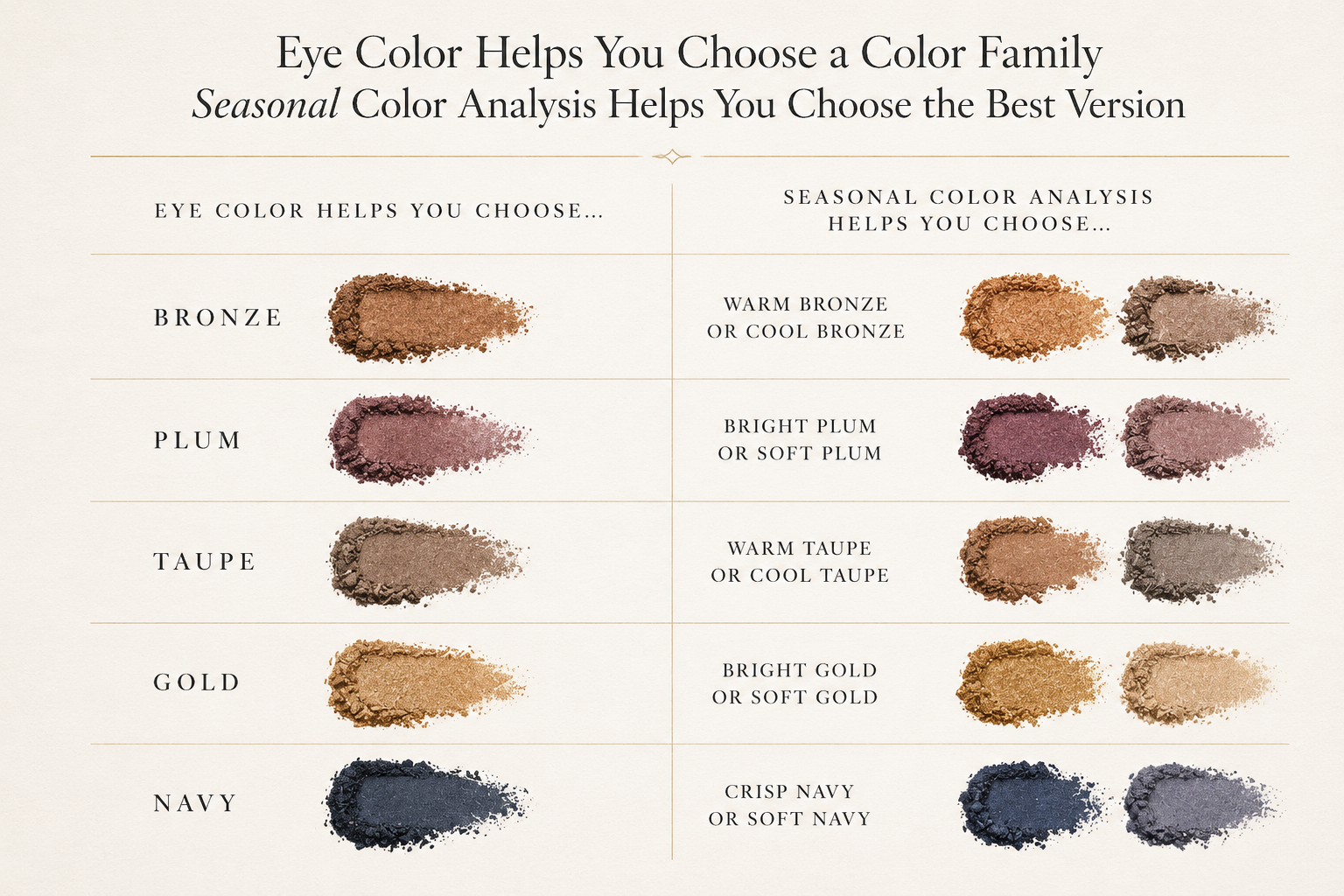
Take bronze, for example. It’s gorgeous on many blue eyes—but not every bronze is the same. A Soft Summer might glow in a muted, cool bronze with a hint of taupe, while a Warm Autumn looks radiant in a deeper, golden bronze. Both are beautiful because both are in harmony with the woman wearing them.
Your seasonal palette doesn’t restrict you—it simply helps your makeup feel balanced and effortless. Instead of colors sitting on top of your features, everything works together, allowing your eyes to stand out without overpowering the rest of your face.
Spring Seasons
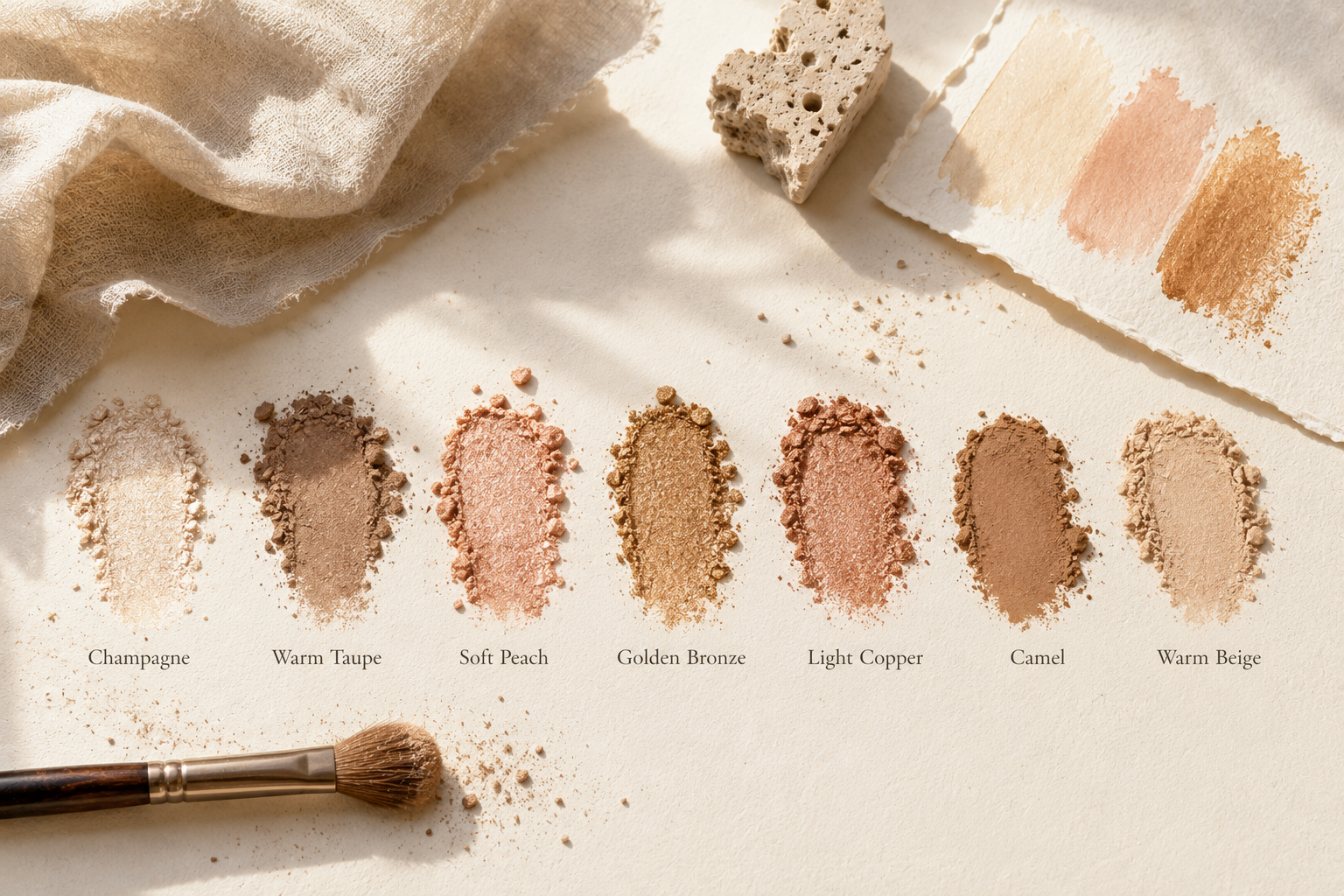
Spring coloring is naturally warm, fresh, and luminous. Eyeshadows with gentle golden undertones brighten the eyes while keeping that airy, radiant quality Springs wear so well.
Look for shades like:
Champagne, Warm Taupe, Soft Peach, Golden Bronze, Light Copper, Camel and Warm Beige.
Spring Tip:
Choose clear, fresh colors rather than smoky or heavily muted ones. Even a small touch of champagne at the inner corner can make Spring eyes look bright, awake, and full of life.
Summer Seasons
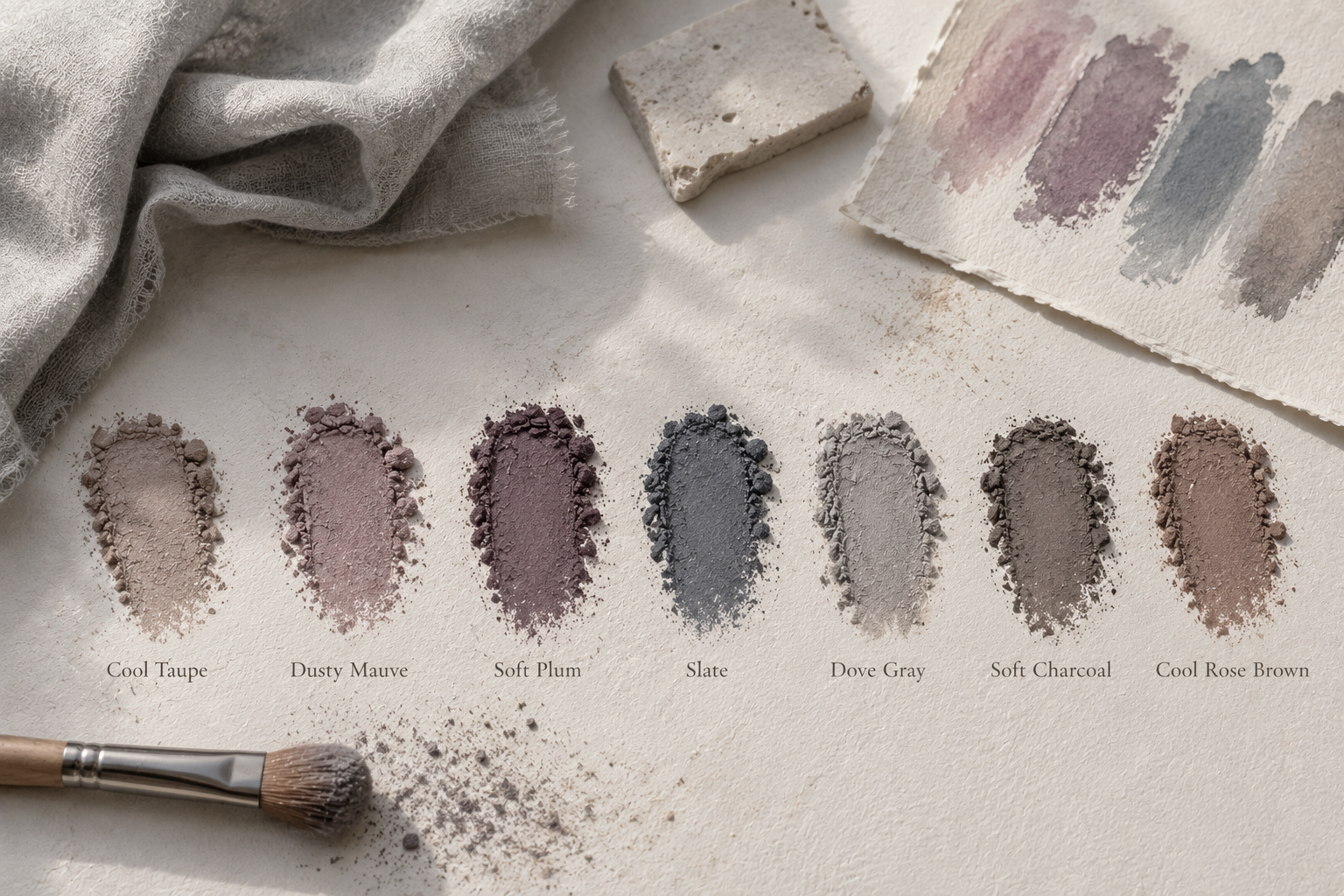
Summer palettes are cool, soft, and quietly elegant. Gentle, muted shades tend to look more refined than strong contrast, allowing the eyes to glow in a natural, understated way.
Look for shades like:
Cool Taupe, Dusty Mauve, Soft Plum, Slate, Dove Gray, Soft Charcoal and Cool Rose Brown.
Summer Tip:
Satin finishes are especially flattering—they add a whisper of light without disturbing the softness of Summer coloring.
Autumn Seasons
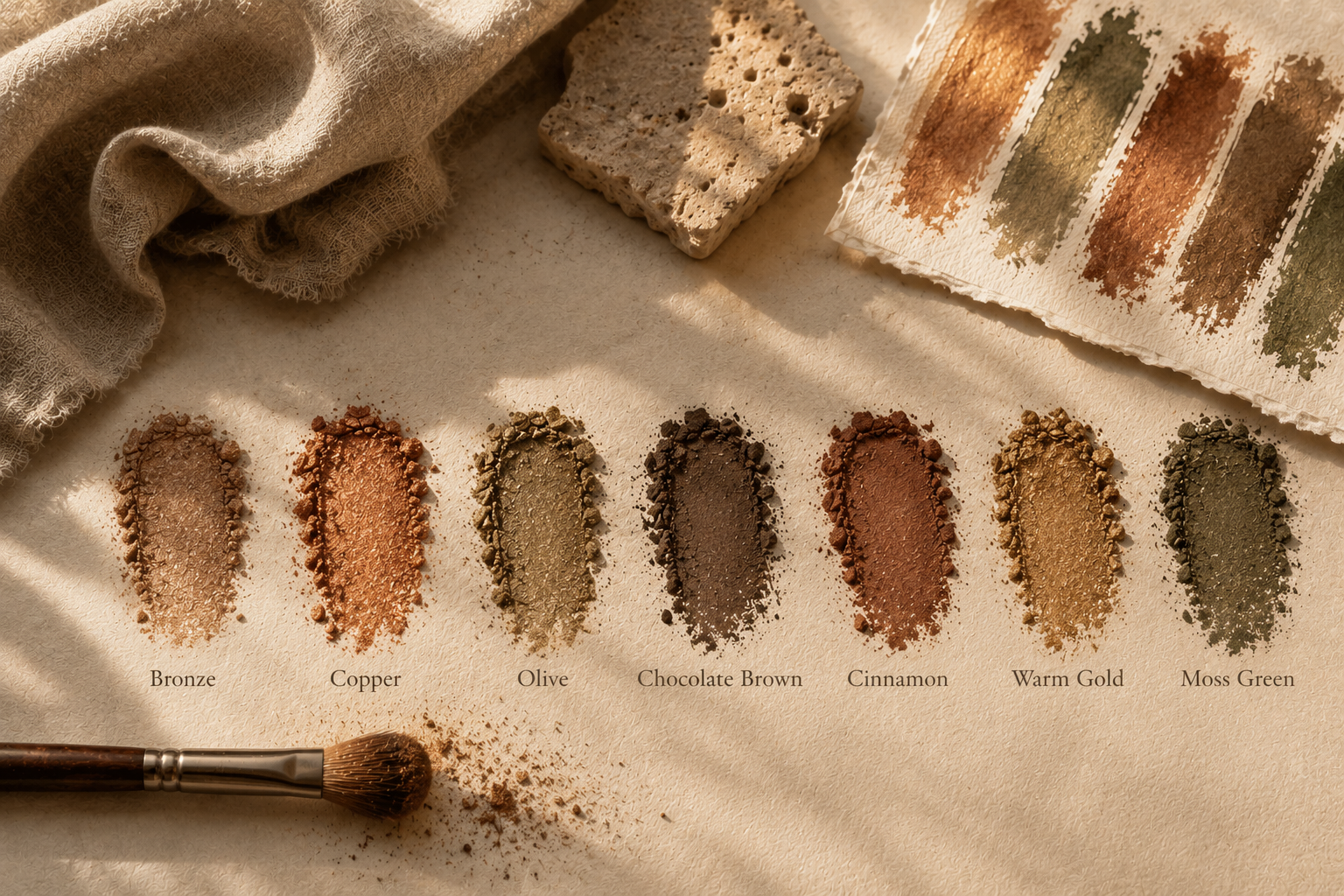
Autumn coloring thrives in rich, earthy tones that echo the warmth found in nature. These shades add depth without harshness, making them especially lovely for mature eyes.
Look for shades like:
Bronze, Copper, Olive, Chocolate Brown, Cinnamon, Warm Gold and Moss Green.
Autumn Tip:
Try layering a few warm neutrals to create soft dimension. And instead of reaching for black, chocolate brown or deep olive can define the eyes beautifully without feeling stark.
Winter Seasons
Winter palettes naturally carry more contrast and beautifully carries cooler, deeper shades that might overwhelm other seasons. Crisp definition and jewel-toned accents often look strikingly harmonious on Winter coloring.
Look for shades like:
Cool Silver, Charcoal, Pewter, Navy, Plum, Espresso and Cool Taupe.
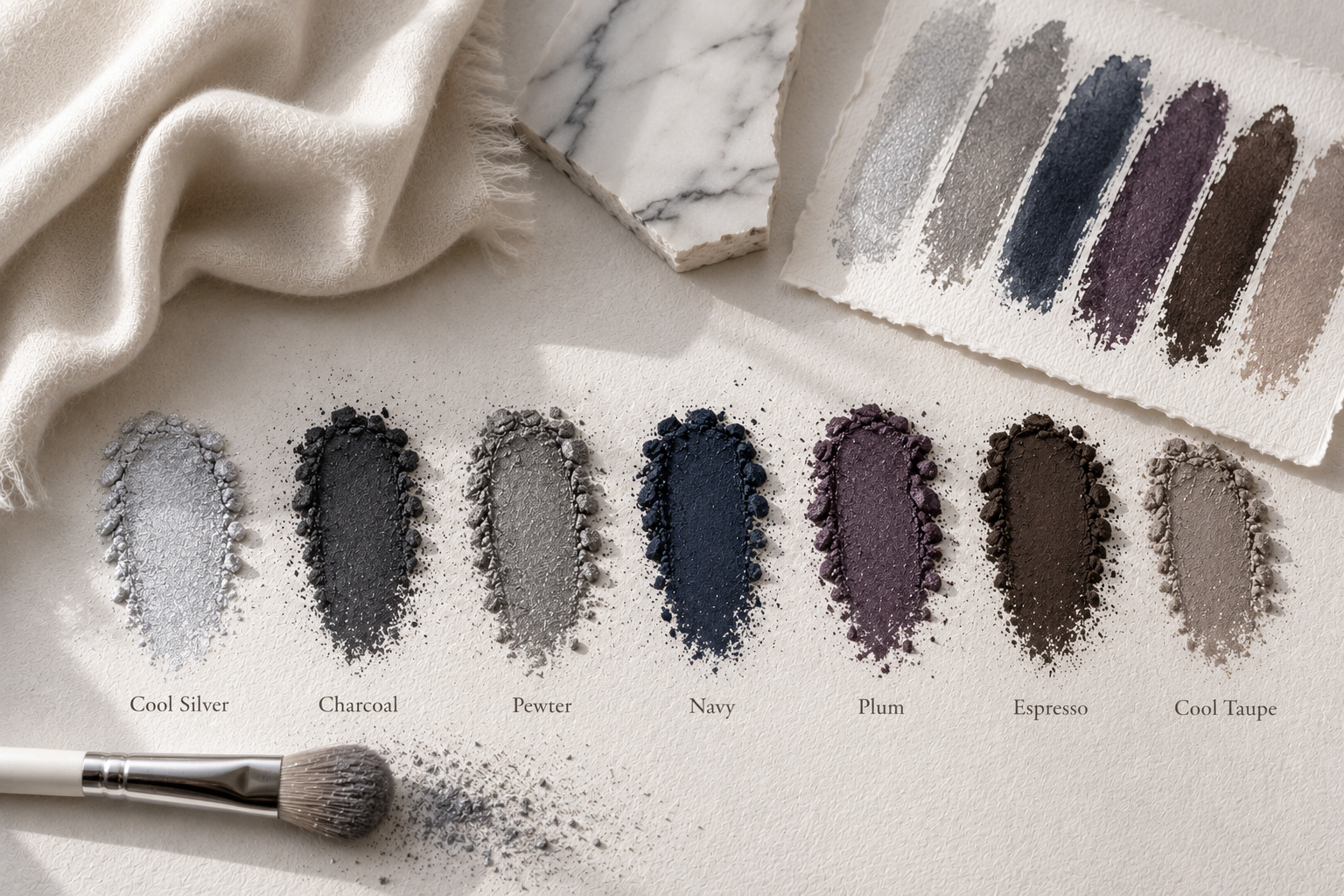
Winter Tip:
Choose cool, crisp colors over warm browns or orange-based bronzes. The right cool-toned shades make Winter eyes look bright, clear, and beautifully defined. Make it stand out
A Few Shades Work for Almost Everyone
Even though seasonal palettes help personalize your makeup, there are a handful of shades that flatter almost everyone—when the undertones are chosen well.
If you're building your first eyeshadow wardrobe or simply want a few dependable shades, these colors tend to work beautifully across many different seasons when the undertones are chosen well.
Universally versatile options include: Soft Taupe, Champagne, Soft Bronze, Mocha and Soft Plum.
The key is choosing the version that fits your season. A warm champagne won’t look exactly like a cool champagne, but both can create that softly luminous effect when they harmonize with your natural coloring.
Remember
Seasonal Color Analysis isn’t about limiting your choices—it’s about refining them.
You don’t need a brand‑new makeup collection. Most of the time, it’s simply choosing a cooler or warmer version of a color you already love. Those subtle shifts make your makeup feel softer, more balanced, and naturally flattering because they work with your natural coloring instead of competing against it.
Adjust Your Makeup Placement for Your Eye Shape
Just as every eye color is uniquely beautiful, every eye shape has it’s own character. The goal isn’t to make your eyes look different — it’s simply to understand how small, thoughtful shifts in placement can highlight what’s already there.
A tiny adjustment in where you blend your eyeshadow, place your liner, or add a touch of light can completely change how your eyes read. Some techniques create a little lift, others add balance or openness. None of them are about correcting anything. They’re about working with your natural structure so your eyes feel bright, expressive, and beautifully yours.
Hooded Eyes
With hooded eyes, part of the lid naturally folds over the crease — something that becomes even more common as skin softens with time. Instead of placing shadow directly into the crease, try blending a soft matte or satin shade slightly above it while looking straight ahead. This keeps the color visible and helps the eyes appear more open.
Deeper shades look especially flattering when placed on the outer third of the eye and blended upward rather than outward. Soft, diffused edges melt beautifully into mature skin.
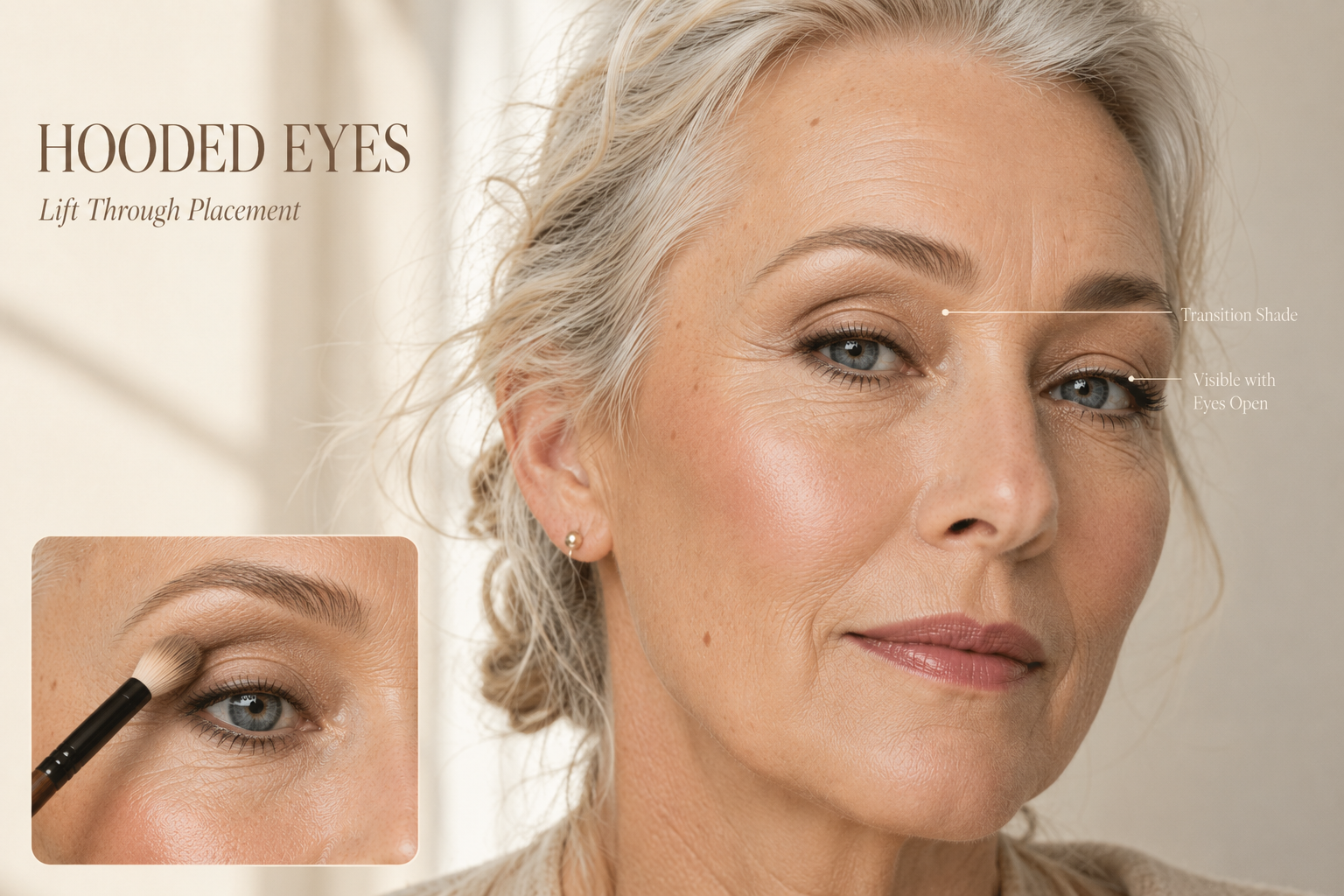
Try This:
Apply your transition shade with your eyes open, letting the brush land exactly where the color needs to sit. It’s a small shift that makes your shadow visible even when your eyes are relaxed.
Monolid Eyes
Monolids have a naturally smooth lid without a pronounced crease. Instead of trying to draw one in, focus on building soft, gradual dimension.
Start with your lightest shade across the lid, then deepen the color as you move toward the lash line and outer corner. A gentle gradient adds depth while honoring the eye’s natural shape.
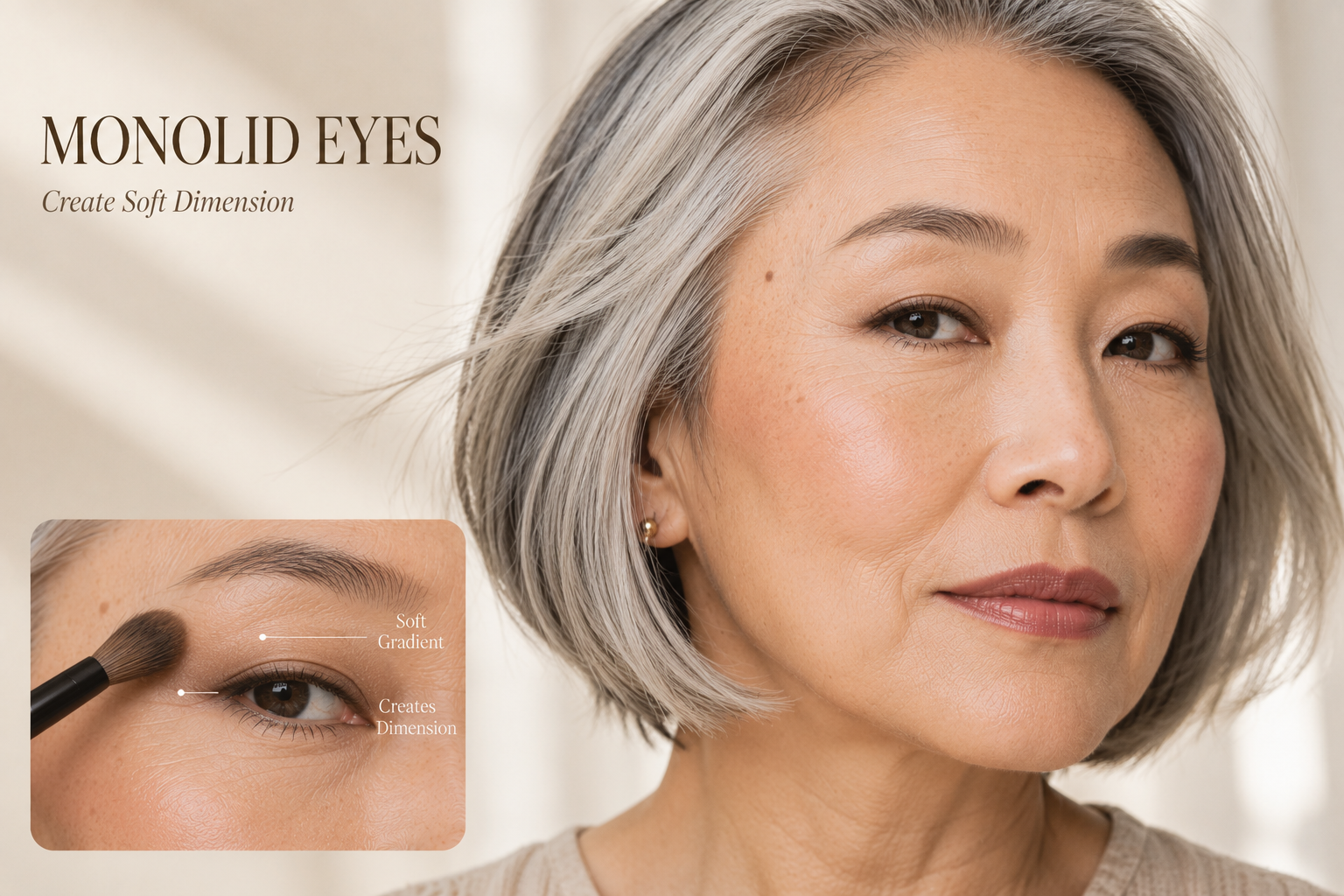
Try This:
Keep the deepest shade closest to the lashes and let it fade upward like watercolor. The result is soft definition that feels natural rather than sculpted.
Downturned Eyes
Downturned eyes have outer corners that naturally slope slightly downward, giving them a relaxed, serene look. If you want a bit more lift, place your deeper shades on the outer third of the eye and blend upward toward the tail of your brow. Even a small shift in direction creates a lovely lifting effect.
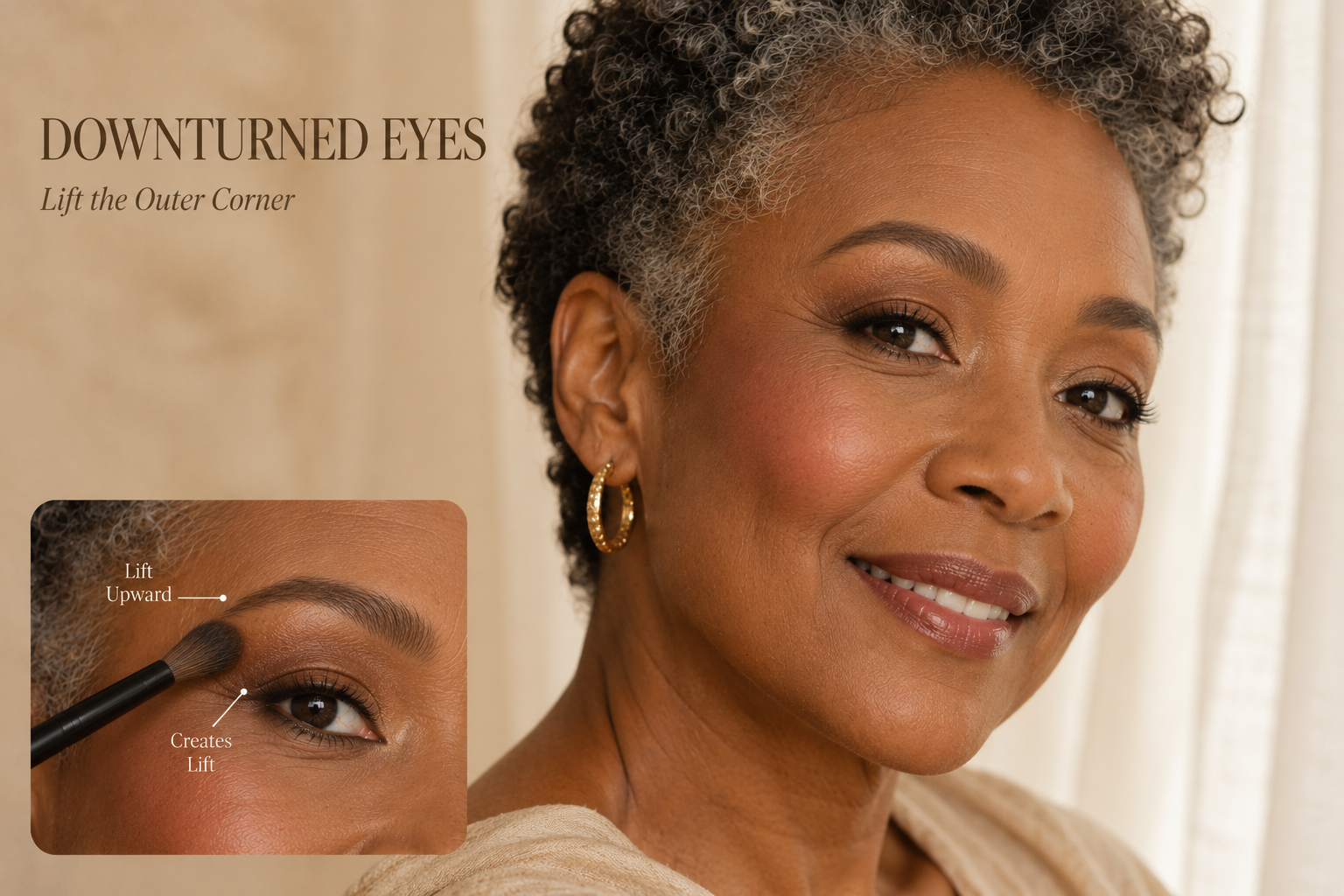
Try This:
Blend your shadow toward the outer tip of your eyebrow, almost as if you’re guiding the color upward. It’s subtle, but it gently shifts the eye into a more lifted expression.
Close-Set Eyes
Close-set eyes sit a little nearer together, so the goal is simply to create the impression of more space.
Use lighter shades and a touch of brightness near the inner corners, and keep your deeper colors toward the outer third of the lid. This gently draws the eye outward and creates soft balance.
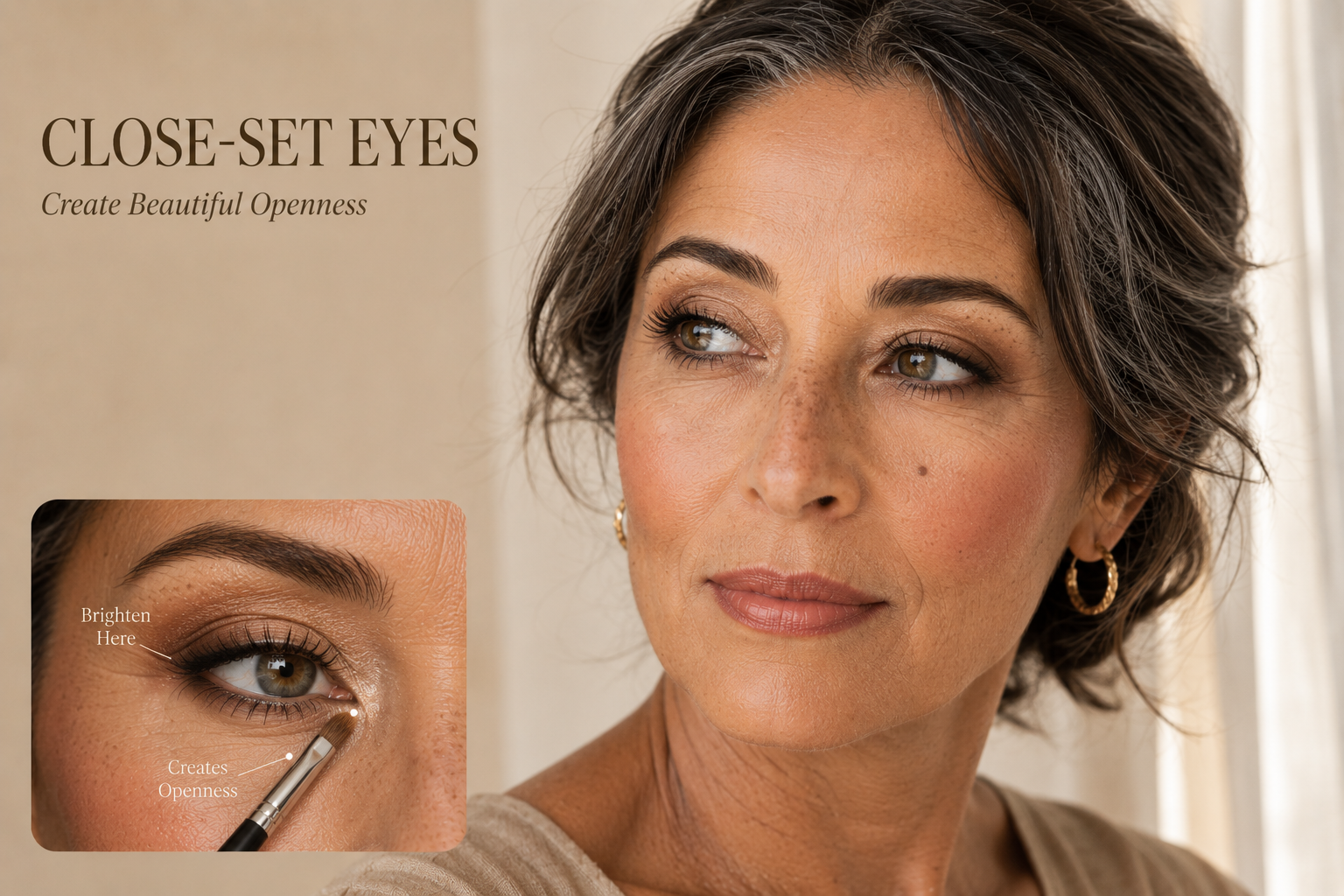
Try This:
Let shimmer or highlight kiss the inner corners, then deepen the color as you move outward. It creates a natural sense of openness without feeling obvious.
Wide-Set Eyes
Wide-set eyes naturally have a beautiful sense of openness. If you'd like to create a little more visual balance, begin your transition shade slightly closer to the inner half of the eye before softly blending outward. This gently draws attention toward the center of the face while preserving the openness that makes wide-set eyes so striking.
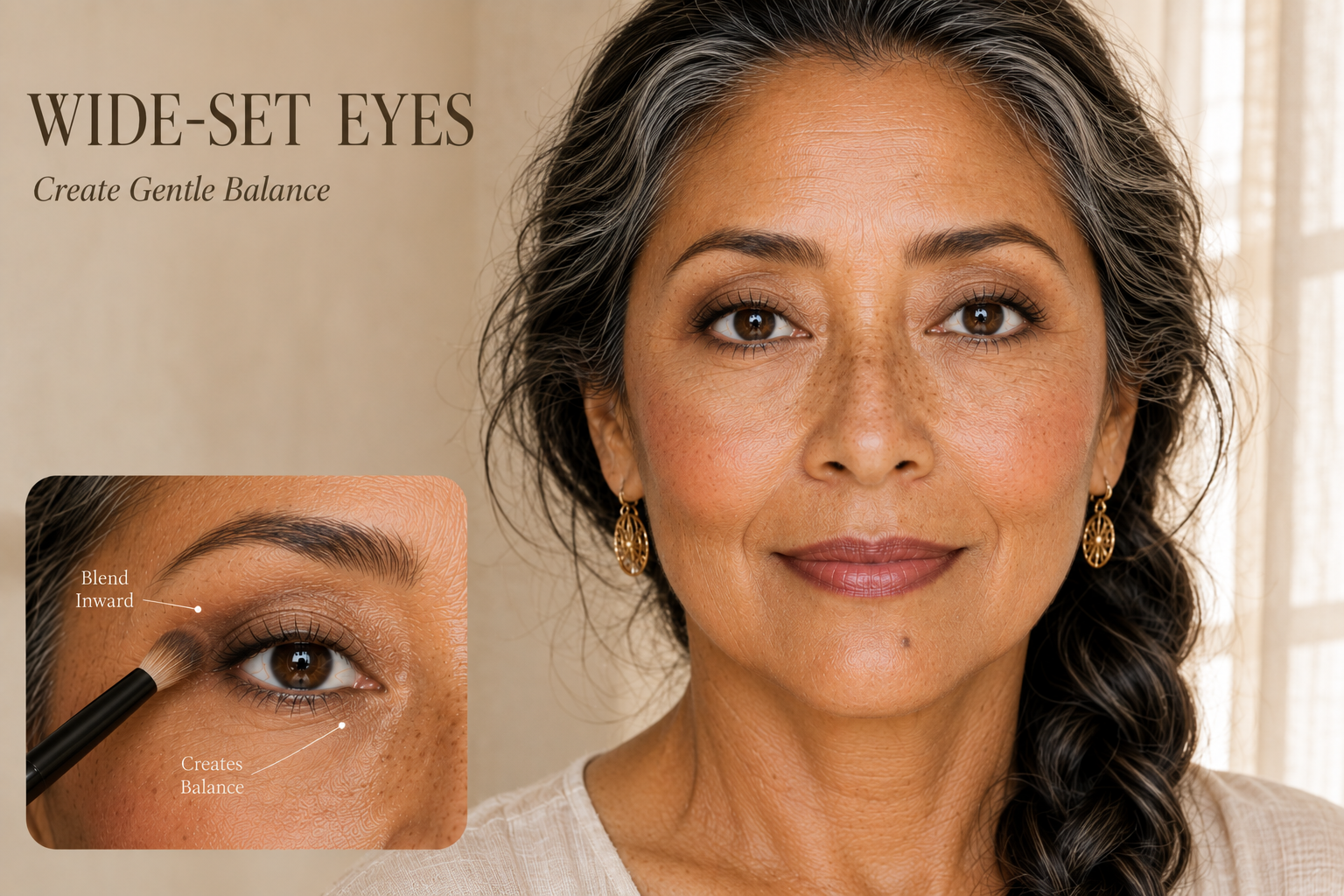
Try This:
Blend your transition shade a little farther toward the inner corner than usual, keeping the outer corner airy and soft. It gently centers the eyes while preserving their openness.
Deep-Set Eyes
Deep-set eyes naturally have beautiful definition and depth. Rather than adding more shadow throughout the eye, the goal is to gently bring light forward so your eyes appear brighter and more open. Keeping the center of the lid softly illuminated while concentrating deeper shades only at the outer corner enhances your natural bone structure without making the eyes appear more recessed.
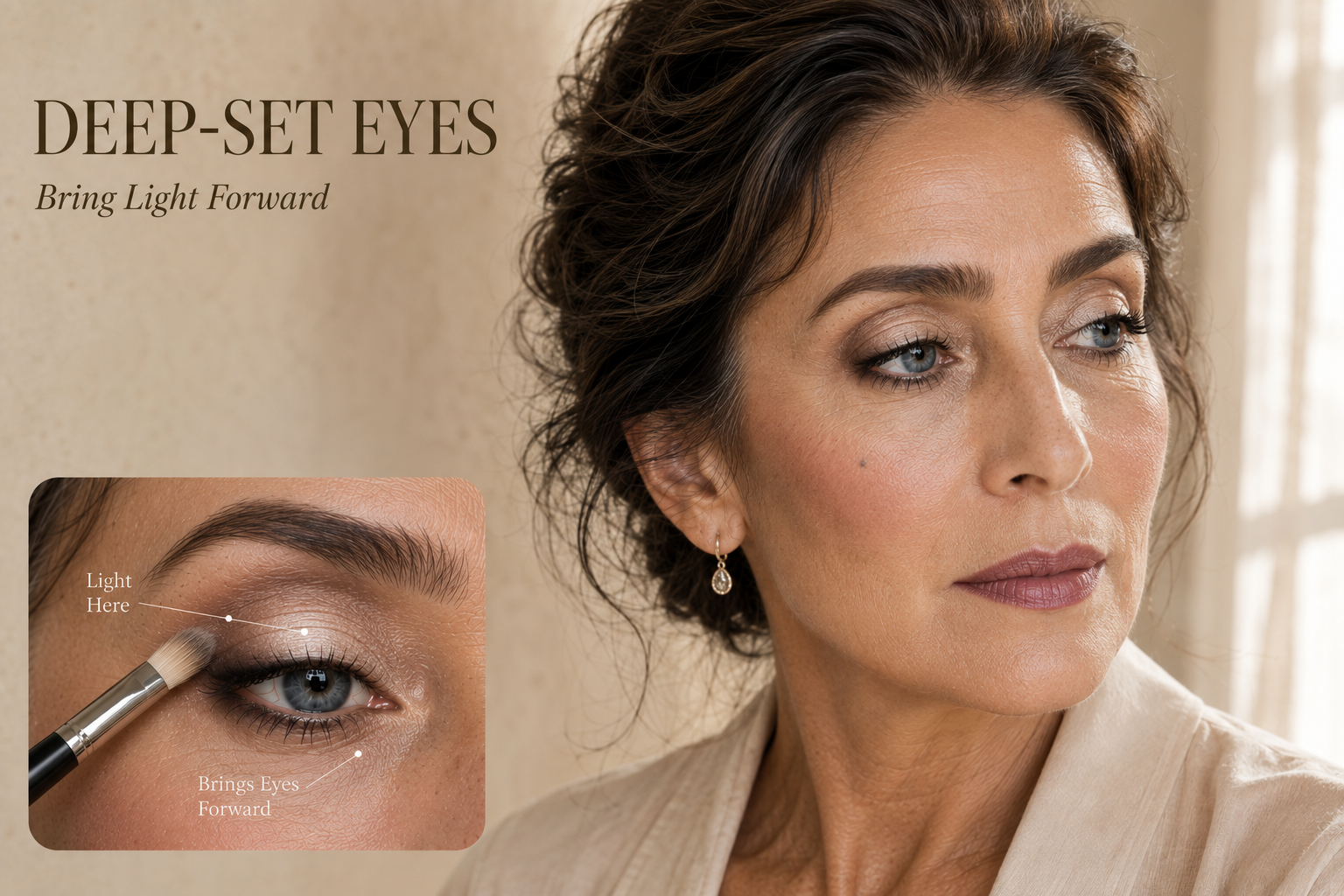
Try This:
Sweep a soft satin shade across the center of the lid, then keep deeper colors concentrated only at the outer corner. The touch of light helps deep-set eyes appear brighter while preserving their naturally elegant definition.
Protruding Eyes
Protruding eyes naturally catch the light beautifully and have a striking openness. Rather than covering that feature, softly shaping the lid with matte and satin shadows creates gentle balance while allowing the eyes to remain bright and expressive. The effect feels polished without diminishing their natural beauty.
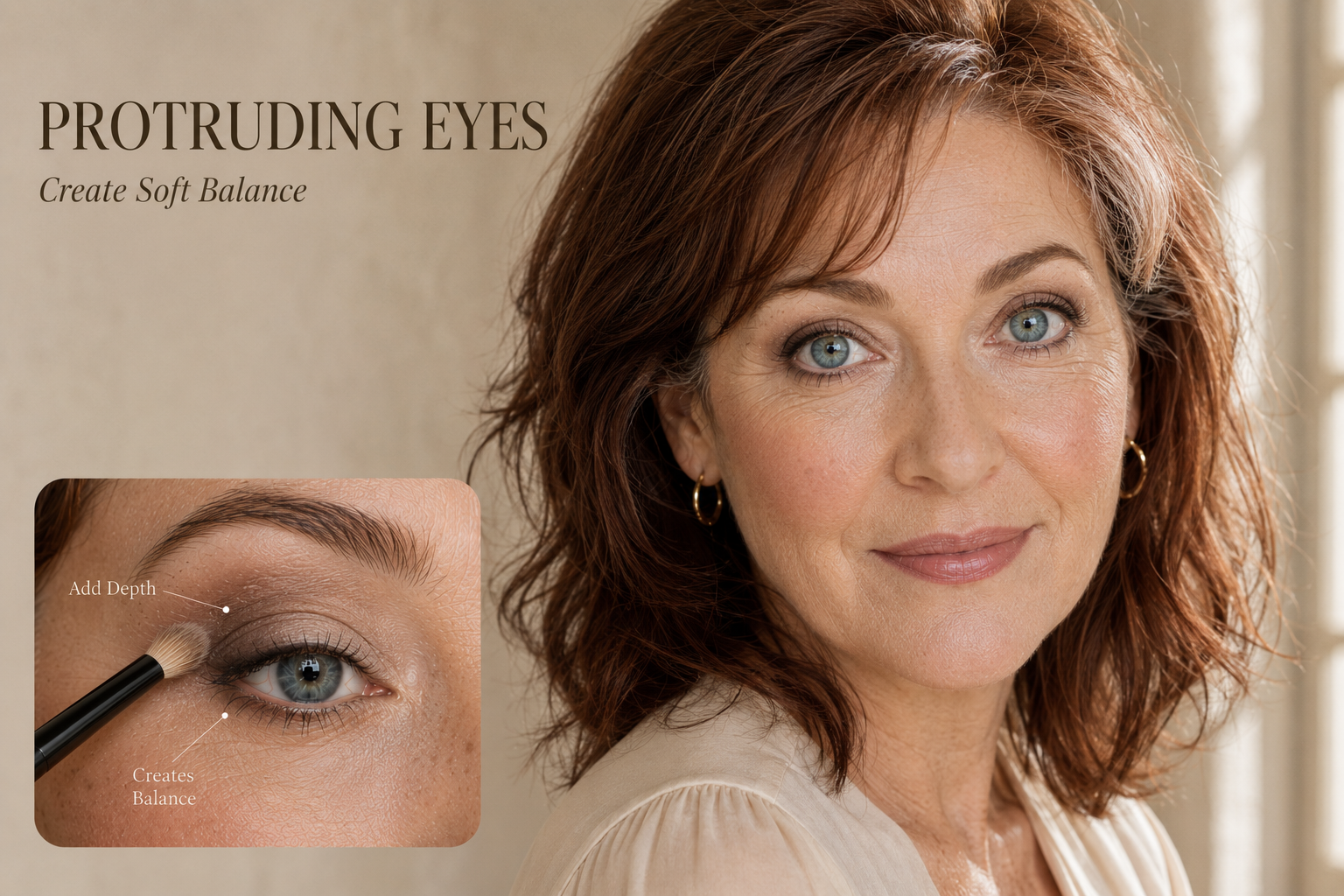
Try This:
Blend a soft matte or satin shadow across the lid and slightly above the crease, keeping shimmer mainly at the inner corner. This creates gentle dimension while preserving the luminous quality that makes protruding eyes so captivating.
Think of these as starting points rather than rules. Every eye is unique, and small adjustments often make the biggest difference.
Remember
Eye shape isn’t something to correct — it’s something to understand.
Every eye shape has its own quiet beauty. The most flattering makeup doesn’t try to disguise your features; it works with them. Often, the smallest adjustments in placement make the biggest difference, helping your eyes look naturally balanced, open, and beautifully defined.
Working with the Natural Changes That Come with Mature Eyes
One of the lovely things about makeup is that it can evolve right alongside us. As the years pass, the delicate skin around our eyes naturally shifts. Lids may become a little more hooded, skin a bit drier, brows a touch finer, and dark circles a little more noticeable. None of these changes mean you’ve lost anything — they simply invite a gentler, more thoughtful approach.
And the encouraging part is this: brighter, more refreshed-looking eyes usually don’t require more makeup. More often, it’s about choosing lighter textures, softer finishes, and placement that works with your features instead of against them.
Crepey Lids
As collagen gradually declines, the skin on the eyelids becomes thinner and less elastic. Powder shadows that once glided on easily may start to cling to dry patches or settle into fine lines.
Instead of reaching for heavily frosted shimmers or very dry matte formulas, look for soft satin finishes or cream‑to‑powder formulas. They add gentle luminosity without spotlighting texture. And when you apply shadow, think in thin, sheer layers — building slowly creates a smoother, fresher finish.
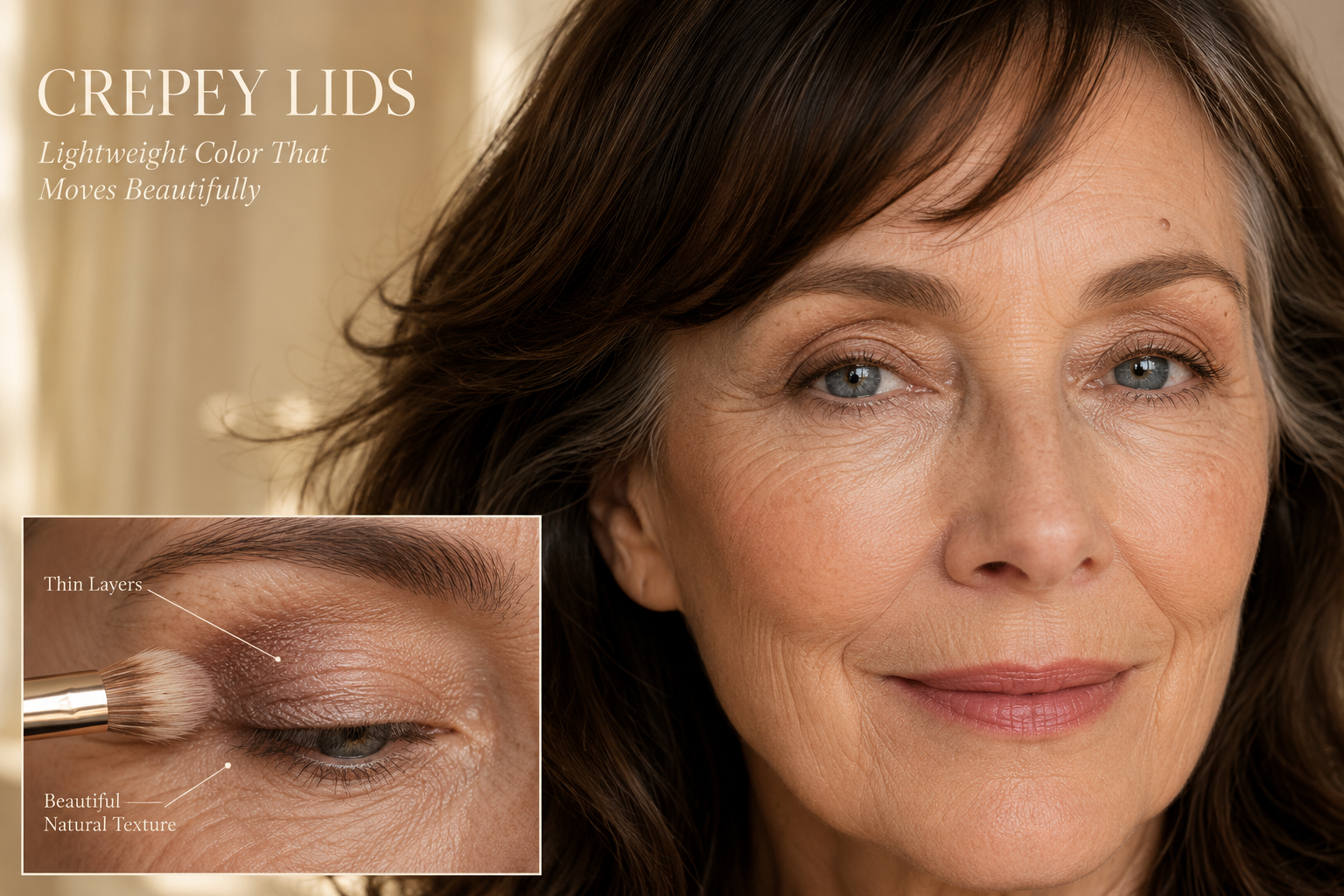
Try This:
Start with a lightweight primer, then use a fluffy brush to sweep on color in airy layers. Let each pass settle before adding more. The result is a soft wash of color that feels smooth rather than heavy.
Thinning Brows
Brows naturally become finer with age, especially through the arch and tail. Because brows frame the eyes, even subtle changes can shift how lifted or defined the eye area appears.
Instead of filling them in solidly, use a fine pencil to create tiny, hair‑like strokes wherever fullness has softened. Keep the front of the brow light and gradually build definition toward the arch and tail. A tinted brow gel adds texture and keeps everything looking natural.
The goal isn’t a perfectly sculpted brow — it’s gently restoring the shape that frames your eyes in a soft, believable way.
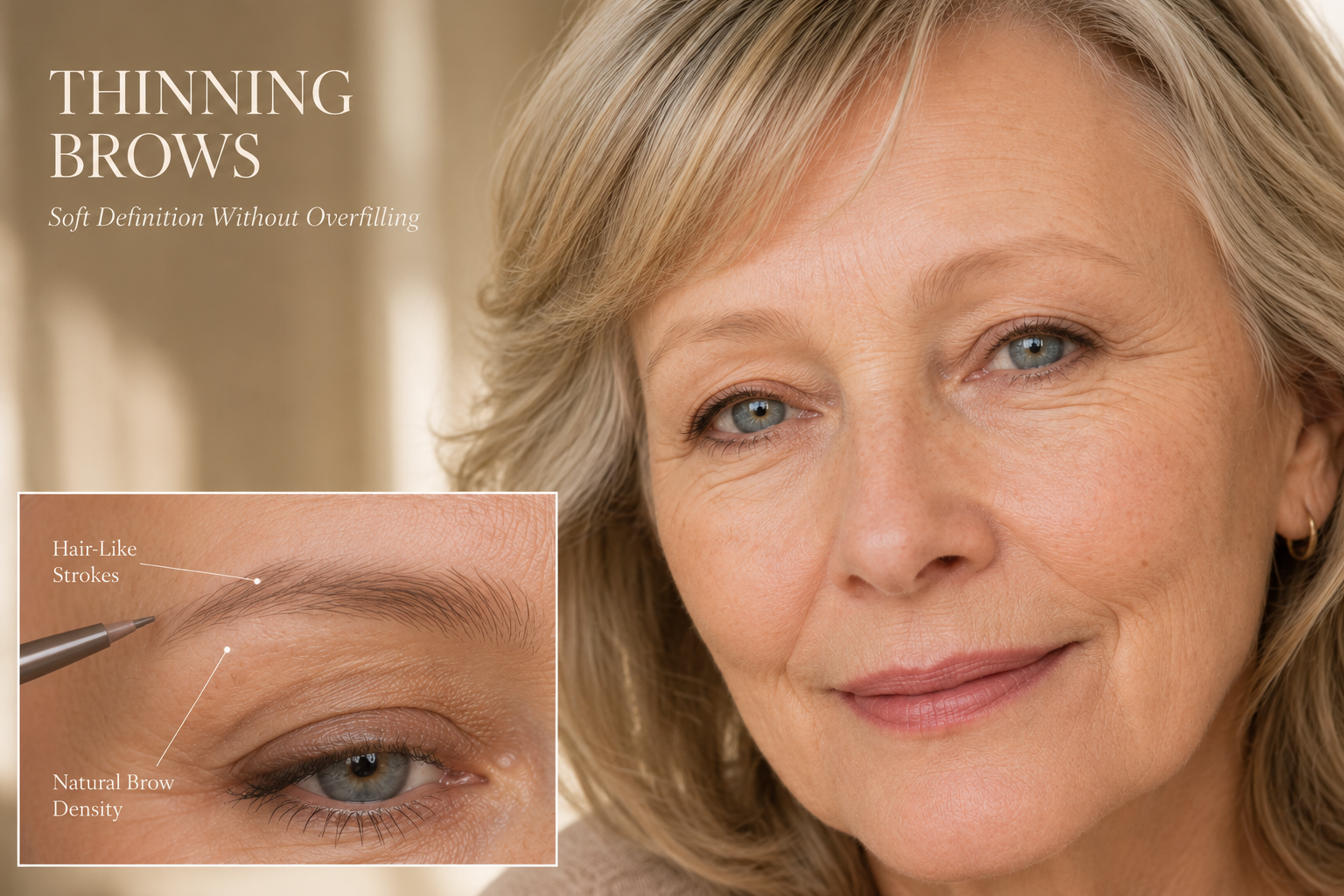
Try This:
After adding your hair‑like strokes, brush the brows upward with a spoolie before applying gel. It softens the pencil and creates the illusion of naturally fuller brows.
Dark Circles & Under‑Eye Puffiness
As the under‑eye area loses some of its natural volume, shadows can become more noticeable — even after a good night’s sleep. The instinct is often to apply more concealer, but heavier formulas tend to settle into fine lines.
Instead, choose a lightweight, hydrating concealer or serum‑based formula. Apply only where darkness is most visible — usually near the inner corner — and blend outward. Less product often looks smoother and brighter than trying to cover the entire under‑eye.
If darkness leans blue or purple, a touch of peach or apricot corrector beneath concealer can neutralize the tone beautifully without adding weight.
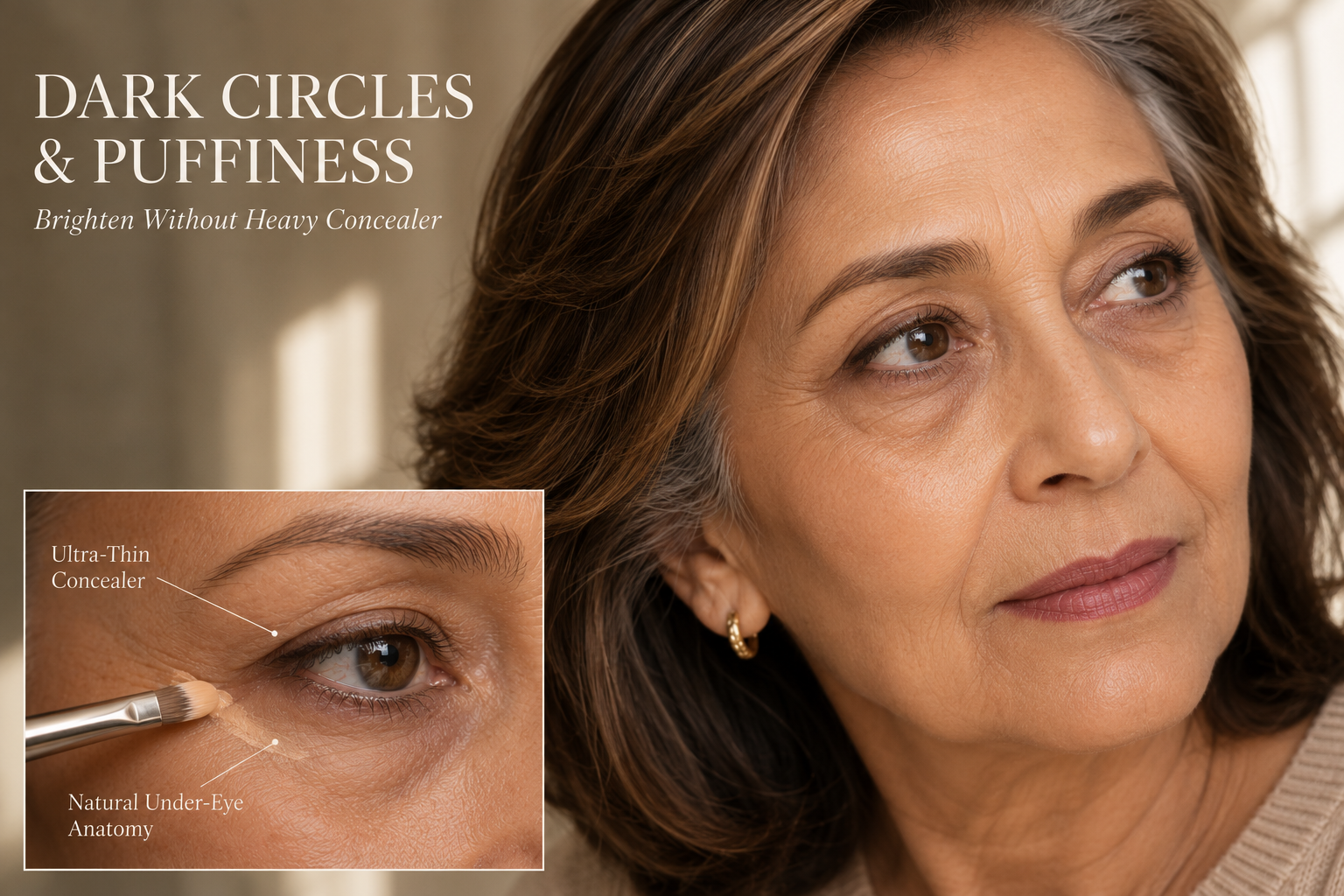
Try This:
Use your fingertip or a small brush to tap concealer exactly where it’s needed. Precision keeps the finish light, fresh, and natural.
Softer Definition Creates More Lift
Many of us learned makeup during the era of thick black liner, dramatic wings, and heavily lined lower lashes. Those techniques can still be gorgeous in the right setting, but they sometimes feel a bit heavy as the eye area softens.
Instead of relying on stronger lines, think about creating softer definition. Brown, espresso, charcoal, or deep plum pencils often define the eyes just as beautifully while allowing them to remain open and expressive. A softly smudged line nestled close to the lashes creates the illusion of fullness without visually closing off the eye.
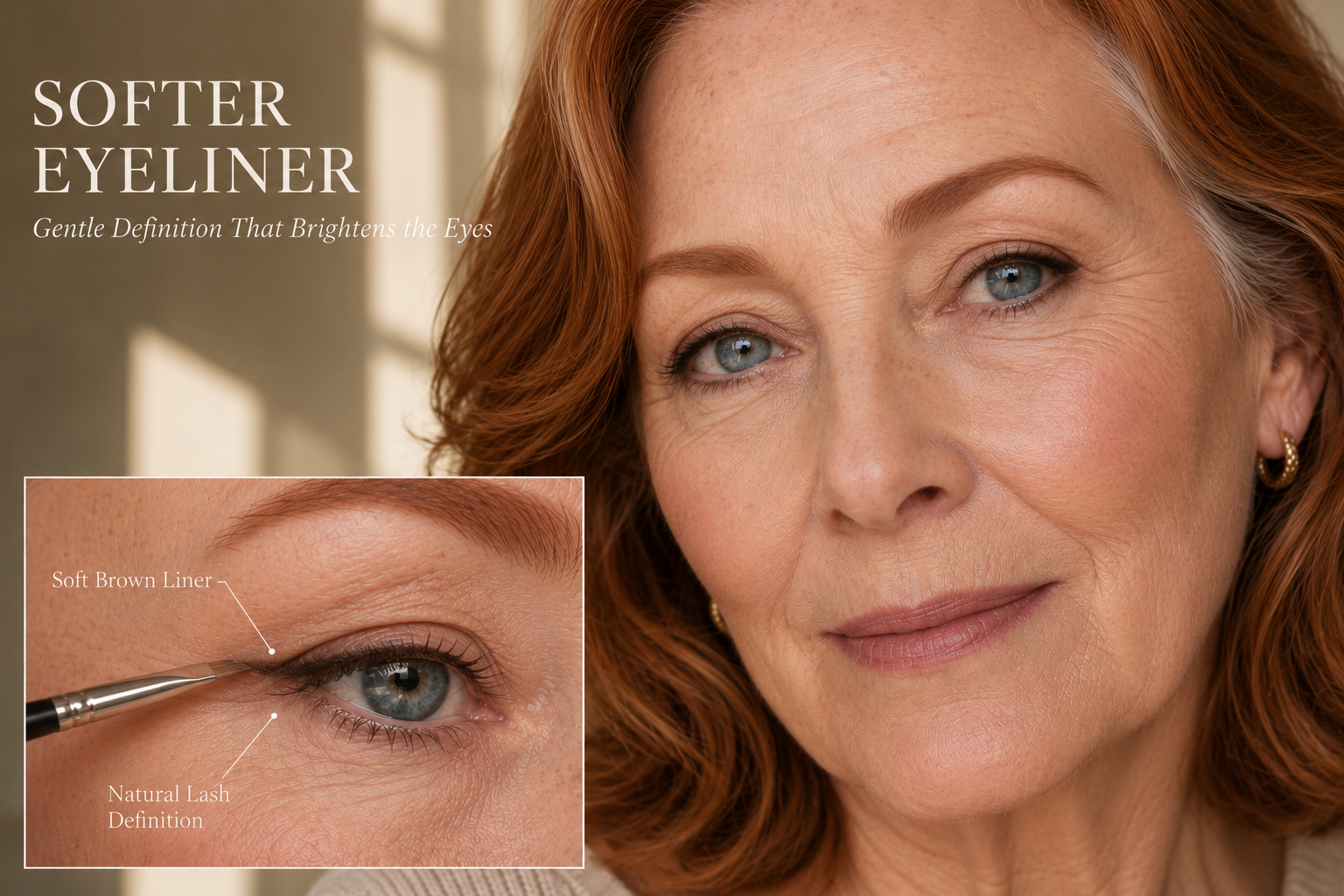
Try This:
Press your pencil gently into the base of the lashes using short, tiny strokes, then soften the line with a small smudge brush. It creates definition that feels natural and quietly flattering.
Remember
Mature eye makeup isn’t about using less — it’s about choosing differently.
Hydrating formulas, satin finishes, lightweight concealers, softly defined brows, and gentle placement all work together to create eyes that feel fresh, bright, and beautifully expressive. Often, the most flattering changes are also the smallest ones.
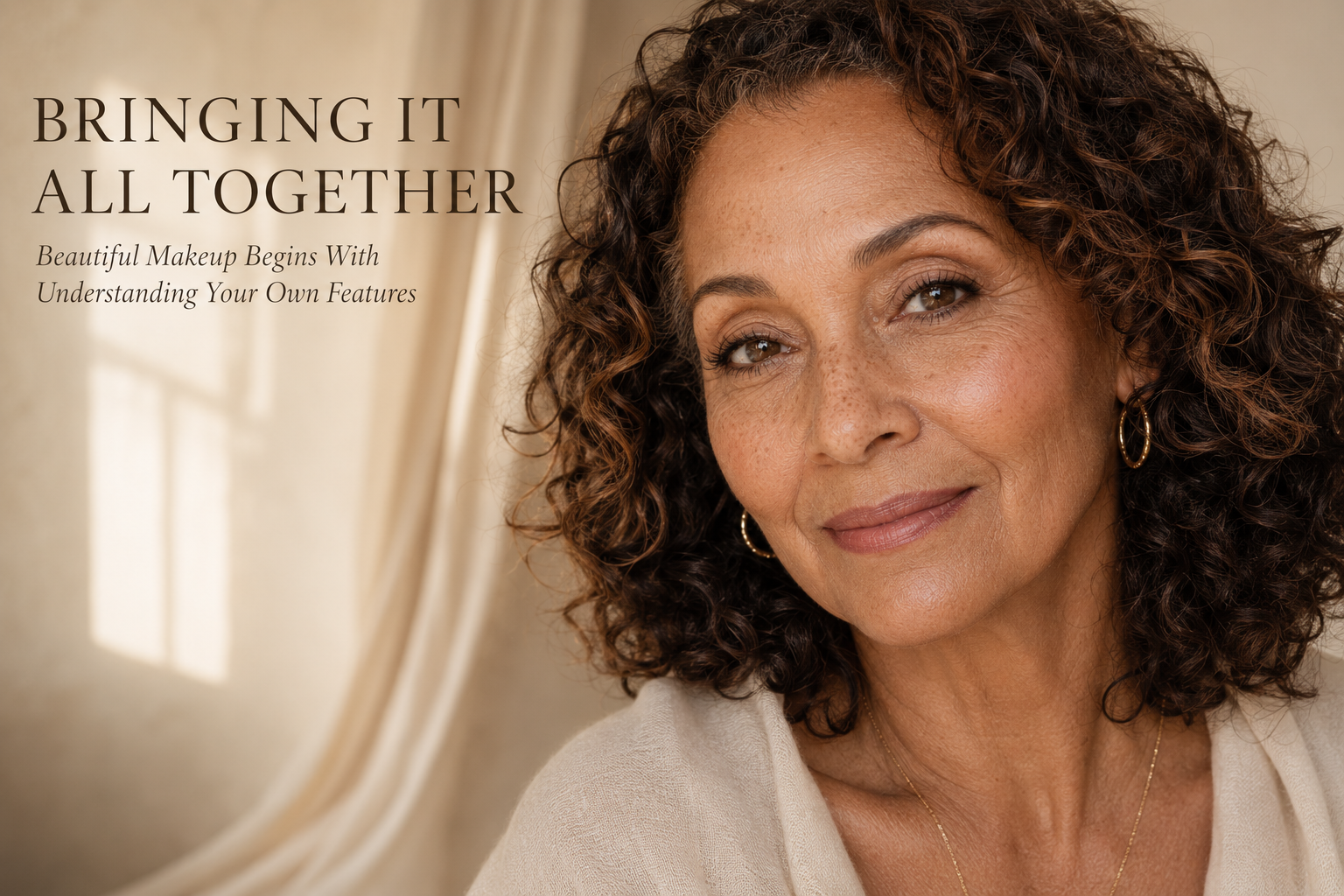
By now, you’ve probably noticed that beautiful eye makeup has very little to do with chasing trends or buying whatever palette is currently having its moment. It comes from understanding your own features — your natural coloring, your eye shape, and the gentle changes that come with time — and making small, thoughtful choices that work in harmony with them.
The colors that flatter your eyes may be different from someone else’s. The placement that lifts hooded lids may not be the same technique that balances close‑set eyes. And as our skin evolves, the formulas that once felt perfect may simply benefit from a softer texture or a lighter touch.
The wonderful thing is that none of this requires reinventing your routine. Most of the time, it’s simply refining what you already do — choosing gentler finishes, adjusting placement by a few millimeters, and selecting colors that complement both your eye color and your seasonal palette.
If there’s one idea to carry with you, it’s this:
Beautiful eye makeup isn’t about creating a different face — it’s about bringing more attention to the one you already have.
When your makeup works with your natural coloring, your eye shape, and the quiet changes that come with time, the result rarely looks like “more makeup.” Instead, your eyes simply appear brighter, more open, more expressive, and more like yourself.
Your Quick Guide to Brighter, More Beautiful Eyes
Whenever you’re choosing or applying eye makeup, these five principles will gently guide you:
✓ Choose eyeshadow colors that naturally enhance your eye color.
✓ Refine those colors using your Seasonal Color Analysis palette.
✓ Adjust placement to complement your eye shape.
✓ Choose hydrating and lightweight formulas that flatter mature skin.
✓ Choose matte eyeshadow over shimmer.
✓ Focus on light, softness, and gentle definition rather than heavier coverage.
These small refinements work together to create eye makeup that feels timeless, elegant, and effortless — at every age.
Final Thoughts
Our eyes tell the story of a lifetime. They’ve smiled through celebrations, softened during quiet moments, welled up during difficult seasons, and reflected years of curiosity, love, and wisdom. Those experiences aren’t something makeup should hide — they’re part of what makes us beautiful.
The role of makeup isn’t to erase the passage of time. It’s to honor the face looking back at us in the mirror today.
With the right colors, thoughtful placement, and formulas that evolve alongside you, eye makeup becomes less about following rules and more about expressing who you are with quiet confidence. When everything works in harmony, people rarely notice your eyeshadow or your eyeliner first.
They notice you.
Disclosure: This article may contain affiliate links. If you make a purchase through these links, I may earn a commission at no additional cost to you.
