

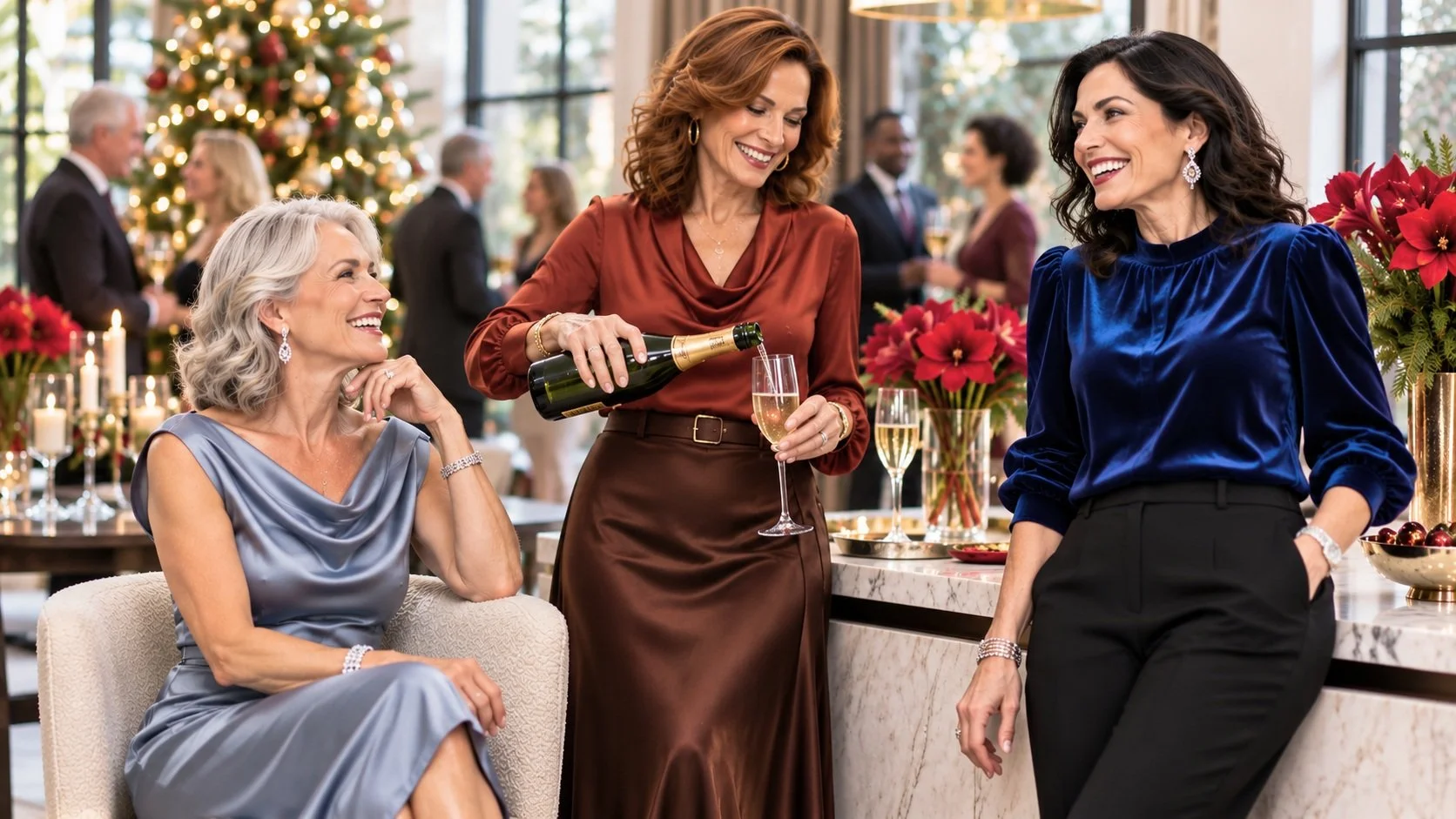
The invitation sat on the counter for a week before I read it properly. Two words, tucked beneath the time: festive attire.
I stood in front of the closet the way I have a hundred times before, and nothing in it seemed to match that description. My go-to little black dress, although timeless, felt too understated for December. The temptation was to run out and buy yet another holiday outfit that would end up forgotten in the back of my closet by January.
What I wanted was to feel like myself, just a little more polished, a little more festive. The problem was I couldn't see how to get there from a rack full of clothes.
Then it hit me. Instead of starting with the dress, I needed to start with the colors that already looked best on me.
The Four Seasons at a Party
This is the same framework I use for everything else, applied to one evening. Find your family, and take the one idea that follows.
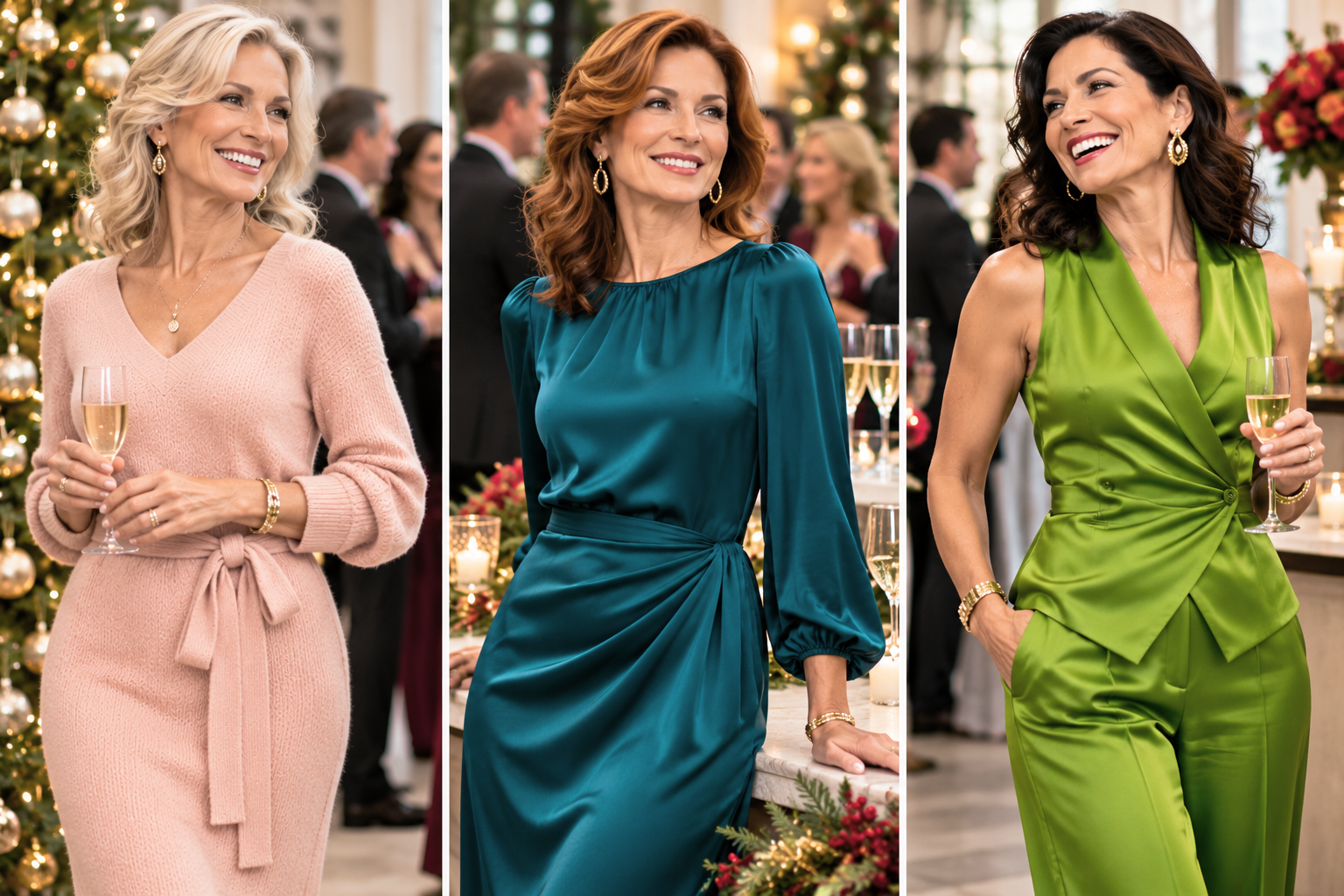
Spring
Spring coloring is warm, light, and clear, and it does not disappear in December. Wear the lighter end of your palette and let it glow against the dark: ivory, soft coral, warm pink, a gentle aqua. Velvet works in any season, so a festive bright poppy red or deeper kelly green velvet is beautiful here. Your metal is gold, and the brighter the better. Most people reach for darker colors in December, but Springs often look better doing the opposite.
If you're a Light Spring, look to peach, melon, light aqua, and warm ivory. True Springs shine in coral, poppy red, and clear turquoise, while Bright Springs can handle the strongest holiday colors, including vivid tomato red and clear emerald.
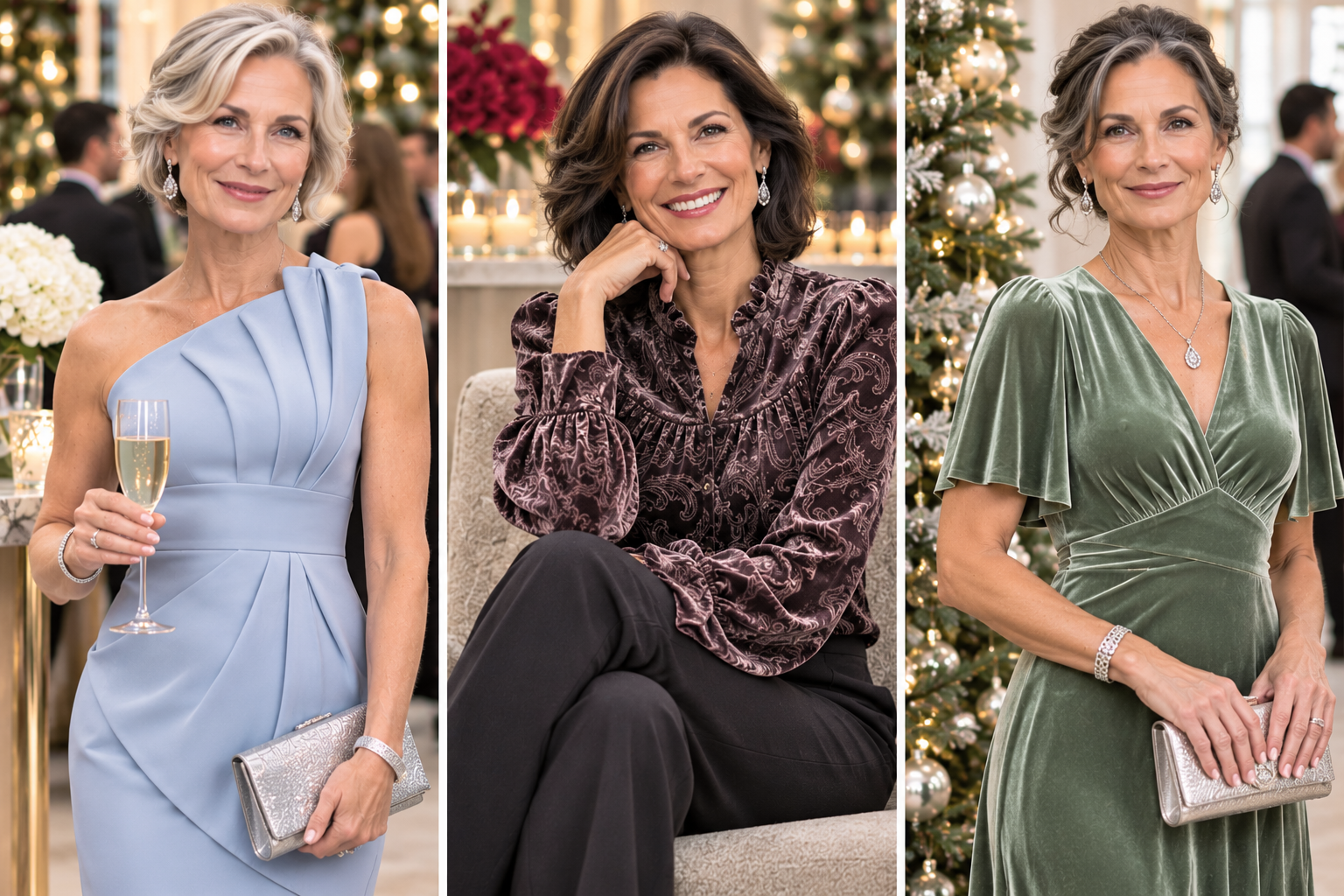
Summer
Summers don't need a lot of sparkle to look festive. Soft color and a little shine usually do the job. Cranberry red, roses, berries, a cool muted blue, a muted violet, and soft summer white do the work. Berry velvet and dusty navy blue satin tend to look especially good on Summers. Silver jewelry and pearls feel naturally at home in this palette. If the party is glittery, keep your shimmer soft, in the fabric rather than in sequins.
Light Summers can lean into icy pink, soft raspberry, periwinkle, and silver-gray. True Summers shine in cool cranberry, rose, lavender, and soft navy, while Soft Summers look especially beautiful in dusty berry, muted plum, eucalyptus, smoky teal, and soft mulberry.
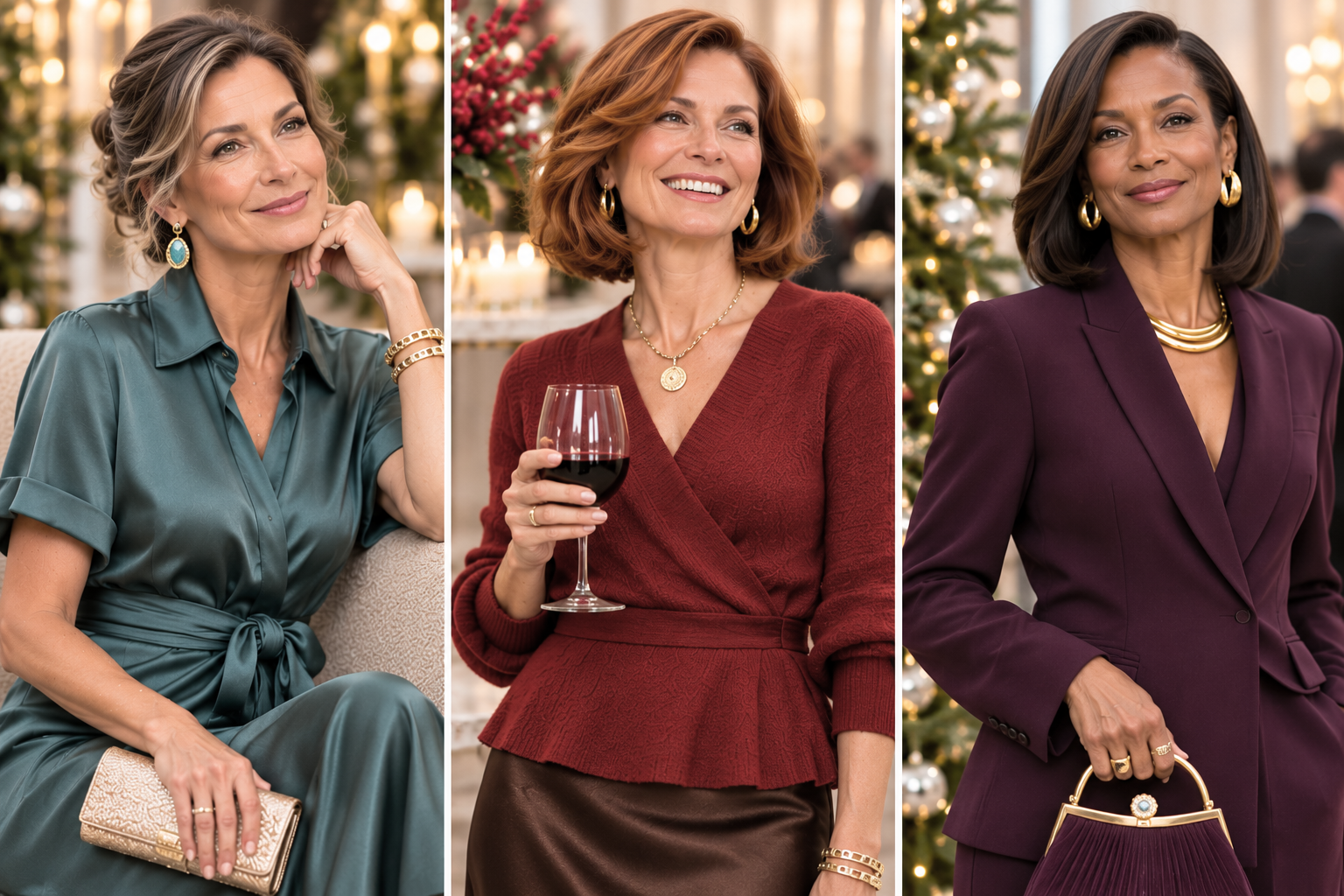
Autumn
Autumn coloring is warm, rich, and deep. Honestly, the holidays are pretty kind to Autumns. Forest greens, warm browns, rich golds, and rusty reds are everywhere this time of year. Rust, olive, mustard, terracotta, forest green, and chocolate all work, and they look like the season feels. A deep green or a warm rust velvet is close to perfect. Bronze, copper, and antique gold tend to look especially good on Autumns.
Soft Autumns do best in muted olive, cinnamon, sage, and warm taupe. True Autumns shine in rust, moss, copper, and golden brown, while Deep Autumns can carry rich forest green, aubergine, espresso, and deep teal beautifully.
Winter
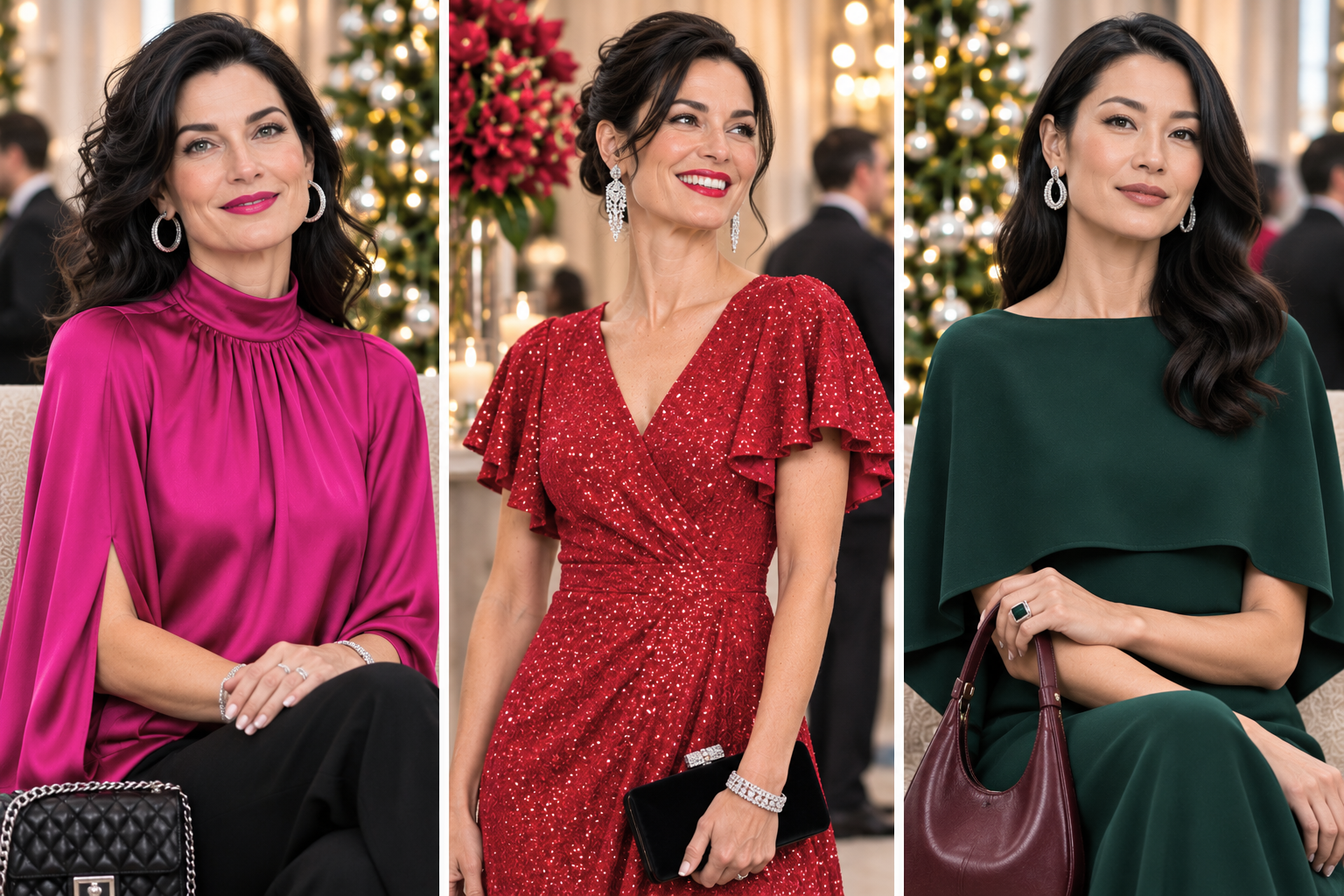
Winter coloring is cool, deep, and bright, with real contrast between the light and the dark. Holiday colors are already working in your favor. True red, emerald, sapphire, plum, and black against icy white all look right, and you can wear more contrast than anyone else at the table. Silver and platinum are yours. A true red or deep emerald is hard to beat at holiday time.
Bright Winters look fantastic in clear ruby, cobalt, emerald, and vibrant fuchsia. True Winters shine in classic holiday red, sapphire, and icy white, while Deep Winters can lean into burgundy, dark emerald, blackberry, and inky navy.
→ Shop my Winter holiday picks
Holiday Party Outfit Mistakes That Fight Your Coloring
Sometimes an outfit looks perfect on the hanger but falls flat once it's on. More often than not, the issue isn't the style. It's the color, the metallic, or the level of contrast.
Spring: Heavy black velvet, cool silver sequins, and overly dark colors can overwhelm your natural brightness. Look for warm ivory, gold, coral, champagne, and clear festive colors instead.
Summer: Bright orange-reds, harsh yellow gold, and high-contrast color combinations can feel overwhelming on a Summer palette. Silver, pewter, berry tones, dusty blues, and muted jewel shades are usually much more harmonious.
Autumn: Icy silver fabrics and stark black-and-white combinations often feel disconnected from Autumn's warmth. Forest green, bronze, copper, rust, cinnamon, and rich olive tend to create a more flattering holiday look.
Winter: Muted earth tones and antique bronze metallics can leave Winter coloring looking flat. Crisp contrast, jewel tones, silver, platinum, true red, and emerald are usually much stronger choices.
A Simple Rule to Remember
If an outfit feels slightly off and you can't figure out why, look first at the color nearest your face and then at your jewelry. Those two details often make a bigger difference than the outfit itself.
Fabric and Finish
The fabric does as much as the color at night, and it is the fastest way to lift an outfit you already own.
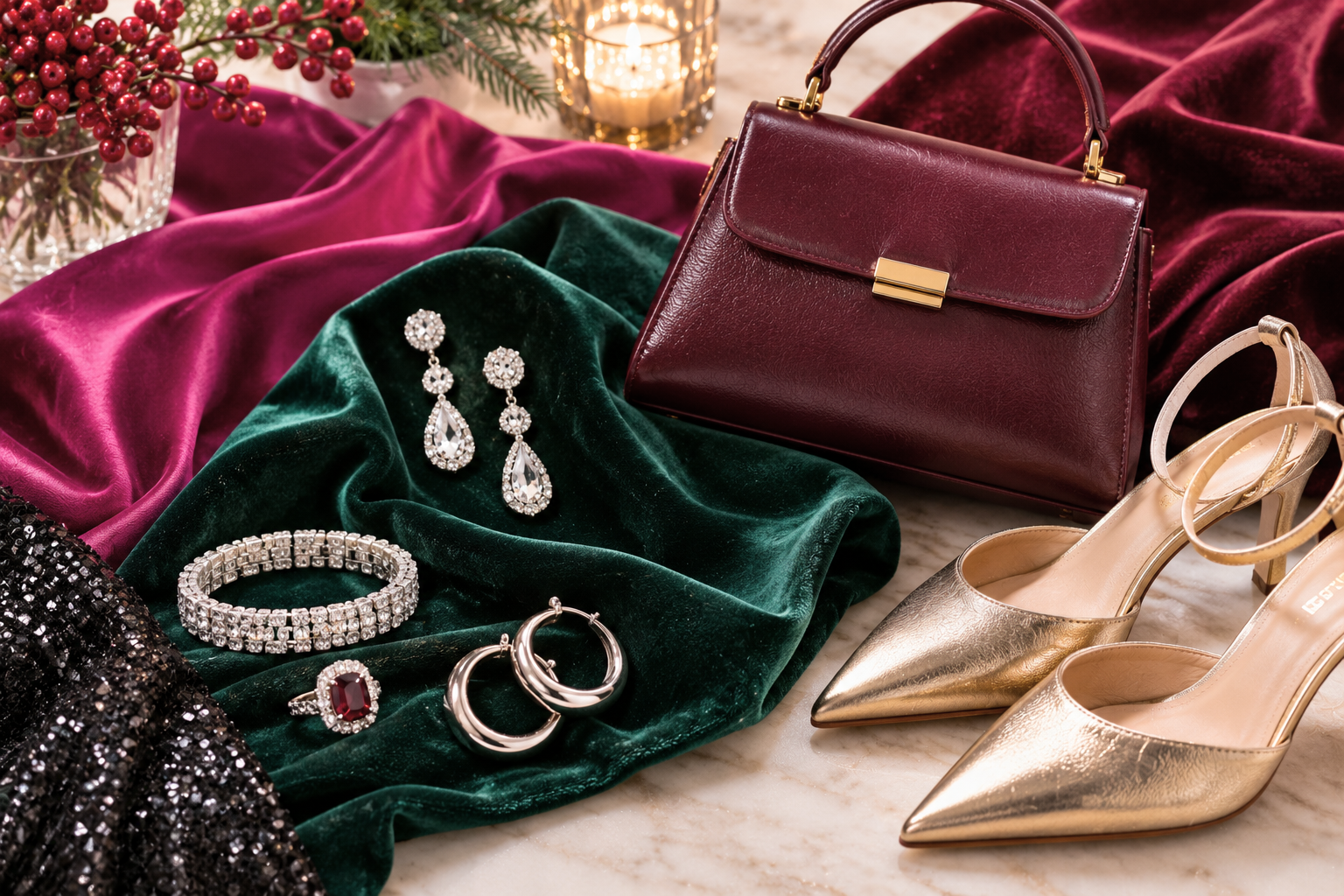
Velvet is the fabric of a December evening. It holds color deeply, it is warm to wear, and it flatters almost every palette. If you have one festive piece, make it velvet.
Satin is smoother and cooler. It catches light in a quieter way and suits the Summer and Winter palettes especially, though anyone can wear it as a skirt or a blouse.
Sequin is the loudest finish, and the holidays are the one time it belongs. Choose the sequin in your own palette rather than the shiny one on the mannequin, and keep everything else around it plain. One sequinned piece is plenty.
Metallic is a finish rather than a color. A bronze or gold thread in a knit reads festive without shouting, and it lets a knitwear lover dress for a party in the clothes she actually likes.
Jewelry
Jewelry is where a lot of women get this wrong, and it is the easiest thing to fix.
If you've ever wondered why some jewelry seems to brighten your face and some doesn't, undertone is usually the reason. If you run warm, gold is yours, in any weight. If you run cool, silver, platinum, and white gold are yours, along with pearls. Autumn leans bronze and copper. Spring shines in yellow gold and rose gold. When your metal matches your coloring, every piece in the box starts working together.
If you wear both, that is fine. Choose the one that flatters your face and keep it near the face, then let the other live in a bag strap or a watch.
Shoes and Bag
Evening is where comfort quietly wins, and you do not have to choose one.
A low heel or a beautiful flat will carry a party better than a heel you cannot walk in past nine. If you love a heel, take it, and take a foldable flat in the bag for the walk to the car. Nobody at the party is looking at your feet, but you will be feeling them.
One small bag is plenty. Choose it in your metal or in the deepest neutral of your palette, and keep it in your hand rather than your shoulder, so it does not fight the line of the dress.
The Finishing Layer
The piece that keeps you warm is also the piece that finishes the outfit, so choose it on purpose.
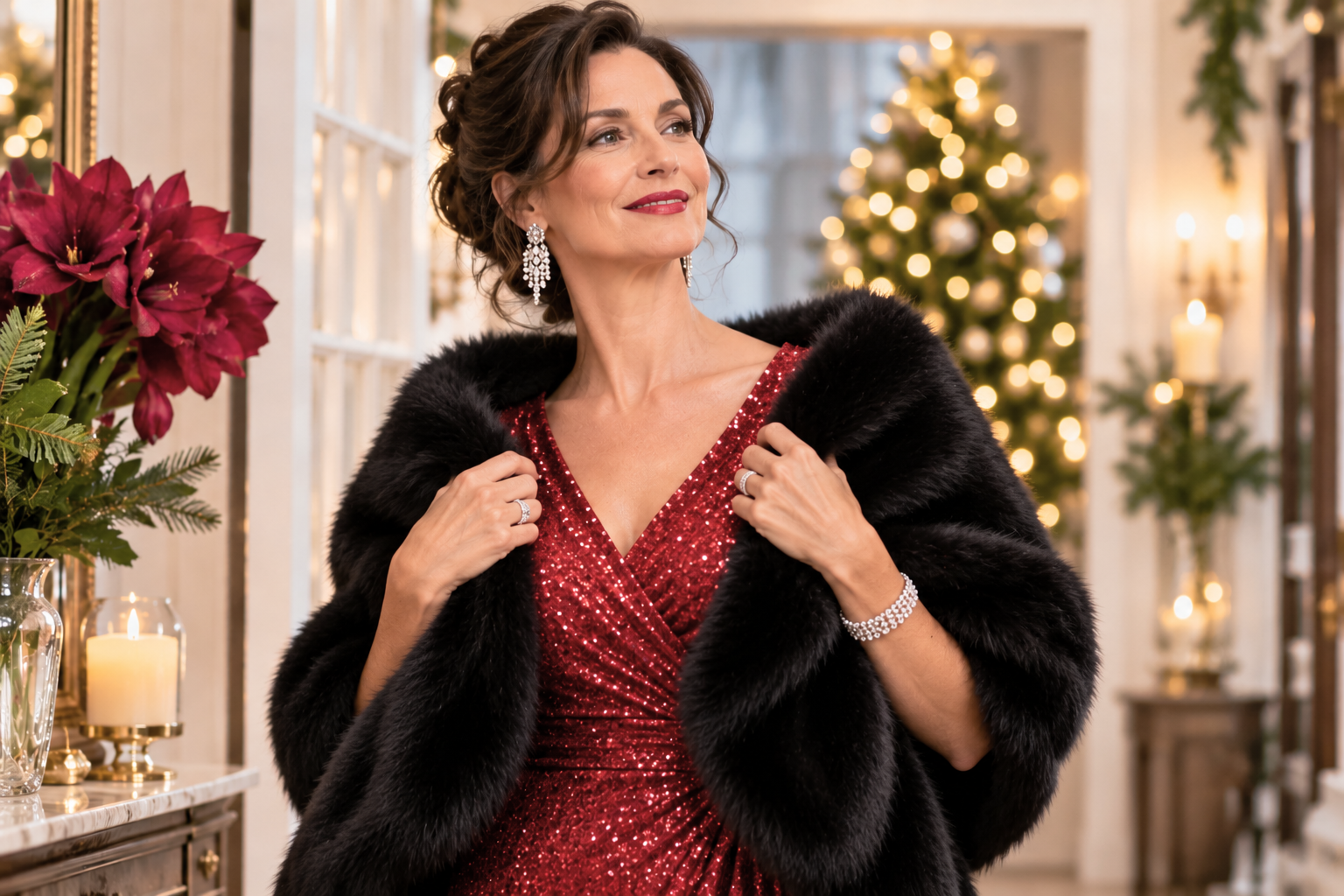
A wrap or a pashmina in one of your colors stays near your face and flatters you all evening. A velvet wrap or faux fur shawl is festive and warm at once. If you are wearing a long coat, keep it in your palette too, since it is the first thing anyone sees when you walk in.
For jewelry, one good piece beats five small ones. Earrings in your metal, near your face, do more for a bare dress than a necklace that has to compete with the neckline.
Frequently Asked Questions
Can I wear sequins after 50?
Of course. Sequins don't have an expiration date. What matters is how you wear them. A sequined top, jacket, or skirt can look elegant and festive at any age, especially when the color suits your palette. Most women find that one sparkling piece paired with simpler pieces feels more modern and flattering than dressing in shine from head to toe.
What if my best colors don't feel festive enough for the holidays?
Most people think holiday dressing is about wearing red, green, or something covered in sparkle. In reality, texture often does more work than color. Berry velvet feels festive on a Summer. Forest green and bronze feel festive on an Autumn. Warm ivory and gold can be beautiful on a Spring.
You don't have to dress like a Christmas card to look right for the season.
I always end up wearing black. Is that a problem?
Not necessarily. Most of us own plenty of black because it's easy and it's familiar. The question is whether it's one of your best colors. If black tends to make you look tired, try moving it away from your face. A scarf, a necklace, earrings, or even a more open neckline can soften the effect and bring your own coloring back into focus.
Sometimes a small change is all it takes.
How do I know when an outfit is really working?
You'll usually notice it before anyone says a word. The outfit feels comfortable. You stop adjusting it. You stop thinking about it. And if someone compliments you, they're likely to say, "You look great," rather than, "What a beautiful dress."
That's often the difference. The clothes support you instead of becoming the main attraction.
A Closing Thought
In the end, the people and the room are what the evening is about. The clothes are just what you wear to get there. Wear the colors you know you love, add a little holiday texture or sparkle if the mood strikes, and then let it go. When your clothes feel like you, they're no longer competing for your attention. You can simply enjoy the evening, which is really the whole point.
Disclosure: Some links on this page may be affiliate links. If you make a purchase through certain links, I may earn a small commission at no additional cost to you. B'Inspired combines original photography, properly licensed imagery, product photography and AI-assisted editorial illustrations. AI-assisted visuals are used to interpret ideas and teach concepts, not to misrepresent actual destinations, products, people or personal experiences.
