

The Travel Comfort Essentials I Never Fly Without After 50
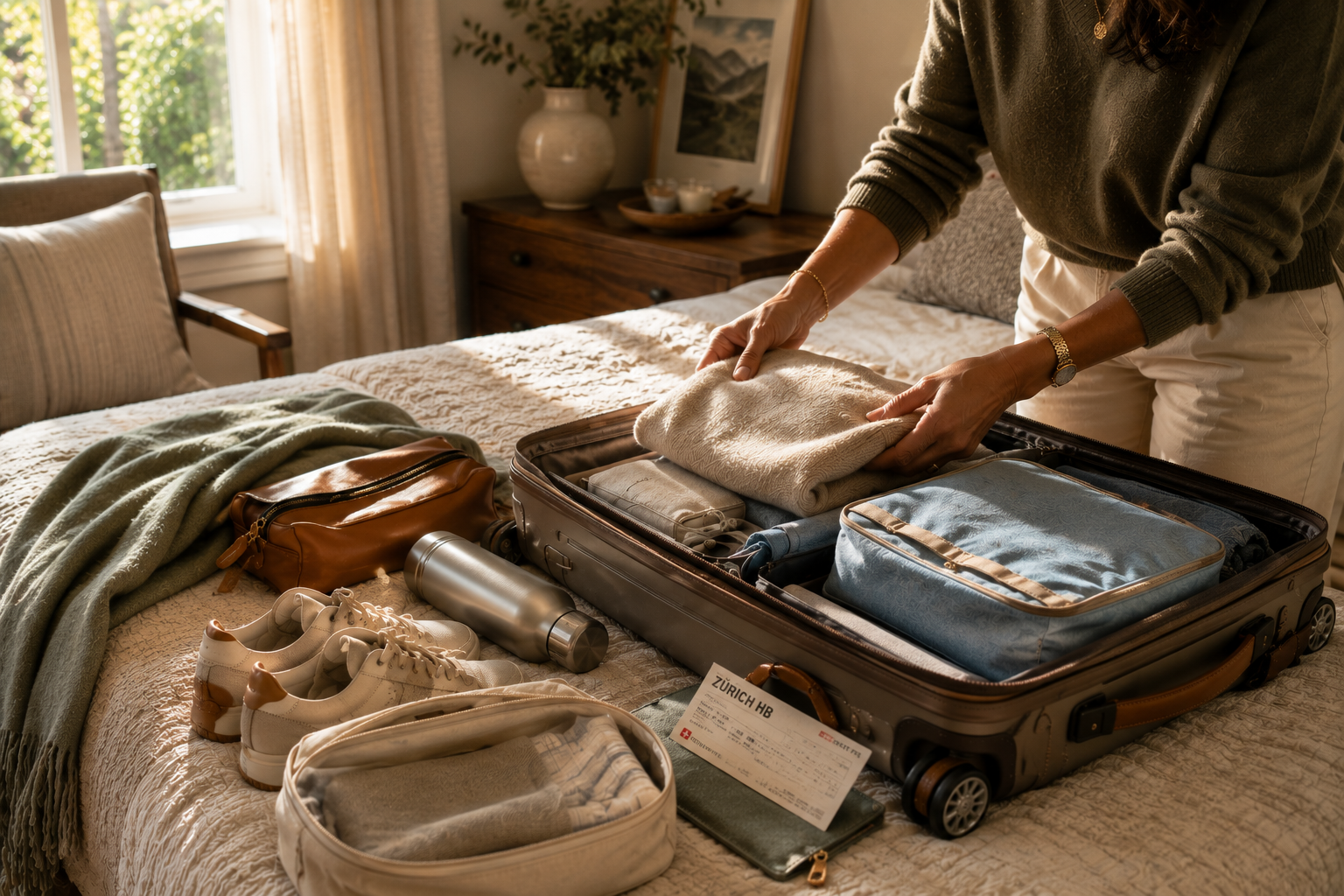
There was a time when I could sleep sitting upright in an airport chair, land after an overnight flight, and spend the day wandering a city on little more than excitement and caffeine.
I don't remember thinking much about hydration. I certainly wasn't packing electrolytes. Compression socks never crossed my mind. If a flight was uncomfortable, it was simply part of the experience.
Travel still feels exciting. If anything, I appreciate it more now than I did then. But somewhere along the way, I realized that arriving exhausted, dehydrated, stiff, and sleep-deprived wasn't earning me any sort of travel badge of honor.
The truth is that travel asks different things of us at different stages of life.
Long flights feel longer. Cabin air feels drier. A poor night's sleep has a way of lingering into the next day. The shoes that looked stylish when leaving home can feel remarkably less charming after seven miles of walking through an unfamiliar city.
What surprised me most wasn't that comfort became more important. It was realizing that comfort had quietly become one of the great luxuries of travel itself.
Not luxury in the traditional sense.
Not upgrades and champagne lounges.
The luxury of arriving with enough energy to enjoy the evening.
The luxury of walking a little farther because your feet still feel good.
The luxury of being present enough to notice the details that made you want to travel in the first place.
Over time, I've learned that the most enjoyable trips aren't necessarily the most expensive or the most ambitious. They're often the ones where I've taken the time to prepare thoughtfully and remove as much unnecessary friction as possible.
Comfort starts long before boarding a plane.
Comfort Starts Before Boarding
I used to think travel comfort was something you solved once you arrived at the airport.
Now I think it begins at home.
It begins with the outfit you choose before dawn when you're leaving for a flight. It begins with how much water you've had the day before. It begins with deciding whether the shoes in your suitcase are actually comfortable or simply hopeful.
The older I get—not as a complaint but as an observation—the more I appreciate how much energy can be preserved through small decisions.
For me, comfortable travel clothing has become less about looking polished and more about eliminating distractions.
I still want to feel put together.
I still care about style.
But I no longer believe style and comfort exist on opposite sides of a negotiation.
A soft cashmere wrap draped over my shoulders on a chilly flight feels far more elegant than spending eight hours trying to ignore the fact that I'm cold.
A well-cut pair of comfortable dark denim jeans will always outperform clothing that looks beautiful in photographs but spends an entire travel day tugging, pinching, or shifting.
Layering has become one of the simplest ways I create comfort while traveling.
Airports are unpredictable.
Airplanes seem permanently committed to their own climate agenda.
A cool morning departure can become a warm afternoon arrival.
Having layers allows me to adapt instead of endure.
Hydration has become part of this preparation too.
Travel days have a way of encouraging us to ignore basic needs.
We wake early, rush through airports, drink coffee, and convince ourselves we'll have water later.
Then later never quite arrives.
I've learned that feeling good after a flight often starts with the things I do before stepping onto the plane.
Comfort isn't usually created by one big decision.
It's created by dozens of small ones.
The Small Comforts That Earn Their Place in My Carry-On
Every traveler develops a few habits over time.
Mine tend to take up very little space, which is fortunate because carry-on luggage remains one of my favorite travel luxuries.
I've become increasingly convinced that the most valuable things in my bag are rarely the largest or most expensive. They're simply the things that quietly solve problems before those problems have a chance to become distractions.
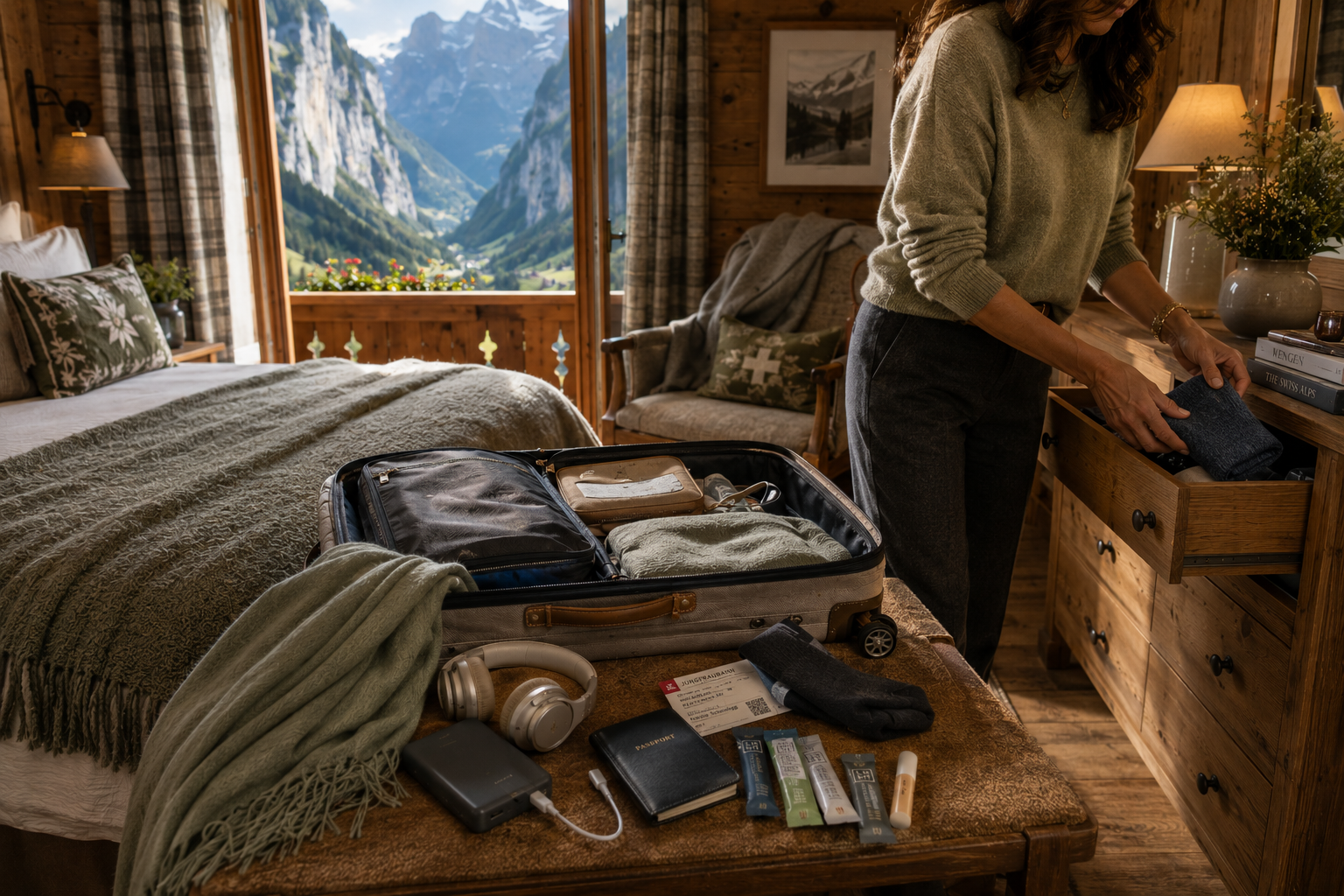
Compression socks are one of those items.
There was a time when I associated them with practicality rather than comfort. Now I think of them differently. After long-haul flights, they help my legs feel lighter and less fatigued, particularly when I'm heading straight into sightseeing rather than a hotel room.
A cashmere wrap has become equally indispensable.
Mine has crossed the Atlantic multiple times, accompanied me through Christmas markets across Europe, and served as everything from a blanket on overnight flights to an extra layer on chilly horse-drawn carriage rides in Vienna.
Noise-canceling headphones have become another small luxury I appreciate more with every trip.
Airports and airplanes are full of sound. Announcements, conversations, engines, rolling luggage, and the general hum of movement. Creating a small pocket of quiet can feel surprisingly restorative.
I carry a portable charger for similar reasons.
Not because I spend my travels glued to my phone, but because few things create unnecessary stress faster than watching a battery percentage disappear while navigating unfamiliar cities.
The same philosophy applies to the smaller items that often go unnoticed.
Electrolytes tucked into a side pocket.
None of these are dramatic. None of them transform a trip. Yet together they help me feel more comfortable, more refreshed, and more like myself.
Even organization has become a form of comfort.
A neatly packed carry-on means I'm not digging through my bag at security or searching for charging cables at the gate.
The goal isn't perfection.
It's ease.
The less energy I spend managing small inconveniences, the more energy I have available for the experiences that matter.
The Difference Between Packing More and Packing Better
For years, I believed preparation meant bringing more.
More outfits.
More options.
More backups.
More things "just in case."
Travel often began with a suitcase that felt reassuringly full and ended with me wondering why I had carried half of it across an ocean.
I suspect many women recognize this pattern.
We imagine different weather scenarios.
Unexpected invitations.
Shoes for every possible occasion.
A version of ourselves that might suddenly require an entirely different wardrobe than the one we've been wearing comfortably for years.
Eventually I realized that most of the items creating anxiety before a trip weren't actually helping me once I arrived.
They were simply adding weight.
The shift toward carry-on travel taught me something valuable.
Restrictions can create clarity.
When space becomes limited, every item has to justify its presence.
The question changes from:
"What else should I bring?"
to
"Will I actually use this?"
That small shift has transformed how I travel.
I pack fewer items now than I once did, but I enjoy my trips more.
My wardrobe works together.
My bag feels manageable.
I spend less time making decisions and more time experiencing the places I've traveled to see.
Packing better isn't about minimalism for its own sake.
It's about creating room for ease.
Comfortable walking shoes have become one of the few things I refuse to compromise on. My trusted Blondo waterproof Chelsea boots have accompanied me across Christmas markets, cobblestone streets, and rainy European afternoons without ever making me wish I had packed something else.
Travel Used to Be About Arrival. Now It's About the Journey
One of my favorite travel memories isn't a destination.
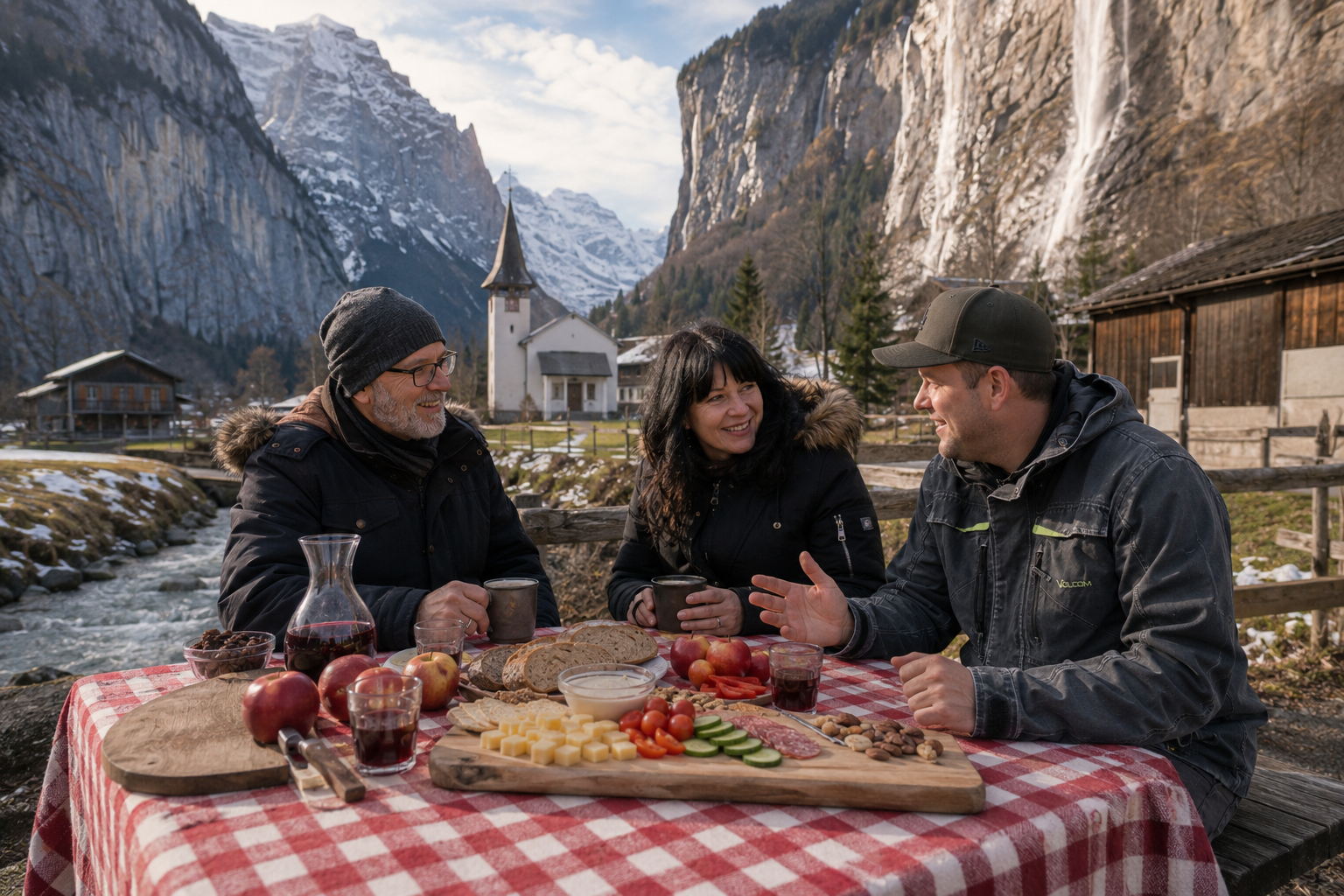
It's a private tour with a Swiss dairy farmer that included a picnic in Lauterbrunnen.
As he drove us through the Swiss Alps, the countryside drifted past the window in a series of green meadows, church steeples, distant mountains, and small villages that looked as though they had been carefully placed into the landscape.
There was nowhere else I needed to be.
Nothing I needed to accomplish.
No itinerary demanding my attention.
Just the wonderful stories our guide shared as the scenery passed by.
Years ago, I might not have splurged on that extra bit of luxury.
Now I understand it differently.
The farmer's stories.
The laughter shared over a simple picnic.
The conversations that unfolded along the drive.
The unexpected human connection.
Those memories remain just as vivid as the scenery itself.
I've come to realize that the journey is often every bit as meaningful as the destination.
I notice airport lounges more than I once did.
Not because they're glamorous, but because they offer a quiet pause before departure.
I appreciate slow breakfasts in hotel dining rooms.
The walk back from dinner through unfamiliar streets.
The conversations that happen unexpectedly.
The moments that can't be scheduled.
Comfort has changed my relationship with those experiences.
When I'm cold, exhausted, dehydrated, or uncomfortable, my attention narrows.
Everything becomes about solving the discomfort.
When I feel comfortable, my attention expands.
I notice architecture.
People.
Light.
Flowers spilling from balconies.
The details that make travel memorable.
Why Comfort Makes Travel More Beautiful
We often think of comfort as something practical.
And it is.
But I think it also creates beauty.
Comfort allows us to linger.
To walk a little farther.
To wander down a street simply because it looks interesting.
It creates space for curiosity.
For spontaneity.
For those small moments that rarely appear on itineraries but often become the memories we carry home.
Some of my favorite travel experiences have happened when I wasn't rushing toward anything.
A hidden courtyard.
A flower market.
A conversation with a shop owner.
An unexpected view around a corner.
These moments require presence.
Presence becomes much easier when your body isn't asking for constant attention.
Comfort doesn't compete with adventure.
It supports it.
Travel Wellness After 50
Travel wellness looks different now than it once did.
Not because I'm trying to optimize every aspect of a trip.
Quite the opposite.
I've simply learned to pay attention to what helps me feel good.
Hydration matters more than it used to.
Movement matters more.
A few minutes of stretching after a flight can make a surprising difference.
Getting outside into natural light after arriving helps my body adjust more quickly.
And sleep has become something I actively protect rather than hope for.
As an esthetician, I've spent years seeing how quickly travel appears in the skin.
Long flights, dehydration, recycled cabin air, and disrupted sleep often leave skin looking more tired than the trip itself.
A little extra hydration, a nourishing moisturizer, and a few moments of care at the end of a travel day often make a remarkable difference.
One of the biggest changes we've made in recent years has been paying more attention to jet lag before we ever leave home.
On our last long-haul trip to Europe, Troy and I experimented with a jet-lag planning system called FlyKitt. It provided a schedule for meals, sleep, supplements, and light exposure leading up to our departure and after arrival. I wasn't entirely convinced it would make much difference. Yet after more than twenty hours of travel, multiple airports, and layovers, I felt far more functional than I expected. The experience reminded me that some of the most effective travel comforts begin before the journey itself.
Another travel ritual I've come to appreciate is booking a massage shortly after arrival whenever possible.
After a long flight, hours of sitting, disrupted sleep, and carrying luggage through airports and train stations, my body often feels the journey before my mind does.
A massage isn't always possible on every trip, but when it is, it helps soothe stiff muscles, swollen joints, and the general fatigue that can accompany long travel days.
I've come to think of it less as an indulgence and more as a gentle way of helping my body catch up with where I've arrived.
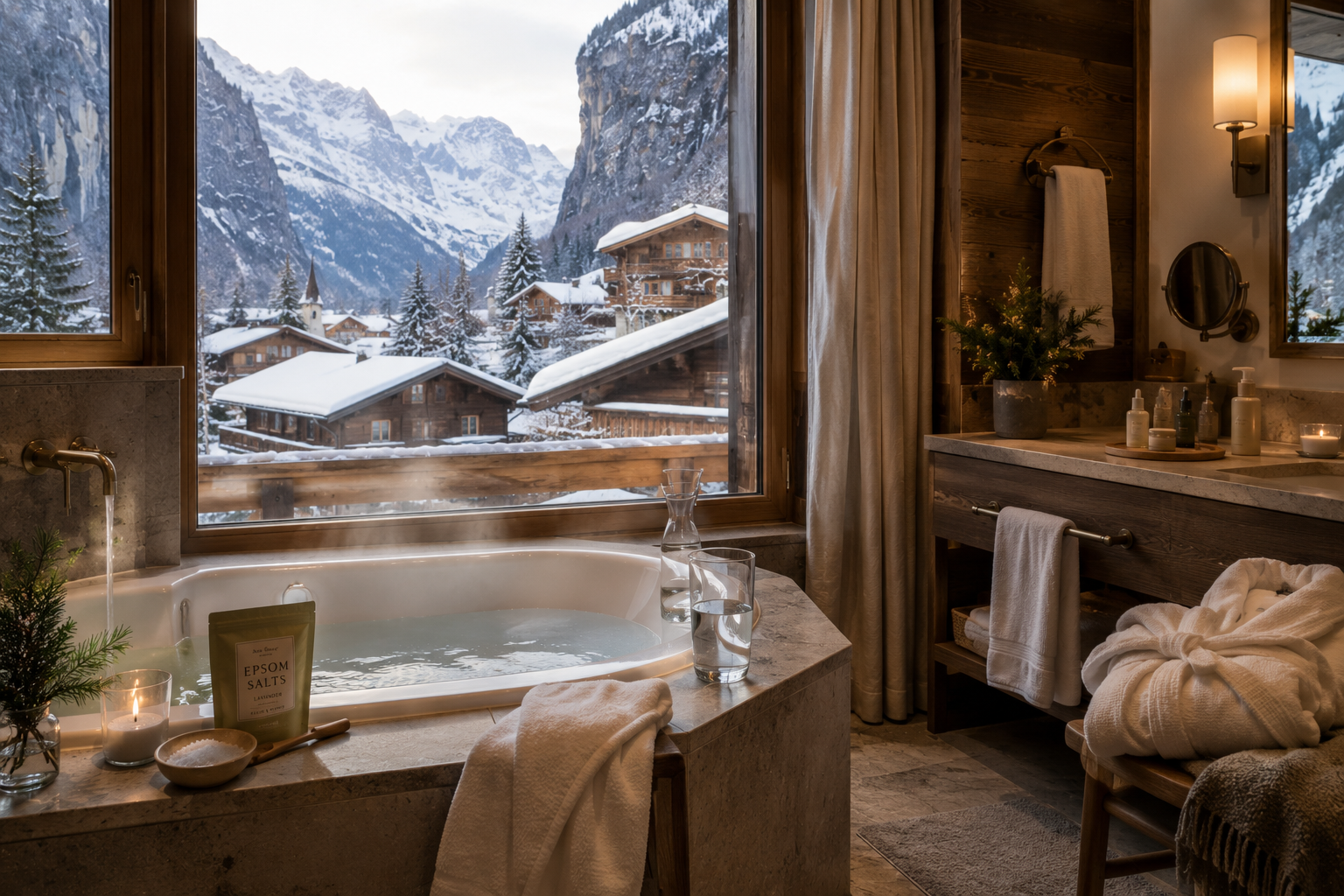
If a massage isn't available, I often pack a small travel-size pouch of Epsom bath salts.
There's something deeply restorative about soaking in a warm bath at the end of a travel day.
After hours spent in airports, airplanes, trains, and taxis, it's a simple ritual that helps me unwind, ease muscle tension, and settle into a new destination.
Like many of the comforts I travel with now, it isn't complicated.
It's simply one more way of arriving well rather than merely arriving.
The goal isn't perfection.
It's recovery.
It's helping the body feel supported rather than depleted.
The better I feel physically, the more fully I can enjoy the places I've traveled so far to experience.
Final Thoughts
Travel comfort isn't about being fragile.
It isn't about expecting every flight to be effortless or every trip to go according to plan.
Travel will always involve a little uncertainty.
A delayed train.
An unexpected weather change.
A missed turn on an unfamiliar street.
That's part of the experience.
For me, comfort has become about removing the unnecessary discomforts that distract from the things that matter most.
The goal isn't to control every aspect of travel.
The goal is to remain present enough to enjoy it.
The drive through unfamiliar countryside with a Swiss dairy farmer sharing stories of the valley he calls home.
The conversation that lasts longer than expected.
The hotel window left open to evening air.
The quiet walk back to your room after dinner.
The unexpected street you turn down simply because you have nowhere else you need to be.
Comfort doesn't create those moments.
It simply makes it easier to stay present for them.
Disclosure: This article may contain affiliate links. If you make a purchase through these links, I may earn a commission at no additional cost to you.
